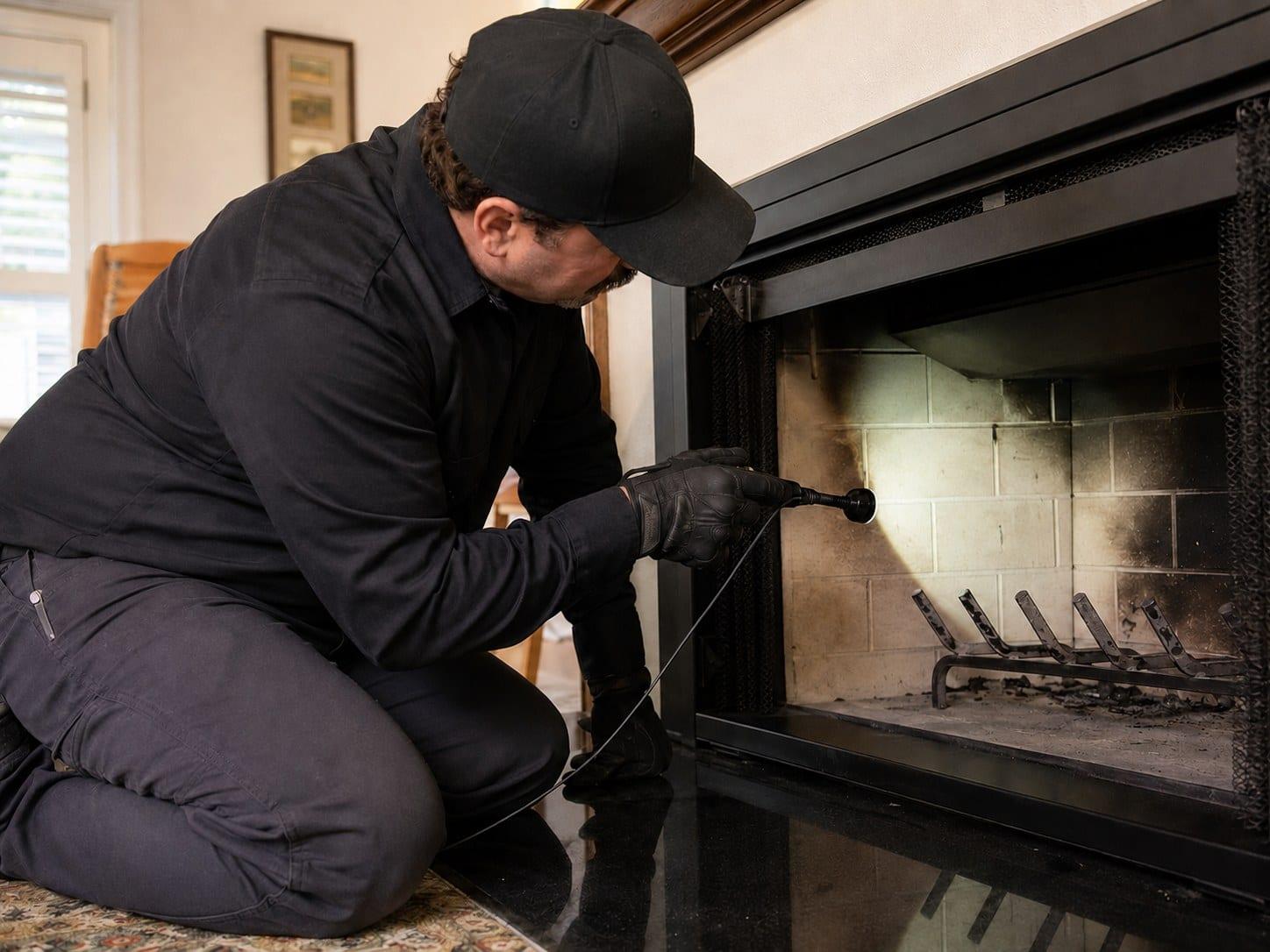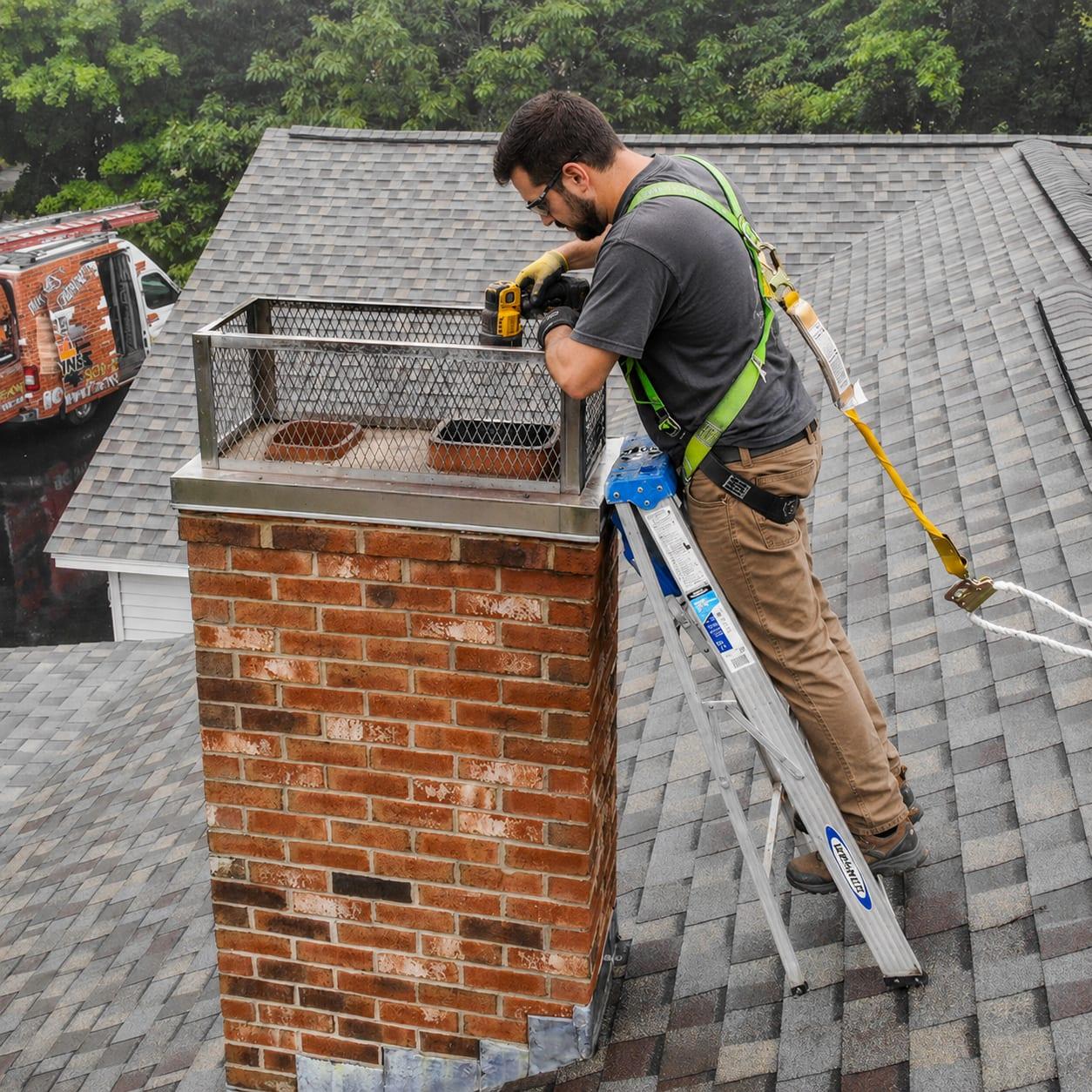
We inspect chimneys and fireplaces for homes in Dunwoody. Homeowners ask most about three parts of the visit: where the chimney passes through the attic and roof, how gas appliances vent, and what to check after storm damage.
When the inspection reaches the attic and roofline
Up in the attic and along the roofline, the question is usually whether water or heat is getting somewhere it shouldn't. In the attic, we look at the framing and roof decking around the chimney or chase for water stains, soft wood or daylight. We also check the clearance between the chimney and nearby wood and insulation. On the roof, we look at where the chimney meets the shingles, at the cap and at the top of the chimney.
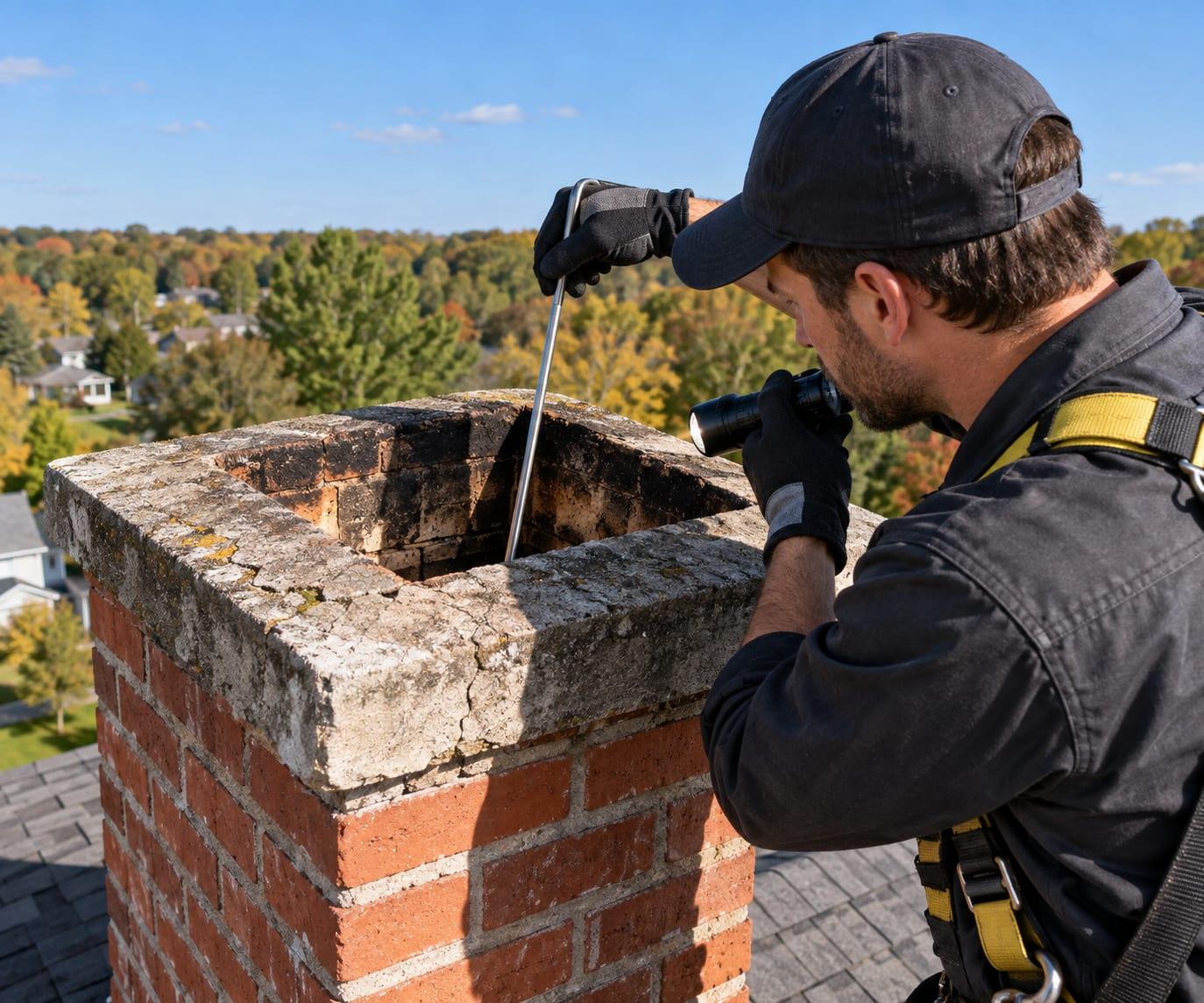
This helps you decide whether a ceiling stain traces back to the chimney or to the roof itself. It also shows whether the fix is sealing, a new or replacement cap, or something more involved.
Checking how gas appliances vent
Gas fireplaces, gas logs and other gas appliances that vent through a chimney need a clear path that suits the appliance. We confirm the vent serving the appliance is open and that the top isn't blocked by nests or debris. We also look for signs of poor venting, such as rust, flaking masonry, moisture or soot staining around the appliance. Gas fireplace and gas appliance work is offered, so we can carry out any service the findings call for. The results help you decide whether to keep running the appliance as it is, have it serviced, or have its venting corrected first.
What the housing data bears on
About 2% of the housing units in Dunwoody were built before 1960, according to the U.S. Census Bureau's American Community Survey 2019–2023 5-year estimates (table B25034, Year Structure Built). Put the other way, roughly 98% date from 1960 or later. That figure says nothing about the condition of any one chimney, so the inspection judges each system on what is actually found.
After a storm or an earthquake
Wind, a falling limb, hail or ground movement can all damage a chimney. After any of these, the inspection can involve checking the cap and chase cover for bending or displacement. It also looks for cracked or shifted masonry and loosened mortar, and checks the flue for debris or damage. Where the inside of the flue can't be seen directly, we may use a chimney camera inspection. The attic check matters here too, because storm damage can let water in before anything shows outside. You end up with a clear record of what changed, which makes repair decisions easier.
Related work an inspection can lead to
- A new chimney cap installation is the right job when the chimney has no cap and rain, animals or debris are getting into the flue.
- chimney cap replacement fits when a cap is there but is rusted, bent, loose or was knocked off in a storm.
- If the flue needs cleaning before it can be judged properly, book a chimney sweep for homes in Dunwoody.
We also handle chimney inspection in Sandy Springs, Chamblee and Brookhaven.
Our chimney inspection service page covers inspection types, the visit itself and the components we check. Everything else we do locally is listed under Dunwoody.
Booking an inspection
Call or request an estimate to set up a visit. Same-day visits are available where the schedule allows, though they can't be guaranteed, and emergency calls are accepted. We work on all major brands of fireplaces and gas appliances.
Sources (1)
The sources of the Dunwoody facts on this page.
- 1U.S. Census Bureau, American Community Survey 2019–2023 5-year estimates, table B25034 (Year Structure Built)