On this page
What wood stove repair covers
A wood stove depends on a sealed firebox and controlled airflow. When a gasket leaks or a part warps, the stove pulls in air you can't control. It burns through wood quickly, overheats or smokes. Wood stove repair brings back that control by fixing or replacing the worn part, so you aren't left working around the problem every time you load the stove.
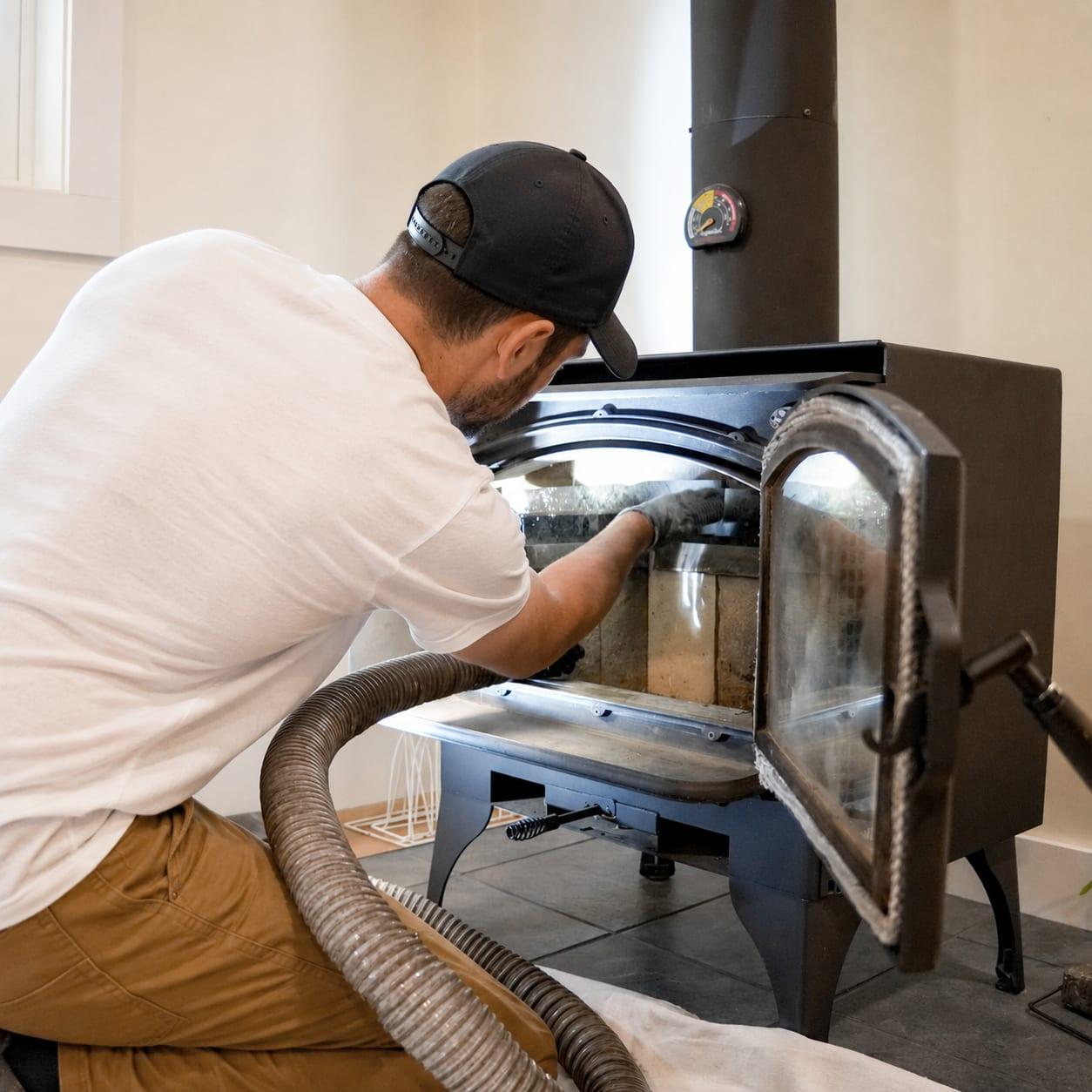
- Door and glass rope gaskets that no longer seal
- Cracked or clouded ceramic glass
- Warped or burned-out baffles and secondary burn tubes
- Cracked or crumbling firebrick lining
- Sticking or broken air controls and damper parts
- Catalytic combustors that are clogged or cracked
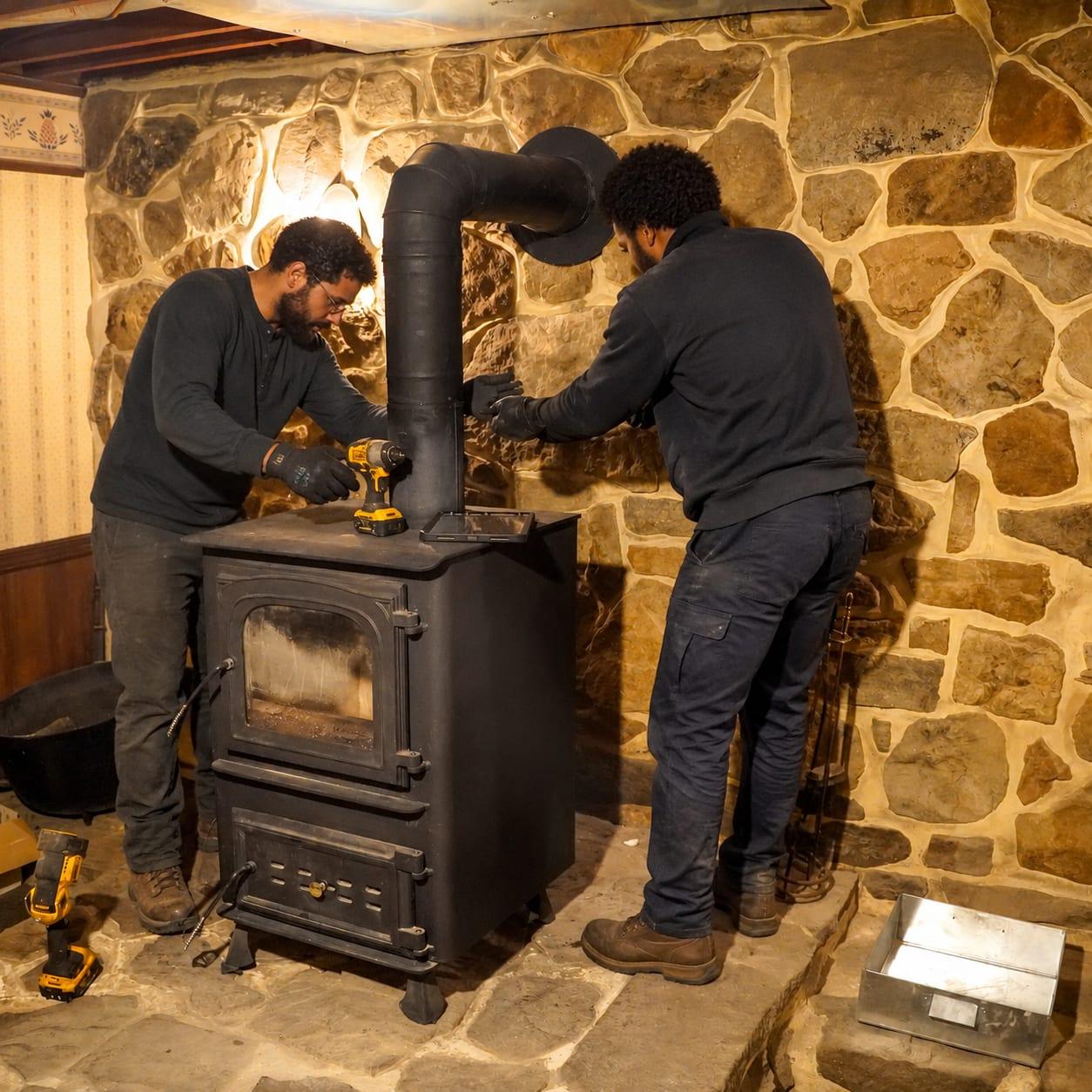
- Loose, damaged or poorly sealed stovepipe connections
Signs your stove needs repair
Common warning signs
- The fire won't die down when you close the air control
- Smoke escapes around the door or glass
- A crack you can see in the glass, firebrick or stove body
- The door won't latch tightly, or the handle is loose
- The stove glows red in spots during normal fires
- Wood burns much faster than it used to
If the stove works well but drafts poorly or smells smoky, the problem may be buildup rather than broken parts, and wood stove cleaning is the place to start. When the body itself is cracked or replacement parts are no longer made, wood stove installation is usually the better investment.
What the repair visit involves
How a stove repair goes
Hear the symptoms
You explain what changed and when, and share the make and model if you know them.
Inspect the cool stove
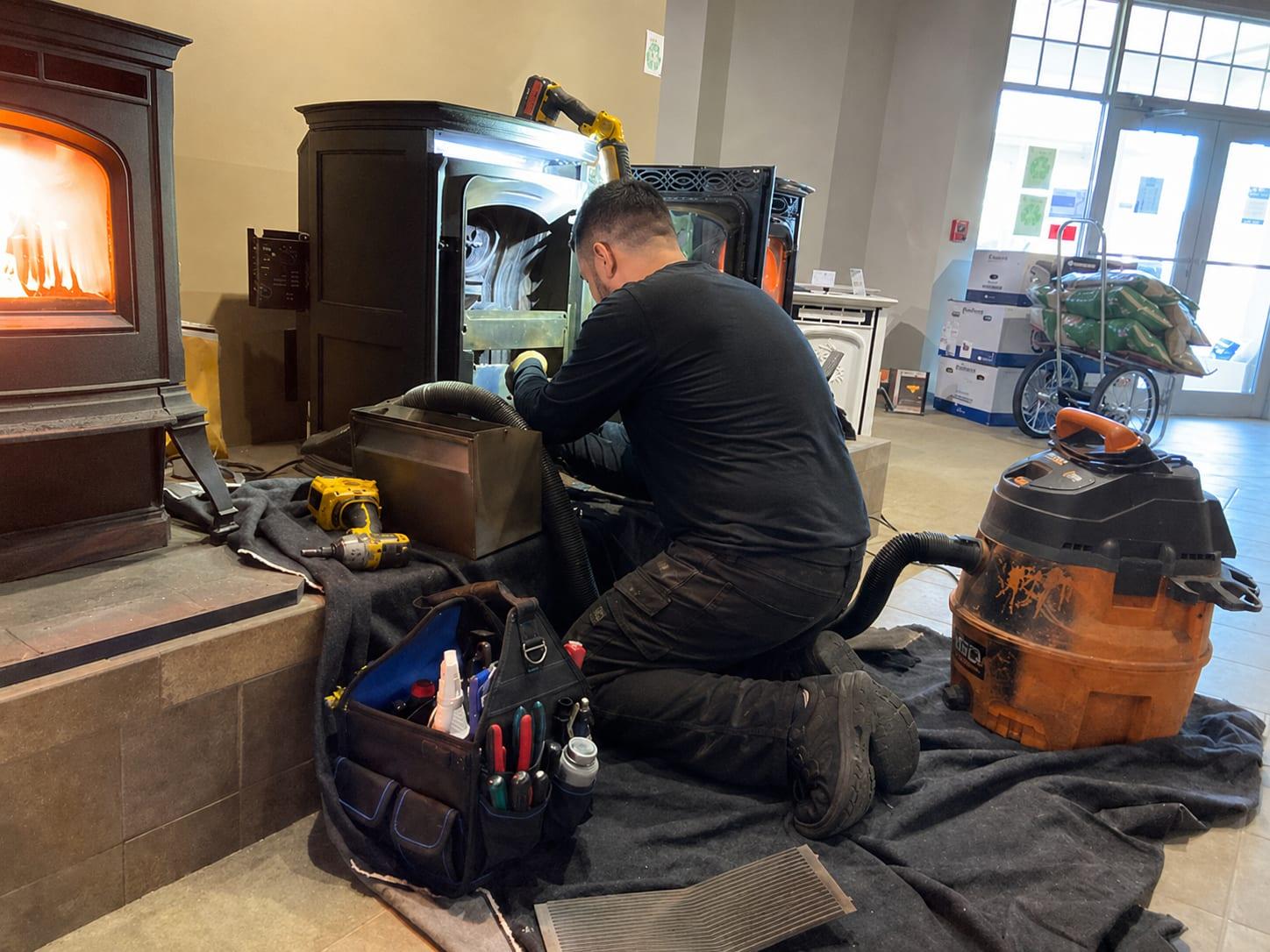
Gaskets, glass, baffles, bricks, controls and the stovepipe are checked, or the burner and electronics on a gas or pellet unit.
Explain and estimate
You get a plain explanation of the fault and a free estimate before work begins.
Repair
Worn parts are replaced or repaired, using parts that match the stove.
Test
The door seal, controls and, where possible, a test light confirm the stove operates as it should.
Gas stove repair
Gas heating stoves fail differently from wood stoves. Common problems include a pilot that won't stay lit, a dirty or failing thermocouple or thermopile, an ignition fault, a burner that lights unevenly, and venting issues that make the flame look lazy or yellow. Gas appliance work is part of the service, from diagnosing the valve and controls to cleaning the burner and logs. For built-in gas units, the gas fireplace service covers that side in more depth.
If you smell gas
Don't light anything or use switches. Leave the house and call your gas utility from outside.
Wood pellet stove repair
Pellet stoves add motors and electronics to the firebox, so repairs often involve the igniter, the auger and its motor, the combustion and convection fans, the burn pot, and the sensors and control board. A stove that won't light, shuts down mid-burn or jams with pellets usually has one of these at fault, and dirty ash and an unclean burn pot often play a part. For the bigger picture on fuel, see pellet vs wood stoves.
Booking a stove repair
Call or request an estimate. Same-day visits are available where the schedule allows, though they can't be guaranteed, and emergency calls are accepted. The work covers all major brands of wood, gas and pellet stoves. Commercial and property-manager jobs are welcome. If you're still sorting out what kind of heater you have, our guide to type of fireplace and the comparison of a free-standing stove vs an insert can help.
What the technician checks
- Connector pipe joints, screws and rust
- Creosote in the connector and flue
- Firebrick and baffle condition
- Clearances to walls, floor protection and the hearth pad
- Draft with the door closed
Before the technician arrives
- Clear a few feet around the unit and the area under any connector pipe.
- Have the make and model handy; it's usually on a plate on the back or under the ash lip.
- Make sure the roof or the attic access can be reached if the flue needs to be checked from above.
- Let the stove or insert go out and cool completely — ideally no fire for a full day before the visit.
Carbon monoxide
A stove or insert that vents poorly can push carbon monoxide into the home. If an alarm sounds or anyone feels dizzy or sick near it, get everyone outside and call 911.