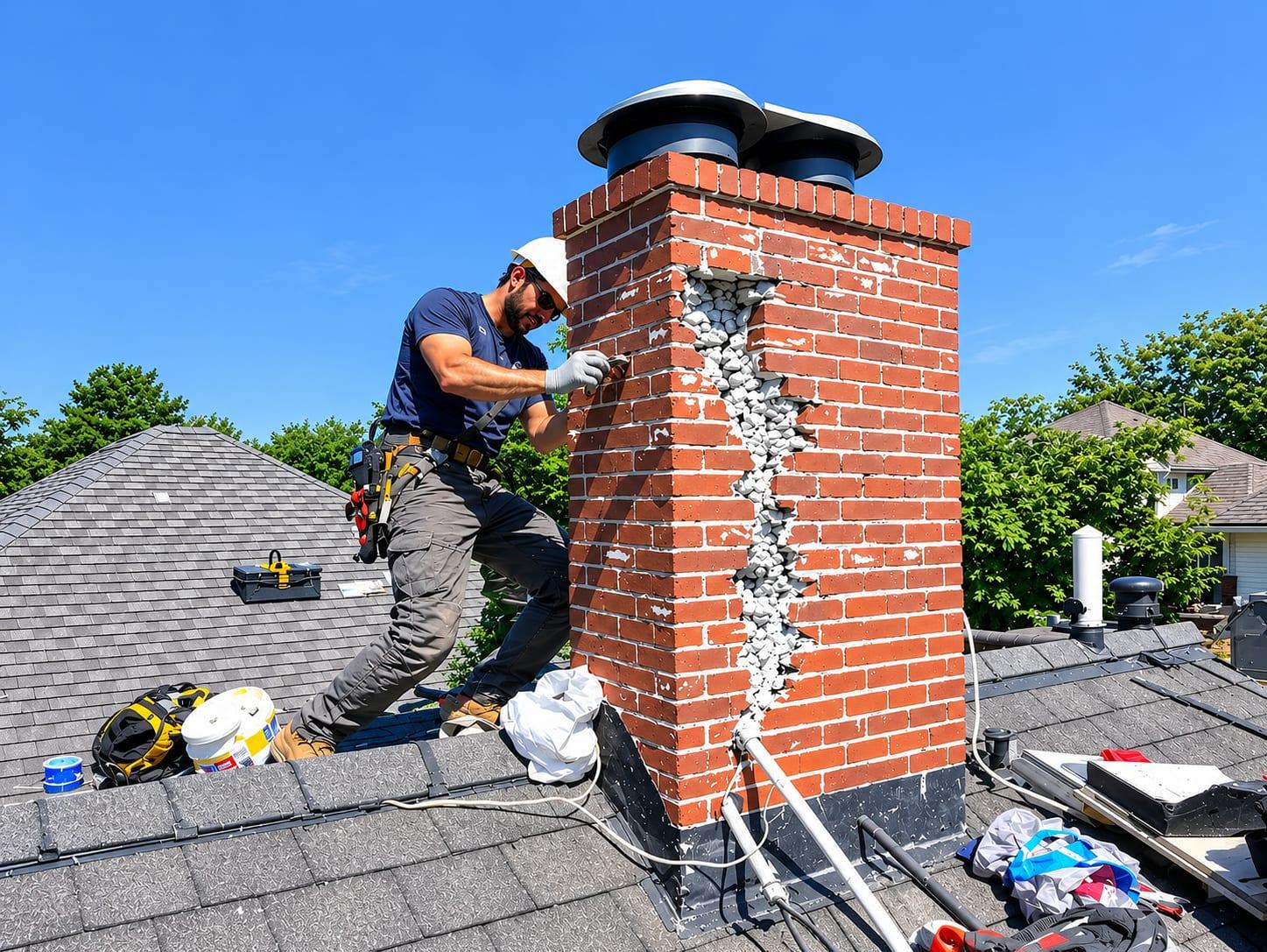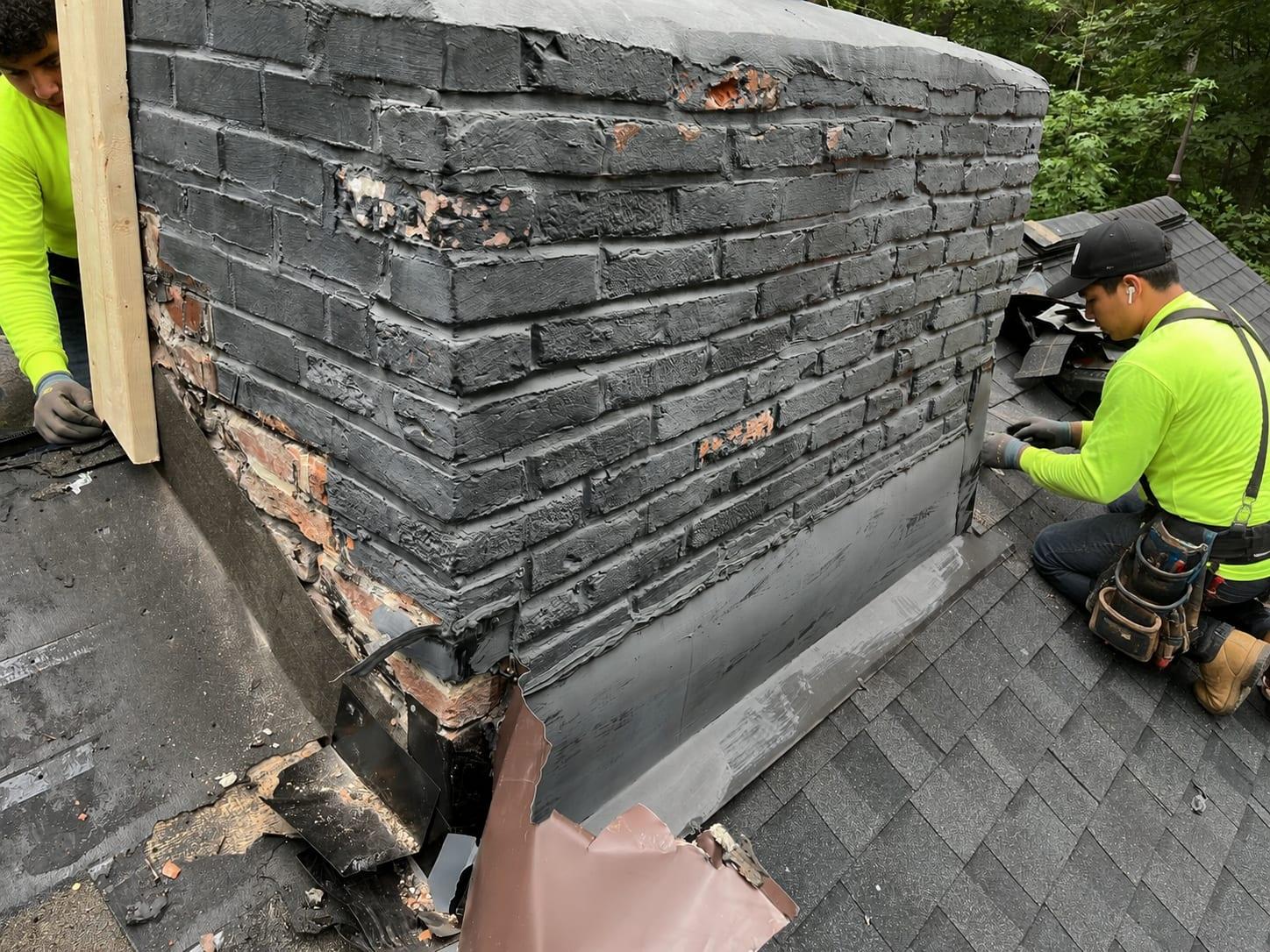
Signs your chimney is letting water in
- Water stains or bubbling paint on the ceiling or walls next to the chimney
- Dripping, puddles or damp ash in the firebox after rain
- A musty or damp smell from the fireplace
- A rusted damper, firebox doors or fireplace parts
- White, chalky deposits on the brick, or bricks that are flaking or crumbling
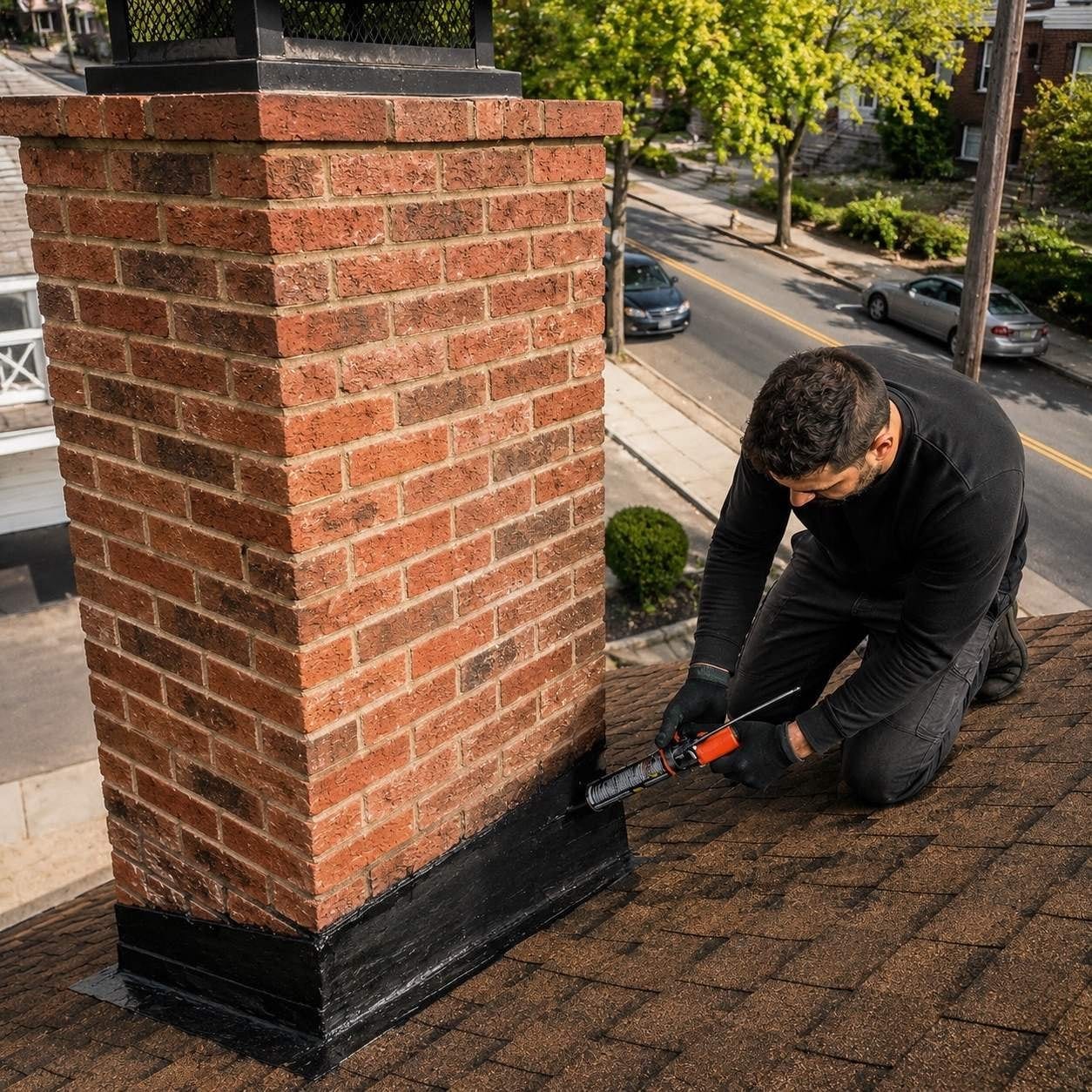
How the visit works
A cracked crown or missing cap lets rain straight into the masonry and the flue. Water in a chimney rusts dampers and caps, breaks down mortar and stains ceilings and walls.
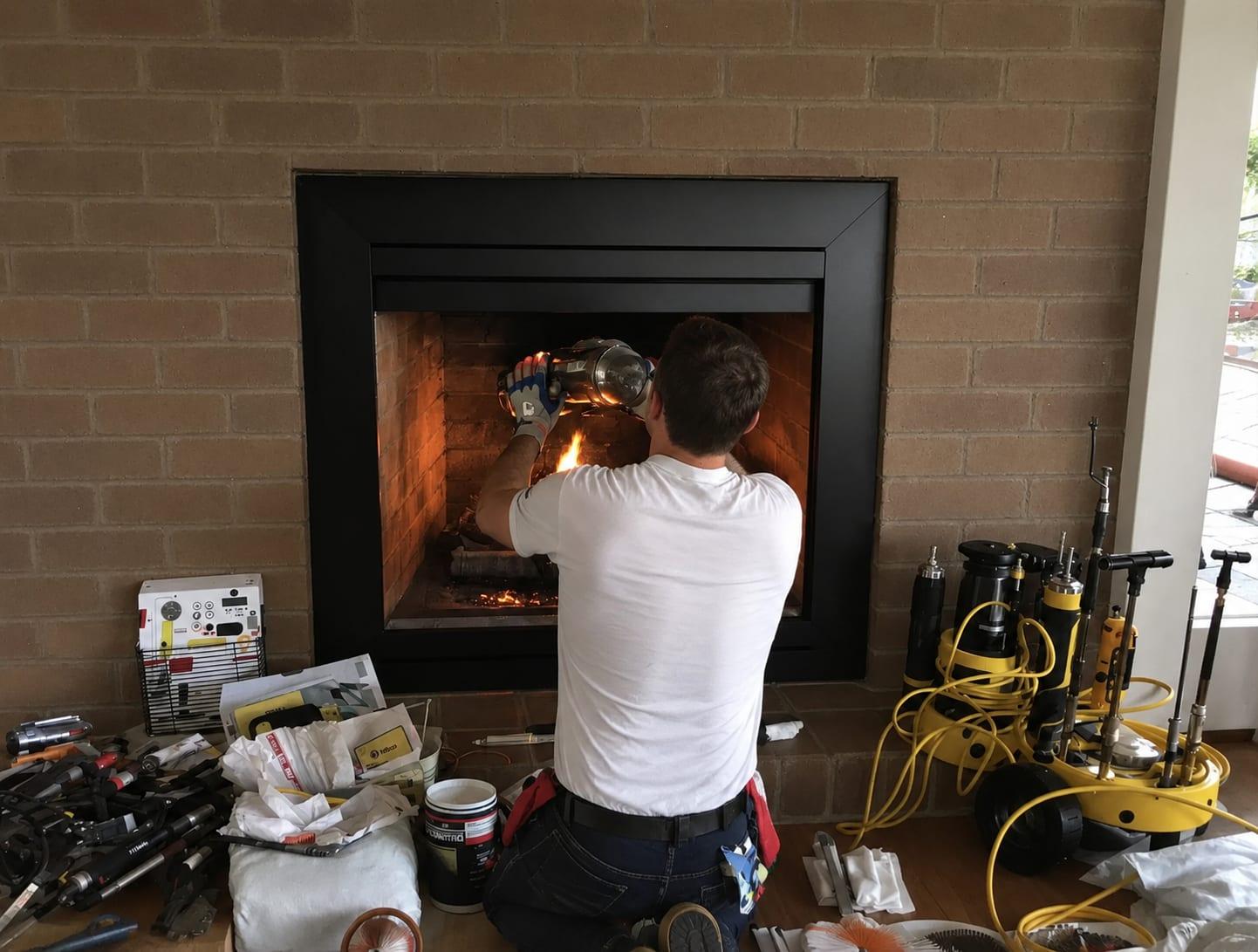
Look inside
Where the water shows up — the ceiling, the firebox, the damper or the attic.
Check the top and roof line
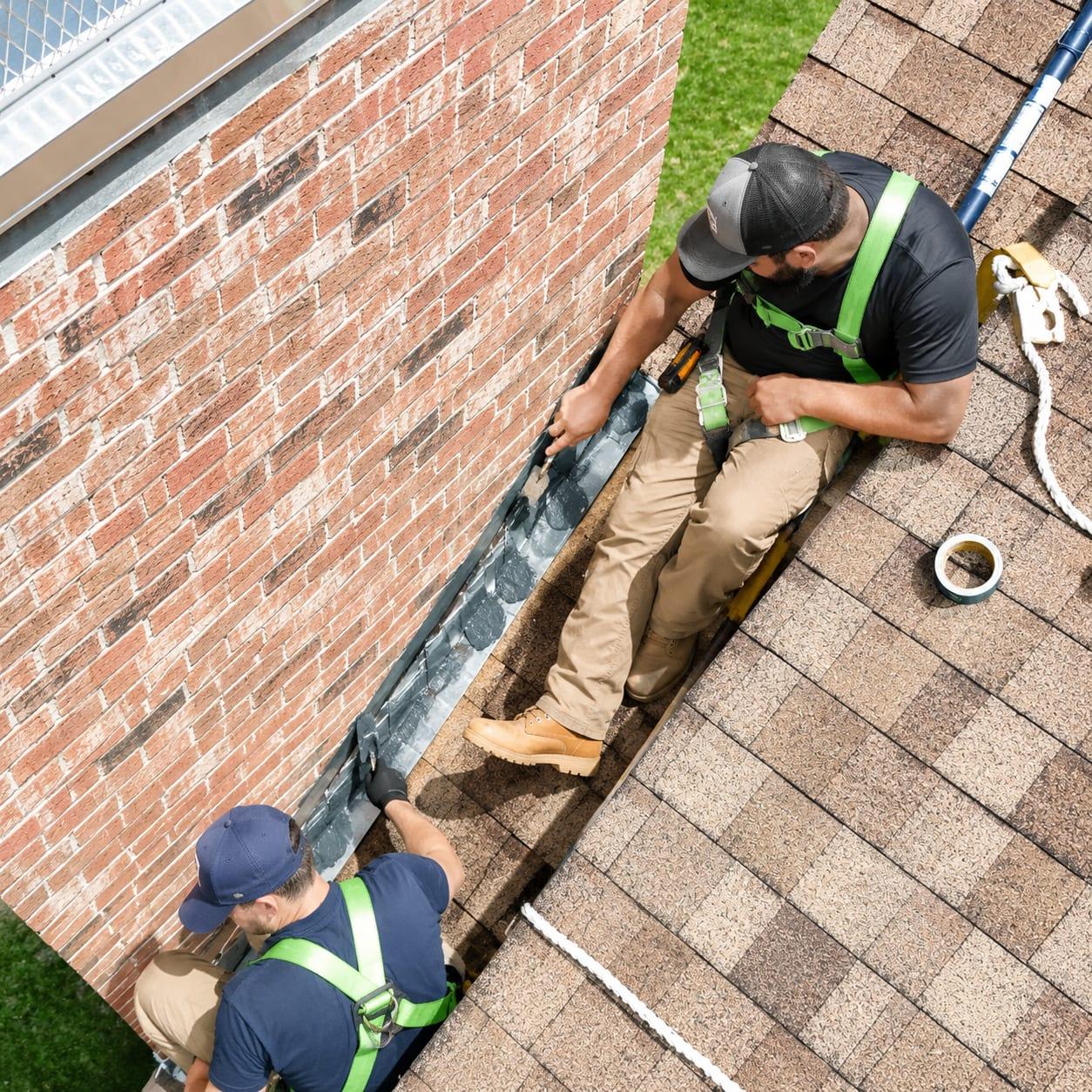
Cap, crown, flashing and the masonry, where it can be reached safely.
Find the source
The likely entry points are narrowed down before anything is repaired.
Repair
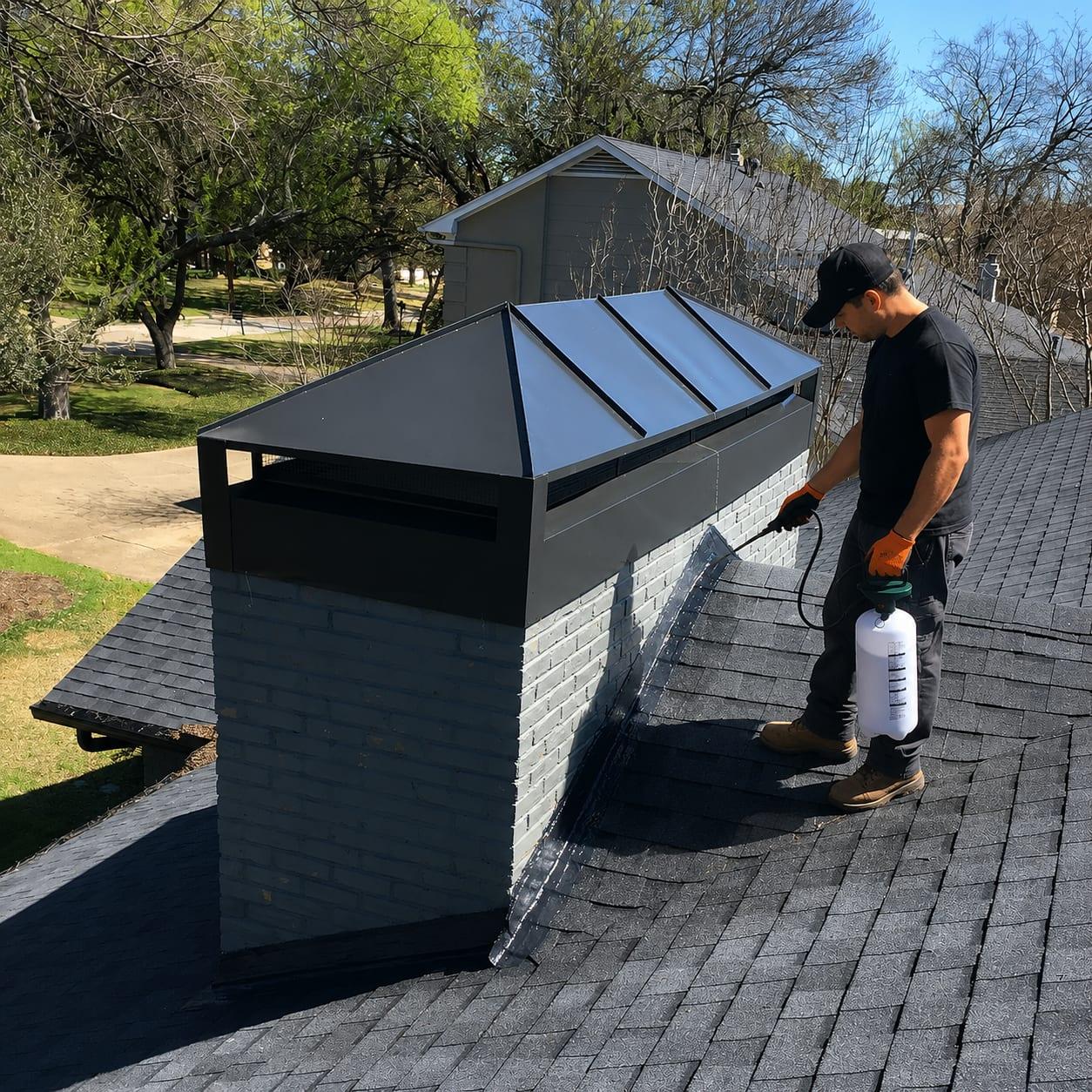
Flashing, crown, cap or masonry work, and a water repellent where it suits.
Water near wiring or a sagging ceiling
If water is reaching light fixtures or wiring, or a ceiling is sagging, keep clear of that area and switch off its power at the breaker if you can do it safely. Call 911 if there's an immediate danger.
Checked on every visit
- Mortar joints and brick faces
- Cap and chase cover
- Attic and ceiling around the chimney
- Crown cracks
- Damper and firebox for rust
- Flashing and counter-flashing
Possible causes
Water can enter at several points, and an inspection is what confirms which one, or which combination, is to blame:
- Chimney flashing leak: the metal seal where the chimney meets the roof has lifted, rusted or lost its sealant
- A cracked or crumbling crown that lets rain into the top of the chimney
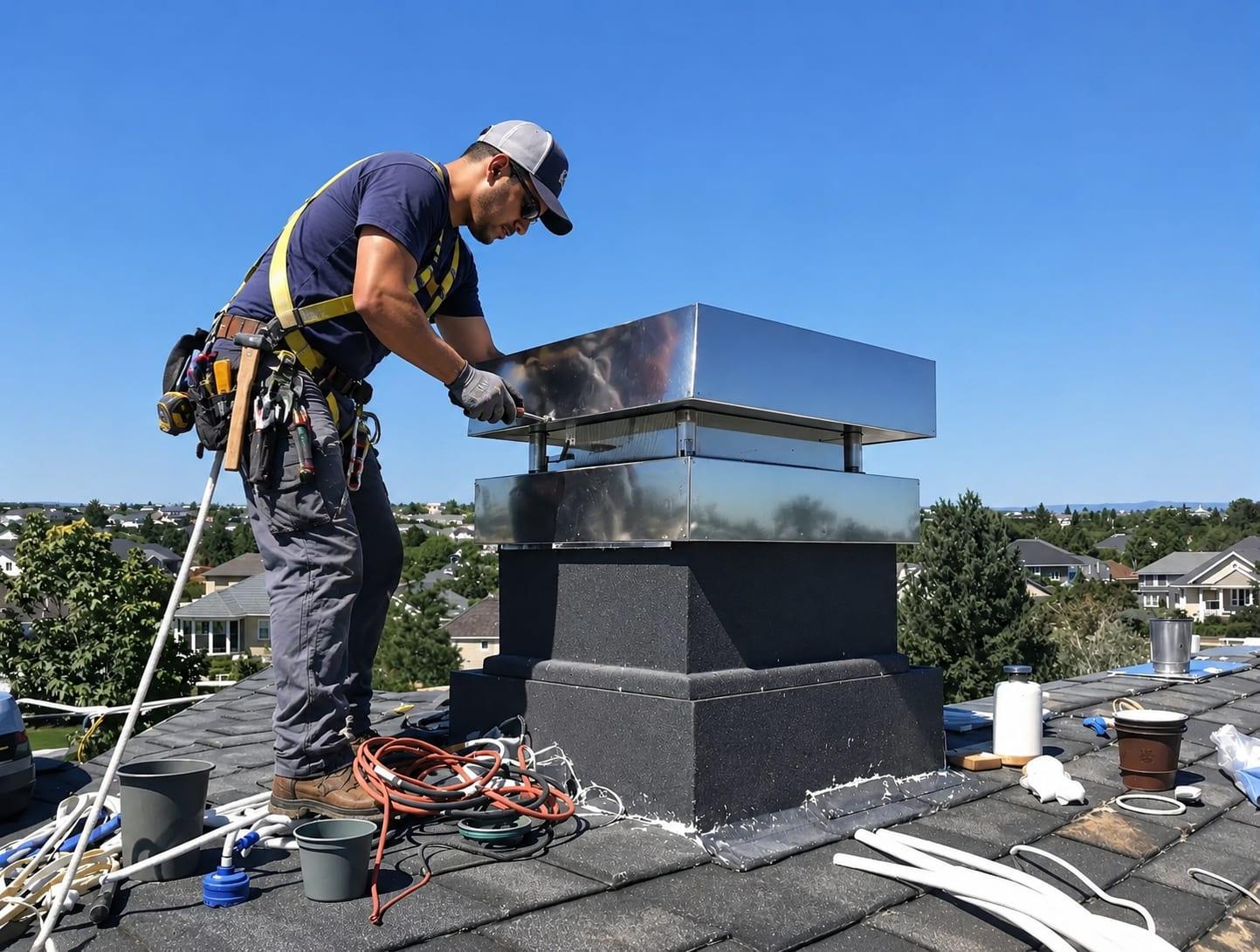
- A missing or damaged cap that leaves the flue open to rain
- Porous brick or worn mortar joints that soak up water like a sponge
- Condensation inside a flue that is unlined or has the wrong liner, which can look a lot like a leak
How urgent it is
A small leak is rarely an emergency, but it doesn't stay small. Water rots framing, ruins drywall, rusts dampers and breaks down mortar and flue tiles. Stop using the fireplace if water is reaching the firebox or flue, if the damper has rusted, or if you see crumbling masonry inside. Moisture can damage the liner, and a damaged liner isn't safe to burn against. Our guide on why every chimney needs a liner explains the stakes.
What normally fixes it
The repair follows the cause. Lifted or rusted metal at the roofline calls for repairing the chimney flashing. An open flue is closed off with a new chimney cap. Cracked crowns and worn joints get Chimney Crown Repair or Chimney Tuckpointing. Once the masonry is sound, a breathable water repellent from chimney waterproofing helps keep the brick from soaking up rain. Many leaking chimneys need more than one of these repairs.
What not to do
- Don't smear roofing cement or caulk over flashing as a permanent repair. It cracks and traps water.
- Don't coat the brick with paint or a non-breathable sealant. Moisture trapped inside the masonry can make spalling worse.
- Don't climb onto a wet or steep roof to look for the leak yourself.
What if I suspect a chimney leak?
Stop using the fireplace, catch any dripping water and move belongings away from the wet area. Take photos of the stains, and note when the leak appears, whether in every rain or only in wind-driven storms. Then request an estimate so the chimney can be inspected and the entry point found.