On this page
What a dryer vent inspection and airflow test include
Most of a dryer vent is hidden inside walls, ceilings or floors, so problems stay out of sight until drying slows down or something overheats. The inspection looks at each part of the system and puts a number on its performance:
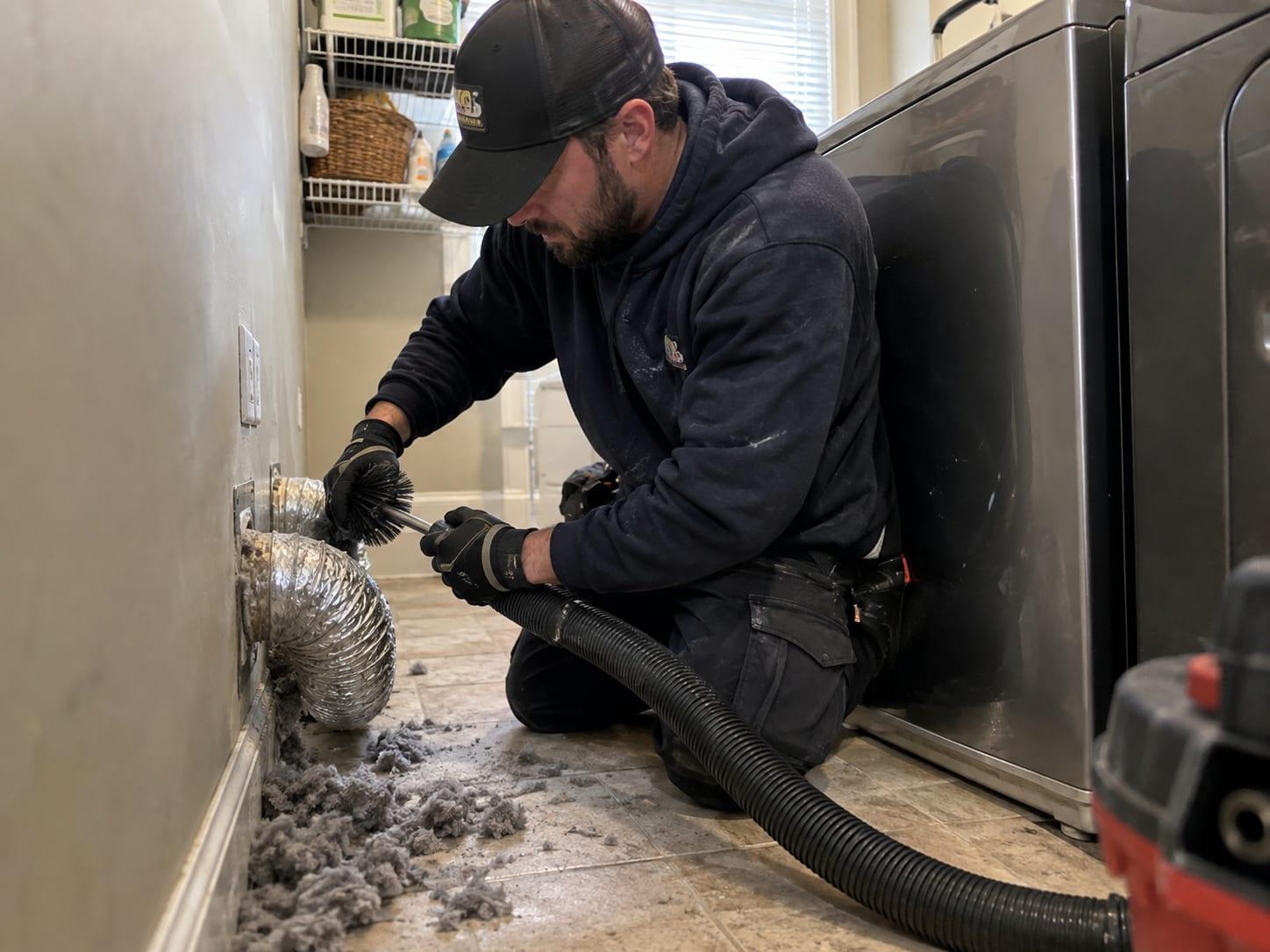
- The transition hose behind the dryer: its material, length and whether it is kinked or crushed
- Joints and connections, including loose sections and screws poking into the airflow where lint catches
- The length of the run and how many turns it makes
- Visible lint buildup at the accessible ends
- The exterior or roof cover and whether its flap opens freely
- Where the vent actually ends, which should be outdoors and never in an attic, crawlspace or garage
- Airflow at the outside opening with the dryer running
Getting ready for the visit
- Make sure the outside vent hood can be reached.
- Clear space around the dryer so it can be pulled out.
- If the dryer isn't overheating or smelling of burning, you can run an empty load first to compare airflow before and after.
Burning smell?
If you smell burning while the dryer runs, turn it off and unplug it until the vent is checked.
What gets checked
- Vent length and number of bends
- Crushed or kinked sections
- Joints and foil tape
- Connector behind the dryer
- Outside hood, flap and screen
When to book dryer vent inspection
- The outside flap barely opens when the dryer is on
- Clothes take two cycles to dry
- The dryer or laundry room gets very hot
- A burning smell when the dryer runs
When homeowners schedule a dryer vent inspection
Good times to have it checked
- You've just bought or moved into a home and don't know the vent's history
- Loads are taking longer to dry than they used to
- You installed a new dryer or remodeled the laundry room
- The dryer feels hot or shuts off mid-cycle
- Animals have been seen at the outside cover
- A rental unit is turning over between tenants
Landlords managing several units can set inspections on a schedule through dryer vent care for rentals and property managers.
What the visit involves, step by step
How the inspection runs
Baseline airflow reading
With the dryer on, we measure airflow at the outside opening before touching anything.
Behind the dryer
The dryer is pulled out so the transition hose and wall connection can be checked.
Trace the route
We follow the run through accessible areas and note length, turns and joints.
Check the termination
The exterior or roof cover is checked for damage, nesting and flap movement.
Walk through the findings
You get a plain explanation of what was found and what, if anything, should happen next.
Safety, and what the results point to
Lint is flammable, and a restricted vent holds heat and lint together right where the dryer runs hottest. With gas dryers, poor venting can also send combustion exhaust back indoors. Results usually lead to one of these next steps:
- Heavy lint along a sound run calls for a thorough dryer vent cleaning.
- A single clog or nest is handled through dryer vent blockage removal.
- Crushed, split or disconnected duct is fixed with dryer vent repair.
- A run that is too long or ends in the wrong place is a case for rerouting the dryer vent.
- A broken or stuck outside hood just needs a new dryer vent cover.
Booking a dryer vent inspection
Estimates are free, and same-day visits are available when the schedule allows. If the dryer is overheating or smells like it's burning, tell us when you call, because emergency calls are accepted. We work on homes, rental units and commercial laundry setups.