An animal in the chimney, in plain terms
To a raccoon, squirrel, bird or bat, an open chimney looks like a dry, sheltered hollow tree. Animals climb or drop in from the top, then settle on the smoke shelf, wedge themselves above the damper or get stuck partway down a smooth flue they can't climb back out of. Some raise young there. Others fall into the firebox, and some die in the flue. Removal means getting the animal out without harming it or your home, clearing what it left behind, and closing the opening it used.
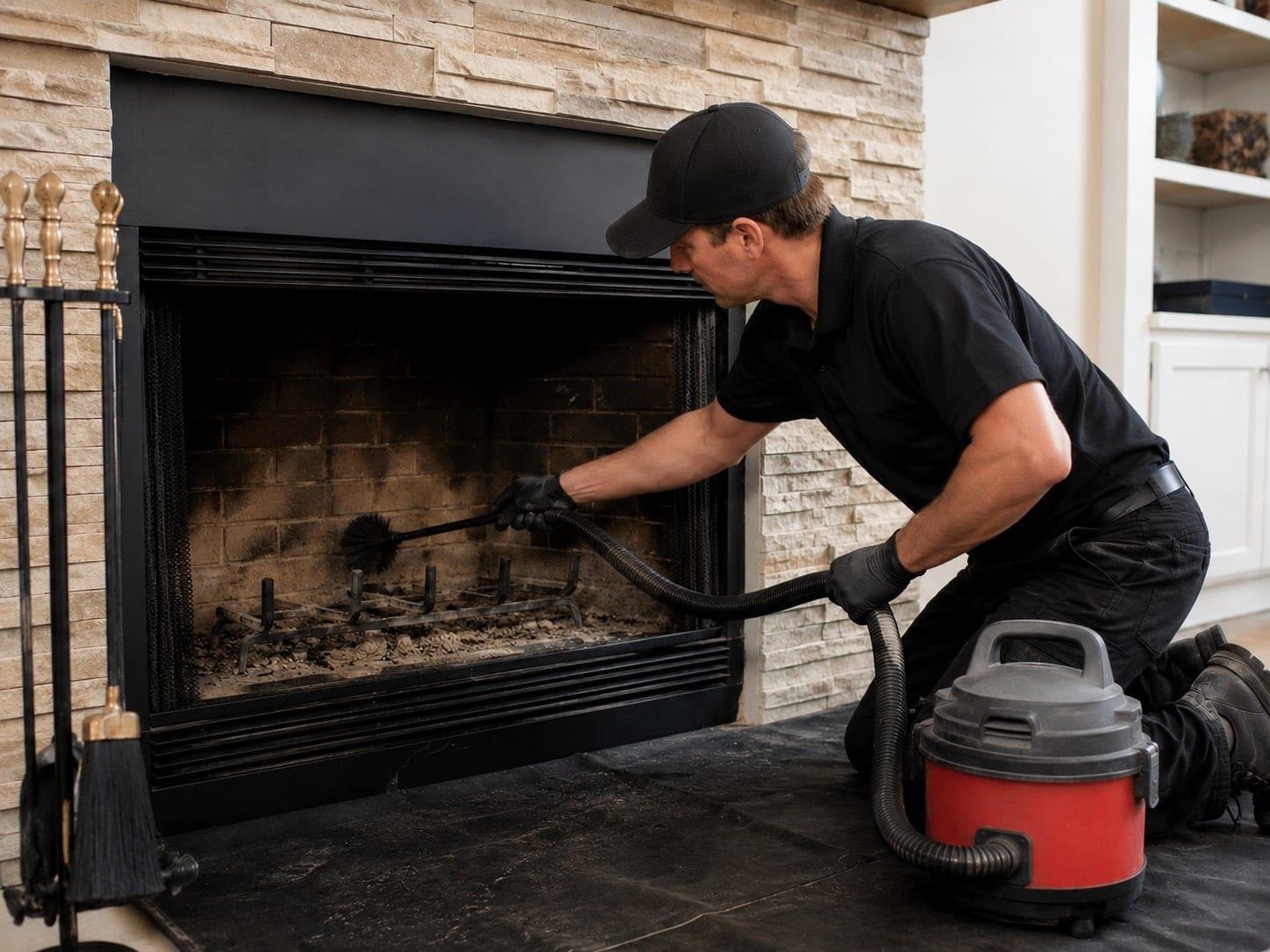
What happens during the visit
Nests and debris can block the flue completely and send smoke and carbon monoxide back into the house. Animals in the flue carry mites, droppings and odor into the chimney.
Find out what's there
What animal it is and where it is in the flue or smoke chamber.
Remove it safely
The animal is removed or allowed to leave, following state wildlife rules for that species.
Clean out
Nests, debris and droppings are cleared and the flue is checked for damage.
Close the way in
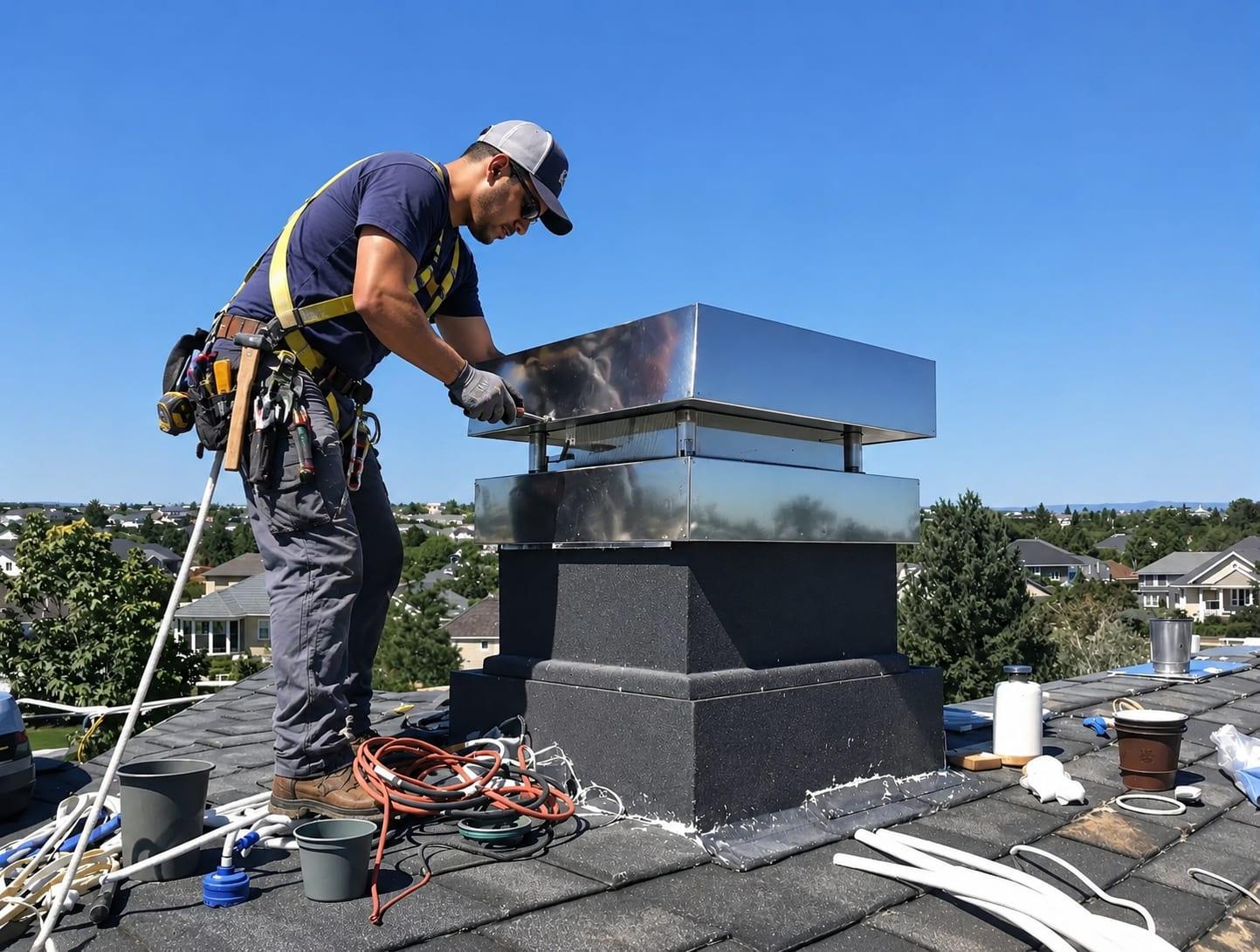
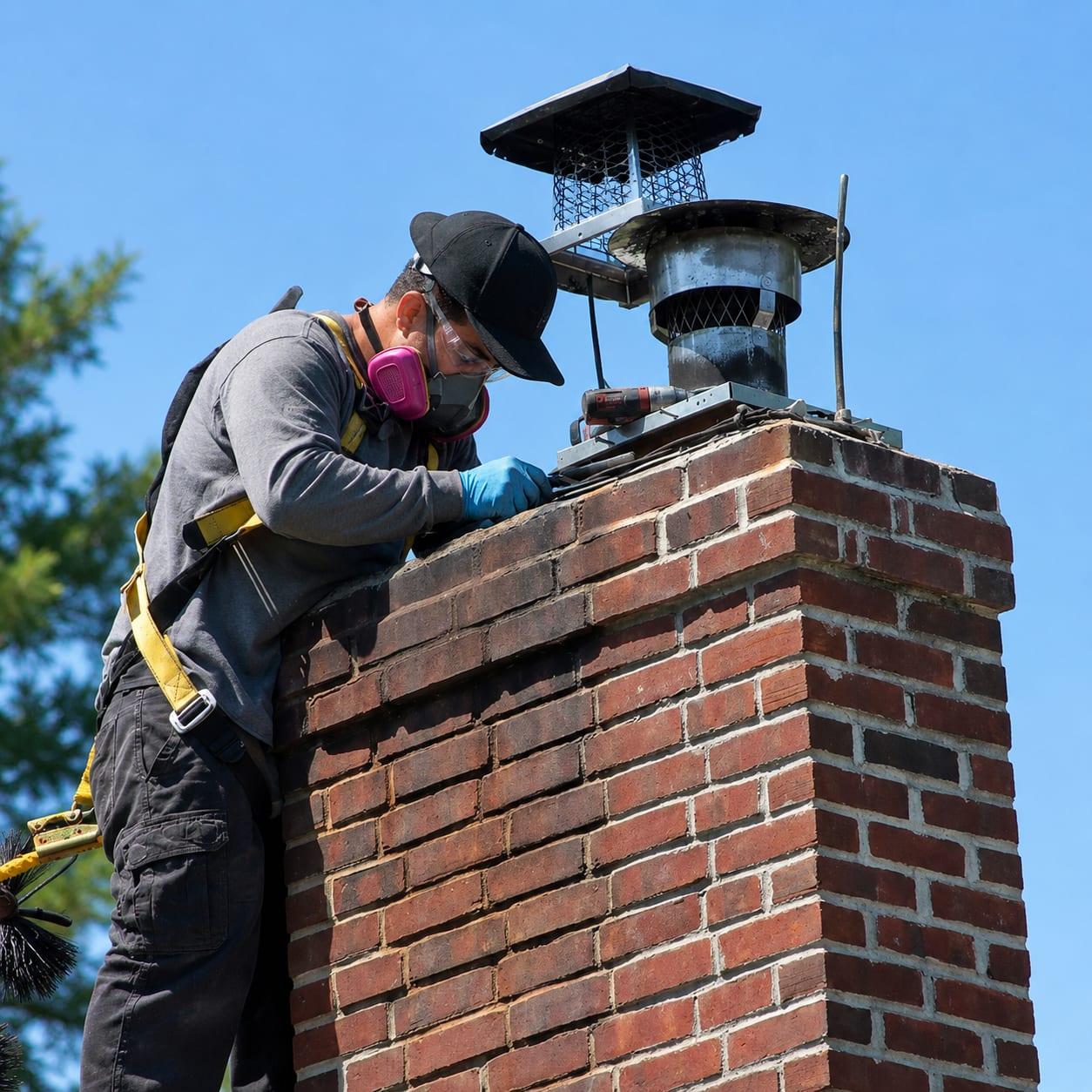
A cap or screen sized to the flue keeps animals out.
What gets checked
- Cap and screen
- What animal and where
- Nest material in the flue and smoke chamber
- Odor and debris
- Gaps around the crown and chase
- Damper condition
Closing the damper
Only close the damper once the fireplace is completely cold and no stove, furnace or water heater vents into that flue. If the fireplace has gas logs, leave the damper as the installer set it — vented gas logs need it open.
Common signs of an animal in the chimney
- Scratching, scurrying or fluttering above the fireplace, often around dawn and dusk
- Chirping, squeaking or chattering from inside the flue
- Droppings, twigs, leaves or fur collecting in the firebox
- A musky smell, or a rotten one if an animal has died inside
- Smoke drifting into the room the next time a fire is lit
- An animal visible behind the glass doors or seen coming and going from the chimney top
Possible causes
Only an inspection of the chimney top and flue confirms how an animal got in, but the entry point is usually one of these:
- No chimney cap at all, leaving the flue wide open
- A cap that is rusted through, bent, loose or knocked off by wind or branches
- Cap mesh with openings large enough for small animals, or mesh that has torn away
- A damper left open or no longer sealing
- Rusted or gapped chase covers and cracked crowns on prefab and masonry chimneys
How urgent it is, and when to stop using the fireplace
Treat it as urgent and stop using the fireplace right away. A fire won't drive the animal out cleanly. It can kill it in the flue, ignite nesting material and push smoke and carbon monoxide back into the house if the flue is partly blocked. If an animal is loose in the firebox or has gotten into the room, close the doors to that room, open a door to the outside and keep pets and children away. Emergency calls are accepted, and same-day visits are available when the schedule allows.
What normally fixes it
The work happens in this order: the animal is removed through Chimney Animal & Nest Removal, then the flue is cleared of nesting material, droppings and odor with a thorough chimney sweep, and finally the opening is closed with a properly sized chimney cap and animal screen. If what you're dealing with is mostly sticks and leaves, the steps for clearing a nest from the flue apply.
Birds that can't be disturbed
Chimney swifts are protected by federal law, and an active swift nest can't be removed or disturbed. In that case removal waits until the birds have left for the season, and the cap goes on afterward.
What not to do
- Don't light a fire or burn anything to smoke the animal out.
- Don't open the damper when an animal is sitting right above it.
- Don't use poison, which can leave a dead animal stuck in the flue.
- Don't cover the chimney top while an animal is still inside, or you'll seal it in.
For the wider picture on keeping a flue clean and safe to use, read our chimney cleaning and safety guide.