On this page
What a level 2 Chimney inspection is
Inspection levels come from the Chimney Safety Institute of America's standard of practice. A Level 1 inspection covers the readily accessible parts of the chimney and fireplace. A Level 2 includes everything in a Level 1, then adds a video scan of the flue's interior and an examination of accessible spaces the chimney runs through, such as attics, crawl spaces and basements. No construction is removed.
| Feature | Level 1 | Level 2 |
|---|---|---|
| Readily accessible chimney and fireplace | Yes | Yes |
| Video scan of the flue | No | Yes |
| Accessible attic, crawl space and basement | No | Yes |
| Typical use | Routine check of an unchanged system | Sale, chimney fire, storm damage or system changes |
Readily accessible chimney and fireplace
- Level 1
- Yes
- Level 2
- Yes
Video scan of the flue
- Level 1
- No
- Level 2
- Yes
Accessible attic, crawl space and basement
- Level 1
- No
- Level 2
- Yes
Typical use
- Level 1
- Routine check of an unchanged system
- Level 2
- Sale, chimney fire, storm damage or system changes
For an unchanged system in regular use, a routine chimney inspection is usually enough.
Signs to watch for
- Visible damage to the chimney
- Smoke, smells or stains near the fireplace
- A fireplace that's hard to use
How to prepare
- Clear a few feet of space in front of the hearth or appliance.
- Move rugs, photos and anything fragile away from the work area.
- Keep pets in another room while the work area is open.
- Note the make and model of any insert, stove or gas unit if you have it.
What the technician checks
- Flashing
- Crown and cap
- Firebox
- Flue and liner
- Damper
If smoke comes into the room
Stop adding fuel, open a window and don't relight the fire until the chimney has been checked. If the smoke is heavy, an alarm sounds or you suspect a chimney fire, get everyone outside and call 911.
When a level 2 inspection applies
Under the CSIA standard of practice, a Level 2 inspection is recommended in these situations. They are industry recommendations, not a building code or legal requirement:
- When a property is sold or transferred
- After a chimney fire
- After a weather event or seismic event that may have damaged the chimney
Beyond those, homeowners often book one when changing fuel type, adding or replacing an insert or stove, relining the flue, or when a Level 1 turns up something that needs a closer look. Smoke in rooms away from the fireplace, a persistent odor or a water stain near the chimney are also good reasons.
What the visit involves, step by step
How a Level 2 runs
Exterior
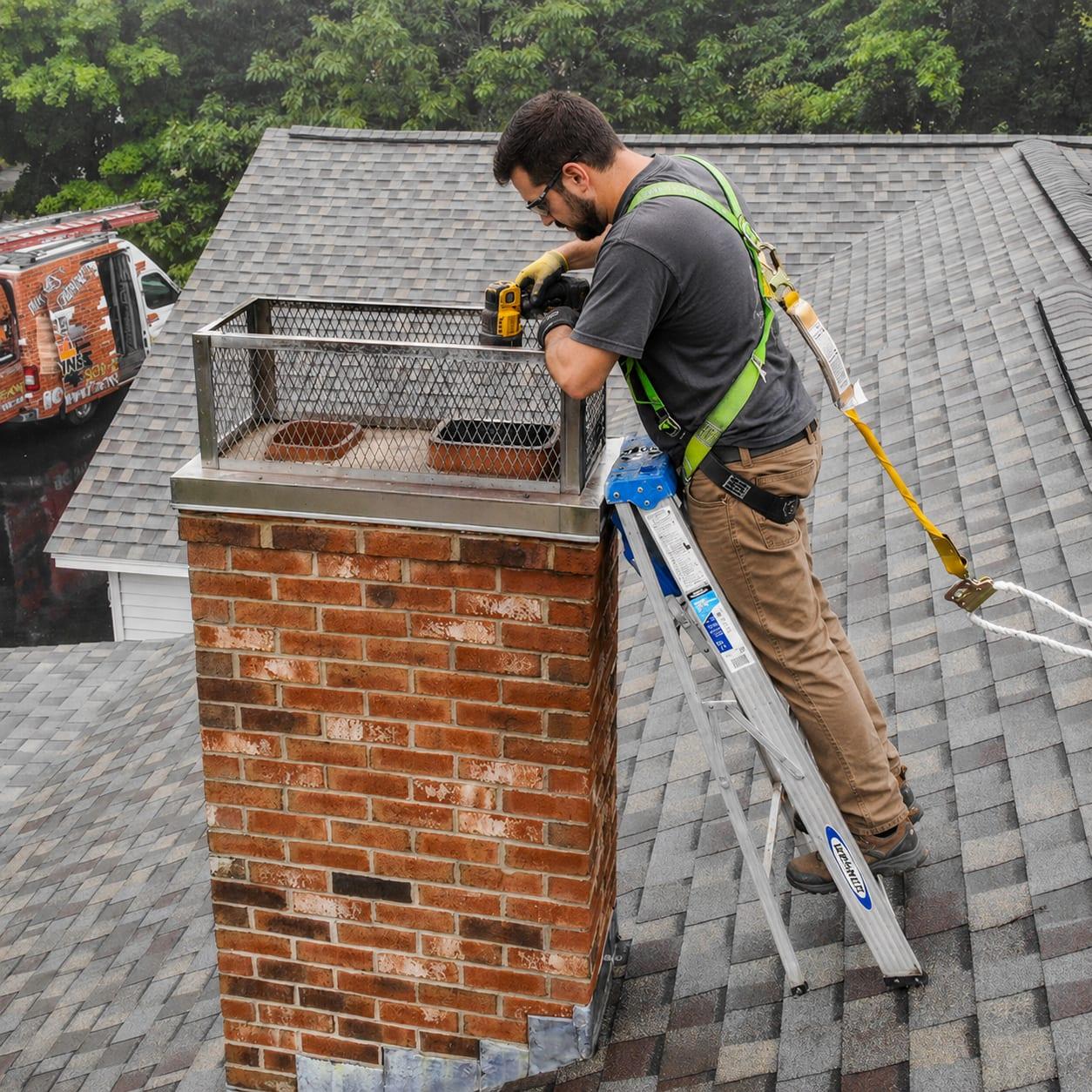
Cap, crown, masonry or chase, and flashing are checked from the roof where it is safe to do so.
Firebox, damper and smoke chamber
We examine the lower system for cracks, gaps and deposits.
Flue video scan
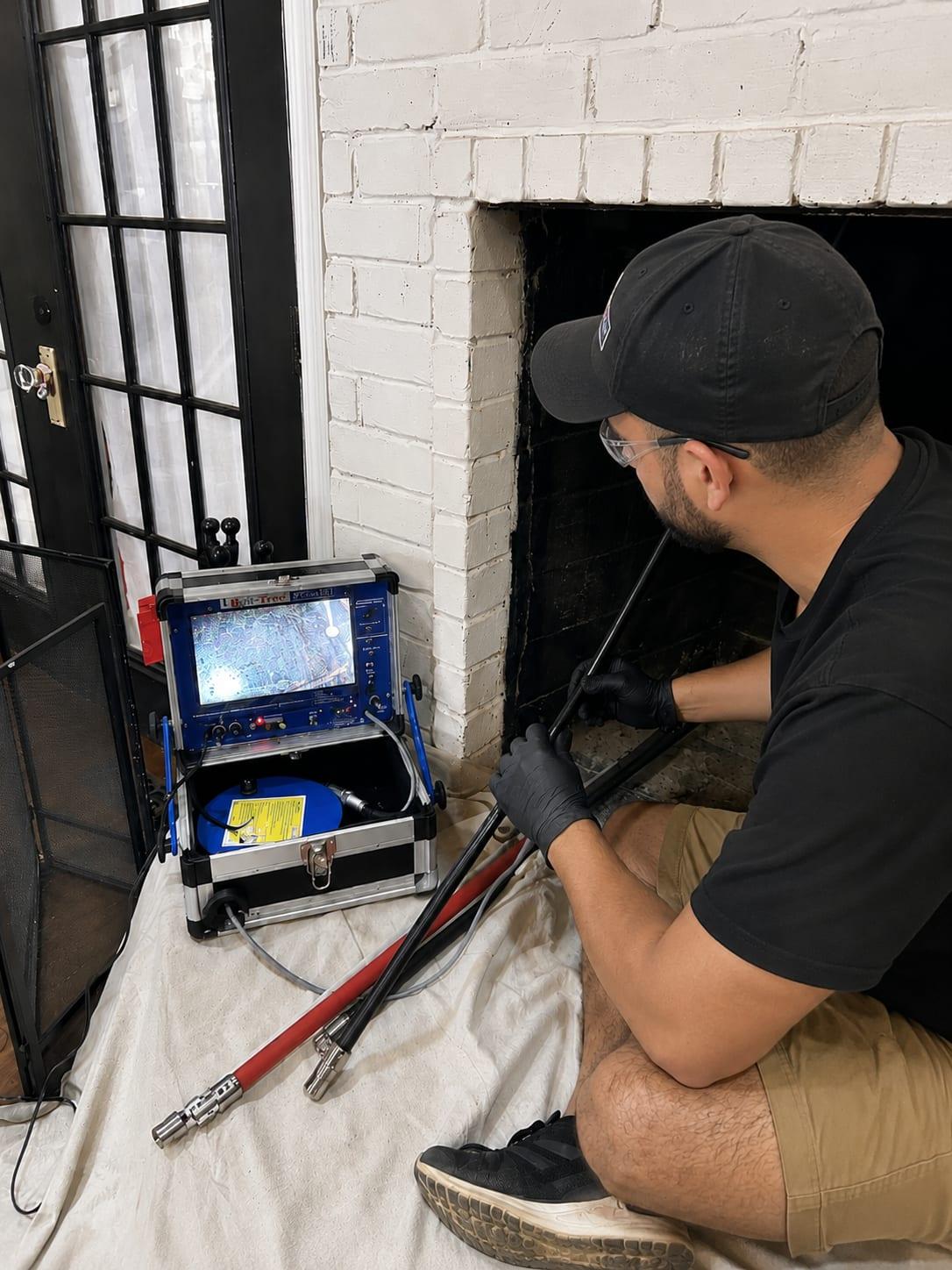
A camera travels the length of the flue to record liner cracks, gaps at joints, blockages and creosote buildup.
Concealed-path spaces
We check accessible attics, crawl spaces and basements for clearance to combustibles and for heat or water damage.
Findings
We walk you through what we saw. If repairs are needed, the estimate is free.
Safety and maintenance context
A damaged flue can look fine from below, which is why the video scan matters after a fire or storm. Hold off on using the fireplace until the inspection is done. If the scan points to damage hidden behind walls or masonry, the next step may be a Level 3 chimney inspection. For the firebox and fireplace itself, see our fireplace inspection service.
Booking a level 2 inspection
Estimates are free, and same-day visits are available when the schedule allows, though never guaranteed. We inspect wood-burning and gas systems across all major brands and take commercial and property-manager work.