On this page
- What chimney masonry repair involves
- Signs your chimney needs masonry repair
- Chimney smoke damage and what it says about the masonry
- Damaged firebox and fireplace walls
- What the visit involves, step by step
- Components and materials involved
- When repair turns into a rebuild
- Keeping masonry in good shape after the repair
- Booking chimney masonry repair
What chimney masonry repair involves
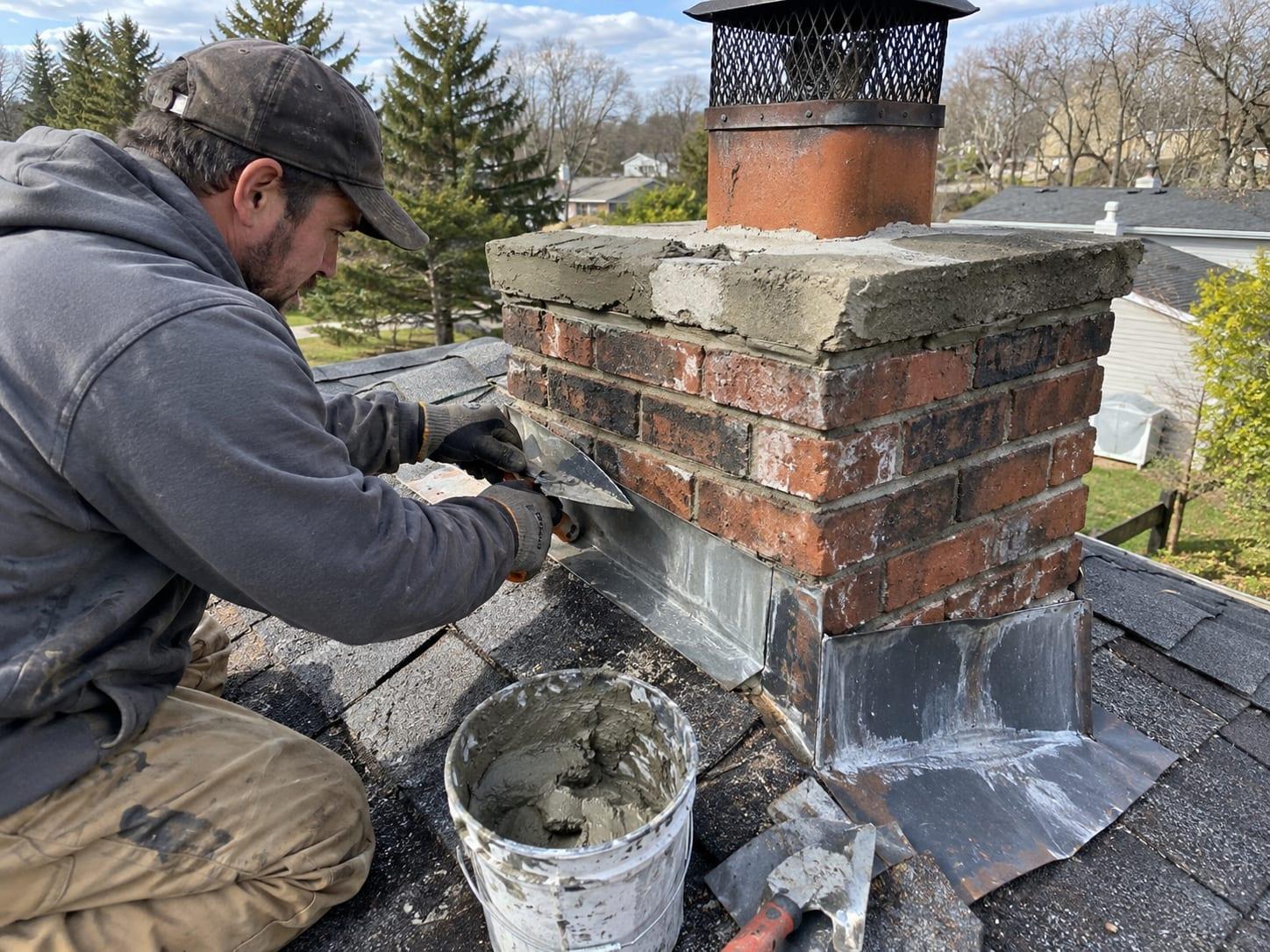
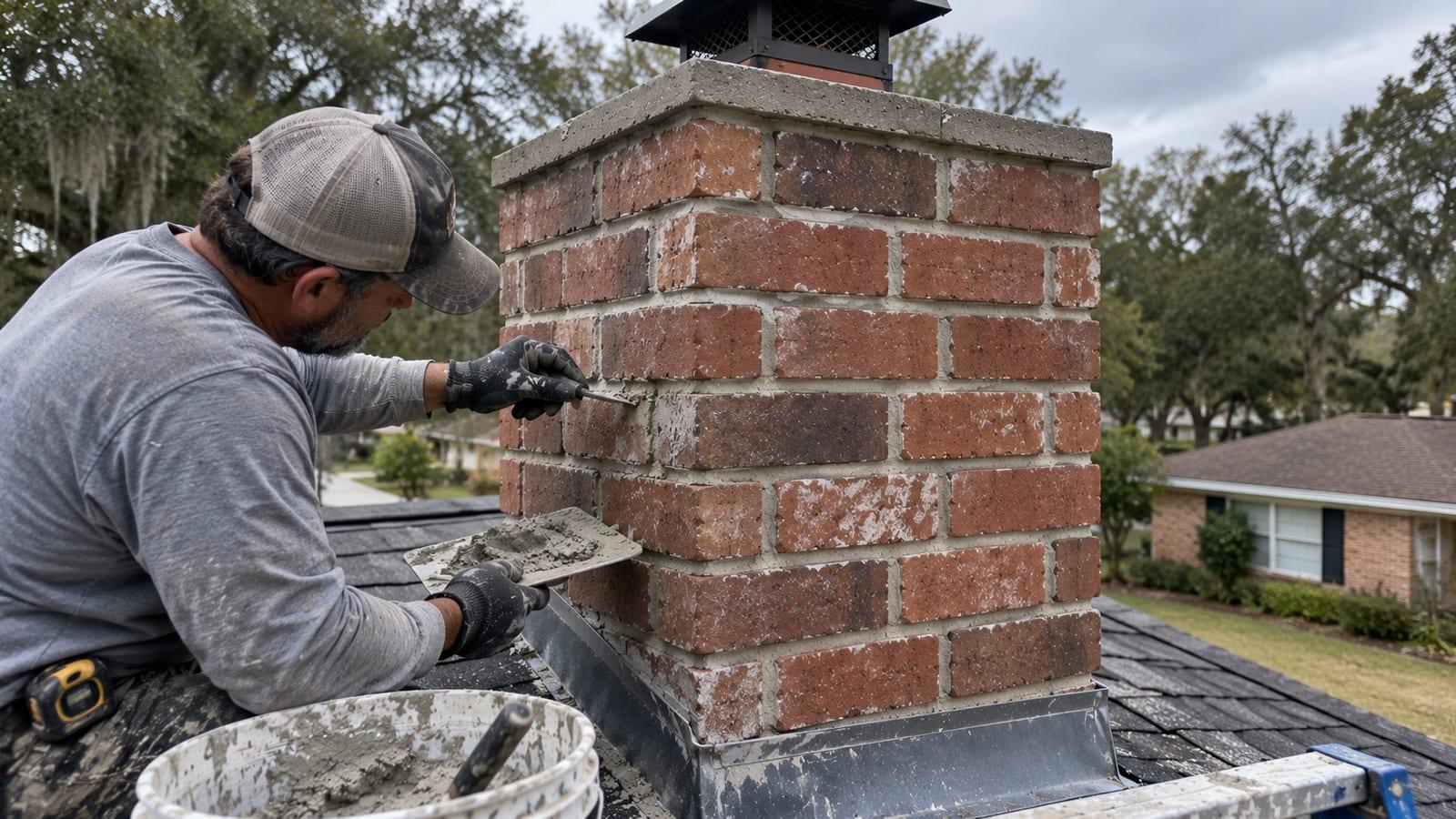
A masonry chimney is a stack of brick or stone held together by mortar, topped by a crown and lined with a flue. Chimney masonry repair restores the parts of that structure that have cracked, crumbled or loosened. The repair depends on the damage. It can mean grinding out and replacing worn mortar joints (tuckpointing), swapping out individual cracked or spalling bricks, or rebuilding and sealing the crown. It can also mean fixing the firebrick inside the fireplace.
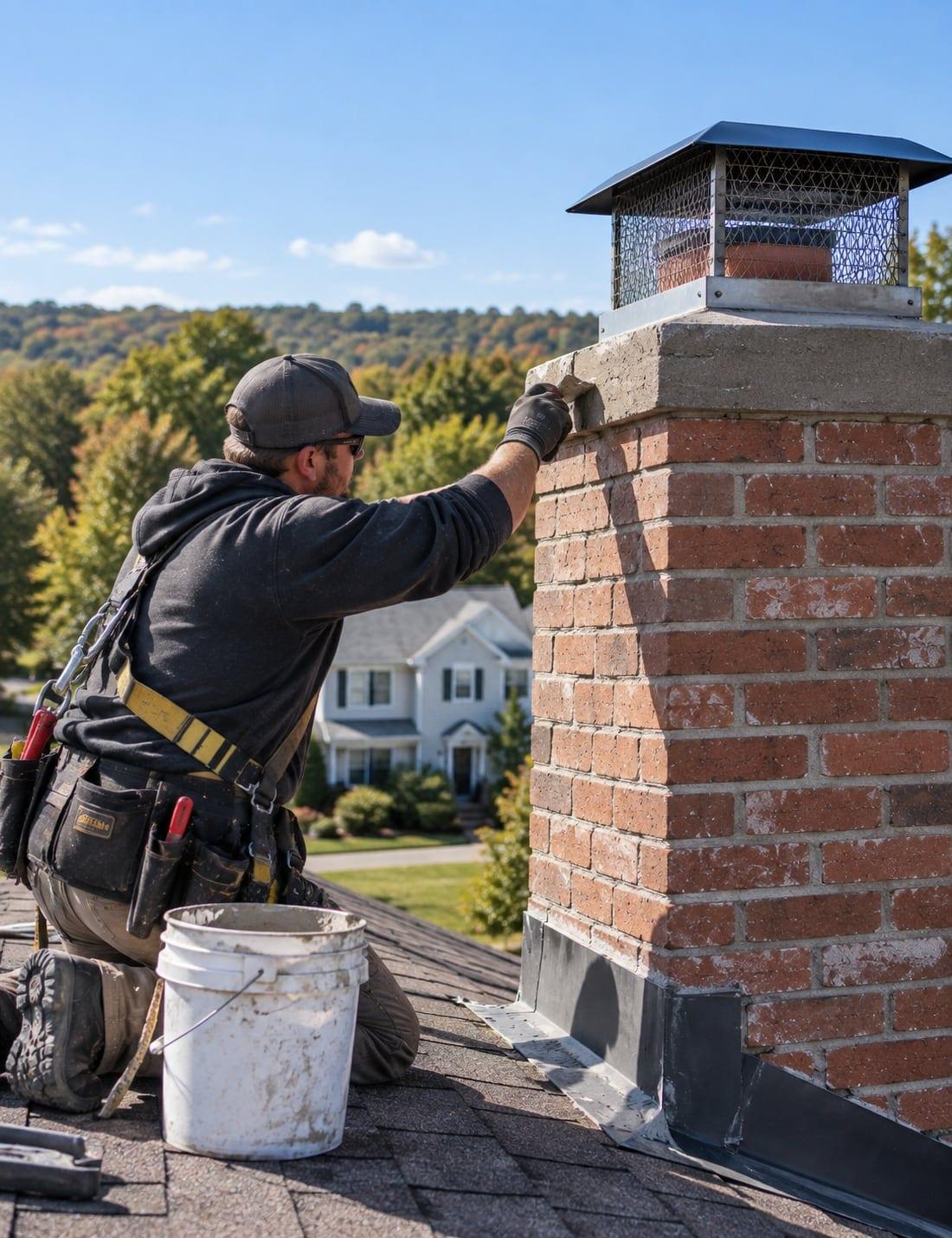
The goal is to keep water out and keep the chimney structurally sound. Brick and mortar absorb moisture. When that moisture repeatedly soaks in and dries out, or freezes and thaws, it widens small cracks, pushes the faces off bricks and washes mortar out of the joints. Catching it early usually keeps the repair small.
Signs your chimney needs masonry repair
Look for these on the outside and inside
- Mortar joints that are recessed, sandy or crumbling when you press on them
- Bricks with flaking, chipped or popped-off faces (spalling)
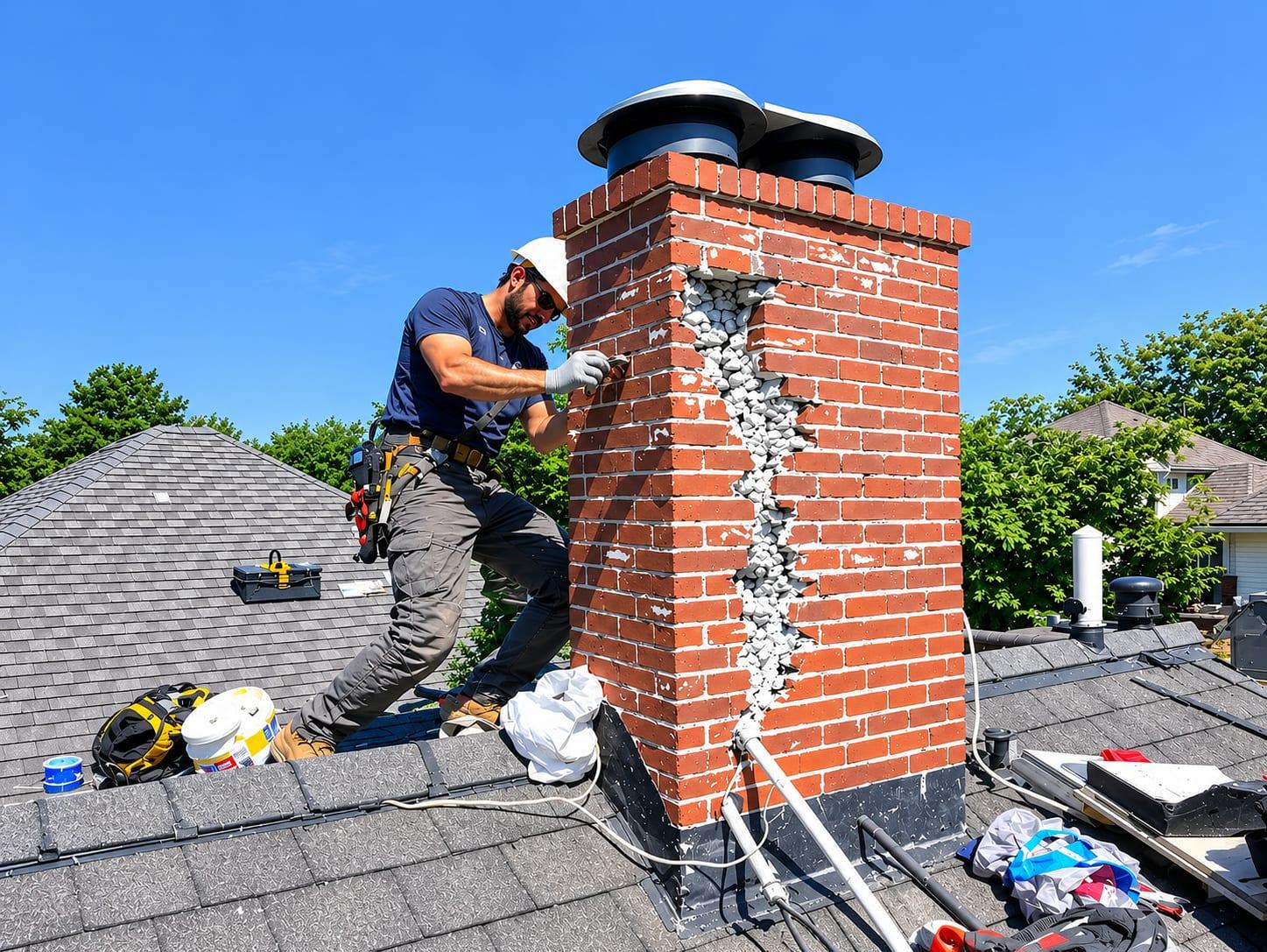
- Cracks running through bricks or along mortar lines
- A cracked, chipped or crumbling crown at the top of the chimney
- White, chalky staining (efflorescence) on the brick, a sign water is moving through the masonry
- Brick pieces or mortar grit on the roof, in the gutters or in the firebox
- Water stains on the ceiling or wall beside the chimney
- Cracked firebrick or gaps in the joints inside the fireplace
- A chimney that leans or pulls away from the house
When to stop using the fireplace
A visibly leaning chimney, loose bricks near the top, or cracked firebrick with gaps behind it are reasons to hold off on fires until the masonry is checked. Heat and gases can reach places they shouldn't, and loose masonry can fall. If bricks are falling or it looks like it could come down, keep everyone away from the area below it and call 911.
Chimney smoke damage and what it says about the masonry
Smoke staining on the brick above the fireplace opening, on the face of the chimney or near the crown is often a symptom, not just a cosmetic problem. It can point to a draft problem, a damaged smoke chamber, or gaps in mortar joints and flue tiles. Those gaps let smoke escape where it shouldn't. We look for the cause first. That can mean repairing the smoke chamber, sealing open joints or correcting a draft issue. Only then does it make sense to clean up stained brick, because stains come back if the gap stays open.
Damaged firebox and fireplace walls
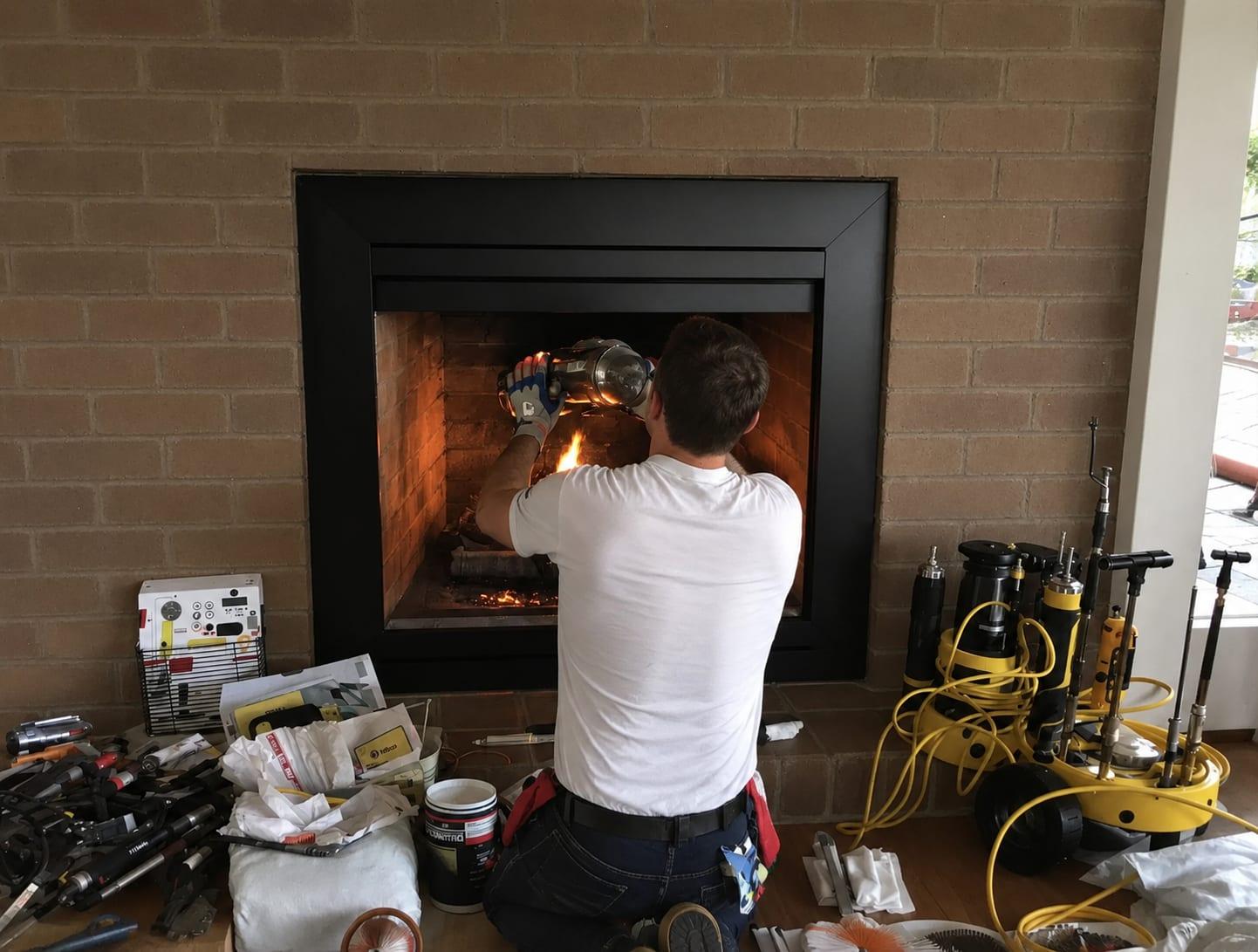
The firebox takes the most direct heat of any part of the chimney system. Over time, firebrick cracks, mortar joints erode and pieces can loosen or fall out. A damaged firebox should be repaired with heat-rated firebrick and refractory mortar. Ordinary mortar breaks down under fire. Prefab fireplaces use refractory panels rather than firebrick, and those are replaced as panels.
Cracks in the brick wall around the fireplace, or a hearth that has separated from the wall, are worth checking at the same time. They can share a cause with the chimney damage above. For work focused inside the fireplace, our firebox and fireplace masonry repair covers the opening, firebox and surrounding brick.
What the visit involves, step by step
From first look to finished repair
Inspect the masonry
We examine the brick, mortar joints, crown, flashing and cap from the roof, and the firebox, smoke chamber and nearby walls from inside.
Check the flue when needed
If there are signs of a cracked flue or damage you can't see from the top or bottom, a chimney camera inspection shows the inside of the liner.
Explain what we found
You get a plain explanation of the damage, what's causing it and the repair options, with a free estimate before any work starts.
Make the repairs
Depending on the damage, that may mean tuckpointing worn joints, replacing cracked or spalling bricks, repairing the crown, or rebuilding firebox sections with refractory materials.
Protect against more water
Where it helps, we discuss a cap, flashing repair or a breathable waterproofing treatment so the same damage doesn't return.
Clean up
We clear mortar debris and brick dust from the roof, firebox and work area before we leave.
Components and materials involved
| Component | Common damage | Typical repair |
|---|---|---|
| Brick or stone | Cracking, spalling faces | Replace damaged units with matching brick |
| Mortar joints | Erosion, crumbling, gaps | Tuckpointing with compatible mortar |
| Crown | Cracks, crumbling edges | Seal small cracks or rebuild the crown |
| Flashing | Loose or rusted metal, leaks at the roofline | Reseal or replace flashing |
| Flue liner | Cracked or broken tiles | Liner repair or a new liner |
| Firebox | Cracked firebrick, eroded joints | Firebrick and refractory mortar |
Mortar choice matters. Mortar that is harder than the surrounding brick can trap moisture and push the damage into the brick itself, so repairs should use a mix compatible with the existing masonry. The crown deserves extra attention because it sheds water off the top of the whole chimney. Our chimney crown repair service handles cracked and crumbling crowns on their own when the rest of the chimney is in good shape.
Not every chimney is masonry. Many homes have metal flues inside a framed chase, and those need different repairs. If you're not sure which you have, how prefab and masonry chimneys differ explains how to tell.
Cracked chimney flue
A cracked flue can let heat and combustion gases reach the brick and framing around it. When a camera inspection shows damaged tiles, the fix is liner repair or a new liner, depending on how widespread the damage is. More background is in our guide to why every chimney needs a liner.
When repair turns into a rebuild
Repair works when damage is limited to joints, scattered bricks or the crown. When bricks are loose through the whole upper section, the chimney leans, or water has broken down the masonry from the inside, patching won't hold. In those cases, rebuilding the damaged section, often everything above the roofline, is the sound option.
Keeping masonry in good shape after the repair
- Have the chimney looked at once a year so small cracks are caught early.
- Keep a cap on the flue to block rain and debris. Here are the benefits of chimney caps and dampers in more detail.
- Watch for new staining, efflorescence or debris after heavy rain.
- Keep gutters clear so water doesn't splash onto the chimney base.
- Ask about breathable waterproofing for brick that absorbs a lot of water.
Booking chimney masonry repair
Call or request an estimate, and tell us what you're seeing: cracked bricks, crumbling mortar, a leak or damage inside the fireplace. Same-day visits are available where the schedule allows, though they can't be guaranteed. Commercial and property-manager work is offered too, through our commercial chimney service.