On this page
What propane fireplace repair involves
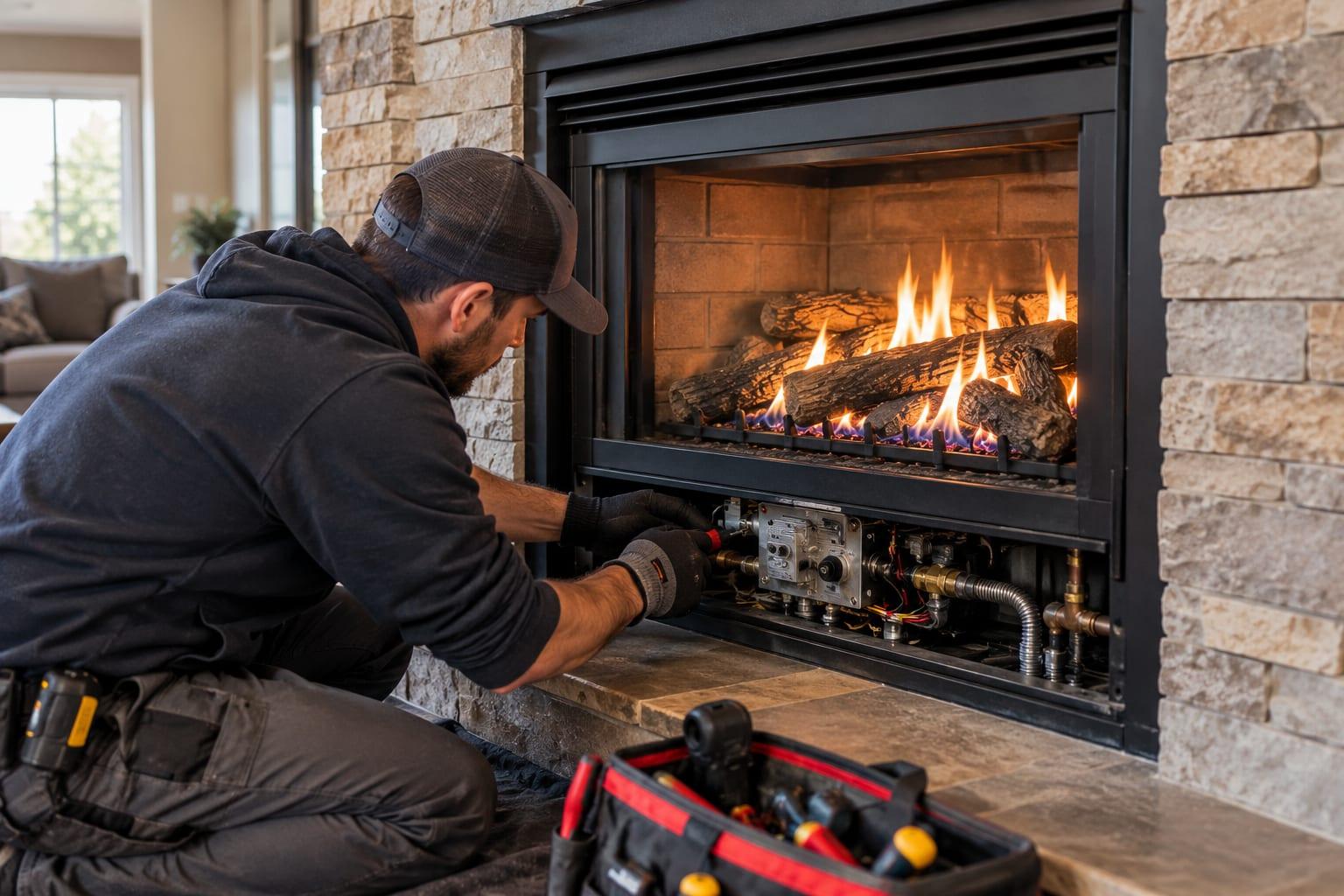
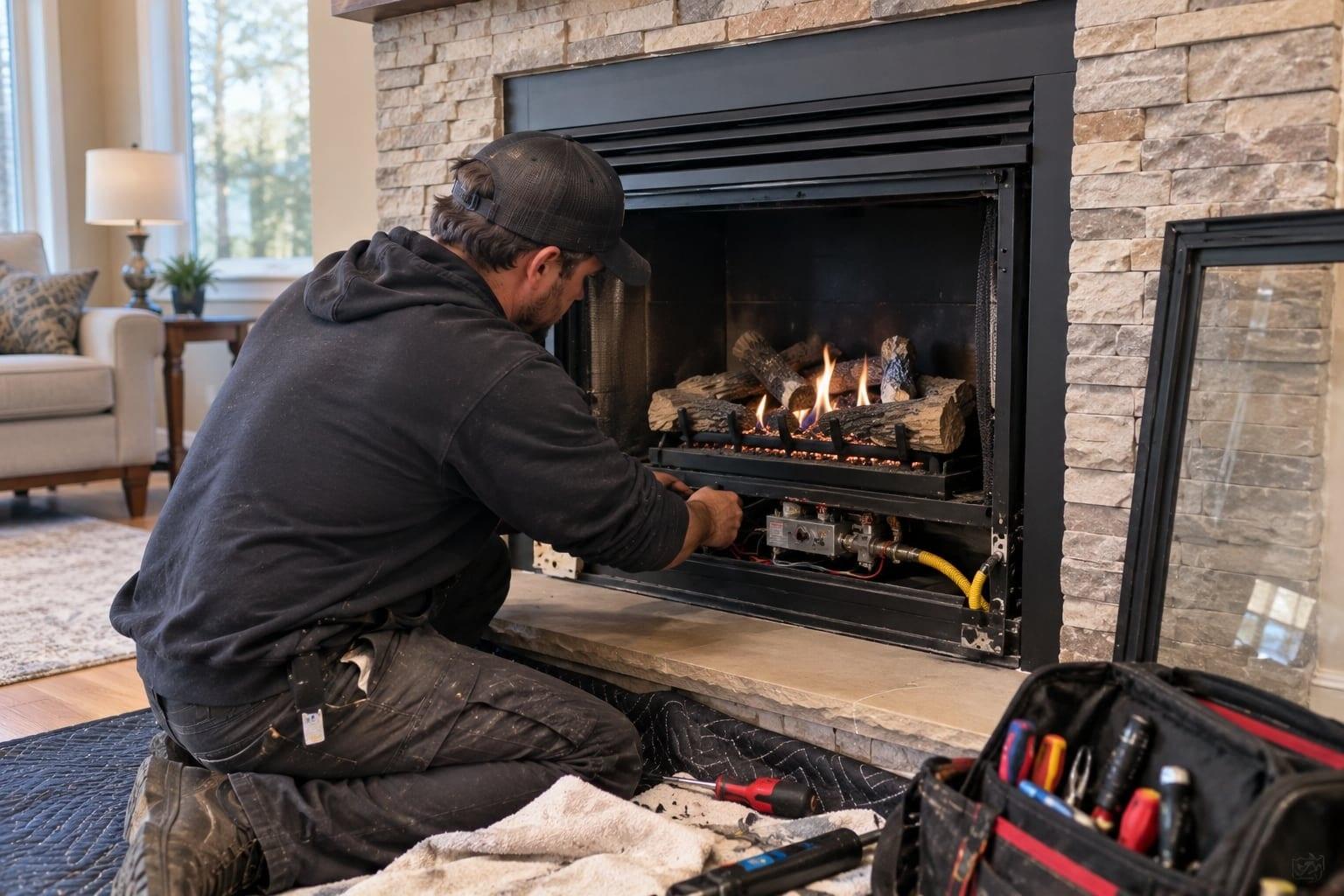
Propane (LP) and natural gas are not interchangeable. A propane appliance runs at a different supply pressure and uses burner orifices and a valve set up for LP, so the repair always starts by confirming the unit is actually configured for the fuel it's getting. From there, propane fireplace repair means tracing the fault along the fuel path: the supply line and regulator, the gas valve, the pilot assembly, the thermocouple or thermopile that proves the flame, the ignition system, the burner, the log set and the venting.
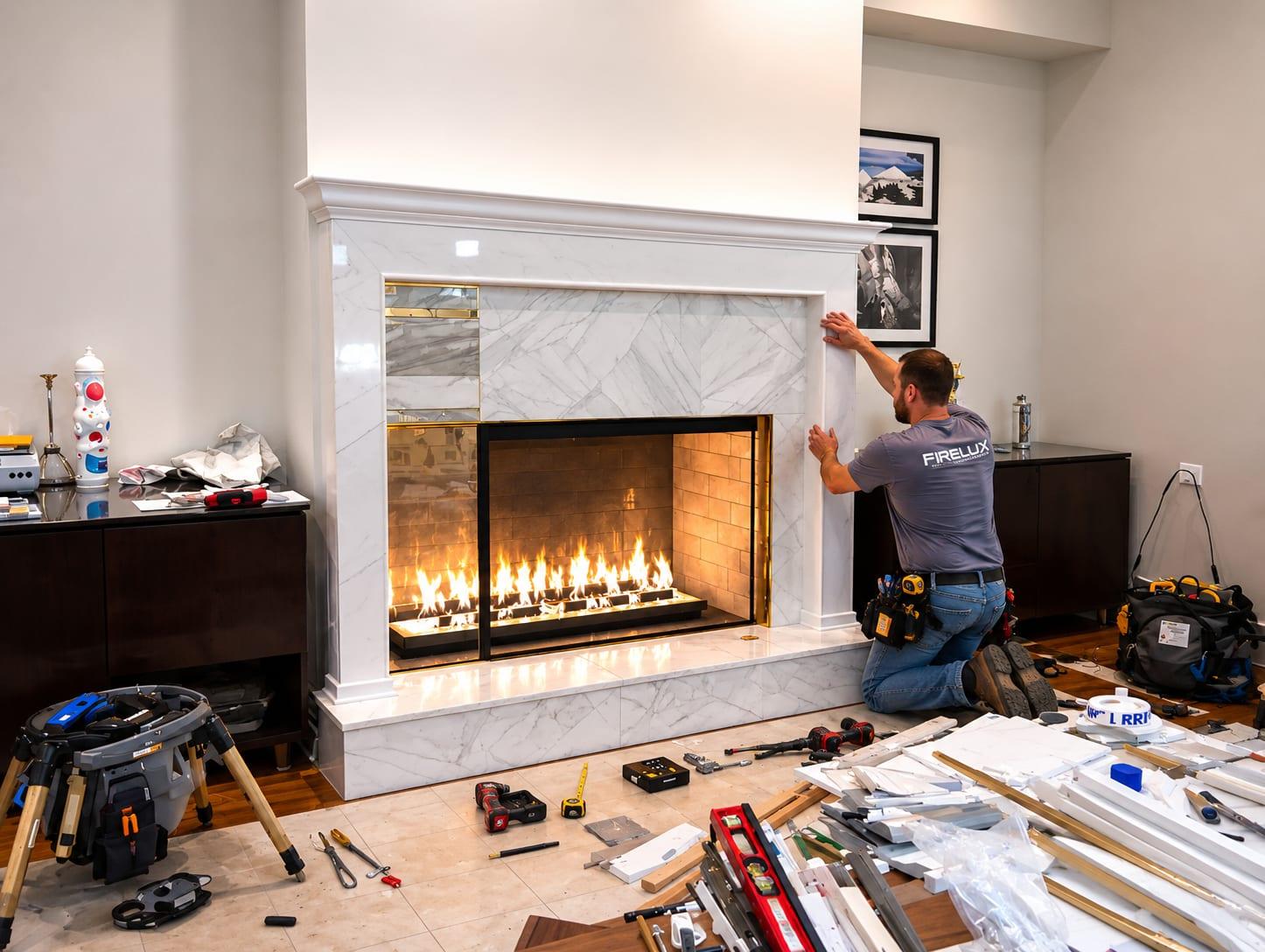
The installation side covers new propane fireplaces, inserts and log sets connected to an existing propane supply. Much of it follows the same process as our gas fireplace installation service, with the unit and its settings matched to LP. If you're still weighing fuel types or styles, how fireplace installation works lays out the broader options.
Parts that most often cause trouble on LP units
- Thermocouples and thermopiles that weaken over time and no longer hold the gas valve open
- Pilot orifices partly blocked by dust, spider webs or debris
- Regulators that deliver too little pressure, giving a weak or wavering flame
- Igniters, receivers and batteries on remote-start models
- Logs or embers that have shifted and now block the flame pattern
What we look at
- Hearth extension and protection
- Opening or framing dimensions
- Required clearances to combustibles
- Gas supply or electrical needs
- Permit requirements
- Vent or liner route and length
Before the technician arrives
- Write down what you've noticed and when it happens — smells, smoke, sounds or stains.
- Note the make and model of any insert, stove or gas unit if you have it.
- Clear a few feet of space in front of the hearth or appliance.
- Make sure the technician can reach the roof or attic access if it's needed.
Carbon monoxide
A blocked or damaged flue can push carbon monoxide into the home. If an alarm sounds or anyone feels dizzy or sick near the fireplace, get everyone outside and call 911.
Signs your propane fireplace needs repair
- The pilot lights but goes out as soon as you release the knob
- You hear clicking from the igniter but no flame appears
- Flames are tall, yellow or orange and leave soot on the glass or logs
- The burner lights, then shuts itself off after a few minutes
- The remote or wall switch does nothing even with fresh batteries
- The flame is noticeably weaker than it used to be, even with a full tank
Some of these have simple causes and some don't. Our guide to gas fireplace needs repair explains which symptoms point to which parts.
If you smell propane
Leave the house first, without flipping switches or using the fireplace controls. Call your propane supplier or 911 from outside. Propane is heavier than air and collects near the floor and in low spaces, so don't go back in until it has been cleared.
What the visit involves, step by step
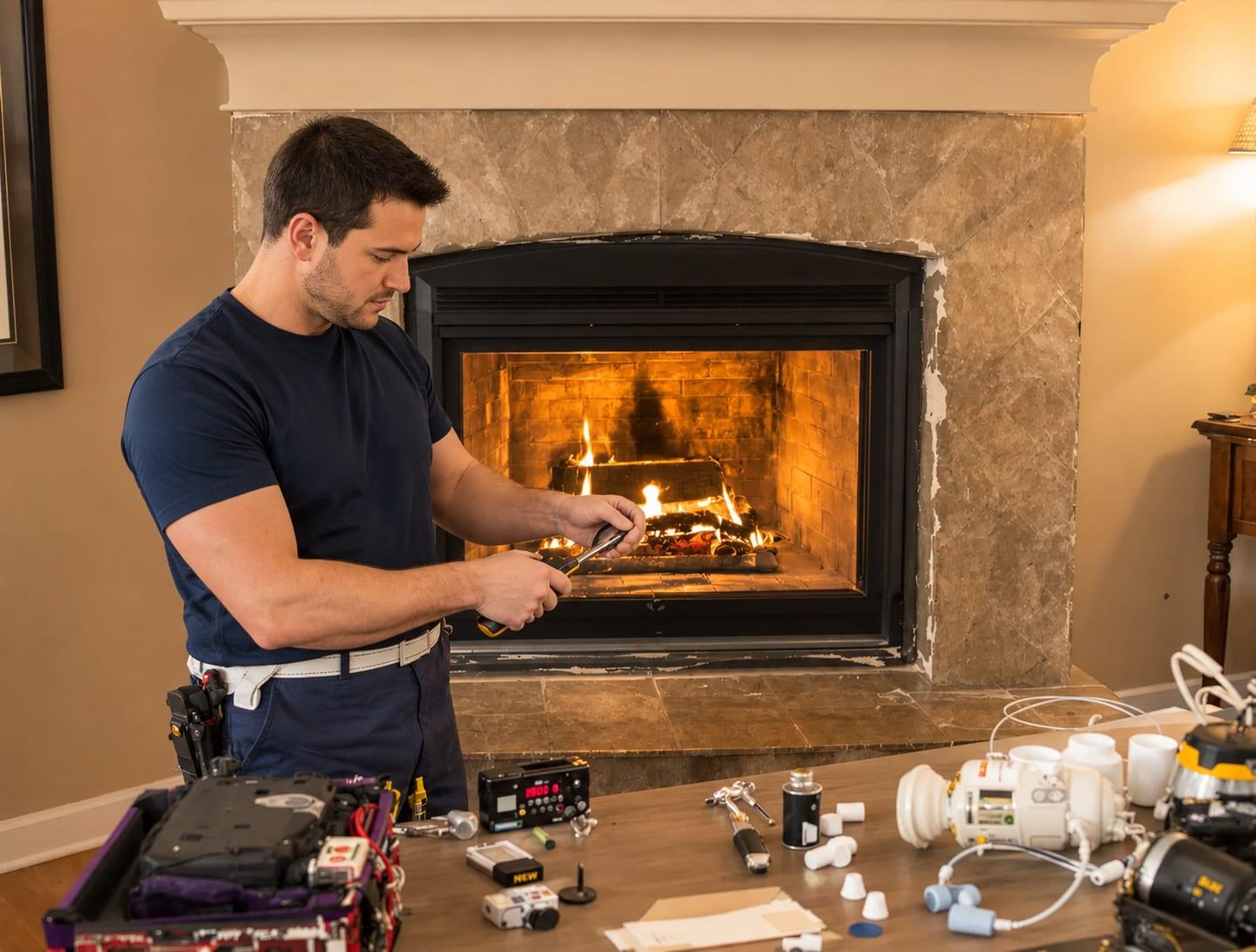
A propane fireplace service call
Confirm the fuel setup
We check that the supply is on, the shutoff is accessible and the appliance is set up for propane rather than natural gas.
Test ignition and pilot
We watch the pilot and ignition sequence and test the flame sensor that keeps the valve open.
Check pressure and the valve
Supply pressure is measured, and the valve and regulator are checked for proper operation.
Inspect burner, logs, glass and venting
We look for blockages, misplaced logs, damaged gaskets and venting issues that affect the flame or exhaust.
Explain the options
You get a free estimate for the repair, or for replacement if the unit isn't worth fixing.
Repair and test
Once you approve, we make the repair and run the fireplace to confirm it lights, stays lit and burns cleanly.
Repair or replace: keeping a propane unit safe long term
Replacement usually makes more sense when parts for an older model are no longer available, the firebox or burner is corroded, or you want a different style altogether. If you're thinking about moving away from wood entirely, our guide to gas vs wood fireplace installation compares the two. Whatever you have, keep a working carbon monoxide alarm nearby, keep the tank from running empty (air can enter the line and pilots may need relighting), and leave the logs where the manufacturer places them. A yearly check, outlined in our guide to gas fireplace safety inspections, catches small problems before they turn into no-heat calls.
Booking propane fireplace work
Same-day visits are available when the schedule allows, though they're never guaranteed, and emergency calls are accepted. We work on all major fireplace brands and handle the full range of gas fireplace service, including propane appliances in rental and commercial properties for owners and property managers. Call or request an estimate to get started.