On this page
What a chimney inspection covers
A chimney inspection is a hands-on check of the whole venting system: the chimney outside, the fireplace or stove inside, and the flue that connects them. We look for damage, blockages and buildup that can let smoke, heat or carbon monoxide escape where they shouldn't. That includes cracked or loose masonry, a damaged crown or cap, creosote in the flue, nests or debris, and worn parts like dampers and firebox panels.
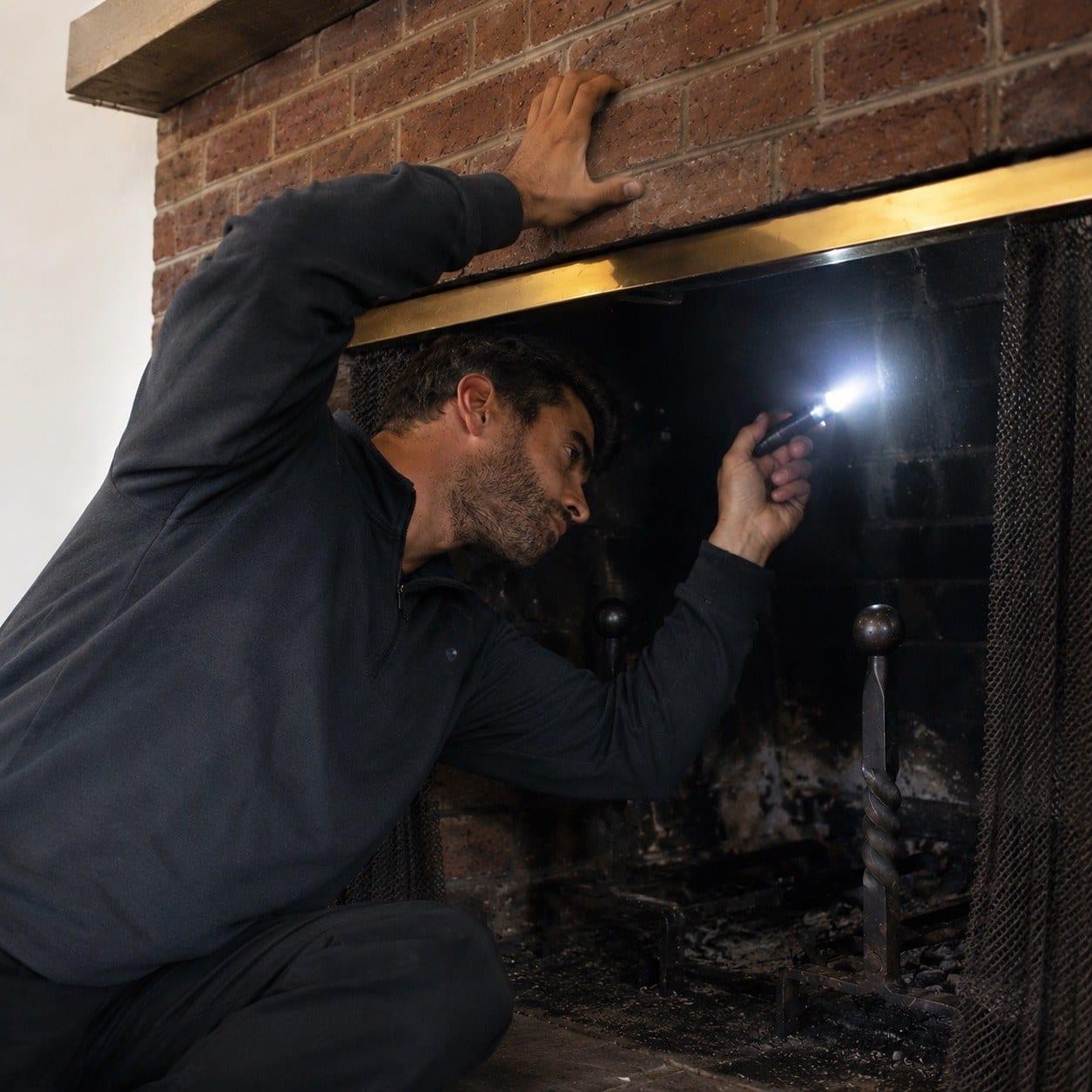
Inspection and cleaning often go together. If heavy soot or creosote hides the flue walls, cleaning comes first so the surfaces can actually be seen and judged.
Chimney inspection level 1
Most routine visits are a Level 1 inspection, the standard visual check described in NFPA 211, the national fire safety standard for chimneys and fireplaces. It covers the readily accessible parts of the chimney exterior and interior, the fireplace or appliance, and its connection to the flue. It's the right choice when you use the system the same way you always have and nothing has changed.
If you suspect a chimney fire, get everyone out and call 911 first. When something has changed, such as a fuel switch, a new insert or a home sale, a Level 2 chimney inspection adds a camera scan of the flue and a closer look at accessible areas like attics and crawl spaces. If a hidden hazard is suspected inside walls or behind finishes, what a level 3 inspection involves explains the next tier.
Signs your home needs a chimney inspection
- Smoke drifts into the room instead of drawing up the chimney.
- A smoky, sour or musty smell comes from the fireplace, even when it isn't in use.
- You see crumbling mortar, flaking brick, or pieces of masonry in the firebox.
- Water stains appear on the ceiling or wall near the chimney, or the damper and firebox show rust.
- You hear scratching or chirping, or debris and twigs fall into the firebox.
- A past fire roared, popped loudly or sent dense smoke out the top, which are common signs of a chimney fire.
- The fire is hard to light or burns poorly, which can point to a restricted flue; the guide to blocked chimneys covers the usual causes.
- You're about to use the fireplace for the first time this season, just bought the home, had a strong storm, or added an insert or stove.
What the visit involves, step by step
How a chimney inspection visit goes
We ask how you use it
Which fuel you burn, how often, when it was last cleaned, and anything you've noticed, like smells, smoke or leaks.
We protect the room
The hearth and floor around the fireplace or stove are covered before we start.
Firebox and appliance check
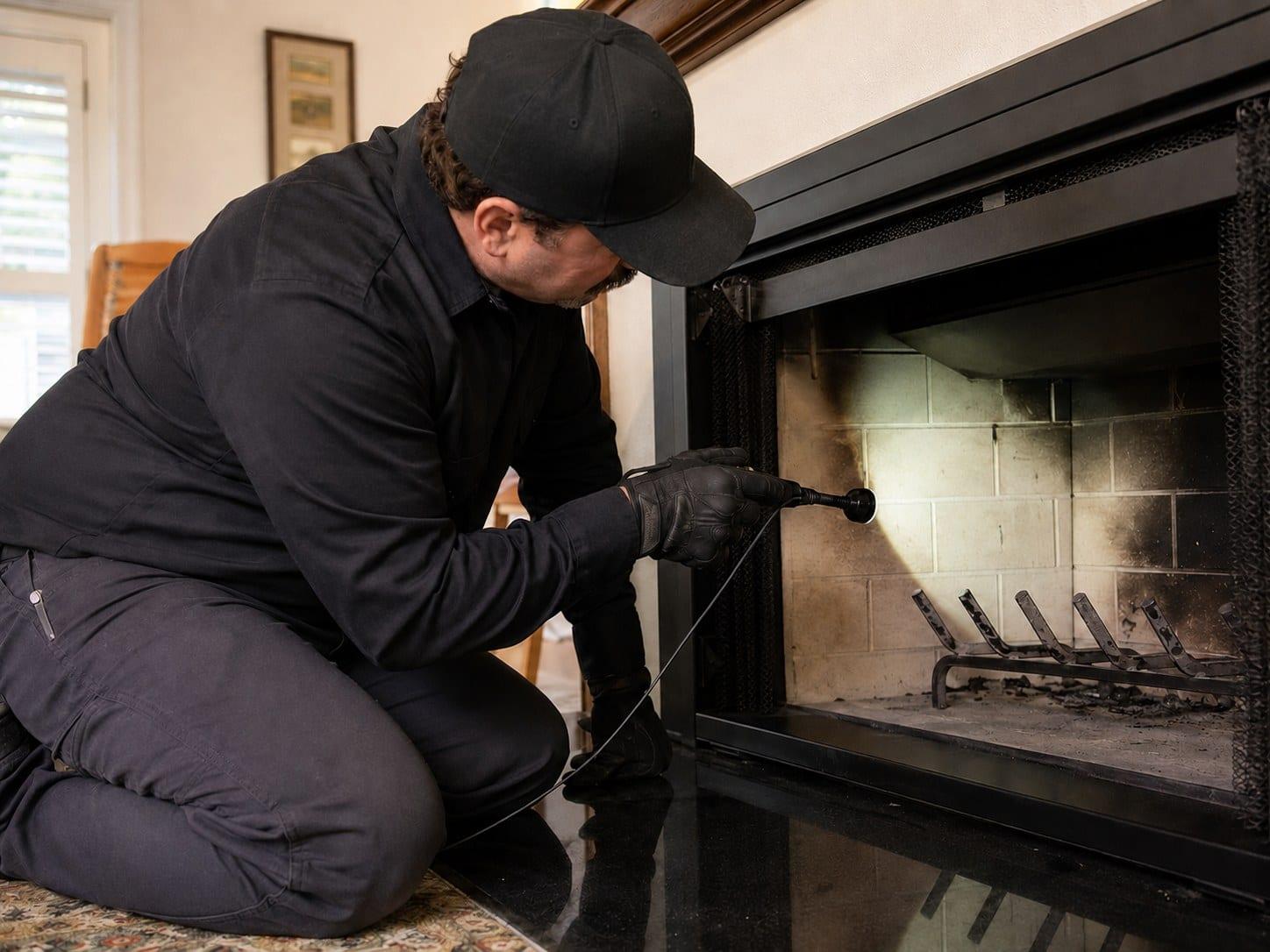
We look at the firebox walls, refractory panels, damper, smoke chamber, glass and doors, or the stove and its connector pipe.
Flue check
We inspect the flue liner for cracks, gaps, creosote and blockages, using a chimney camera when the flue can't be judged by eye.
Exterior check
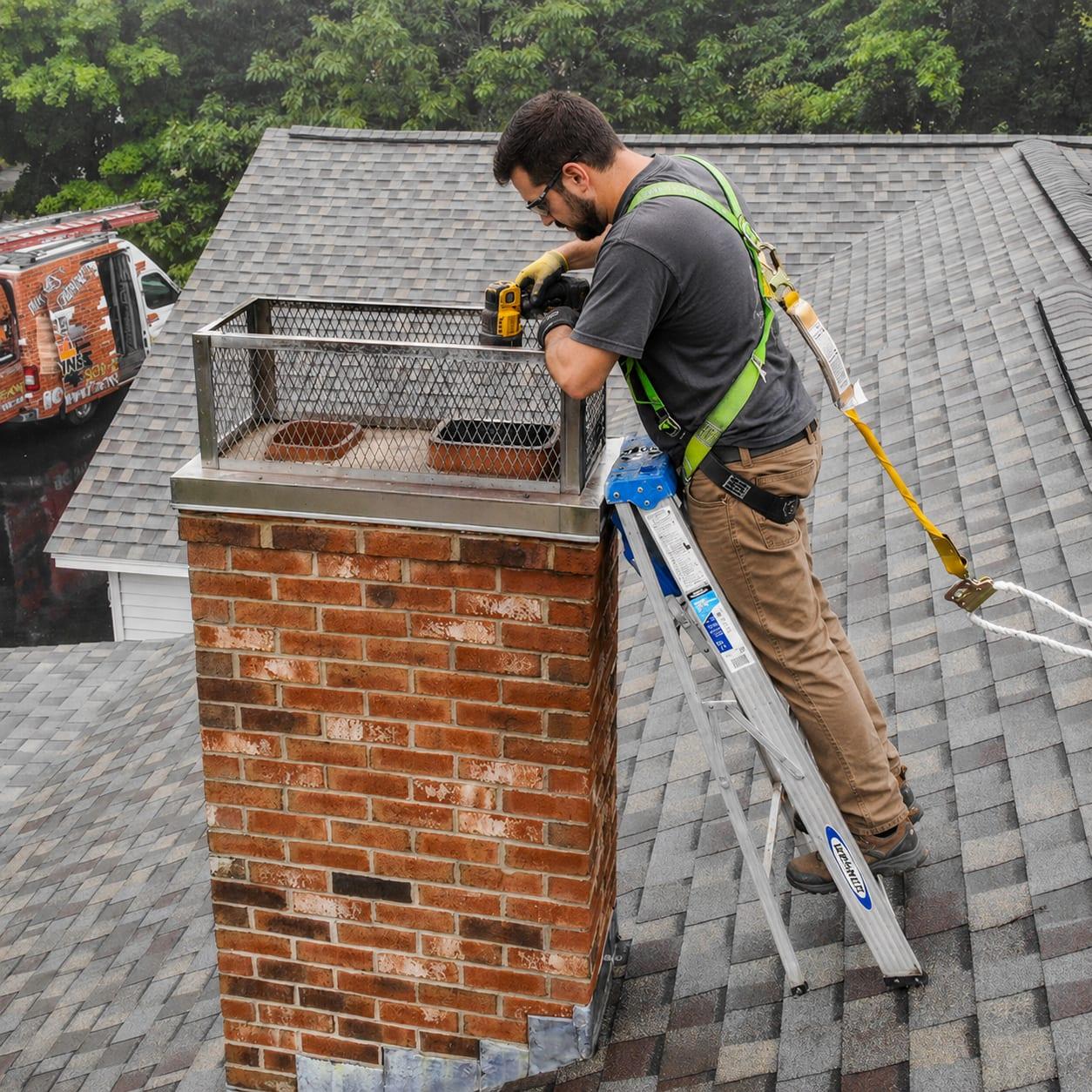
Where safe access allows, we examine the crown, cap, flashing and masonry from the roofline up.
We walk you through the findings
You get a clear explanation of what's sound, what needs watching and what needs work, plus a free estimate for anything we recommend.
Components, materials and fuel types we inspect
What we check depends on how your chimney is built and what burns in it. A masonry chimney inspection focuses on brick, mortar, the crown and a clay or metal liner. A factory-built (prefab) chimney gets a look at the metal flue sections, the chase and the chase cover. Flue inspection applies to both.
- Masonry: brick, mortar joints, crown, and signs of water damage or spalling.
- Flue: liner condition, joints, creosote level and any obstructions.
- Top of the chimney: cap, animal screen, spark arrestor or chase cover.
- Roof connection: flashing where the chimney meets the roof.
- Inside: firebox, damper, smoke chamber, refractory panels, doors and glass.
- Appliances: wood-burning fireplaces, inserts, wood stoves, pellet stoves, and gas fireplaces and gas logs. We work on all major brands.
Brick chimney cover inspection
On a brick chimney, the cover is usually a mortar or concrete crown with a metal cap on top. The crown sheds water away from the brick, and the cap keeps rain, animals and debris out of the flue. We check the crown for cracks, gaps and erosion, confirm the cap is secure and the screen is intact, and look at the surrounding masonry for moisture damage. Small crown cracks let water into the brick and speed up wear, which is one of the reasons homeowners waterproof a chimney.
Pellet stove and wood stove inspection
Stove inspection covers the stove body, door gasket, glass, connector pipe and the flue or vent it runs into. Pellet stoves vent differently from wood stoves, so we also check the exhaust vent and its joints for ash buildup and leaks.
Chimney camera inspection
A chimney camera inspection runs a small camera up the flue so we can see liner cracks, separated joints, missing mortar and blockages that can't be seen from the firebox or the top. It's useful after a suspected chimney fire, when smoke or odors have no visible cause, before a liner decision, and anytime the flue can't be judged by eye. We show you what the camera finds so you're not taking our word for it.
Annual fireplace inspection
An annual fireplace inspection is a once-a-year check before heavy use. It catches creosote buildup, damper problems, firebox cracks and animal activity while they're still small. If your main concern is the fireplace itself rather than the chimney above it, our fireplace inspection service focuses on the firebox, damper, doors and the appliance.
Insurance chimney inspection
An insurance chimney inspection documents the condition of your chimney so you have a clear record to share with your insurer, whether that's for a claim after damage or a policy requirement. We describe what we found and what caused visible damage where it can be identified. We also offer Real Estate Chimney Inspection, Rental Property Chimney Inspection and Storm Damage Chimney Inspection when the reason for the visit is a sale, a rental unit or a recent storm.
Safety and maintenance context
Don't use a chimney you're unsure about
Creosote is flammable, and a cracked liner can let heat reach nearby framing or let carbon monoxide into the house. If you see smoke where it shouldn't be or smell something wrong, stop using the fireplace until it's been checked. If a chimney fire is happening, get everyone out and call 911.
An inspection often points to the next job. Chimney sweeping is the right step when the main finding is soot, creosote or debris in the flue. Chimney repair is the right step when the crown, mortar, flashing, liner or damper is damaged. A chimney rebuild is the right step when the masonry is too far gone to patch. Chimney installation is the right step when you're adding a new chimney or replacing one entirely.
Booking your chimney inspection
Request an estimate and tell us what you burn and what you've noticed. Same-day visits are available where the schedule allows, and emergency calls are accepted. Gas fireplace and gas appliance work is offered, as is commercial and property-manager work. We also handle chimney inspection in Alpharetta and chimney inspection.
Related work covered on this page
- Chimney Camera Inspection
- Annual Fireplace Inspection
- Insurance Chimney Inspection