On this page
What creosote removal involves
Creosote forms when wood smoke cools as it rises through the flue. Unburned gases, tar and moisture condense on the cooler walls and harden there. It builds up in stages, and each stage takes a different approach to remove:
| Stage | What it looks like | How it usually comes off |
|---|---|---|
| First stage | Dry, flaky, sooty black dust | Standard brushing during a sweep |
| Second stage | Crunchy, puffy flakes with a tarry feel | Heavier brushing or rotary tools |
| Third stage | Shiny, hard glaze that coats the flue like dripped tar | Rotary tools, often after a treatment that softens the glaze. It can take more than one visit. |
First-stage buildup is usually handled during a routine chimney sweep. Creosote buildup removal means going after the second and third stages. Those deposits stick hard to the flue and burn hotter than soot, and a brush alone won't clear them.
Signs your chimney needs creosote removal
Call for an estimate if you notice any of these
- Black, tarry or shiny deposits on the damper or around the top of the firebox
- Flakes or crumbles of black material falling into the fireplace
- A strong, smoky or asphalt-like smell from the fireplace, even when it's not in use
- Fires that are hard to start, smoke into the room or don't draw well
- A lot of wood burned since the last cleaning, especially wet wood or slow, smoldering fires
- A loud roaring or popping sound from the flue during a past fire. If you hear roaring or see flames or sparks from the top of the chimney, get everyone out and call 911.
Odor and poor draft can have other causes too. If the smell lingers after the flue is clean, chimney odor removal looks for the source. Water getting into the flue can turn creosote into an acidic, smelly slurry, which is one of the reasons homeowners waterproof a chimney. If smoke won't go up at all, the problem may be a nest or debris. That calls for removing a chimney blockage.
What the visit looks like, step by step
A creosote removal visit
Protect the room
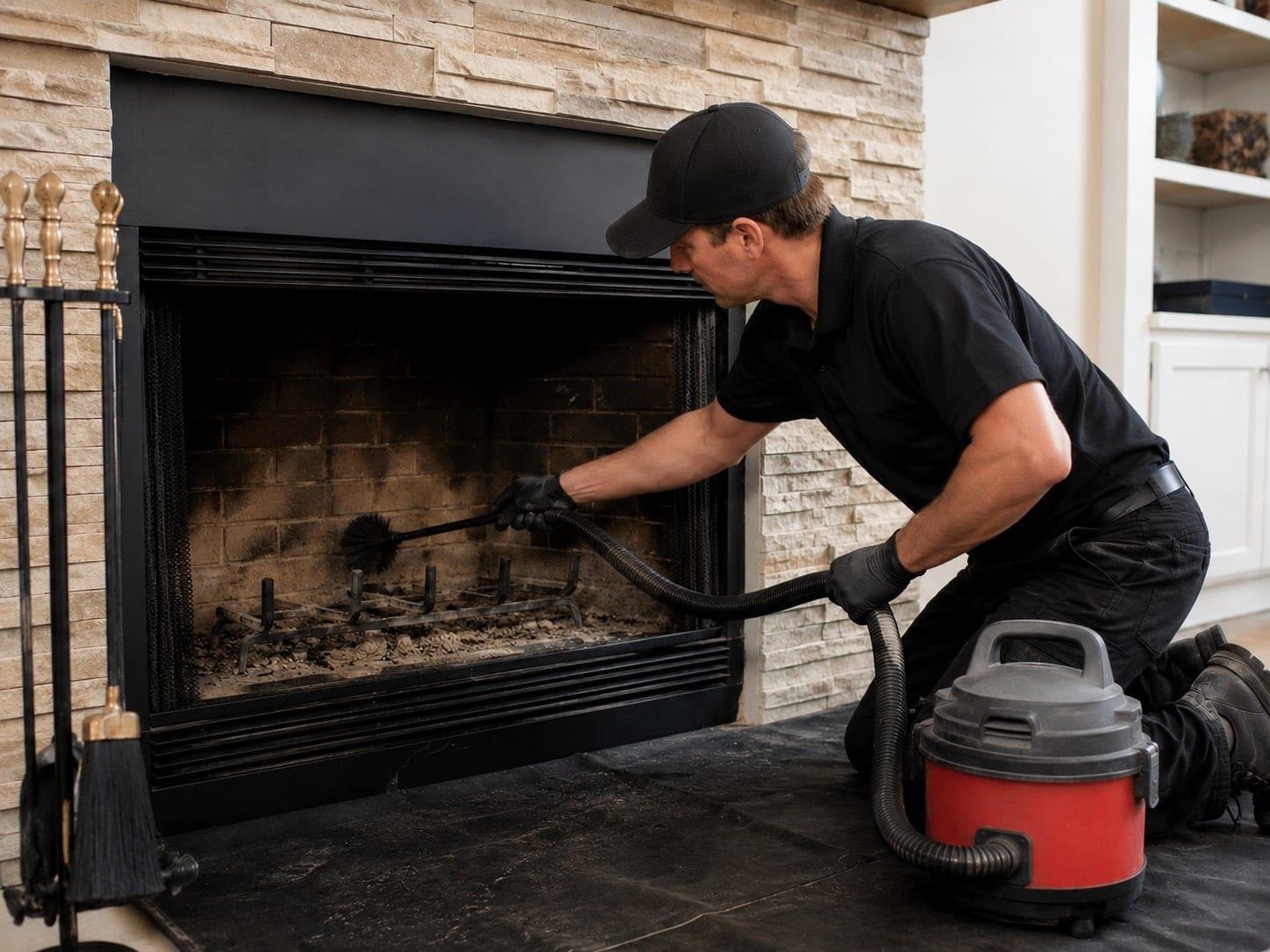
We lay drop cloths around the hearth and seal the fireplace opening so dust and flakes stay contained.
Look at the whole flue
We check the deposits from top to bottom and judge which stage they're in. Where we can't see well enough, a camera can show the full length of the flue.
Remove the buildup
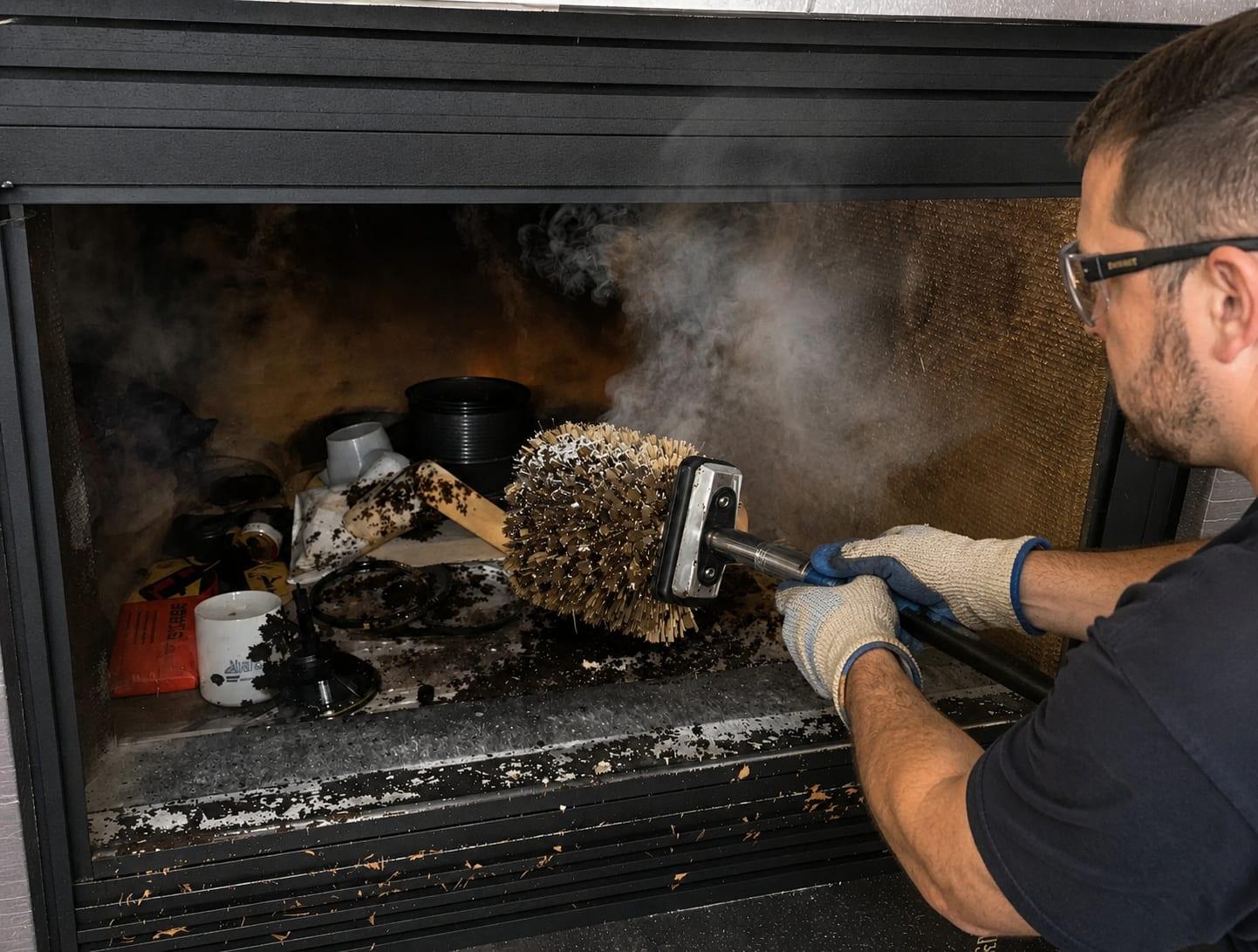
We use brushes for loose material and rotary tools for hardened deposits. Glazed creosote may need a softening treatment first.
Clean the firebox and smoke chamber
The smoke shelf, damper area and firebox collect falling debris and their own buildup, so they get cleaned too.
Clear the debris
We vacuum and bag the loosened creosote and remove it from the home.
Go over what we found
We explain how heavy the buildup was and point out any damage we saw. We also tell you whether glazed areas need a follow-up visit before you light another fire.
Fireplaces, inserts and stoves
Creosote comes from burning wood. Open wood-burning fireplaces, fireplace inserts and wood stoves are where it builds up. Inserts and stoves can build it up quickly because their flues run cooler and fires are often turned down low for long burns. We clean all of these, including units from the major brands.
Gas fireplaces don't produce creosote the way wood does, but they still need care. We service gas fireplaces and other gas appliances as well.
Keeping creosote from coming back
- Burn dry, seasoned firewood. Wet wood smolders and sends more tar up the flue.
- Build hotter, shorter fires instead of smoldering ones that burn all night.
- Open the damper fully and give the fire enough air.
- Have the chimney checked and swept on a regular schedule so buildup is removed before it hardens.
If a chimney fire may be burning
Signs include a loud roar, popping, dense smoke or flames from the top of the chimney. Get everyone out of the house and call 911. Don't use the fireplace again until the chimney has been inspected, because a chimney fire can crack the flue even when it burns out on its own.
Booking creosote removal
Get in touch to describe what you're seeing, and we'll set up a time to look at the flue. Same-day visits are available where the schedule allows, but they are never guaranteed. Commercial and property-manager work is offered too, so rental units and multi-unit buildings can be scheduled the same way. If you aren't sure what's going on inside your flue, the blocked chimney guide covers other warning signs to watch for.