On this page
What gas fireplace service covers
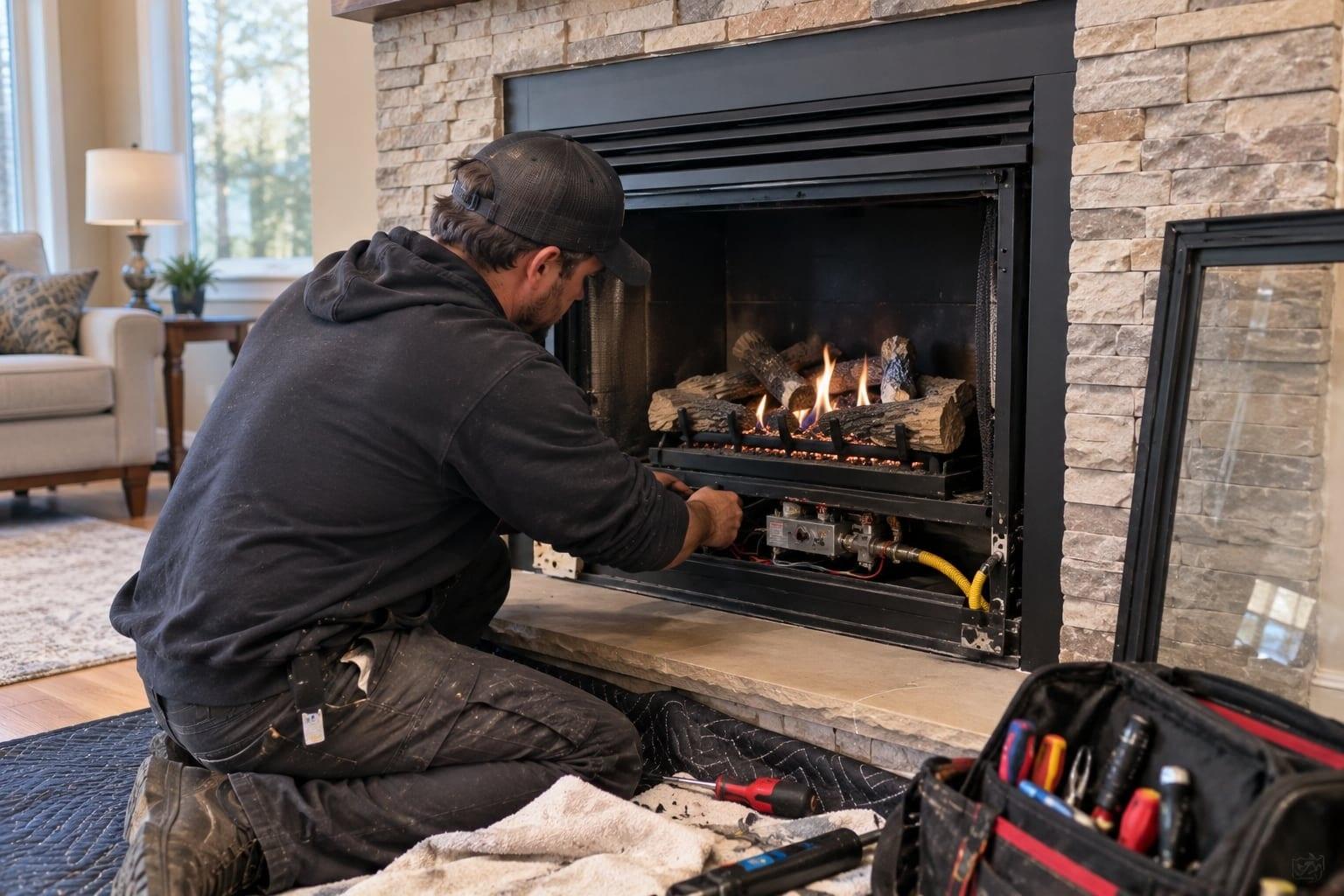
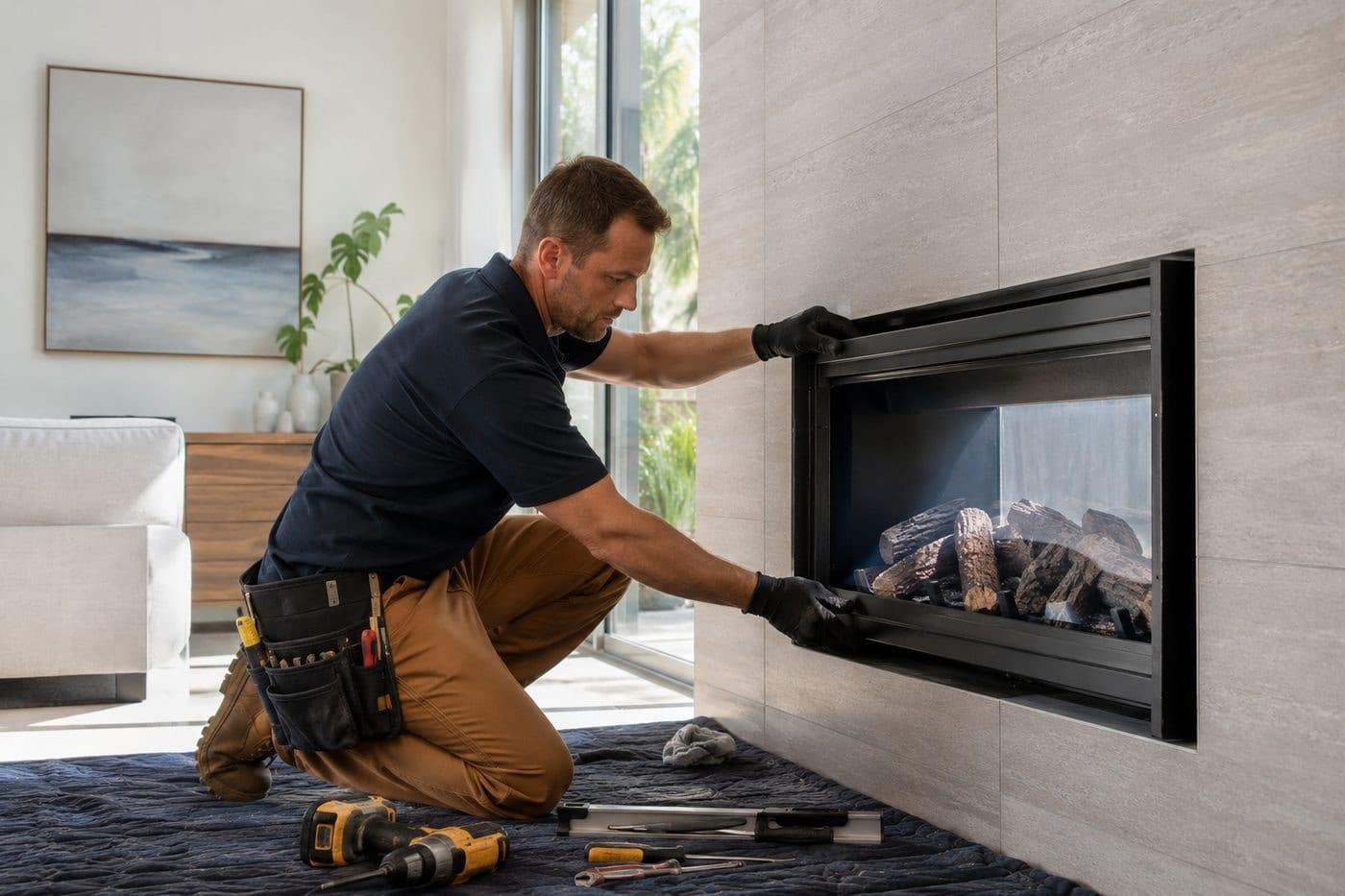
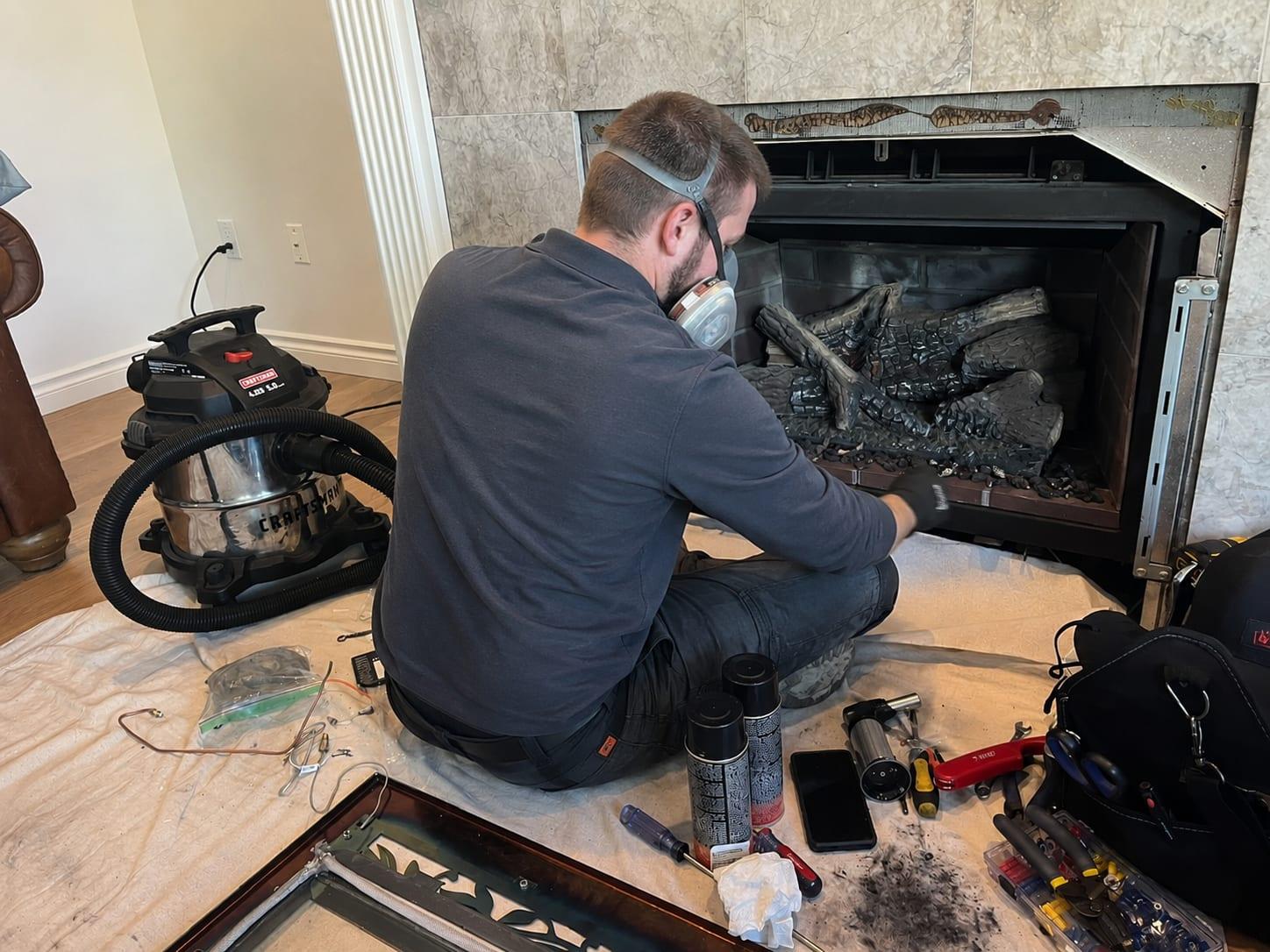
Gas fireplace service is a hands-on visit to clean, check and adjust the parts that light the fire, control the gas and carry exhaust out of the house. It overlaps with our gas fireplace cleaning service, but it goes further. Service also includes testing the pilot and ignition, confirming the valve and safety sensors respond the way they should, checking for leaks at the connections, and making sure the venting is clear. If you only want a documented safety review, read how gas fireplace inspection works.
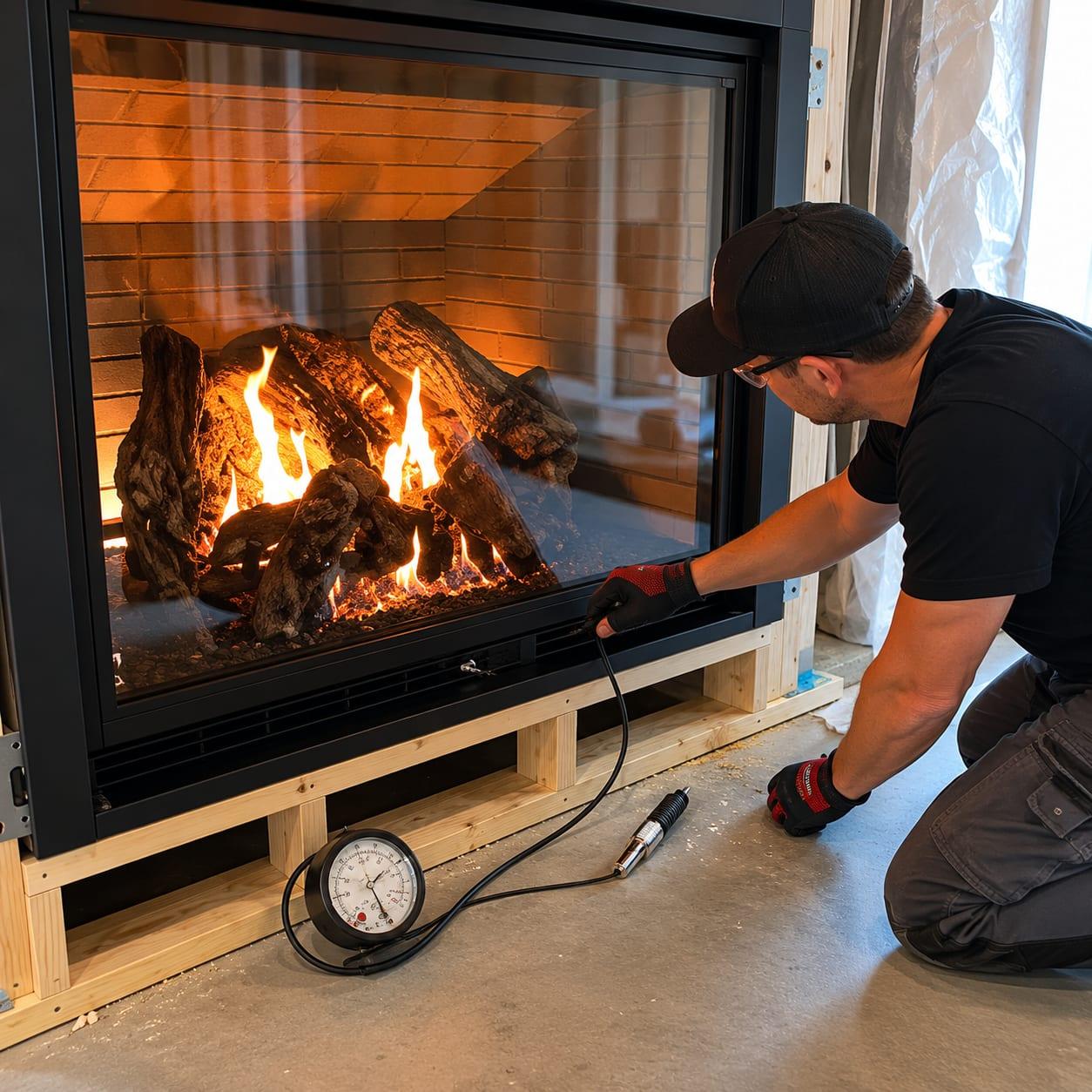
We work on gas fireplaces, gas inserts and gas log sets from all major brands, fueled by natural gas or propane.
If you smell gas
Leave the building right away. Don't flip light switches, use phones or light anything inside. Once you're outside, call the gas utility or 911.
Signs your gas fireplace needs service
Some of these signs are just wear and dirt. Others point to a part that is failing. Either way, they mean the unit should be looked at before you keep using it:
- The pilot won't light, or it lights and then goes out when you release the knob.
- The fireplace shuts itself off after a few minutes of running.
- The unit won't ignite the first time you try it at the start of the season.
- Flames look tall, lazy, mostly yellow or orange, or they touch the logs and leave black soot.
- A white or gray film builds up on the glass faster than usual.
- You hear clicking with no ignition, or the remote or wall switch stops responding.
- You notice a smell that lingers after the fire is off, or condensation forms on the glass and doesn't clear.
- If a carbon monoxide alarm sounds, get everyone outside and call 911.
For the dirt-and-buildup side of this list, our guide on when a gas fireplace needs cleaning explains what each sign usually means.
What happens during a service visit
Talk through the problem
We ask what you've noticed and find the make, model and fuel type on the unit's rating plate.
Shut off and cool down
The gas is turned off at the fireplace and the unit is allowed to cool before anything is taken apart.
Glass off and cleaned
We remove the glass front, clean off combustion film and check the gasket and frame for wear or cracks.
Logs and burner
Logs or decorative media come out. The burner, pilot assembly and firebox are cleaned, and blocked burner ports are cleared.
Ignition and controls
We test the pilot flame, the thermocouple or thermopile, the igniter, the gas valve, and the remote or wall switch.
Leaks and venting
Connections are checked for leaks, and the vent path and outside termination are checked for blockages and damage.
Reassemble and test fire
Logs go back in the position the manufacturer specifies, the glass is reinstalled, and the fireplace is run while we watch the flame pattern.
Go over findings
You get a plain explanation of what we found. Anything that needs repair or a part is quoted before work starts.
Parts and fuel types we work with
Most gas fireplaces share the same core parts. A pilot assembly lights the burner. A thermocouple or thermopile tells the gas valve the pilot is lit. The valve controls gas to the pilot and burner. Then there are the logs or media, the glass front with its gasket, an optional blower, and the venting. Newer units often use electronic ignition with a battery backup instead of a standing pilot.
Venting comes in a few types. Direct-vent units draw outside air and exhaust through a sealed pipe. B-vent units vent through a pipe or chimney using room air. Vent-free units have no flue and rely on an oxygen depletion sensor to shut off if air quality drops. Each type is checked differently.
Fuel matters too. A unit is set up for either natural gas or propane, and the orifices and valve settings differ between the two. Switching fuels takes the correct conversion parts and adjustment. For propane units, see our propane fireplace repair and installation work.
Fireplace gas valve replacement
The gas valve is the control center of the fireplace. Some symptoms suggest it may need replacing: the pilot won't stay lit even with a good thermocouple, the control knob sticks, or the pilot holds but the burner never comes on. Before recommending a new valve, we rule out cheaper causes such as a dirty pilot, a weak thermopile or a bad switch. When a valve does need replacing, it has to match the unit's make, model and fuel type. After installation, we leak-test the connections and check that the burner lights and modulates properly. Valve work is part of our gas fireplace repair service, and it isn't a job to attempt yourself.
Gas fireplace logs
Log placement affects more than looks. Logs set off the manufacturer's diagram can block flame paths, cause sooting and raise carbon monoxide output. During service we brush the logs gently rather than scrubbing them, since many are made of ceramic fiber. We replace cracked or crumbling logs and return every piece to its correct position.
Gas fireplace inserts and gas stove inserts
A gas fireplace insert, sometimes called a gas stove insert, sits inside an existing masonry fireplace and usually vents through liners running up the chimney. Servicing an insert includes the same burner, pilot and glass work, plus checking the liner connections at the top and bottom and cleaning the blower if the unit has one.
Safety and routine maintenance
Gas burns cleaner than wood, but a gas fireplace still produces exhaust that has to leave the house. A few habits keep it working safely between visits:
Between-service habits
- Keep carbon monoxide alarms working on every level of the home and near sleeping areas, and test them regularly.
- Keep the outside vent termination clear of shrubs, leaves, nests and anything stored against the wall.
- Don't run the fireplace with cracked or missing glass.
- Use a safety screen if children or pets are around, since the glass gets hot enough to burn.
- Shut the unit off and call for service if the flame pattern changes. If a carbon monoxide alarm sounds, get everyone outside and call 911.
Our guide to gas fireplace safety inspections explains what a thorough safety check looks at and why it matters.
Booking gas fireplace service
Call or request an estimate and tell us the make of your fireplace and what you've noticed. Same-day visits are available where the schedule allows, though they are never guaranteed, and emergency calls are accepted. We work on all major brands, and we also handle commercial and property-manager work for buildings with several gas units.