On this page
What chimney cap replacement involves
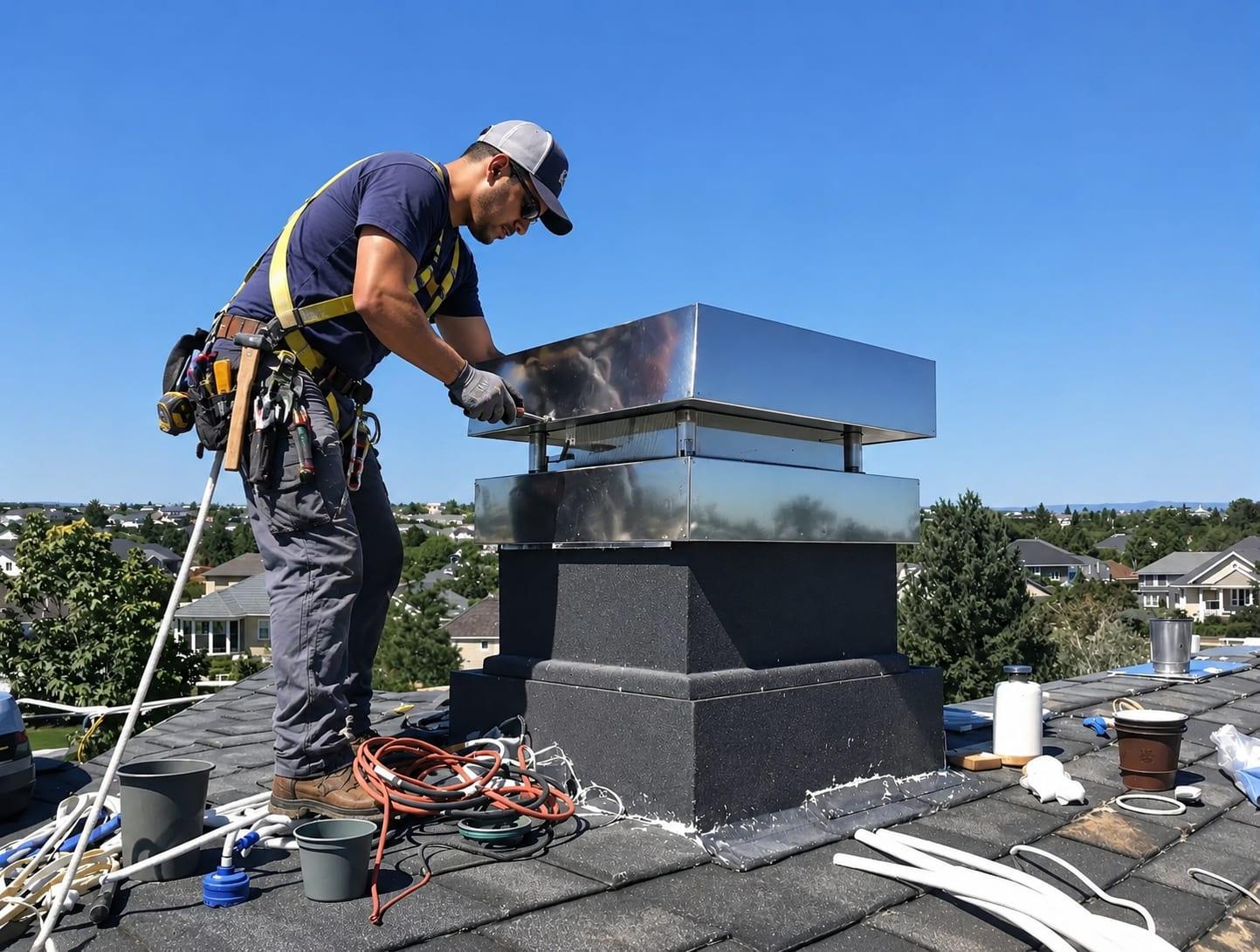
A chimney cap is the covered, screened fitting at the very top of the flue. It sheds rain, keeps birds and small animals out, and helps stop sparks and debris from leaving or entering the chimney. When a cap has rusted through, lost its screen, blown loose or been crushed, patching it usually isn't worth it. Chimney cap replacement means removing the old cap, checking what it was attached to, and fitting a new cap that matches the flue size and mounting style.
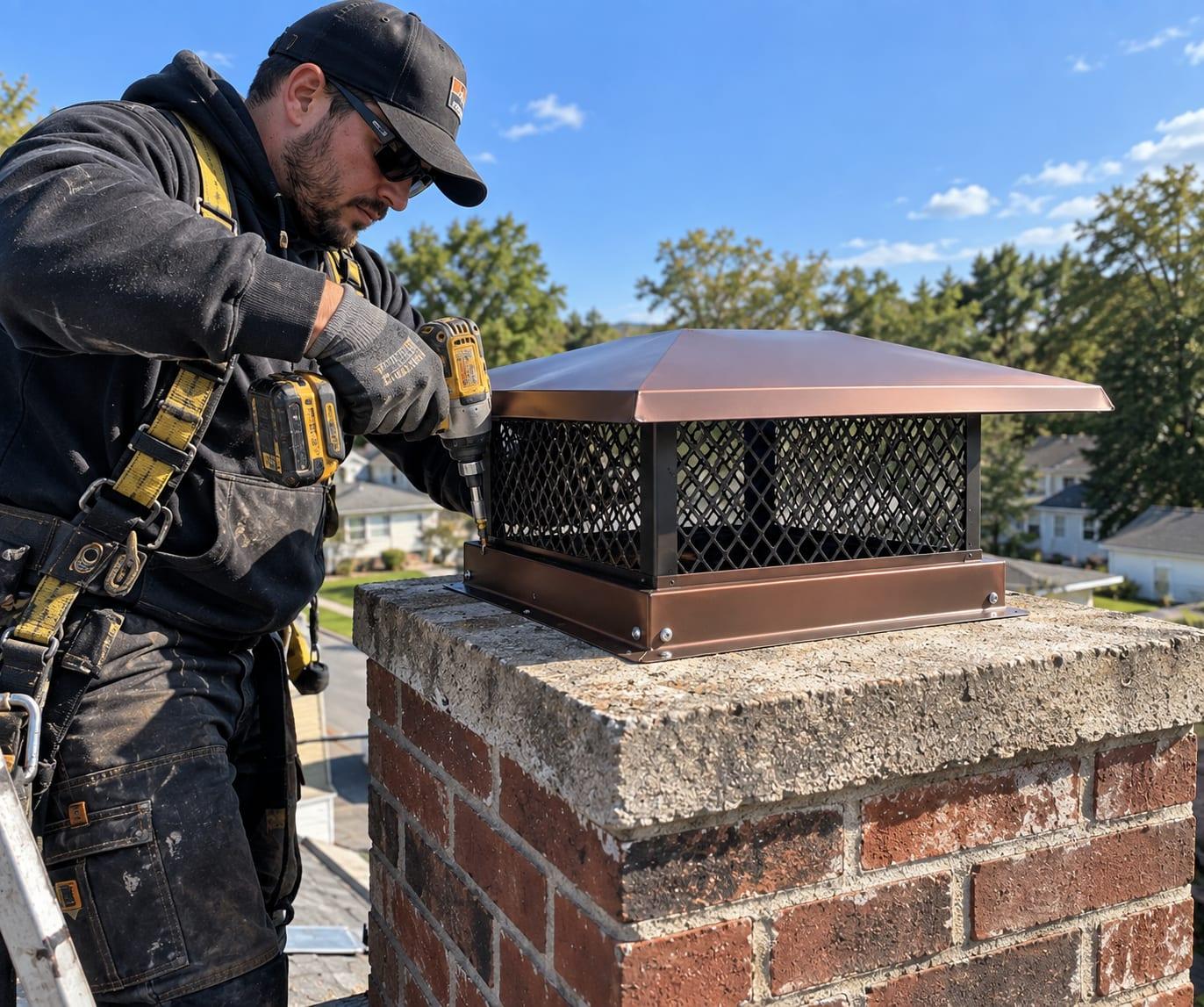
If the cap is basically sound and only needs a screen fixed or fasteners tightened, chimney cap repair is the better fit. If there has never been a cap on the chimney at all, the job is a new cap installation rather than a replacement.
Signs a chimney cap needs replacing
Most failed caps show it from the ground or from the fireplace. These are the common reasons homeowners call about a replacement:
Problems that point to a new cap
- Rust streaks on the cap or running down the brick or chase below it — rusted chimney cap replacement is the most common version of this job
- Holes or gaps in the mesh screen, or a screen that has torn away
- A cap that is tilted, dented, or loose enough to move in wind
- Water dripping into the firebox or damper area after rain
- Birds, squirrels or nesting material in the flue
- Twigs, leaves or debris falling into the fireplace
- Pieces of the cap found in the yard or gutters after a storm
Water damage can spread below the cap
A cap that lets rain in can lead to rust on the damper, wet masonry and a deteriorating flue. If water has been getting in for a while, the visit includes a look below the cap so the new one isn't sitting on a problem that keeps growing. For background on what a damaged flue lining means, read signs a chimney liner needs replacement.
Cap replacement on masonry and prefab chimneys
Masonry chimneys
On a brick or stone chimney, masonry chimney cap replacement usually means a cap that clamps or screws onto a single clay or metal flue liner, or a larger cap that covers several flues and mounts to the crown. The crown — the concrete or mortar slab around the flue — needs to be solid for a crown-mounted cap to stay put. Cracks in the crown or loose bricks near the top are handled through chimney masonry repair or crown repair, so the new cap has a sound surface to anchor to.
Prefab (factory-built) chimneys
Prefab fireplaces use a metal flue inside a framed chase, with a chase cover on top and a cap on the flue pipe. These caps are often designed for a specific flue system, so the replacement needs to match the flue diameter and fit the existing termination. We work on all major brands of factory-built systems. If the chase cover around the cap is also rusted or sagging, chase cover replacement can be done at the same visit.
Cap materials and parts
| Material | What to know |
|---|---|
| Galvanized steel | Coated steel; the coating wears over time and the cap can rust once it does |
| Stainless steel | Resists rust well and is a common choice for replacement caps |
| Copper | Long-lasting and weathers to a darker patina; usually chosen for appearance |
Beyond the material, a cap is defined by its mounting (flue-mounted or crown-mounted), the number of flues it covers, its mesh screen, and the hood that sheds rain. Some caps include a spark arrestor screen for wood-burning fireplaces. A top-sealing damper combines a cap with a damper you open and close from below; the benefits of chimney caps and dampers guide explains how the two work together.
What the visit looks like
Chimney cap replacement, step by step
Look at the chimney top
We check the old cap, its fasteners, the screen and what it's mounted to, and note rust, water staining or animal activity.
Check the flue and crown
The flue opening, liner and crown are looked at so the new cap fits and any damage underneath is found before it's covered up.
Measure and match
Flue size, number of flues and mounting style decide which replacement cap fits. We go over material options with you.
Remove the old cap
The failed cap and any loose debris or nesting material at the top of the flue are cleared out.
Fit and fasten the new cap
The new cap is secured to the flue or crown so it sits level and doesn't move in wind.
Walk you through it
You hear what was found, what was done, and whether anything else — such as masonry, liner or damper work — should be looked at.
Safety and upkeep around the cap
Roof work is dangerous, and a chimney top is one of the hardest spots on a roof to stand. Please don't climb up to pry off or reattach a loose cap yourself; if it's hanging or partly detached, keep people away from the area below until it's dealt with.
- Don't use the fireplace if an animal or nest may be in the flue — a blocked flue can push smoke back into the house.
- Glance at the cap from the ground after strong storms and look for tilting or missing pieces.
- Have the cap checked during routine chimney cleaning and inspection, when the chimney top is already being looked at.
- Take water inside the fireplace seriously; damp masonry and a rusting damper get worse with time. The guide on why every chimney needs a liner covers what's at stake inside the flue.
Booking a chimney cap replacement
Free estimates. Call or request an estimate and tell us what you're seeing — rust, a loose cap, water in the firebox or animals in the flue. Same-day visits are available where the schedule allows (never guaranteed), and emergency calls are accepted. We serve homes across Greater Atlanta, and commercial and property-manager work is offered as well.