On this page
If you smell gas
Leave the building now. Don't use light switches, phones or any flame inside. Once you're outside, call the gas utility or 911. Don't go back in until they say it's safe.
What gas fireplace repair covers
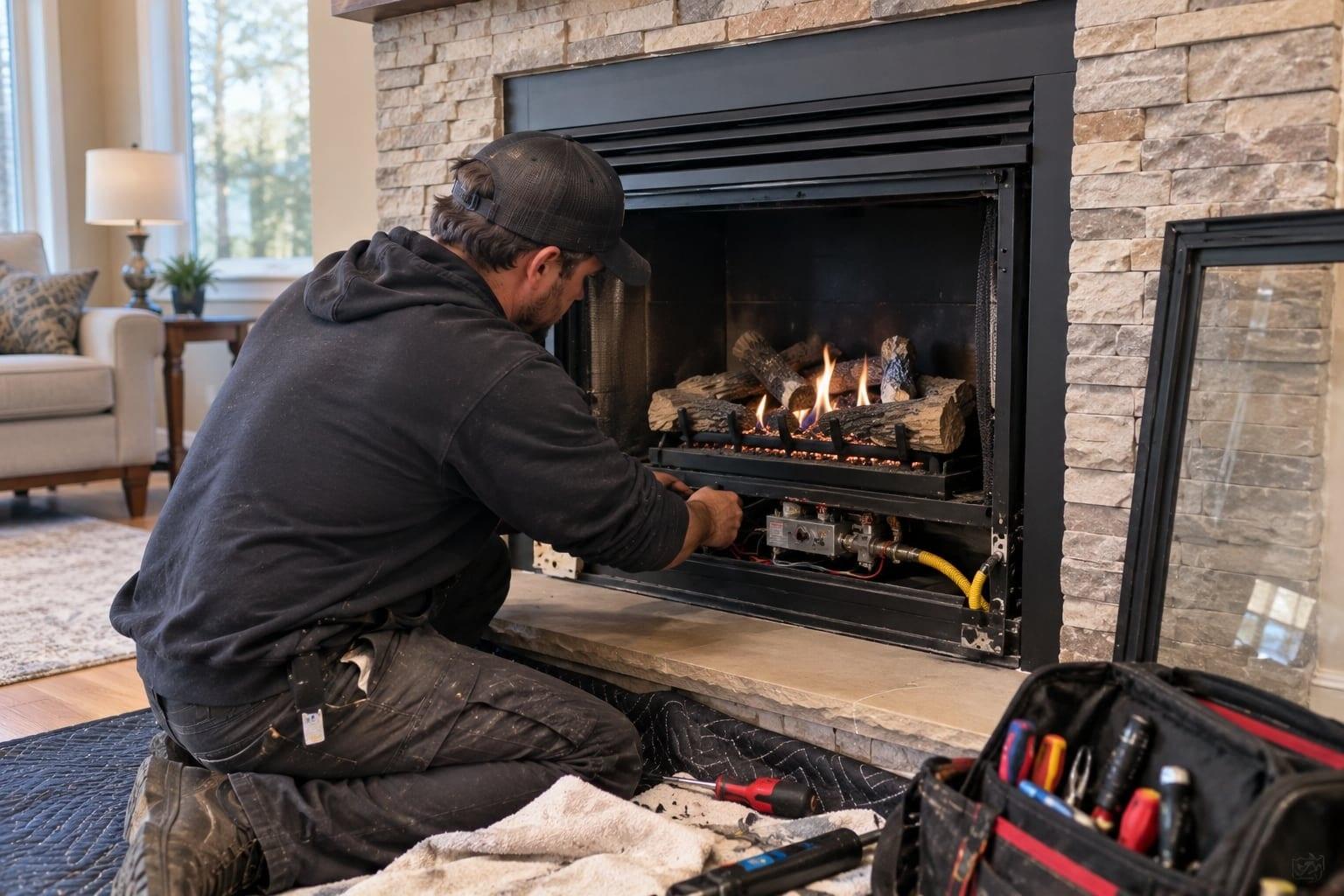
Gas fireplace repair means finding why the unit isn't working as it should and fixing that cause. The problem is usually in the ignition system, the gas control valve, the safety sensors, the burner, the venting or the glass and door seal. Most repairs replace or adjust one faulty part. It is rarely a full rebuild.
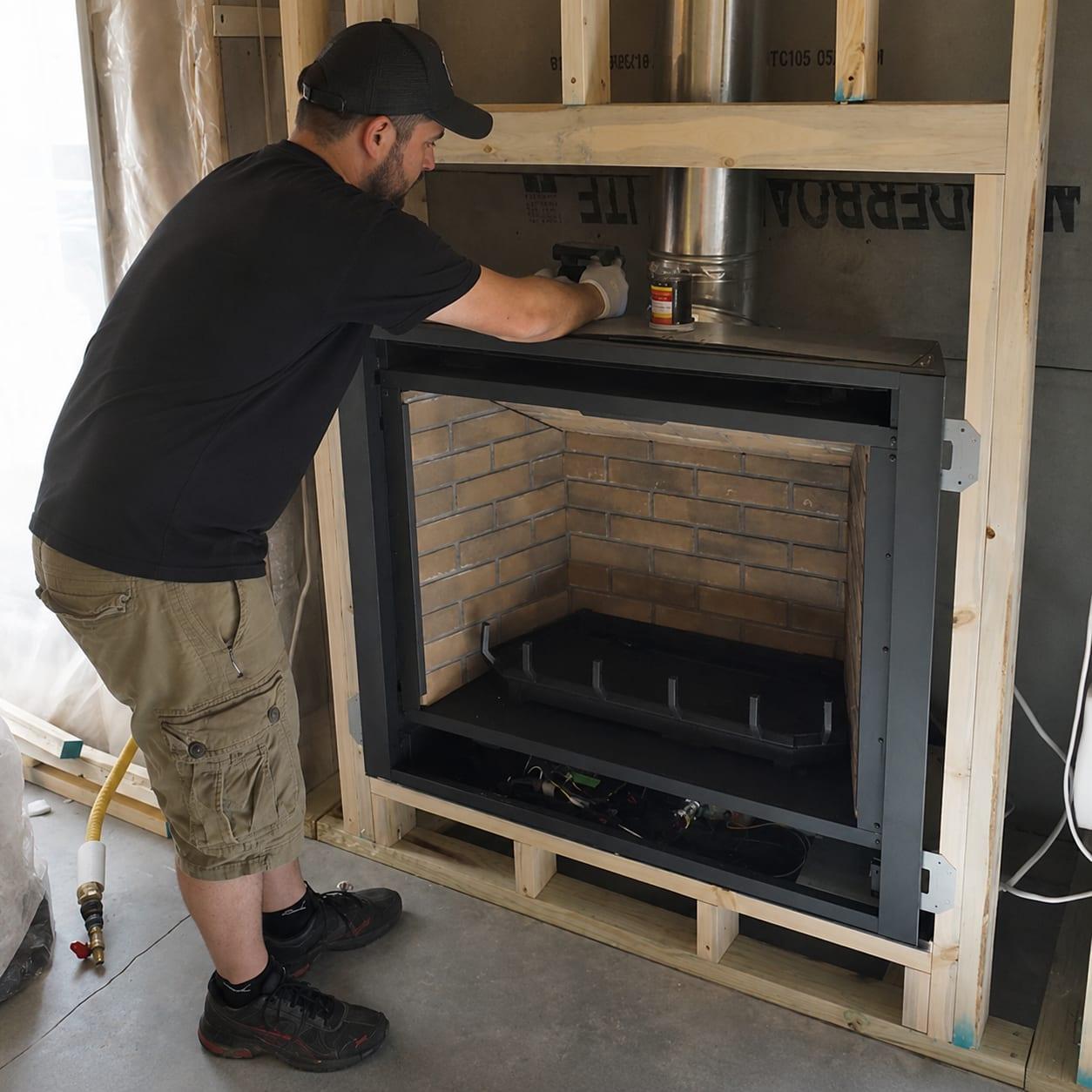
Repair is the right job when something is broken or behaving wrong. If the fireplace works but is sooty or dusty, our gas fireplace cleaning service is the better fit. If you mainly want to know whether it's safe to use, start with a gas fireplace inspection.
Signs your gas fireplace needs repair
These are the symptoms that most often lead to a repair visit. Our guide on how to tell a gas fireplace needs repair goes into more detail.
- The pilot won't light, or it lights and goes out after a few seconds.
- The burner won't come on even though the pilot is lit.
- The igniter clicks but nothing catches.
- The flame is tall, yellow, lazy or leaves soot on the glass or logs.
- The remote, wall switch or thermostat no longer controls the fire.
- The fire shuts off on its own partway through a burn.
- You hear whistling, popping or a loud whoosh at ignition.
- The glass is cracked, or the door gasket is loose or missing.
Fireplace gas valve repair
The gas valve controls how much gas reaches the pilot and the burner. A thermocouple or thermopile tells the valve whether a flame is present. When the valve or its sensors fail, the usual results are a pilot that won't hold, a burner that won't respond to the switch or remote, or a flame that won't adjust.
Many valve complaints turn out to be a weak thermopile, a dirty pilot assembly or a loose connection rather than the valve itself. We test those first. If the valve is the fault, we explain whether it can be serviced or should be replaced with a matching part, and we check the unit's operation once the work is done.
Parts we commonly work on
| Component | What it does | Typical symptom when it fails |
|---|---|---|
| Gas control valve | Meters gas to the pilot and burner | Burner won't come on or flame won't adjust |
| Thermocouple / thermopile | Confirms a flame and powers the valve | Pilot goes out when the knob is released |
| Igniter / electronic ignition | Lights the pilot or burner | Clicking with no flame |
| Burner and ports | Spreads gas evenly for a steady flame | Uneven, yellow or sooty flame |
| Venting | Carries combustion gases outside | Shutdowns, soot, stale smell |
| Glass and door gasket | Seals the firebox | Cracked glass, drafts, soot on walls |
We work on all major brands of gas fireplaces and gas logs, and on propane units as well as natural gas. For background on how these systems differ from wood-burning ones, read our comparison of gas and wood fireplaces.
What a repair visit involves
Step by step
Tell us the symptoms
When you get in touch, describe what the fireplace is doing and when it started. This helps us bring the right parts and test equipment.
Safety check and diagnosis
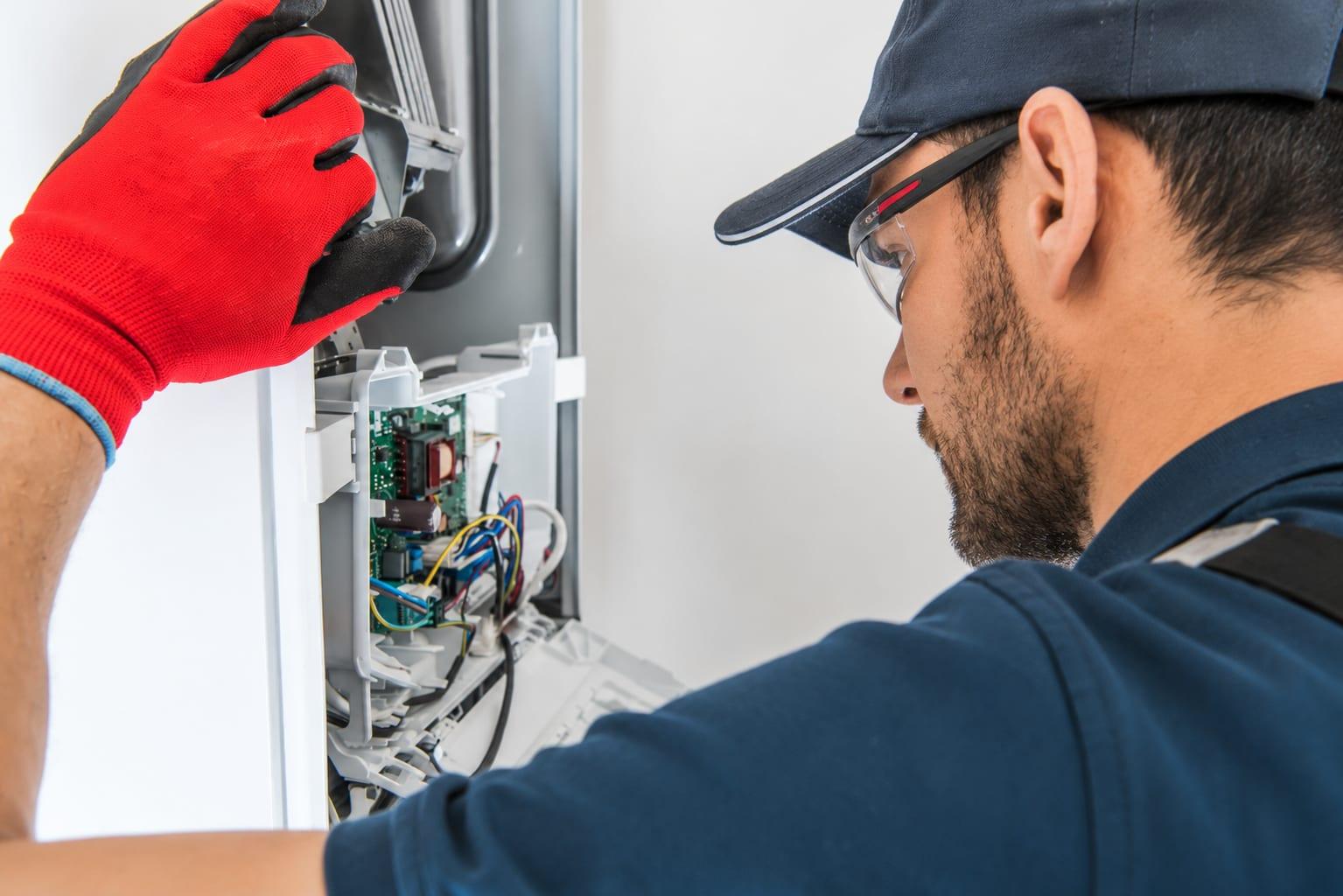
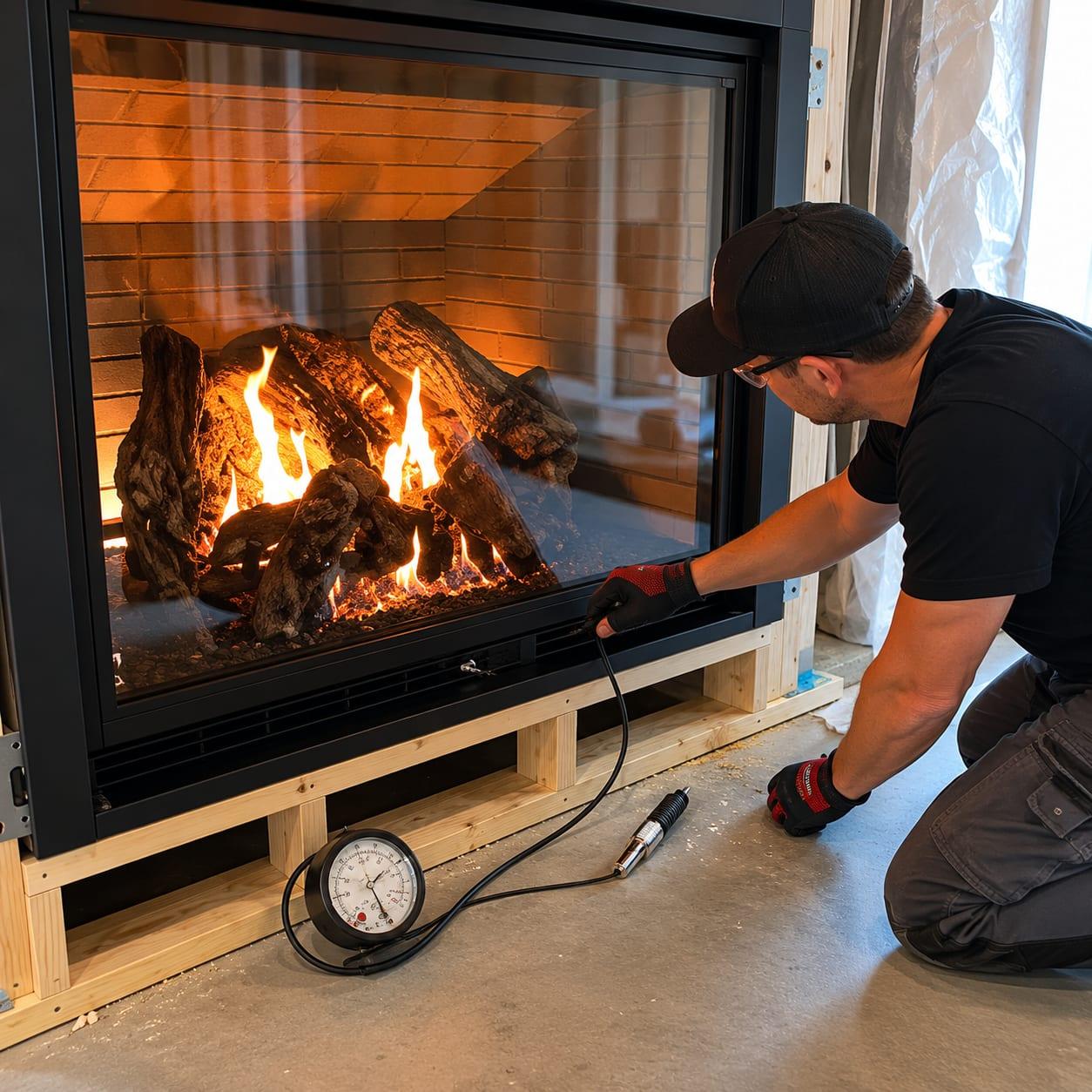
We shut off the gas to the unit, inspect the burner, pilot assembly, valve, sensors, ignition and venting, and test them to find the actual fault.
Free estimate
We explain what's wrong and what the repair involves, and give you a free estimate before any work starts.
Repair
With your approval, we replace or adjust the faulty parts.
Test and walk-through
We run the fireplace, check the flame and controls, and show you anything you should keep an eye on.
Safety and maintenance
Gas fireplaces are low-effort, not no-effort. Gas connections, venting and safety sensors all wear over time. A fault that looks minor, like soot on the glass, can point to poor combustion or a venting problem that deserves attention. Because faults in these systems affect safety, gas line and valve work should be left to someone with the right tools and training.
Simple habits that help between visits
- Keep the glass closed and the area in front of the fireplace clear.
- Stop using the unit if the flame looks different or soot appears, and have it checked.
- Have a carbon monoxide alarm working on each level of the home.
- Schedule periodic service so small problems are caught early.
For what a safety check covers, see our guide to gas fireplace safety inspections, or browse our broader gas fireplace service options.
Booking a repair
Call or request an estimate and tell us what your fireplace is doing. Same-day visits are available where the schedule allows, and emergency calls are accepted. We also handle commercial and property-manager work across Greater Atlanta.