On this page
- What fireplace repair involves
- Signs a fireplace needs repair
- When the fireplace won't light
- What a repair visit looks like
- Fireplace parts, materials and fuel types
- Fireplace damper repair
- Refractory firebox panel replacement
- Fireplace insert repair
- Older wood-burning fireplaces
- Emergency fireplace repair
- Booking a fireplace repair
What fireplace repair involves
Fireplace repair means fixing the parts of a fireplace that have cracked, warped, rusted or stopped working. That includes the firebox lining, the damper, the doors and gaskets and the smoke chamber. On gas units it also includes the burner, valve and ignition parts. The goal is a fireplace that contains the fire, sends its smoke up the chimney and closes off tightly when it's not in use.
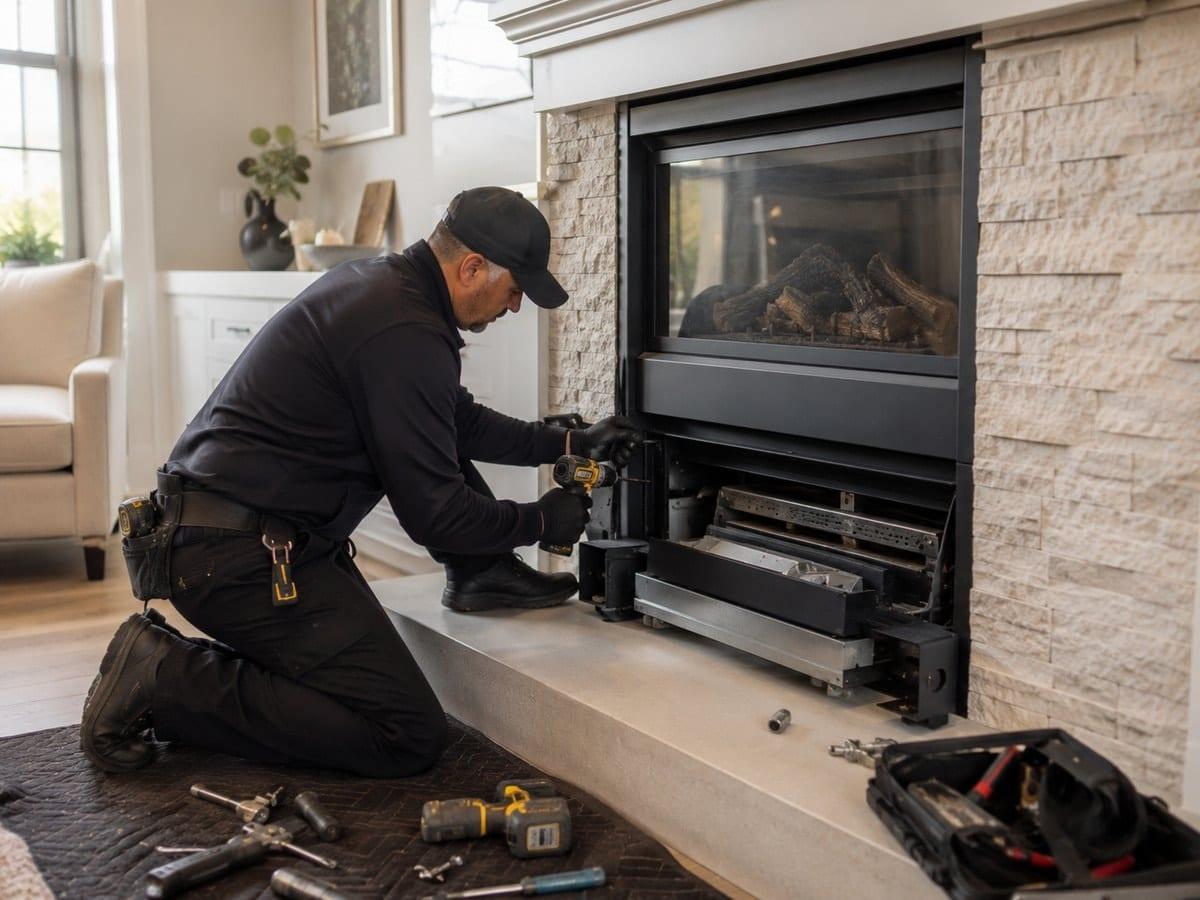
Some jobs are a single part swap, like a new damper handle or door gasket. Others are larger fireplace restoration jobs, where several worn components are repaired together so an older fireplace can go back into regular use. Masonry problems in the firebox or hearth, such as loose firebrick, failed mortar joints or cracked stone, are handled as fireplace masonry repair.
Repair isn't always the right job. If the problem is heavy soot or creosote rather than damage, a cleaning comes first. If the unit is beyond saving or you want a different kind of fireplace altogether, installing a new fireplace is the better route.
Signs a fireplace needs repair
Common reasons homeowners call
- Smoke rolling into the room instead of going up the chimney
- Cracks, gaps or crumbling pieces in the firebox walls or floor
- A damper that's stuck, won't open fully or won't close
- Cold drafts or outdoor smells coming through the fireplace when it's off
- Glass doors that won't latch, rattle or leave a gap around the seal
- Rust, warping or discoloration on the metal parts of a factory-built fireplace or insert
- A gas fireplace that won't light, won't stay lit or burns with an unusual flame
- An insert blower that's noisy or has stopped running
Smoke coming into the room
A fireplace smoking into the room is one of the most common repair calls, and the cause isn't always the fireplace itself. Several things can push smoke back out the front: a damper that only opens partway, a damaged smoke chamber, a blocked flue, or a house that pulls air down the chimney when exhaust fans run. Finding the actual cause matters, because smoky fireplace repair can mean anything from fixing a damper to smoke chamber repair or draft repair. Stop using the fireplace until the cause is fixed, because smoke in the room also means combustion gases in the room.
When the fireplace won't light
On a gas fireplace, start with these common causes:
- The pilot assembly
- The thermocouple or thermopile that confirms the pilot is lit
- The igniter
- The gas valve
- A closed shutoff
- A dead battery in the remote receiver
Some of these are quick fixes, and others need a replacement part. Gas fireplace repair is part of the work we do, including units that won't light or keep shutting themselves off.
If you smell gas
Don't try to light the fireplace and don't flip any switches. Leave the house and call your gas utility or 911 from outside.
On a wood-burning fireplace, a fire that won't catch or keeps dying out usually points to poor draft rather than a broken part. Common causes are a damper that isn't fully open, a cold or obstructed flue, or a firebox that isn't getting enough air. Damp wood causes the same symptoms, so rule that out before you call.
What a repair visit looks like
From the first call to a working fireplace
Tell us what's happening
When you get in touch, describe the symptoms, such as smoke in the room, a stuck damper, cracked panels or a pilot that won't stay lit. Photos help. Estimates are free.
We look at the whole fireplace
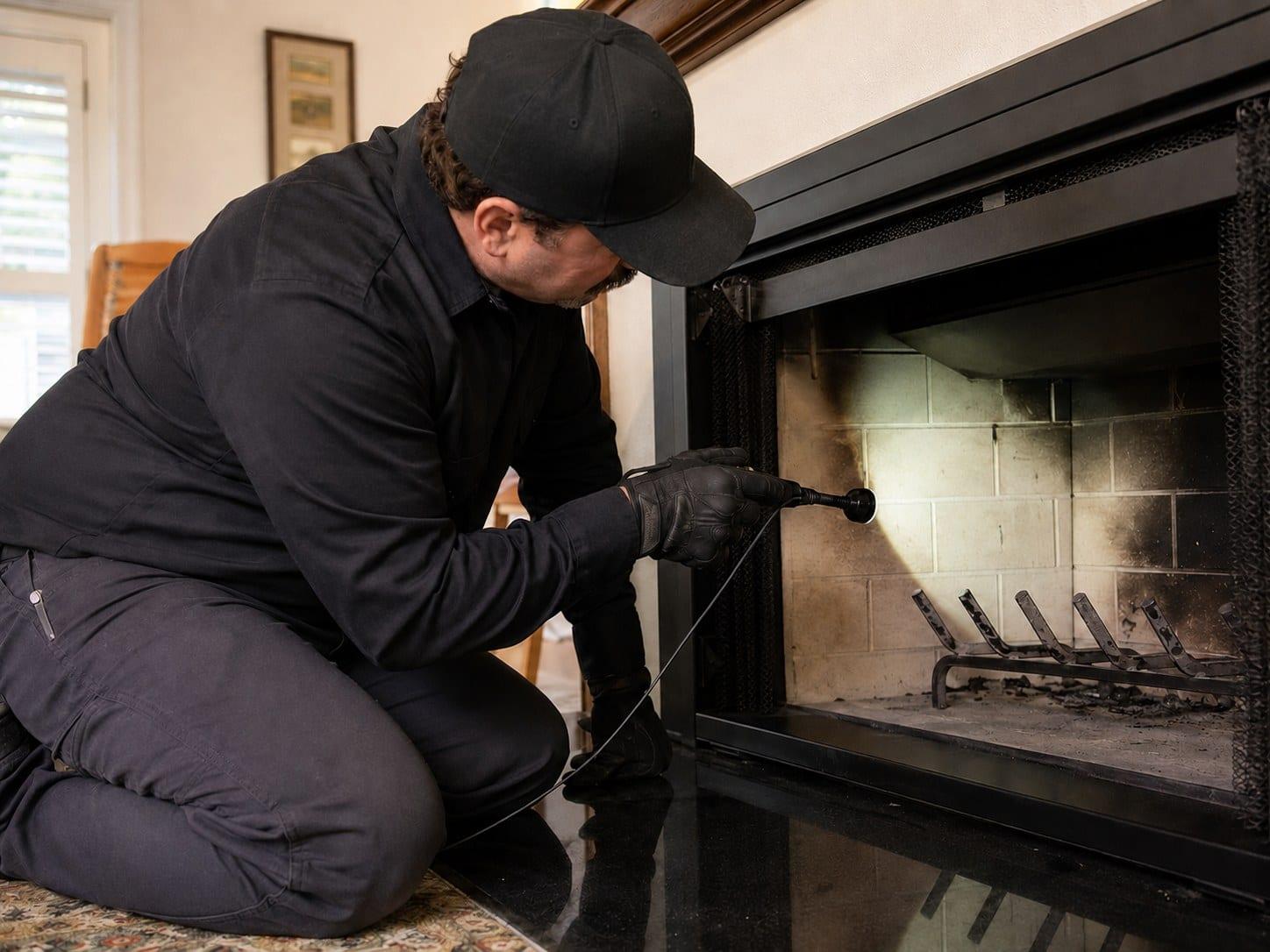
The technician checks the firebox lining, damper, doors and smoke chamber. On gas units, the burner, valve and ignition parts are checked too. We look beyond the part you called about, because one problem often causes another.
You get a clear repair plan
We explain what's damaged, what needs fixing now and what can wait. We'll also tell you whether repair still makes sense for that fireplace.
The repair
Parts are repaired or replaced with components that match the fireplace or insert. On factory-built units, that means parts made for that model.
Test and walk-through
We test the damper, doors and ignition and explain any cure time needed before normal use.
Fireplace parts, materials and fuel types
| Component | Common problems | Usual fix |
|---|---|---|
| Firebrick (masonry fireplaces) | Cracked or loose bricks, eroded mortar joints | Replace bricks and repoint with refractory mortar |
| Refractory panels (factory-built fireplaces) | Cracks, gaps, crumbling edges, missing pieces | Replace with panels made for the unit |
| Throat damper | Stuck, rusted, warped, broken handle | Repair or replace the damper or its hardware |
| Top-sealing damper | Broken cable, worn gasket | Replace the cable, gasket or damper |
| Glass doors | Misaligned frame, loose hinges, worn gasket, cloudy glass | Adjust, replace hardware or gaskets, clean the glass |
| Smoke chamber | Rough or cracked walls that trap soot and hurt draft | Smoke chamber repair |
| Gas burner and controls | Won't light, won't stay lit, weak or uneven flame | Clean or replace the pilot, thermocouple, igniter or valve |
| Insert blower | Noisy or not running | Clean or replace the blower |
Wood, gas (natural gas or propane), pellet and electric fireplaces each fail in different ways. A wood fireplace wears down from heat and creosote. A gas unit tends to develop ignition and control problems. A pellet unit depends on its feed system and fans, and an electric fireplace needs an electrical repair. We work on all major brands of fireplaces and inserts.
Glass doors and gaskets
Fireplace glass doors keep sparks in, and they stop warm room air from being drawn up the chimney when the fire is out. Over time, hinges loosen, frames warp from heat and gaskets flatten, so the doors rattle or leave a gap. Most of that can be adjusted or replaced. Cloudy glass usually just needs proper fireplace glass door cleaning with a cleaner the manufacturer recommends. Cracked or broken glass has to be replaced, not cleaned.
Fireplace damper repair
The fireplace damper, sometimes called the fireplace flue damper, is the plate that opens the flue when a fire is burning and closes it when the fireplace is off. A damper that won't open fully causes smoke problems. One that won't close lets heated or cooled air escape up the chimney, and lets drafts, odors and sometimes rain or animals come down.
Most older masonry fireplaces have a throat damper, which is a cast-iron plate just above the firebox worked by a handle, lever or rotary knob. Over the years these rust, warp from heat or jam with debris, and their pivot points wear out. Fireplace damper repair can mean freeing and adjusting the plate, replacing the handle or hardware, or replacing the damper entirely. When a throat damper is too damaged to seal, a common replacement is a top-sealing damper mounted at the top of the chimney. It's operated by a cable that runs down into the firebox.
Refractory firebox panel replacement
Factory-built (prefab) fireplaces line the firebox with refractory panels instead of firebrick. These panels protect the metal firebox behind them from direct heat, and they wear out with use.
Fine hairline cracks are often within what manufacturers allow, but the limits vary by unit and are usually listed in the owner's manual. The panels should be replaced if you see any of these:
- Cracks wider than the manual allows
- Pieces breaking off
- Crumbling edges
- Panels that have shifted and left gaps
Replacement panels need to be the ones made for that fireplace model. A generic panel or a patch of mortar isn't a safe substitute.
Stop using a fireplace with exposed metal
If you can see the metal firebox through a gap or a missing piece of panel, don't light another fire until the panels are replaced. That metal isn't built to take direct flame.
Fireplace insert repair
A fireplace insert is a closed firebox that burns wood, gas or pellets. It sits inside an existing fireplace and vents through a liner in the chimney. Inserts have their own wear parts:
- Door gaskets that stop sealing
- Glass that clouds or cracks
- Baffles and firebrick inside wood inserts
- Blowers that get noisy or quit
- Ignition and control parts on gas and pellet units
Insert repairs usually call for parts specific to that make and model. While the unit is opened up, we also check that its connection to the liner is still sound. If an aging insert keeps failing and you're thinking about what to replace it with, our guide comparing a freestanding wood stove and a fireplace insert lays out the trade-offs.
Older wood-burning fireplaces
Wood-burning fireplaces that have seen decades of fires often need several repairs at once, such as a worn throat damper, eroded firebrick joints and a rough smoke chamber. Sometimes a fireplace is too worn for part-by-part fixes to make sense. In that case, repairing or replacing an old fireplace treats the unit as a whole.
If the firebox and flue are in good shape and you only want to change how the fireplace looks, refacing the fireplace surround updates the face without touching the working parts.
Emergency fireplace repair
Emergency calls are accepted. If there's fire outside the firebox, smoke you can't clear or a gas smell, get everyone out of the house and call 911 or your gas utility first.
Booking a fireplace repair
We repair fireplaces for homes and businesses across Greater Atlanta. Estimates are free. Same-day visits are available where the schedule allows, though they aren't guaranteed. Gas fireplace and gas appliance work is offered. Commercial and property-manager work is offered too, so rental units and commercial fireplaces are covered along with single homes.
Call or request an estimate and describe what the fireplace is doing. Emergency service available.
Related work covered on this page
- Custom Fireplace Design
- Fireplace Makeover
- Old Fireplace Redesign