On this page
What chimney crown repair is and what it involves
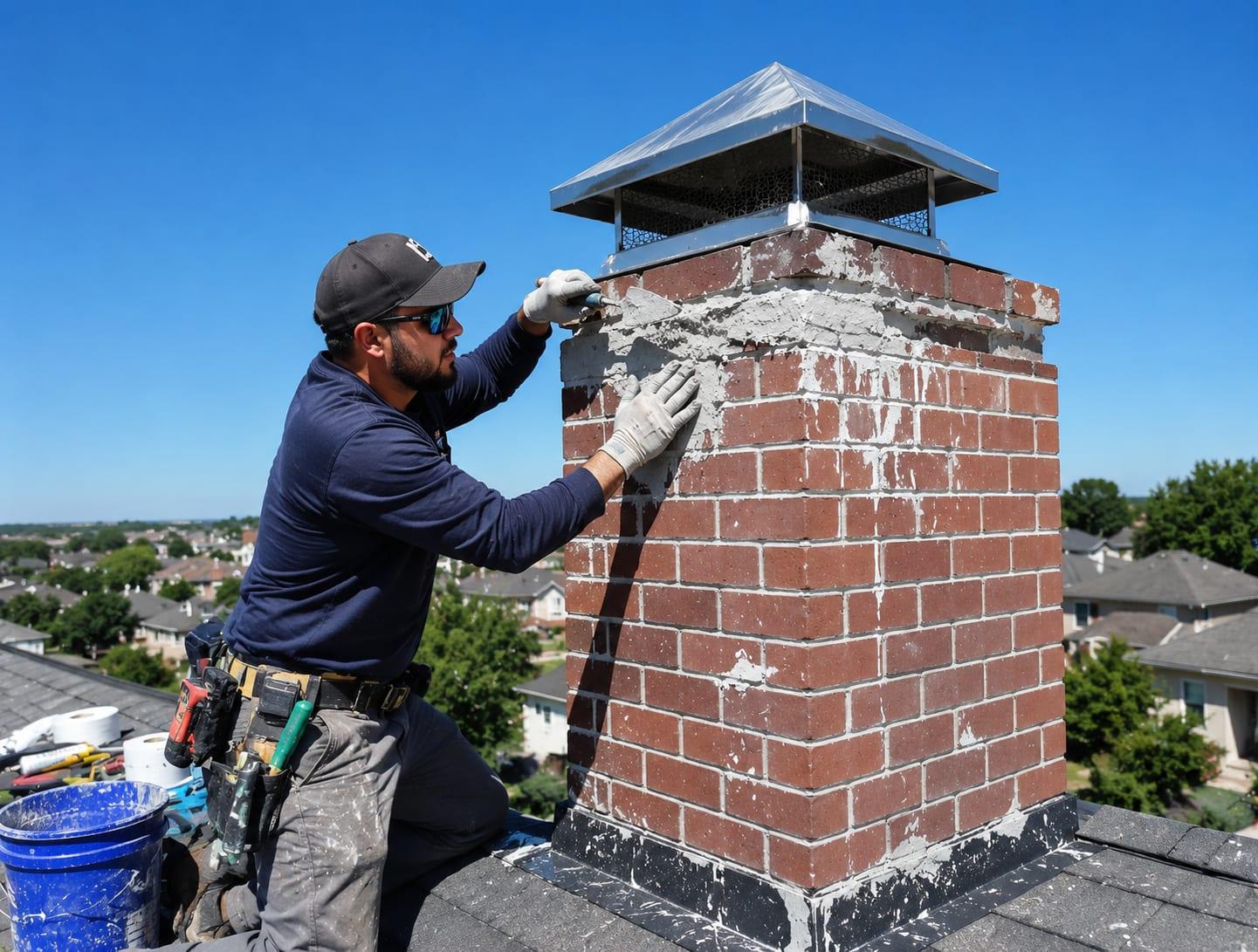
A masonry chimney ends in a crown: a cement or concrete cap poured or set over the top course of brick, with the flue tile passing up through it. Its job is to shed water away from the chimney and protect the masonry beneath. Chimney crown repair covers the work needed to bring a damaged crown back to doing that job, from sealing fine surface cracks to rebuilding a crown that has broken apart.
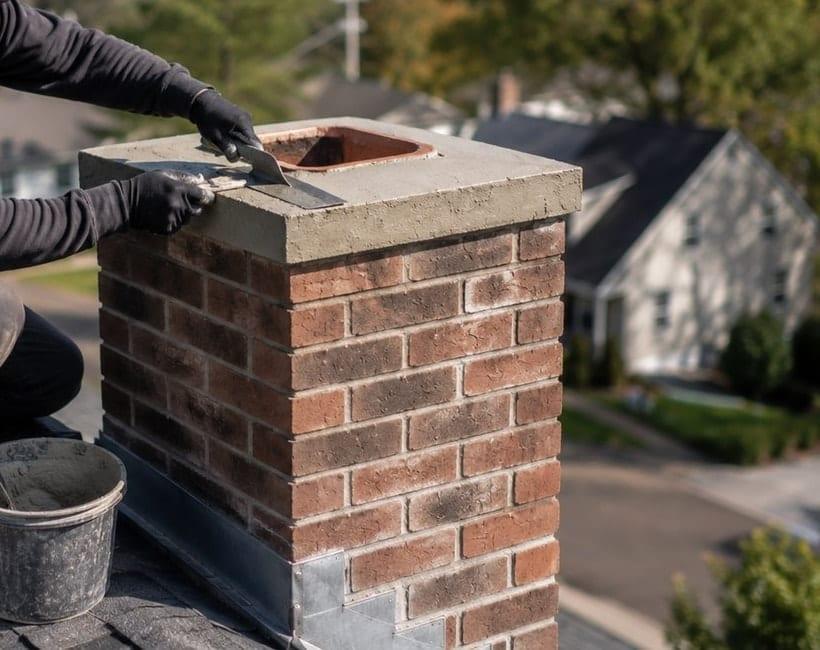
Which repair fits depends on what the crown is made of, how it was built and how far the damage has gone. A crown that is sound but has hairline cracks can usually be sealed. One that is loose, spalling or split through often needs to be removed and rebuilt, and that work frequently goes hand in hand with repairs to the surrounding brick and mortar.
When homeowners need chimney crown repair
Most crown problems are spotted from the roof or with binoculars from the yard, but some show up inside the house first. These are the signs worth getting checked:
Signs your chimney crown may need repair
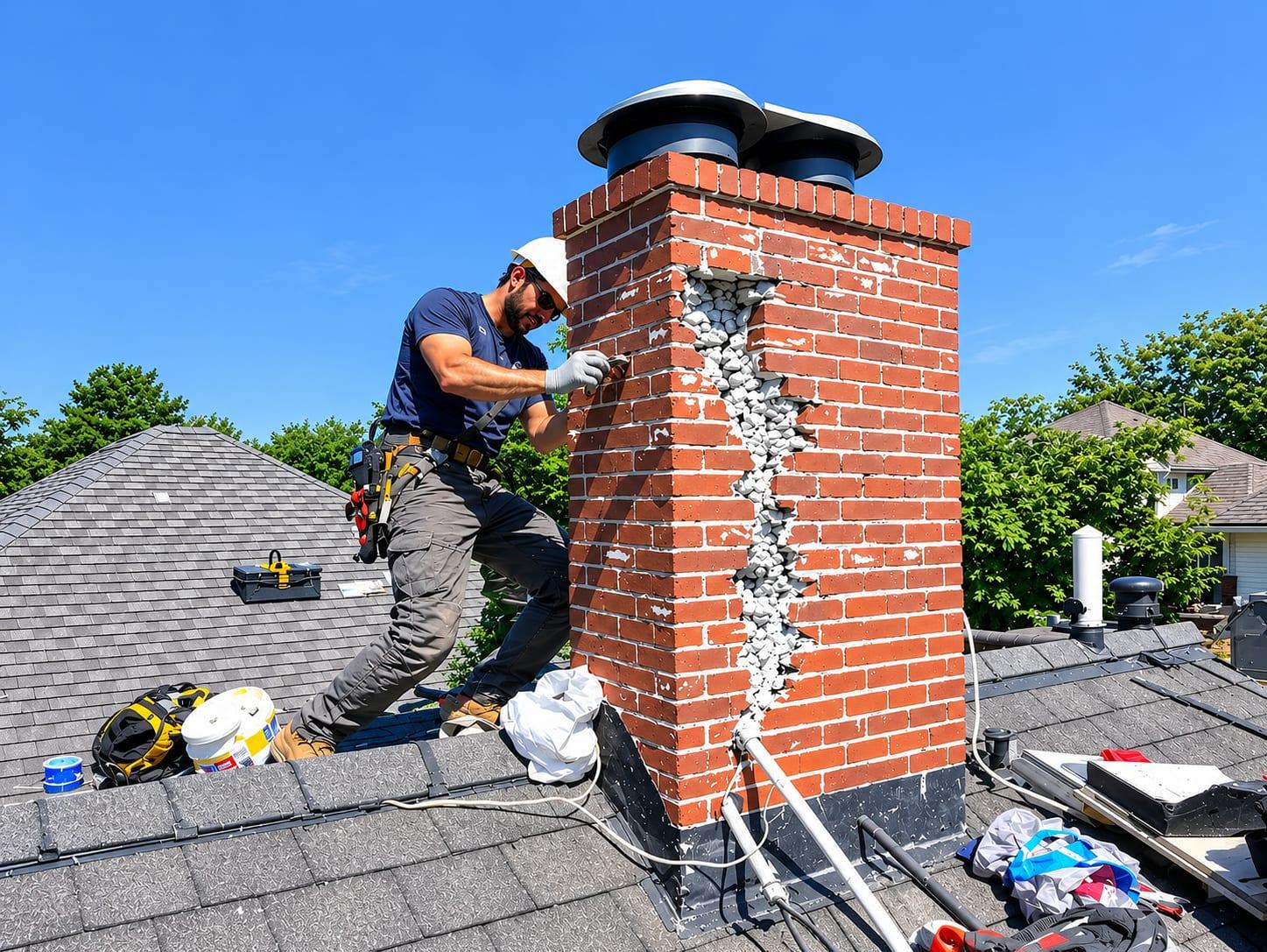
- Visible cracks across the top of the crown, especially around the flue tile
- Chunks or flakes of cement on the roof, in the gutters or in the firebox
- A crown that looks crumbly, pitted or uneven
- Water stains on the ceiling or wall next to the chimney
- Damp brick, white powdery deposits or loose mortar near the top of the chimney
- Rust on the damper or firebox parts, or water collecting in the fireplace after rain
Some of these signs can also come from a missing cap or failing flashing, so the visit starts by finding where the water is actually getting in.
Masonry chimney crown repair: materials and components
Crowns only exist on masonry chimneys. Factory-built (prefab) chimneys are topped by a metal chase cover instead, and the difference between the two is explained in how chimney caps compare with chase covers. On a masonry chimney, these are the parts involved in crown work:
| Component | What it does | How it relates to crown repair |
|---|---|---|
| Crown | Covers the top of the chimney and sheds water | The part being sealed, patched or rebuilt |
| Flue tile | Carries smoke and gases up and out | Passes through the crown; the joint around it is a common crack point |
| Top courses of brick and mortar | Support the crown | Often damaged by the same water and may need repair at the same time |
| Crown sealant or coating | Seals fine cracks and protects the surface | Used when the crown itself is still solid |
| Cement or concrete mix | Forms a new crown | Used when the old crown has to be removed and rebuilt |
| Chimney cap | Keeps rain, debris and animals out of the flue | Sits on or above the crown and is checked during the visit |
What the visit involves, step by step
How a chimney crown repair visit works
Inspect the crown and chimney top
We look at the crown surface, the joint around the flue tile, the cap, the upper brick and the flashing, and check inside for signs of water.
Explain what we found
You get a plain description of the damage and whether sealing, patching or rebuilding makes sense, along with a free estimate.
Prepare the surface
Loose material, dirt and debris are cleared away so new material can bond to sound masonry.
Repair or rebuild
Fine cracks are filled and the crown is coated. If the crown is too far gone, it is broken out and a new one is formed and finished.
Check the surrounding parts
We confirm the cap is seated properly and note any brick, mortar or flashing problems found along the way.
Why the crown matters for the rest of the chimney
Water that gets past a cracked crown soaks into the brick and mortar below. As it freezes and thaws, cracks widen and mortar loosens, so a small crown problem can grow into larger masonry repairs. Moisture can also reach the flue and damper, which is one reason the role of a chimney liner and the condition of the crown are often looked at together.
Crown and cap work together
A sound crown protects the masonry, while a cap keeps rain and animals out of the flue opening itself. The advantages of chimney caps and dampers explain how the pieces at the top of the chimney share the work.
Booking chimney crown repair
Call or request an estimate to have the crown looked at. Same-day visits are available where the schedule allows (never guaranteed), and emergency calls are accepted, which helps when water is already coming in. Commercial and property-manager work is offered as well.