On this page
What a real estate chimney inspection covers
A general home inspection usually looks at the chimney from the roofline and the firebox with a flashlight. A real estate chimney inspection goes further. It covers the full system: the crown, cap and flashing outside; the masonry or chase; the flue and its liner; the smoke chamber and damper; and the firebox, hearth and clearances inside. Gas fireplaces, inserts and wood stoves connected to the chimney are checked too. It uses the same approach as our standard chimney inspection service, timed and reported for a transaction, and a fireplace inspection can be added when the main concern is the firebox or the appliance.
Why a level 2 inspection applies when a home changes hands
The Chimney Safety Institute of America's standard of practice recommends a Level 2 inspection at a property sale or transfer, after a chimney fire and after a weather or seismic event. A Level 2 includes a video scan of the flue, which is the only practical way to see cracked flue tiles, gaps in mortar joints or a damaged liner hidden above the damper. This is an industry recommendation, not a building code or legal requirement, but it reflects how much can go unseen in a chimney that the current owner may have used for years. How chimney inspection Level 2 works explains the process in more detail.
When to schedule one
- As a buyer, inside the inspection window of your purchase contract, so findings can still inform negotiations
- As a seller, before listing, so repairs or disclosures aren't decided under deadline pressure
- When the home inspector's report flags the chimney for further evaluation
- When the sellers can't say when the chimney was last swept or inspected
- When the house has been vacant, or the fireplace hasn't been used in years
- When the property has been through a recent storm
What the visit involves, step by step
A pre-sale chimney inspection
Exterior check
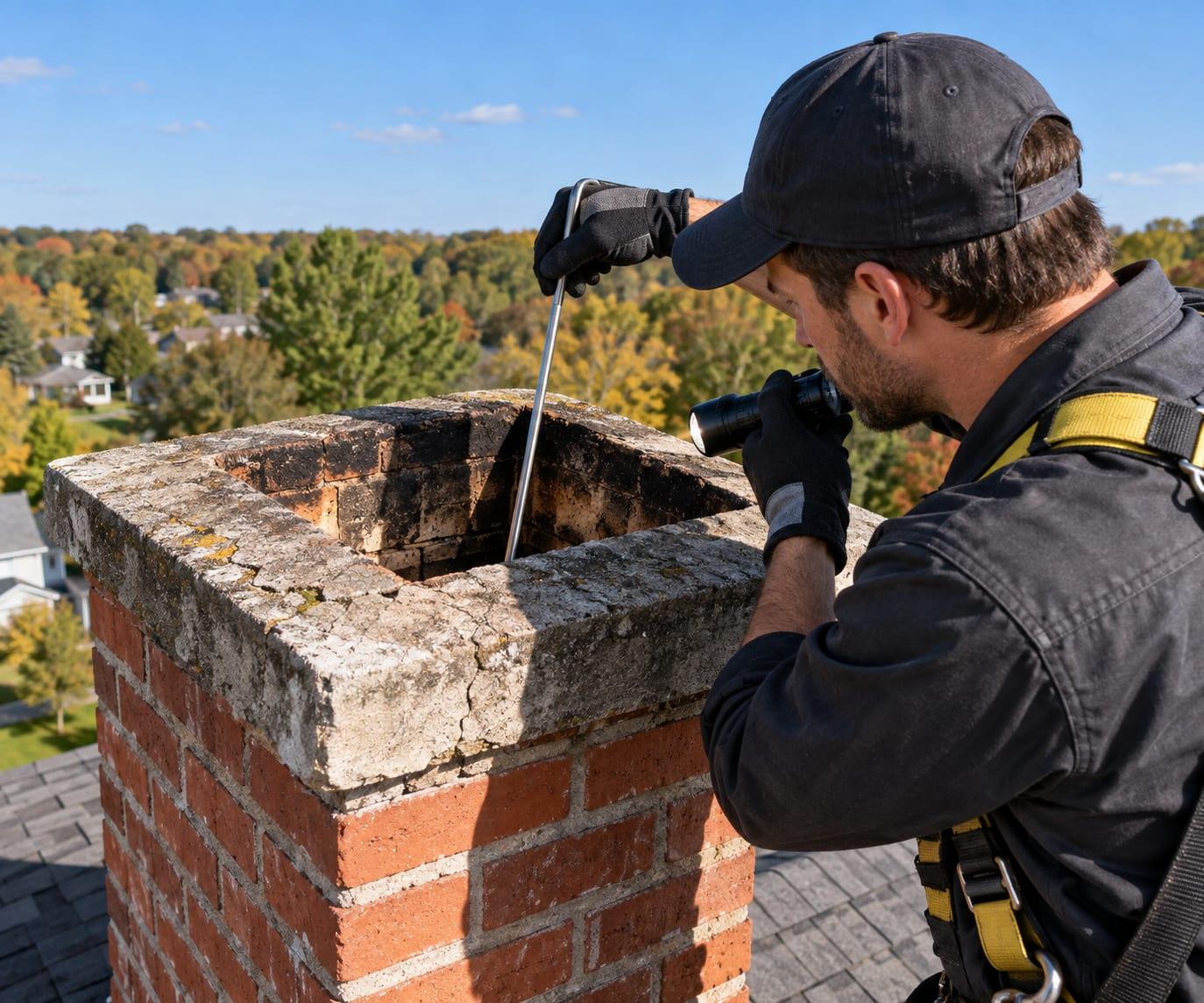
We look at the crown, cap, flashing, masonry or chase, and signs of water entry where the chimney meets the roof.
Firebox and damper
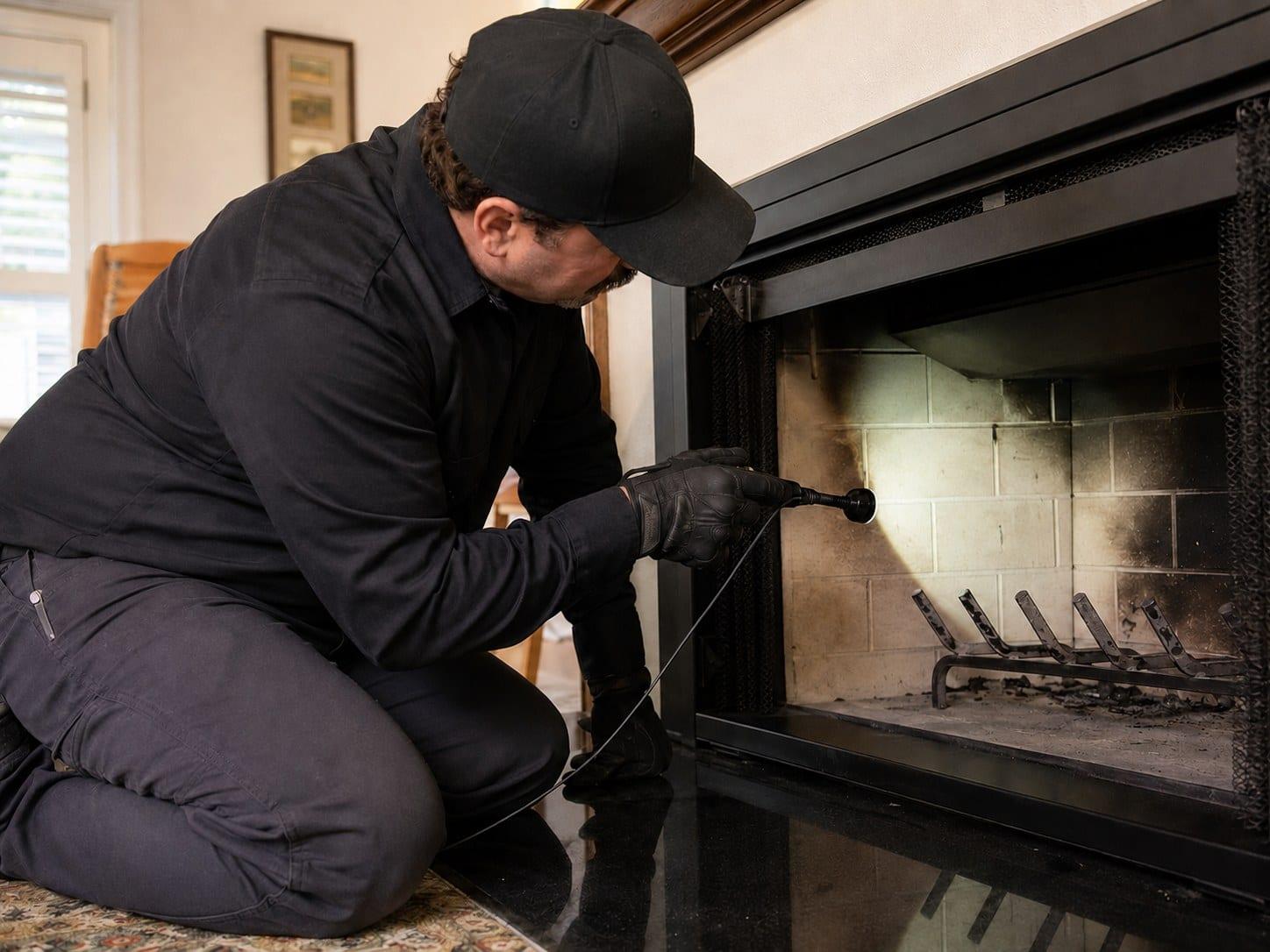
Inside, we check the firebox walls and floor, hearth, damper operation and the smoke chamber above it.
Camera scan of the flue
A camera is run up the flue to record the liner's condition from bottom to top.
Connected appliances
Gas logs, inserts and stoves are checked for proper connection and venting.
Findings and estimates
We explain what we found in plain terms you can pass to your agent, with free estimates for any repairs.
Safety and maintenance context
The most common findings in a sale are creosote buildup, missing caps, cracked crowns, worn flashing and water damage inside the flue. Most are repairable, but none should be ignored, because a damaged liner can let heat and smoke reach the framing. Our guide to chimney cleaning and safety covers what new owners should expect. Moisture problems are explained in the benefits of chimney waterproofing, and gas units have their own checklist in gas fireplace safety inspections.
Booking a real estate chimney inspection
Estimates are free, and same-day visits are available when the schedule allows, though they're never guaranteed. Contract deadlines move quickly, so call as soon as you have an accepted offer or a listing date. We work on all major fireplace brands, take emergency calls, and handle commercial and property-manager inspections as well.
What we look at
- Cap, screen and spark arrestor
- Clearances to framing and combustibles, where visible
- Smoke chamber and smoke shelf
- Firebox walls, floor and joints
- Damper operation and seal
- Flue liner for cracks, gaps and missing mortar
- Crown for cracks and pooling water
Signs to watch for
- Smoke in the room or a fire that won't draw
- It has been more than a year since the last inspection
- You've just bought the home or are about to sell it
- A storm, earthquake or chimney fire may have damaged it
How to prepare
- Make sure the technician can reach the roof or attic access if it's needed.
- Let the fireplace or stove cool completely — ideally no fire for 24 hours before the visit.
- Clear a few feet of space in front of the hearth or appliance.
- Keep pets in another room while the work area is open.
Carbon monoxide
A blocked or damaged flue can push carbon monoxide into the home. If an alarm sounds or anyone feels dizzy or sick near the fireplace, get everyone outside and call 911.