On this page
- What dryer vent cleaning involves
- Signs your dryer vent needs cleaning
- Blocked dryer vent: when it's more than buildup
- Critical dangers of a clogged dryer vent
- What happens during a dryer vent cleaning visit
- Parts of the vent system we clean
- Roof dryer vent cleaning
- Keeping the vent clear between cleanings
- Booking a dryer vent cleaning
What dryer vent cleaning involves
Your dryer pushes hot, moist, lint-filled air through a duct to the outside of the house. The lint screen catches most of the lint, but not all of it. The rest coats the inside of the duct, collects at bends and gathers behind the exterior flap or cap. Dryer vent cleaning removes that lint from the whole run, not just the part you can reach behind the machine.
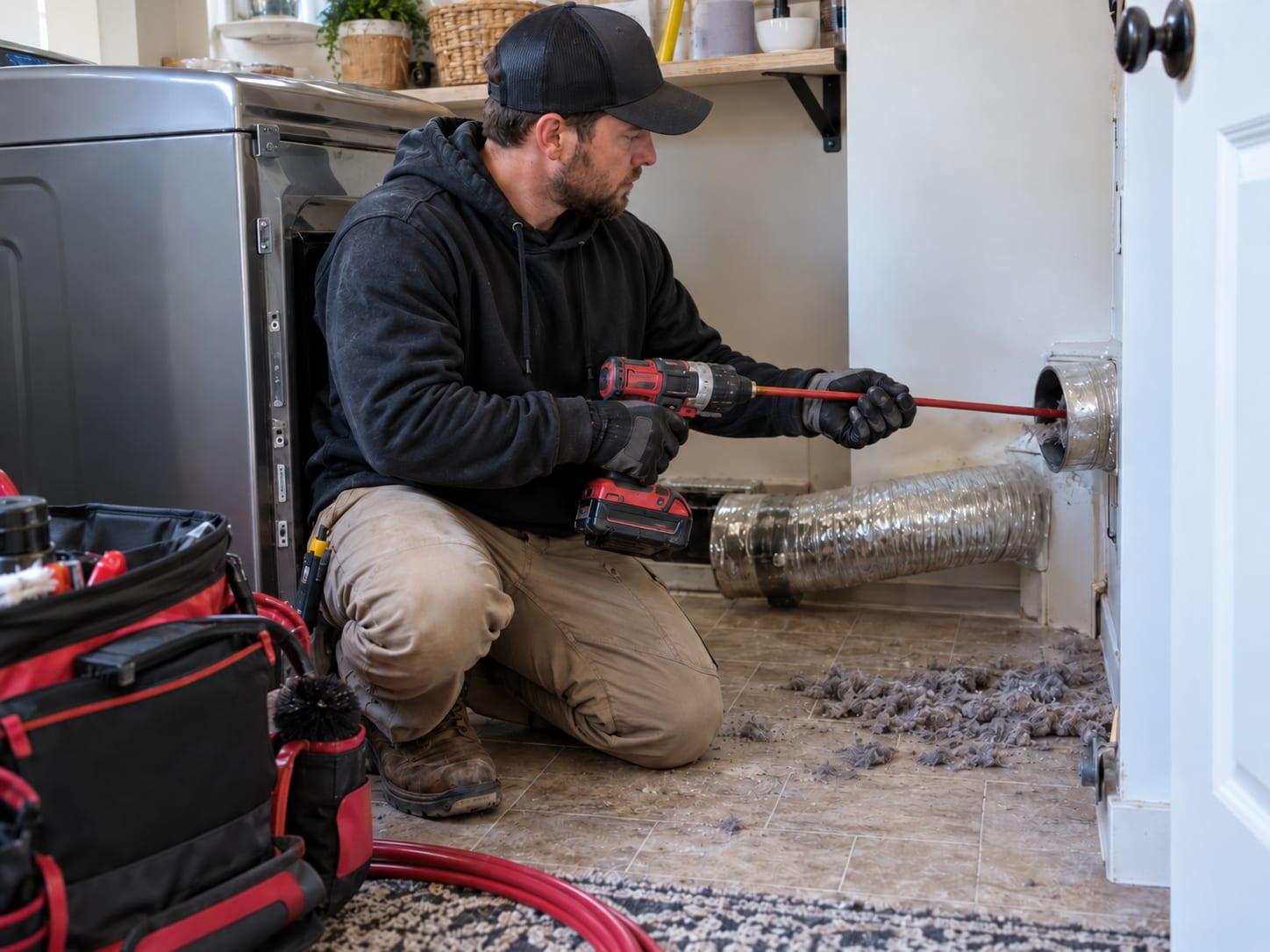
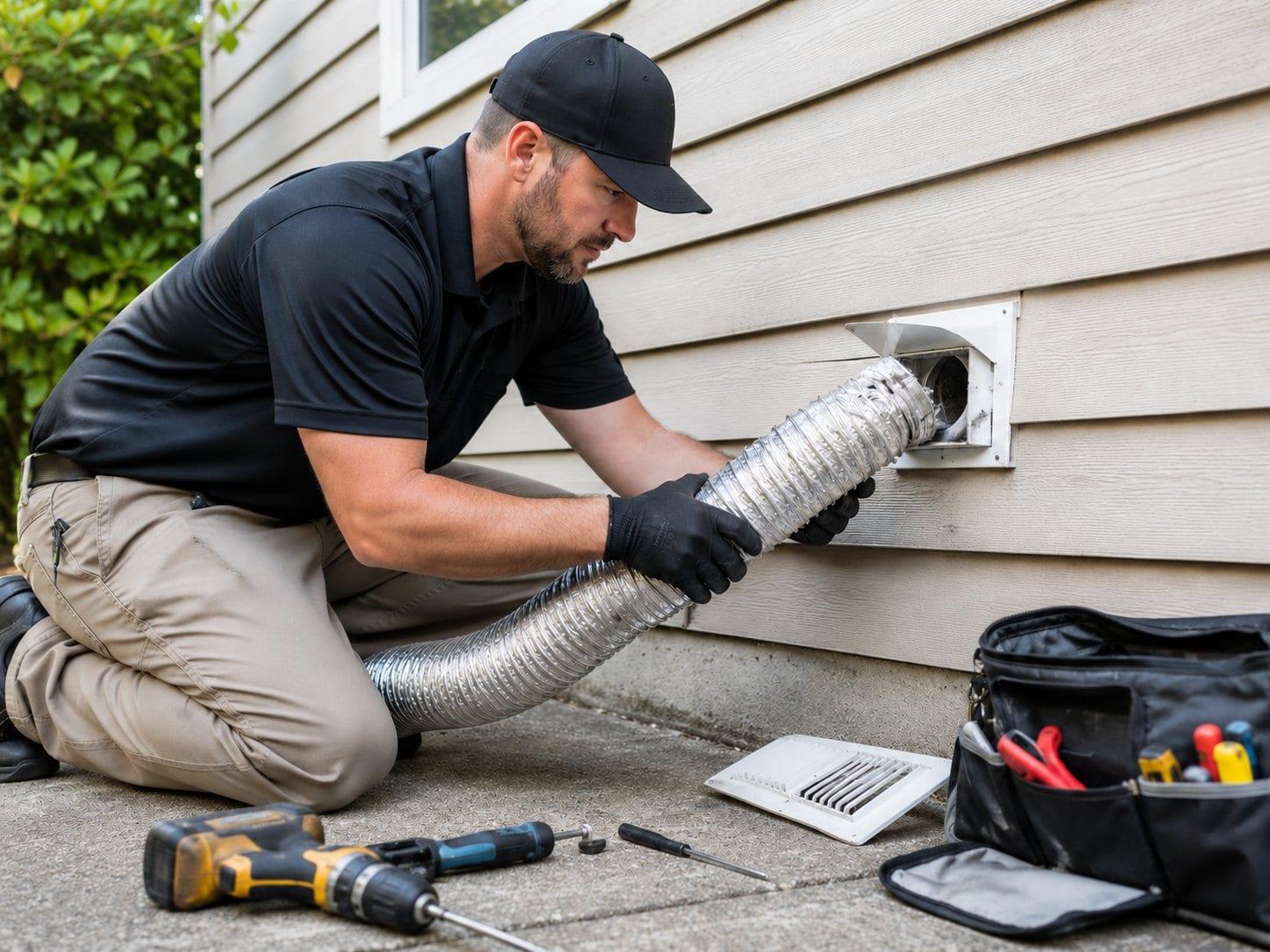
A cleaning covers the short transition hose behind the dryer, the duct running through the wall, floor, attic or crawlspace, and the termination where the air leaves the house. Unplug the dryer first, and on a gas dryer turn off its gas valve. The goal is simple: the dryer should be able to move air out as easily as it was designed to.
Signs your dryer vent needs cleaning
Common signs of dryer vent lint buildup
- Towels and jeans need two or more cycles to dry
- The top of the dryer or the clothes feel unusually hot at the end of a cycle
- The laundry room feels humid or warm while the dryer runs
- A burning or musty smell when the dryer is on
- Lint collecting around the outside vent opening, or the exterior flap barely opens while the dryer runs
- Lint showing up behind or under the dryer
- The dryer shuts off mid-cycle or shows a vent or airflow warning
One of these on its own can have other causes, such as a worn heating element. Several together usually point to restricted airflow in the vent.
Blocked dryer vent: when it's more than buildup
A clogged dryer vent is often just years of lint packed into the duct, and a standard cleaning clears it. Sometimes the blockage is something else: a bird or rodent nest in the exterior opening, a lint plug wedged at a sharp bend, a crushed section of hose behind the dryer, or a stuck damper flap. If the dryer has stopped venting almost entirely, our dryer vent blockage removal service is aimed at that kind of obstruction.
If the duct itself is torn, disconnected inside a wall or crushed beyond use, cleaning won't fix it, and repairing or replacing the damaged vent is the right job.
Critical dangers of a clogged dryer vent
Why lint buildup matters
Lint is fine and highly flammable. When it builds up, the dryer runs hotter and longer, and lint sitting near a heat source can ignite. A blocked vent is a fire risk, not just an inconvenience.
- Fire risk: packed lint plus trapped heat is the main reason dryer vents are worth cleaning at all.
- Carbon monoxide with gas dryers: a gas dryer sends combustion exhaust out through the same vent. If that path is blocked, exhaust can back up into the home.
- Moisture damage: damp air that can't escape can condense inside walls, attics or the laundry room and lead to mildew.
- Wear on the dryer: running hot for longer cycles puts extra strain on heating parts, thermostats and safety cutoffs.
If you smell burning, see smoke or notice the dryer is very hot to the touch, stop the dryer, unplug it if it's safe to do so, and get it checked before using it again.
What happens during a dryer vent cleaning visit
Step by step
Look at how the vent runs
We check where the duct goes, how long it is, how many bends it has and where it exits: a side wall, a soffit or the roof.
Check the exit while the dryer runs
Feeling the airflow at the outside opening gives a quick before-picture of how restricted the vent is.
Pull the dryer out and disconnect it
The transition hose comes off so the duct can be cleaned from the inside end. We clear lint from behind and under the machine and from the lint trap housing.
Brush and vacuum the full duct run
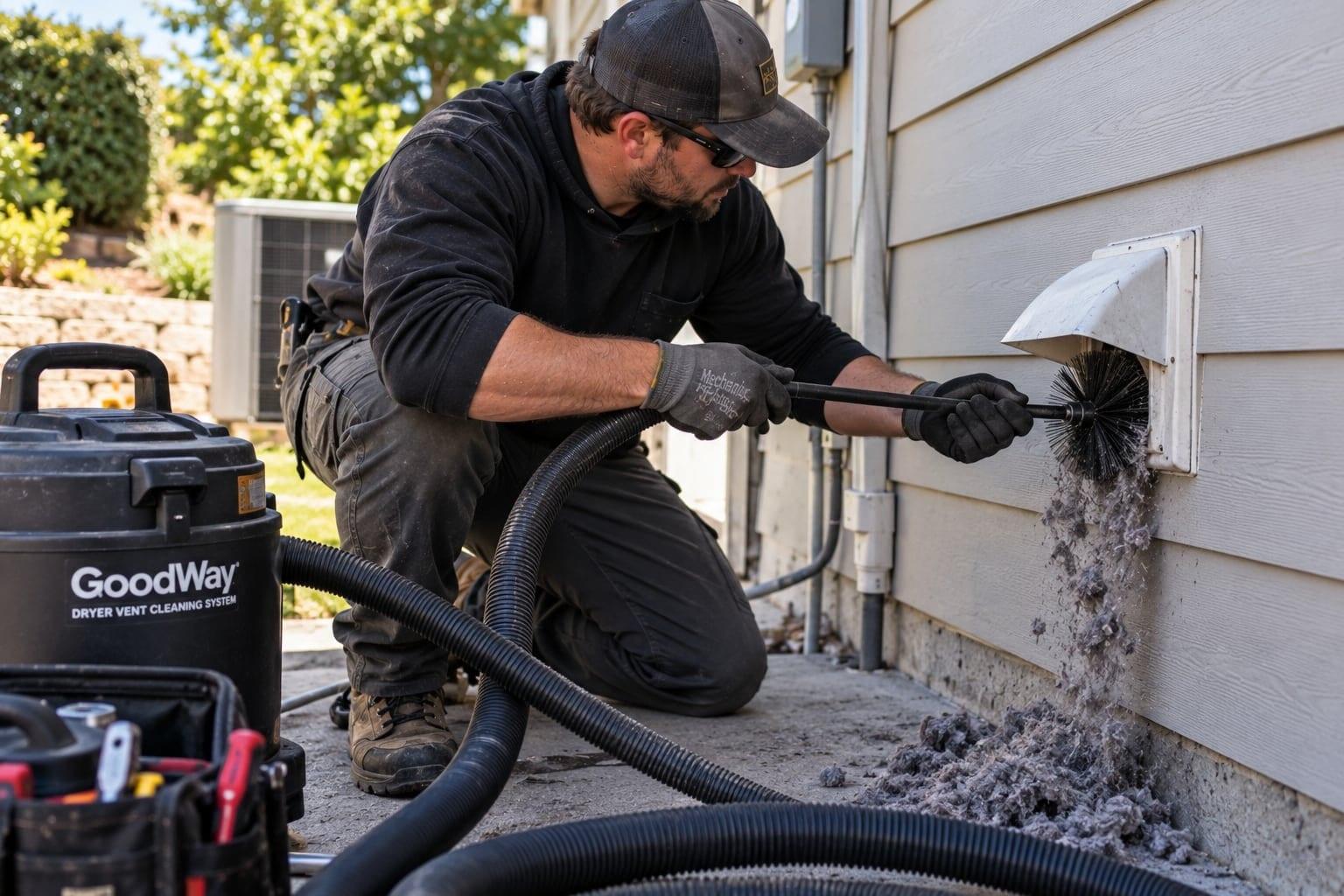
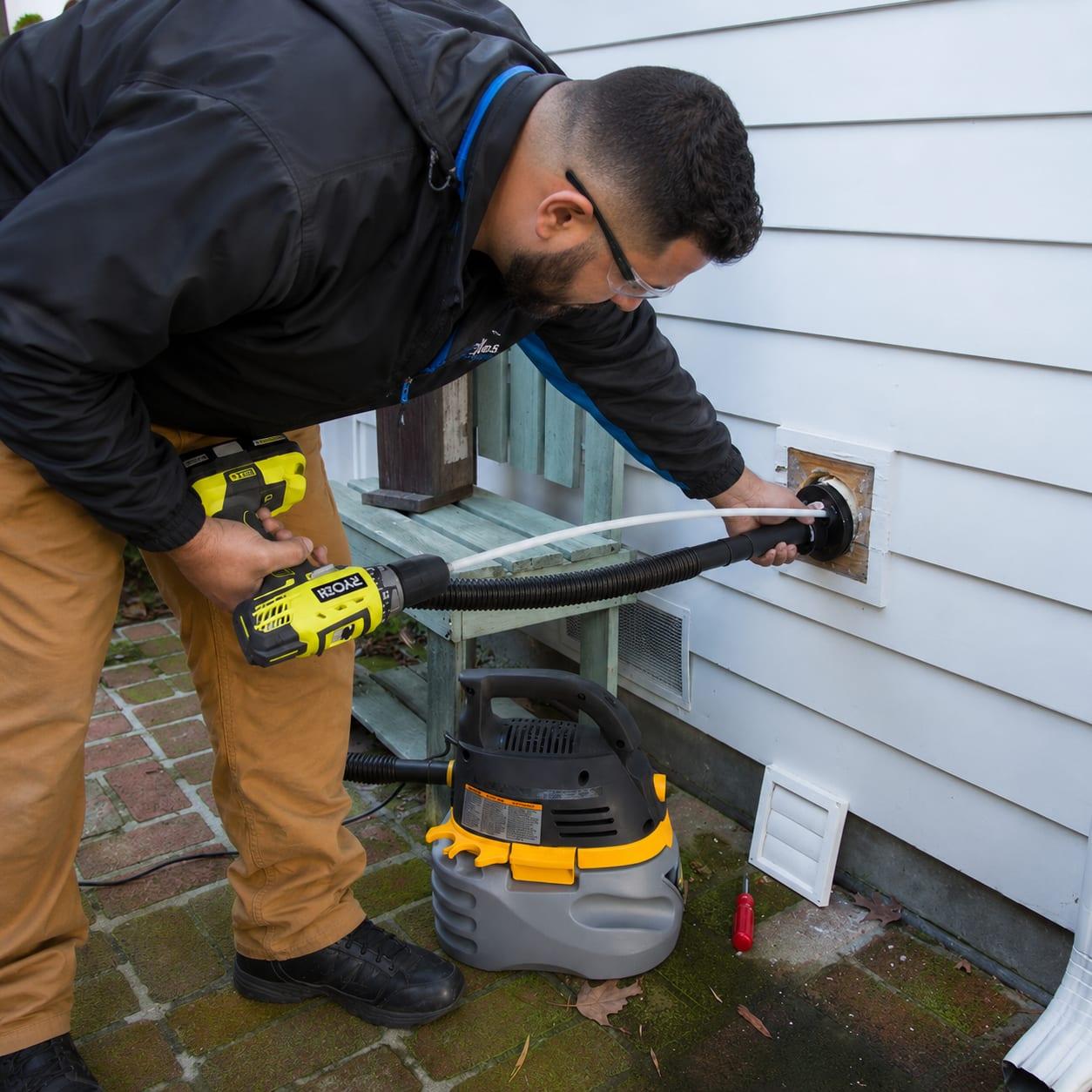
Rotary brushes on flexible rods work through the duct to break lint loose, and a vacuum pulls it out instead of blowing it into the house.
Clear the exterior termination
We clean the wall hood or roof cap, remove any lint or nesting material, and make sure the flap or damper opens and closes freely.
Reconnect and test
The dryer goes back in place and runs again so we can confirm stronger airflow at the exit. If we see a crushed hose, a loose joint or a damaged cover, we point it out.
Parts of the vent system we clean
| Component | What it does | Common problems |
|---|---|---|
| Lint screen and trap housing | First catch point for lint | Lint packed below the screen, in the housing slot |
| Transition hose | Connects the dryer to the wall duct | Kinked or crushed behind the dryer; thin foil or plastic accordion hoses trap lint in their ridges |
| Duct run | Carries air through walls, floors, attics or crawlspaces | Lint buildup at bends, sagging sections, loose joints |
| Wall hood or flap | Lets air out and keeps pests and weather out | Stuck flaps, lint clogs, nests, broken louvers |
| Roof cap | Exit point for vents routed through the roof | Lint caught under the cap, screens clogged, debris and nests |
Both electric and gas dryers vent through this same kind of duct. The difference is that a gas dryer also exhausts combustion gases, which makes a clear vent even more important.
If the exterior cover is cracked, missing its flap or keeps jamming, a new dryer vent cover is often a quick fix done alongside the cleaning.
Roof dryer vent cleaning
Some homes vent the dryer up through the attic and out a cap on the roof, sometimes called a dryer vent chimney. These vents tend to clog faster than wall vents: the air has to travel up and farther, lint drops back down the vertical run, and many roof caps have screens or tight louvers that catch lint quickly.
Rooftop dryer vent cleaning means working the duct from inside and also clearing the cap on the roof itself, so the whole path is open. If a long or awkward roof run keeps clogging no matter how often it's cleaned, moving the vent to a shorter, more direct route may be worth discussing.
Keeping the vent clear between cleanings
- Clean the lint screen before or after every load.
- Every so often, wash the screen with warm, soapy water if dryer sheets leave a film that blocks air.
- Keep the area behind the dryer clear so the transition hose isn't crushed against the wall. Unplug the dryer first, and on a gas dryer turn off its gas valve.
- Glance at the outside vent while the dryer runs: the flap should open and you should feel steady airflow.
- Watch for drying times creeping up; that's usually the earliest sign of buildup.
If you aren't sure whether the problem is lint or something else, such as a disconnected section inside a wall, a dryer vent inspection is the better place to start.
Booking a dryer vent cleaning
Same-day visits are available where the schedule allows, though they're never guaranteed, and emergency calls are accepted. Call or request an estimate and tell us what you're noticing, such as long drying times, a hot dryer, or a vent that exits through the roof, so we can plan the visit.
Commercial and property-manager work is offered too. Landlords and managers with several units can learn about dryer vent cleaning for rentals and property managers.
Free estimates.
Get in touch to schedule a dryer vent cleaning or ask whether your vent needs one.
Related work covered on this page
- Dryer Vent Lint Removal
- Roof Dryer Vent Cleaning