On this page
What dryer vent repair covers
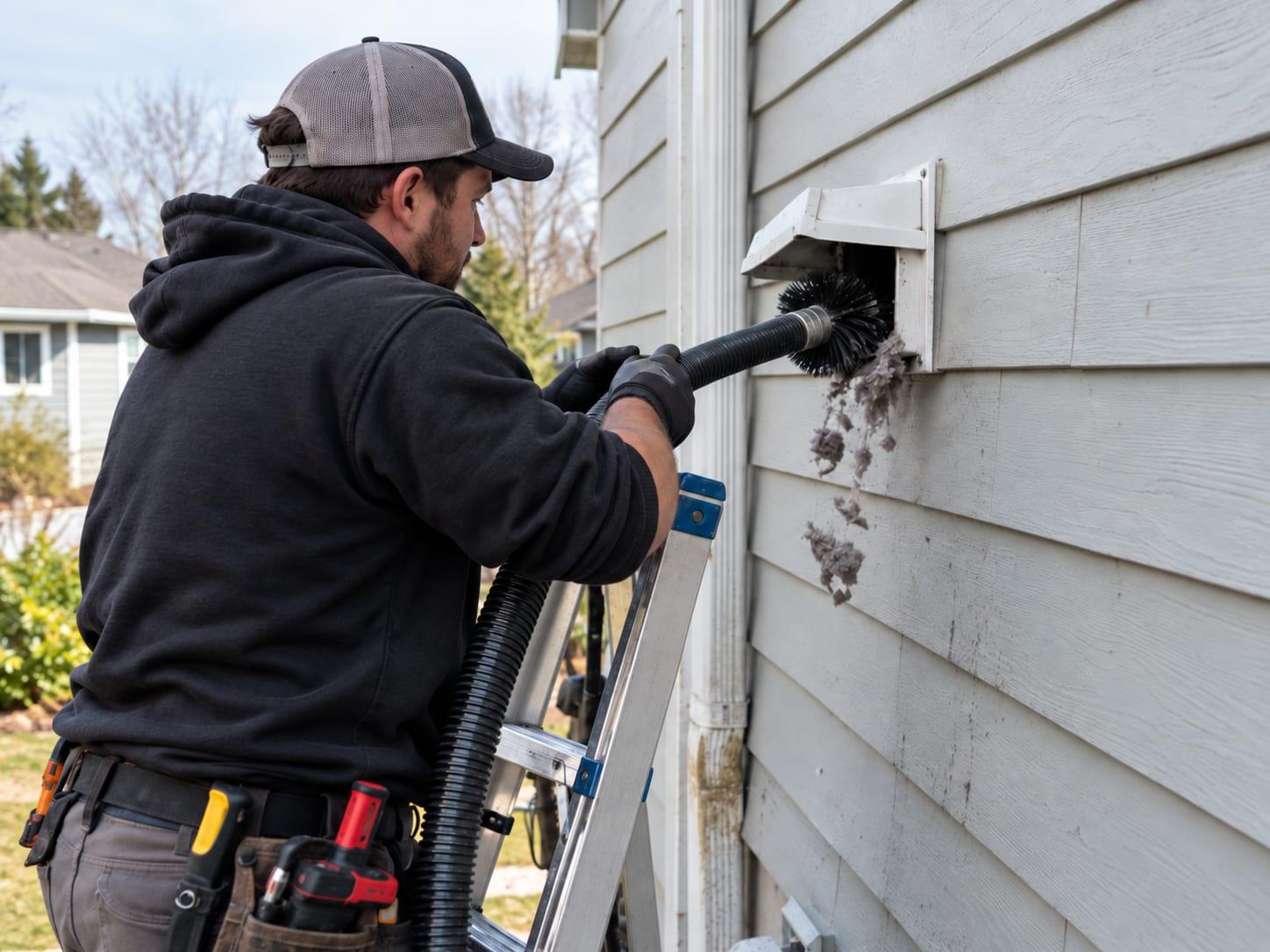
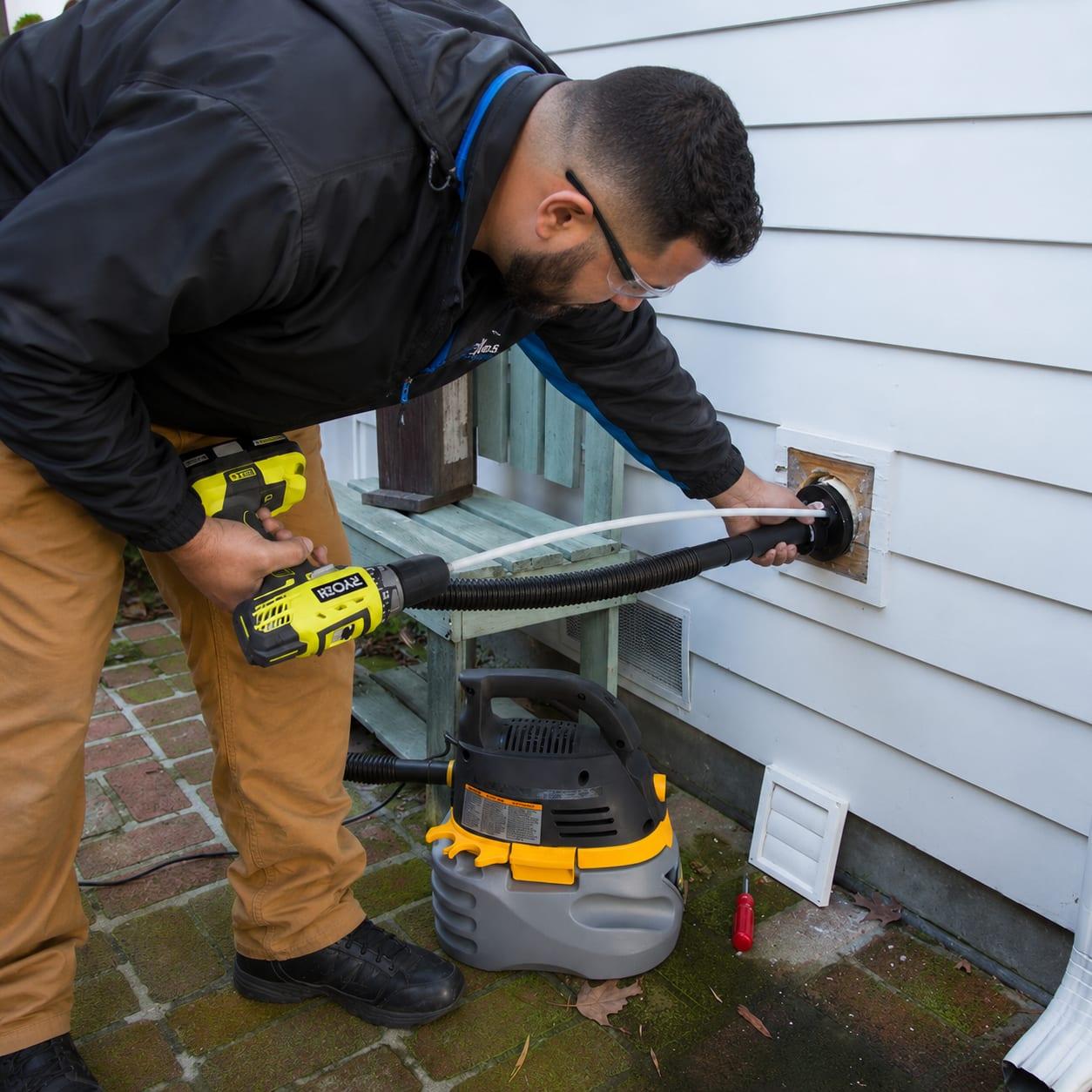
A dryer vent is more than the hose behind the machine. It runs from the dryer's exhaust collar, through the transition duct, into a duct inside the wall, floor or ceiling, and ends at a hood on the outside of the house. Dryer vent repair means fixing whichever part of that path has failed: a joint that has pulled apart, a section that has been crushed flat, a duct that has torn or rusted through, or a run that sags and collects lint.
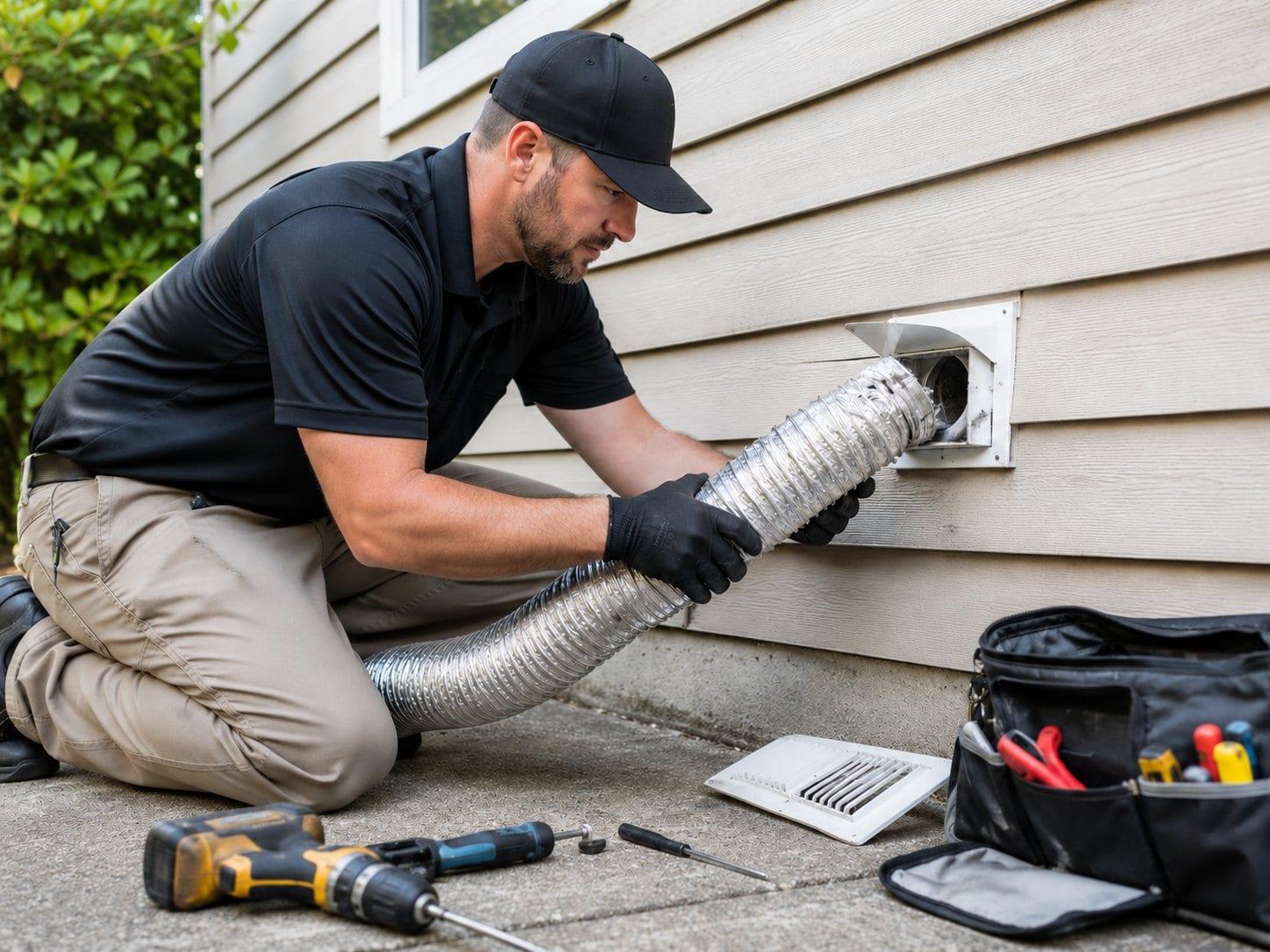
Dryer vent replacement is the better choice when the existing duct is the wrong material, damaged along much of its length, or patched so many times that it can't be sealed properly. In that case the old duct comes out and a new run goes in along the same path.
- Reconnecting ducts that have separated at the dryer, at a joint or at the wall
- Replacing crushed or kinked transition ducts behind the dryer
- Replacing torn, punctured or corroded duct sections
- Re-supporting sagging runs in attics, crawl spaces and basements
- Sealing joints with foil tape rather than screws that catch lint
- Swapping plastic or foil accordion duct for metal duct
Signs your dryer vent needs repair
Some problems are easy to spot behind the dryer. Others show up only as symptoms in the laundry room or elsewhere in the house.
Common symptoms and what they usually point to
01Clothes take two or more cycles to dry
- What you may notice
- Loads come out damp, and the dryer runs longer than it used to.
- How it’s confirmed
- Airflow is measured at the outside hood and the duct is checked for crushing, kinks or a disconnected joint before any lint buildup is blamed.
02Lint around the dryer or on the floor
- What you may notice
- Lint collects behind the machine, on nearby walls or in the laundry room.
- How it’s confirmed
- The transition duct and wall connection are pulled and inspected for gaps, tears or a loose clamp.
03Laundry room feels hot or humid
- What you may notice
- The room gets noticeably warm or damp while the dryer runs.
- How it’s confirmed
- The run is traced for separated joints that release exhaust indoors instead of outdoors.
04Little or no air at the outside hood
- What you may notice
- The flap barely opens, or you feel almost no airflow while the dryer runs.
- How it’s confirmed
- The hood and duct are checked for a blockage, a nest, a stuck flap or a broken section in between.
05Burning smell or a dryer that shuts off hot
- What you may notice
- A scorched smell, or the dryer stops mid-cycle and is very hot to the touch.
- How it’s confirmed
- Stop using the dryer first. The vent is then inspected for a restriction or damage that traps heat.
If the duct is intact and simply packed with lint, the right job is a thorough dryer vent cleaning rather than a repair. If nobody can tell yet what's wrong, testing airflow and inspecting the full vent run comes first. And if the trouble is the route itself, such as a run that is too long or has too many turns, moving the vent to a shorter path is the fix.
What happens during a repair visit
Dryer vent repair, step by step
Talk through the symptoms
We start with what you've noticed, such as long dry times, heat, lint or smells, and when it started.
Pull the dryer and inspect the connection
The dryer is moved out and the transition duct and wall connection are checked for crushing, tears and gaps.
Trace the run
The duct is followed as far as access allows, including in the attic, crawl space or basement, to find damage, sags and loose joints.
Check the exterior termination
The outside hood or roof vent is checked to confirm the flap opens freely and the opening is clear.
Explain the options
You get a plain answer on whether a repair will do or whether replacement makes more sense, plus a free estimate before any work begins.
Repair or replace
Damaged sections are replaced, joints are reconnected and sealed with foil tape, and loose runs are supported so they don't sag.
Test and put the dryer back
The dryer is reconnected without crushing the transition duct, then run while airflow at the outside is checked.
Duct materials and parts we work with
| Feature | Where it's used | What to know |
|---|---|---|
| Rigid metal duct | Runs inside walls, floors, ceilings and attics | Smooth interior holds less lint and resists crushing; the usual choice for concealed runs |
| Semi-rigid metal duct | Short transition from the dryer to the wall | Holds its shape better than foil and is easier to fit in tight spaces |
| Foil or plastic accordion duct | Often found as an older transition hose | Crushes and kinks easily, and its ribs trap lint; we commonly replace it |
Rigid metal duct
- Where it's used
- Runs inside walls, floors, ceilings and attics
- What to know
- Smooth interior holds less lint and resists crushing; the usual choice for concealed runs
Semi-rigid metal duct
- Where it's used
- Short transition from the dryer to the wall
- What to know
- Holds its shape better than foil and is easier to fit in tight spaces
Foil or plastic accordion duct
- Where it's used
- Often found as an older transition hose
- What to know
- Crushes and kinks easily, and its ribs trap lint; we commonly replace it
Many dryer manufacturers' installation instructions call for metal duct, so check your dryer's manual if you're unsure what yours requires. When the outside hood is broken, missing its flap or stuck open, a new exterior vent hood is usually done during the same visit.
Safety and upkeep after a repair
Stop using the dryer if you smell burning
A scorched smell, a dryer that's too hot to touch, or visible smoke means turn it off and leave it off until the vent has been checked. Lint is highly flammable, and a damaged or restricted vent traps both lint and heat.
A gas dryer has an extra concern: its exhaust carries combustion gases, including carbon monoxide. A disconnected or torn vent can release those gases indoors, which is one more reason a working carbon monoxide alarm belongs near the laundry area.
Simple habits that protect a repaired vent
- Clean the lint screen before or after every load
- Leave a few inches behind the dryer so the transition duct isn't crushed
- Look at the outside hood now and then to make sure the flap opens and closes
- Watch for drying times creeping back up
- Avoid pushing the dryer back hard against the wall after moving it
Landlords and managers responsible for several units can pair repairs with scheduled vent service for rental properties, so problems are found between tenants instead of after a complaint.
Booking dryer vent repair
Same-day visits are available where the schedule allows, though they are never guaranteed. Call or request an estimate, and tell us what you've noticed so we can plan the visit.