On this page
What gas log installation is and what it involves
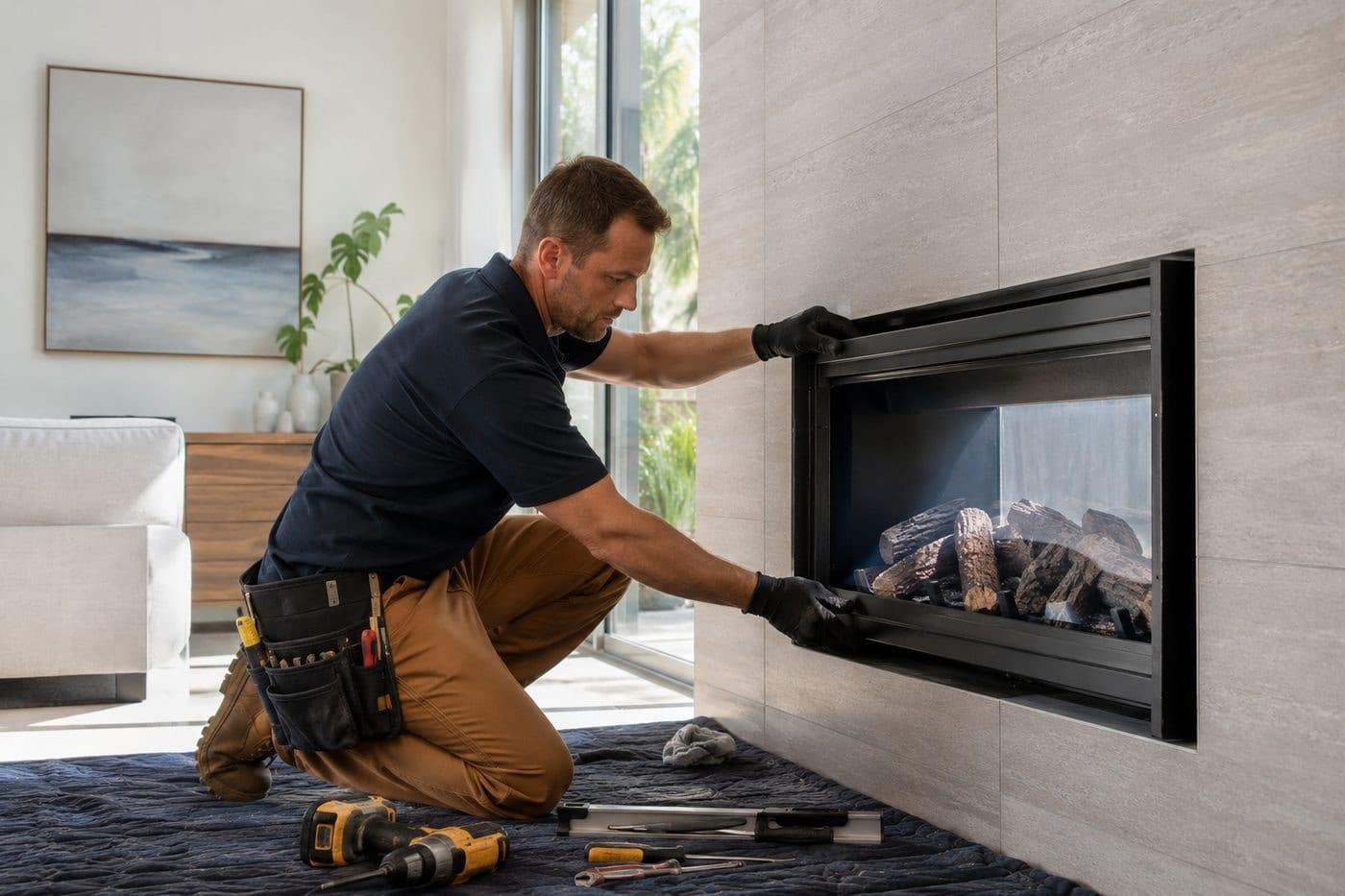
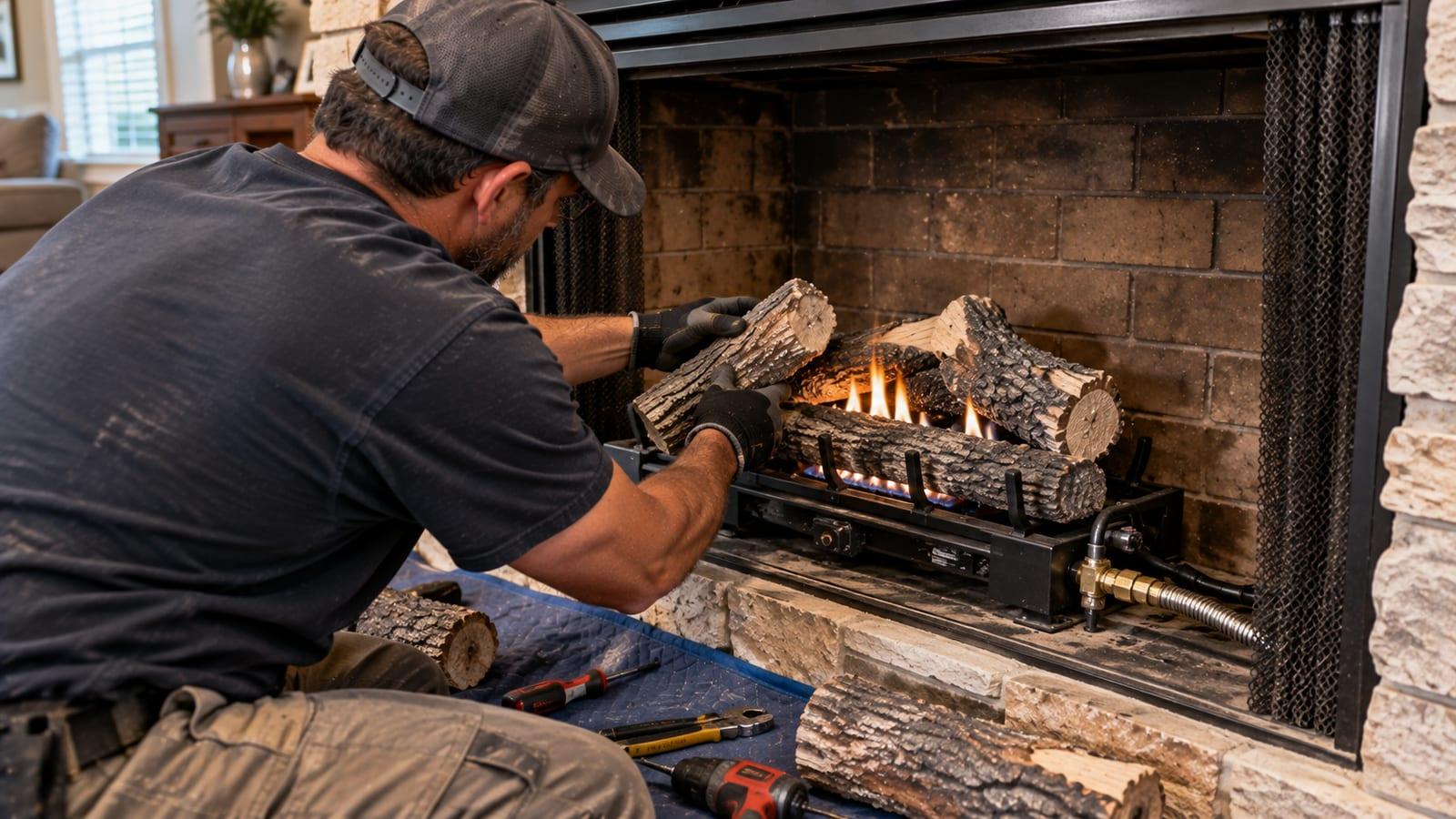
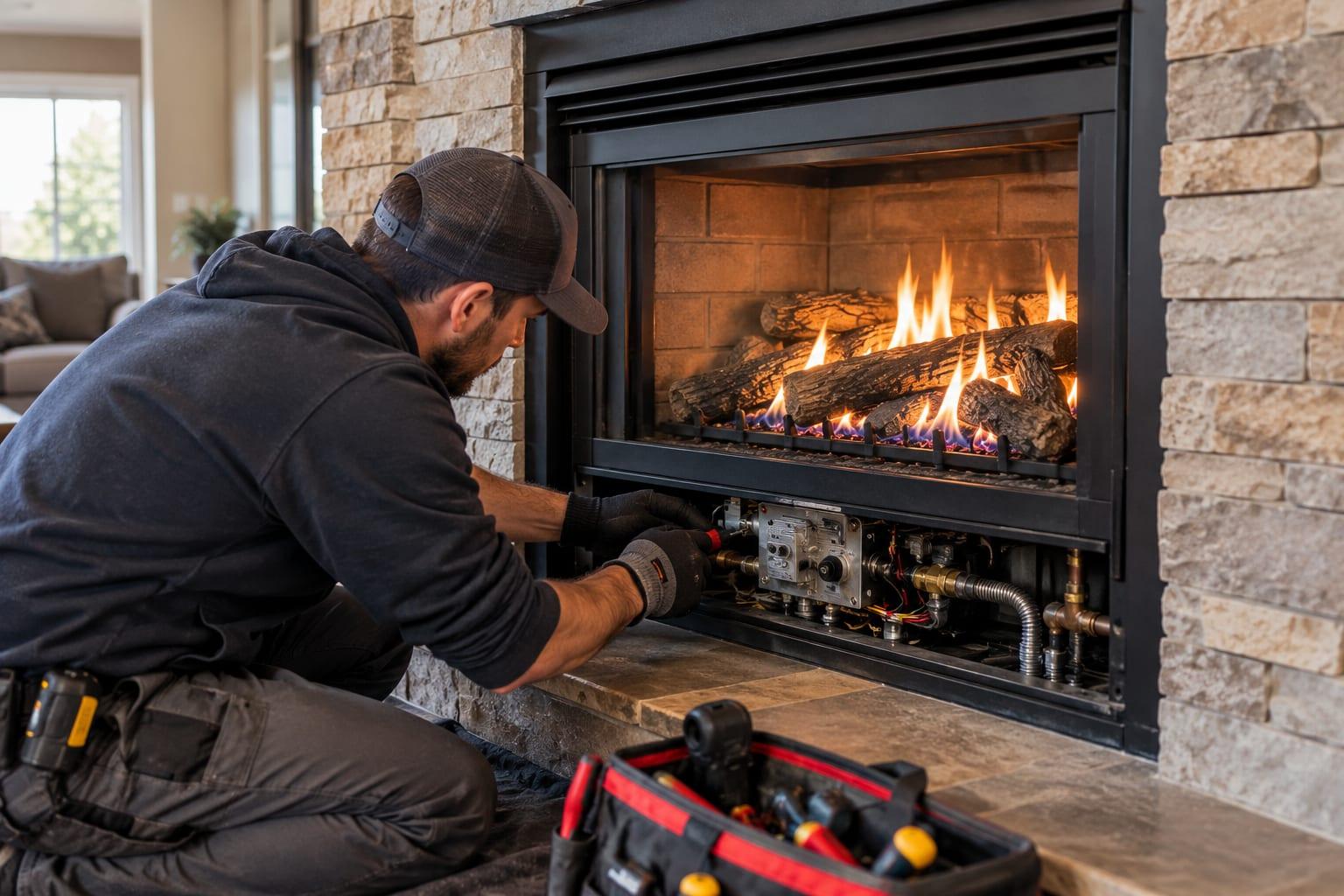
A gas log set sits on the floor of an existing firebox. It is made up of a burner pan, a grate, ceramic or refractory logs, ember material that glows, and a valve with its ignition system. Ignition can be a match-lit key valve, a standing pilot or electronic ignition with a remote. Installation means setting the burner, connecting it to a gas supply, placing the logs exactly as the manufacturer shows and testing the flame.
| Feature | Vented | Vent-free |
|---|---|---|
| Flame look | Tall, yellow and close to a wood fire | Shorter and bluer |
| Heat to the room | Modest; most goes up the chimney | Much more, since there is no flue loss |
| Damper | Open and clamped at all times | Closed or as the manufacturer directs |
| Needs | A sound, working chimney | An oxygen depletion sensor and a room large enough for the unit |
Flame look
- Vented
- Tall, yellow and close to a wood fire
- Vent-free
- Shorter and bluer
Heat to the room
- Vented
- Modest; most goes up the chimney
- Vent-free
- Much more, since there is no flue loss
Damper
- Vented
- Open and clamped at all times
- Vent-free
- Closed or as the manufacturer directs
Needs
- Vented
- A sound, working chimney
- Vent-free
- An oxygen depletion sensor and a room large enough for the unit
If the fireplace has no gas yet, gas line installation brings a supply and shutoff valve to the firebox first.
When homeowners need gas log installation: the signs and problems that call for it
If you smell gas
Leave the house at once. Inside, don't touch switches, use phones or light any flame. From outside and a safe distance away, call the gas utility or 911.
- You love the fireplace but not the wood, smoke and ash that come with it.
- The existing logs are cracked, crumbling or out of place, and can't be arranged correctly anymore.
- The burner pan is rusted or the ports are clogged, giving uneven flames.
- Soot is staining the logs or the fireplace face.
- A match-lit set is awkward to use, and you want a pilot or a remote.
If you want a fire mainly for heat, a sealed unit may serve you better than logs. Compare the options through our gas fireplace installation service and our guide to gas vs wood fireplace installation.
What the visit involves, step by step
Fitting a log set
Check the fireplace
We look at the firebox, damper and chimney to confirm they suit the log type you want.
Choose the set
We match log size to the firebox and recommend vented or vent-free logs for the room. We work with all major brands.
Free estimate
You get a written estimate for the set, the gas connection and any damper clamp.
Install
We set the burner, connect the gas, fit the damper clamp for vented logs and place the logs as the manufacturer shows.
Light and review
We test ignition and flame pattern, leak-check the connection and walk you through the controls.
Safety and maintenance context
- Never burn wood, paper or trash on a gas log set.
- Keep the logs in their marked positions; shifted logs can cause sooting.
- Leave the damper clamp in place on vented logs.
- Keep carbon monoxide alarms working in the house.
- Have the set and chimney checked each year; our guide to gas fireplace safety inspections explains what that covers.
Sooting, a stubborn pilot or a flickering flame are early warnings. Our guide to the signs a gas fireplace needs repair explains what each one points to.
Booking gas log installation
Send us a photo of the fireplace opening and let us know whether gas already reaches it. Estimates are free, and same-day visits are available where the schedule allows. We also fit log sets in commercial properties and rental units managed by property managers across Greater Atlanta, and our gas fireplace service keeps them running afterward.
If you smell gas
Leave the home right away, don't use switches or phones inside, and call your gas utility or 911 from outside.
How to prepare
- Write down what you've noticed and when it happens — smells, smoke, sounds or stains.
- Let the fireplace or stove cool completely — ideally no fire for 24 hours before the visit.
- Make sure the technician can reach the roof or attic access if it's needed.
- Move rugs, photos and anything fragile away from the work area.
What gets checked
- Hearth extension and protection
- Gas supply or electrical needs
- Required clearances to combustibles
- Vent or liner route and length
- Permit requirements
- Opening or framing dimensions