On this page
- What fireplace cleaning covers
- Signs your fireplace is due for cleaning
- How a fireplace cleaning visit goes
- Chimney cleaning for a wood-burning fireplace
- Gas fireplaces and their chimneys
- Fireplace types and what builds up in each
- Keeping a fireplace safe between cleanings
- When cleaning isn't the whole answer
- Booking fireplace cleaning in Atlanta
What fireplace cleaning covers
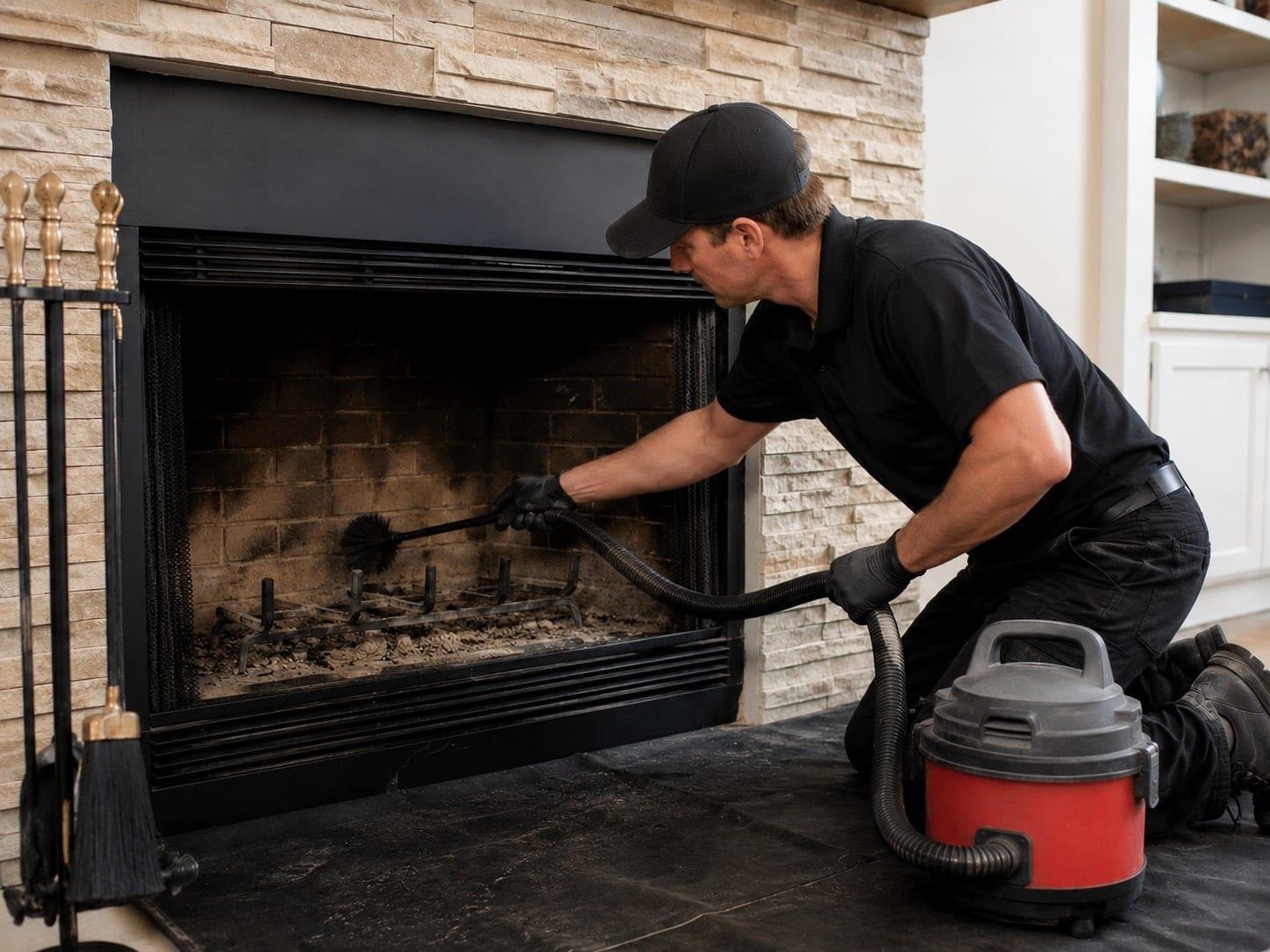
Fireplace cleaning removes the ash, soot and creosote that collect in the firebox, on the damper and smoke shelf, in the smoke chamber and inside the flue. On a wood-burning fireplace, that means working from the hearth all the way up the chimney. On a gas unit, it means the burner area, the logs and the venting. The goal is a fireplace that draws smoke up the chimney, doesn't fill the room with odor, and doesn't carry a layer of flammable residue into the next fire.
If your fireplace has an insert, the insert and its liner are a separate job. Fireplace insert cleaning handles that, because the insert sits between the room and the flue.
Signs your fireplace is due for cleaning
Common signs of buildup
- A smoky or campfire smell in the room, even when no fire is burning
- Smoke rolling into the room instead of going up the chimney
- Black, flaky or tar-like deposits on the firebox walls or the damper
- Fires that are hard to start or that burn sluggishly
- Ash piled deep in the firebox or under the grate
- Soot stains on the fireplace face above the opening
- Scratching, chirping or bits of debris falling into the firebox, which can mean a nest
- You've moved into a home and don't know when the fireplace was last cleaned
Sometimes smoke keeps spilling into the room even after the fireplace has been cleaned. That usually points to a draft problem rather than buildup, and fireplace draft repair is the work that addresses it.
How a fireplace cleaning visit goes
The visit, step by step
Protect the room
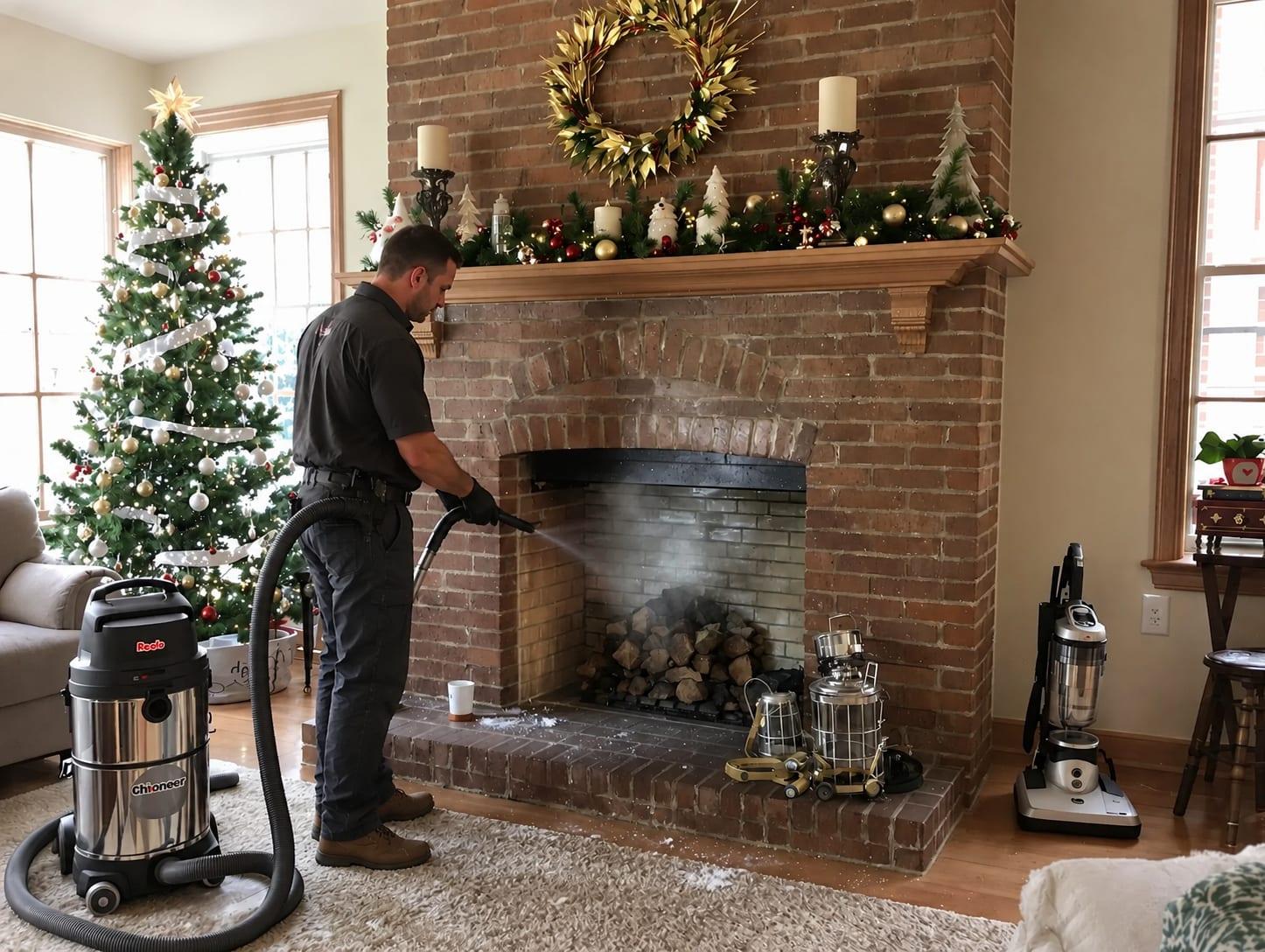
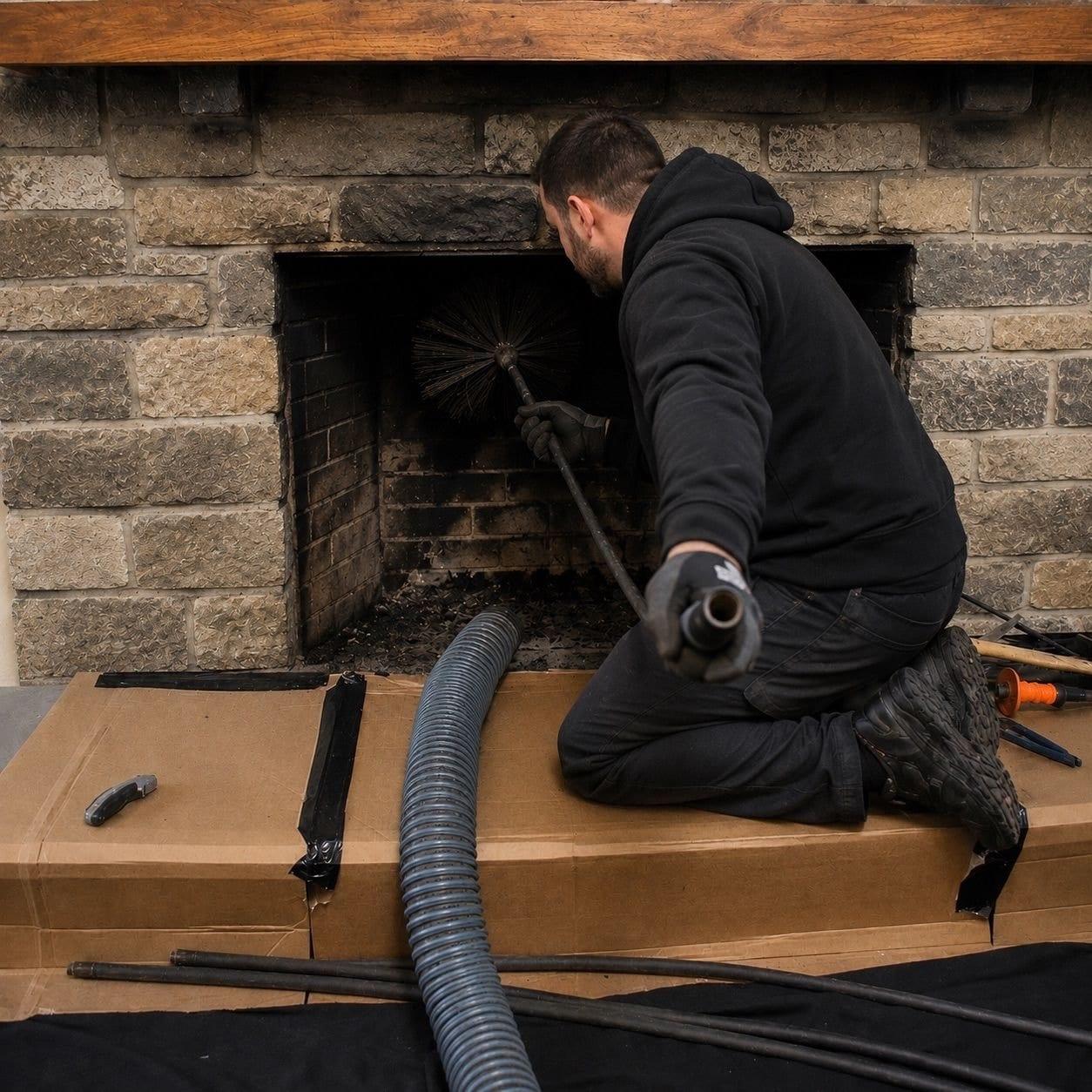
Drop cloths go over the hearth and surrounding floor, and nearby furniture is moved clear of the work area.
Look before cleaning
We open the damper and check the firebox and flue opening. Heavy creosote, cracked firebrick and signs of nesting are noted, so you know what was there before the work started.
Clear the firebox
Ash, unburned wood and debris come out of the firebox and grate.
Brush and vacuum the lower chimney
The firebox walls, damper, smoke shelf and smoke chamber are brushed, and the loosened soot is vacuumed up.
Sweep the flue
Brushes sized to the flue clean the chimney from top to bottom. Depending on the chimney, this is done from below, from the roof or from both.
Deal with creosote
Light soot brushes out. Hardened or glazed creosote may need creosote removal beyond ordinary brushing.
Final check and walk-through
We confirm the damper opens and closes, then go over what we found and anything that needs attention beyond cleaning.
Chimney cleaning for a wood-burning fireplace
Wood smoke cools as it rises, and some of it condenses on the flue walls as creosote. Wet wood, smoldering fires and a chimney that drafts poorly all make that happen faster. Creosote tends to show up in three forms:
- Dry, flaky soot that brushes off easily
- Crunchy or tar-like deposits that take more effort to remove
- Hardened or glazed creosote that coats the flue like a shiny shell and is the hardest to remove
All three can burn, and the thicker the layer, the more fuel there is for a chimney fire. Cleaning a wood-burning fireplace also clears leaves, nests and other blockages that keep smoke from leaving the house. Sometimes the cleaning turns up cracked firebrick, damaged mortar or a damper that won't seal. Those problems call for wood-burning fireplace repair rather than more cleaning.
Gas fireplaces and their chimneys
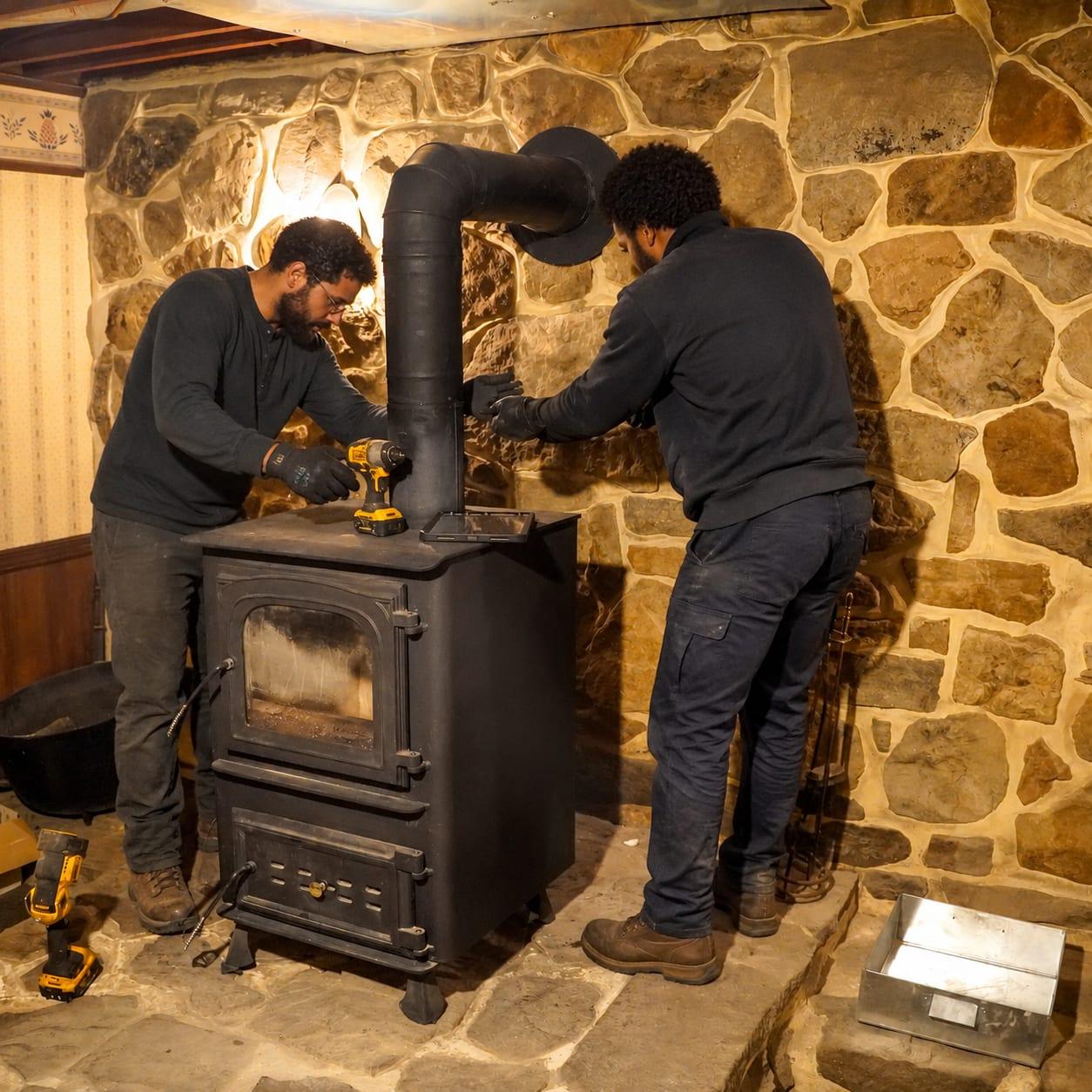
Gas burns cleaner than wood and doesn't leave creosote the same way, but a gas fireplace's chimney or vent still needs attention. Leaves, nests and other debris can block the vent. A burner that's out of adjustment can leave soot on the logs and glass. Dust settles on the burner and pilot assembly between seasons. Gas fireplace and gas appliance work is offered. The details of cleaning the burner, logs and pilot are covered under gas fireplace cleaning, and clearing the exhaust path is fireplace vent cleaning.
If you smell gas
Don't light the fireplace or flip any switches. Get everyone out of the house, then call your gas utility from outside. Cleaning work waits until the leak has been dealt with.
Fireplace types and what builds up in each
| Fireplace type | What builds up | Where cleaning focuses |
|---|---|---|
| Masonry wood-burning | Ash, soot, creosote, sometimes nests or fallen debris | Firebox, damper, smoke chamber and the full flue |
| Factory-built (prefab) wood-burning | Soot and creosote on refractory panels and metal flue pipe | Panels and metal flue, using tools that won't damage them |
| Wood-burning insert | Creosote inside the insert and its liner | The insert and liner, handled as a separate service |
| Vented gas | Dust, light soot, debris or nests in the vent | Burner, logs, pilot area and the vent path |
Not sure which kind you have? Our guide to each type of fireplace explains how to tell them apart.
Keeping a fireplace safe between cleanings
Many homeowners schedule a cleaning once a year, before they start using the fireplace regularly. People who burn often may need it sooner. Habits between visits make a big difference in how fast buildup returns.
Everyday habits that help
- Burn only dry, seasoned hardwood, because wet wood smolders and leaves more creosote
- Keep fires burning actively rather than letting them smolder for hours
- Never burn trash, cardboard, wrapping paper or treated lumber
- Let ashes cool completely, then store them in a lidded metal container outside and away from the house
- Test the smoke and carbon monoxide alarms on the floor with the fireplace
- Keep the screen or doors closed while a fire is burning. Check your fireplace's manual first: some glass doors must stay fully open while a fire burns.
Signs of a chimney fire
Watch for a loud roaring or rumbling sound, popping or cracking from the flue, dense smoke, or unusual heat coming off the chimney. If you hear roaring or see flames or sparks from the top of the chimney, get everyone out and call 911. If you notice any of these, get everyone out and call the fire department.
For more on screens, alarms and safe burning, read our guide to enhancing fireplace safety.
When cleaning isn't the whole answer
Cleaning removes buildup, but it doesn't change how a fireplace is built or what it burns. If you're tired of hauling wood and scooping ash, fireplace conversion to gas is a separate project you can ask about at the estimate. If you're buying a home or need the chimney's condition documented, ask for an inspection instead of a cleaning.
Booking fireplace cleaning in Atlanta
When you get in touch, tell us whether the fireplace burns wood or gas and roughly when it was last cleaned. Also mention any smells, smoke or noises you've noticed. Same-day visits are available where the schedule allows, though they're never guaranteed, and emergency calls are accepted. We work on all major fireplace brands, and commercial and property-manager work is offered too.
Free estimates.
Call or request an estimate to schedule a fireplace cleaning.