On this page
What dryer vent blockage removal covers
Blockage removal is targeted work. Instead of a routine pass through the whole run, the goal is to find the one spot where air has stopped moving and deal with it. The usual culprits are:
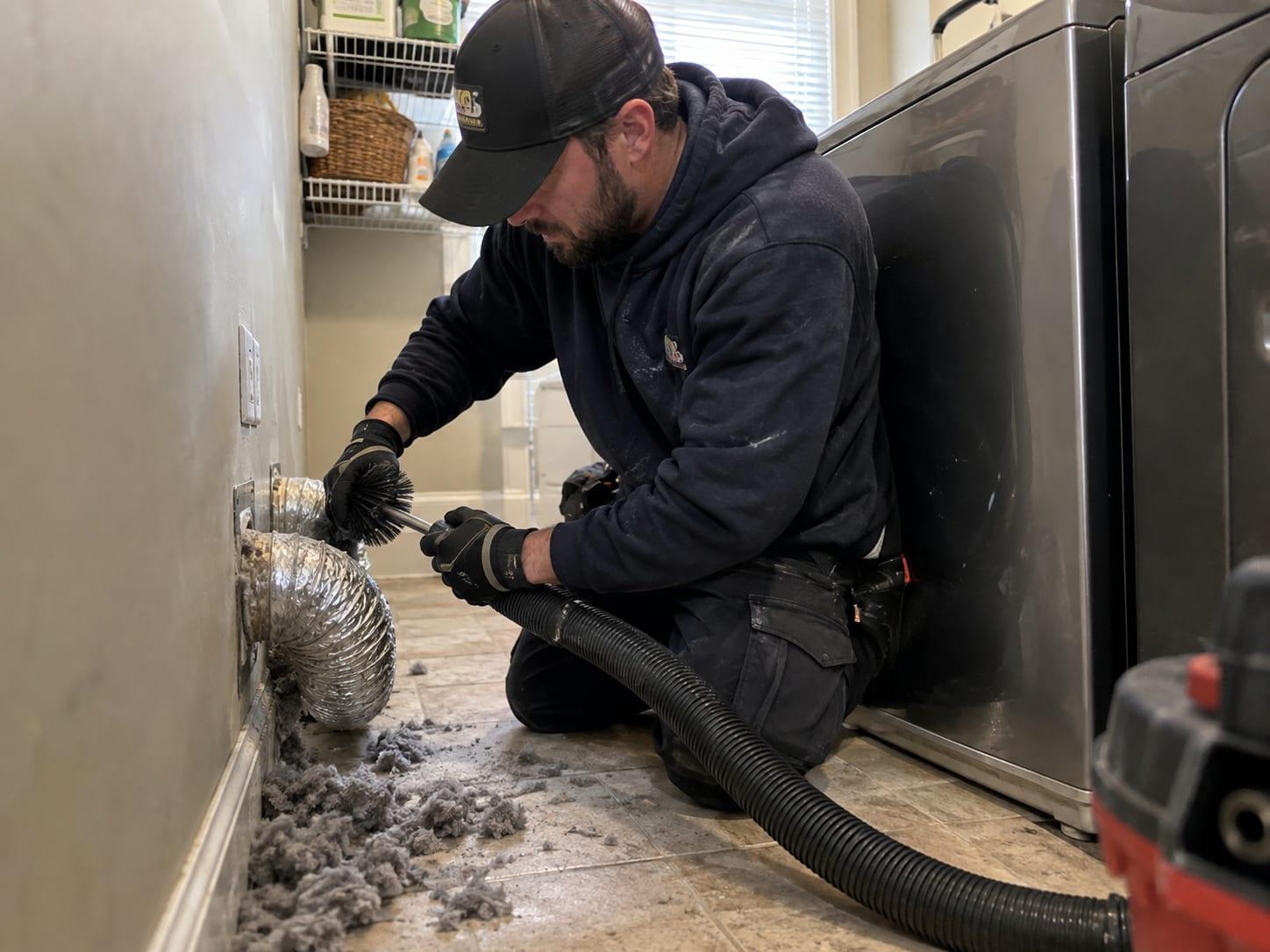
- A dense lint plug at a bend, a joint or where the duct passes through the wall
- A bird or rodent nest built just inside the exterior hood
- A foil or vinyl transition hose crushed behind the dryer after it was pushed back
- A flap on the outside cover that is stuck, painted shut or jammed with lint
- Leaves and debris packed into a roof termination
If the vent is not choked but simply overdue for its yearly cleanout, our dryer vent cleaning service is the better fit.
Signs your dryer vent is blocked
Common warning signs
- Clothes come out damp after a full cycle
- The top of the dryer or the laundry room gets unusually hot
- A burning or scorched-lint smell while it runs
- Little or no air coming out of the outside vent with the dryer on
- The dryer shuts itself off partway through a cycle
- Chirping, scratching or nesting material at the exterior cover
What the visit involves, step by step
Clearing the obstruction
Confirm the problem
With the dryer running, we check airflow at the outside cover to see how restricted the vent is.
Disconnect the dryer
The dryer is pulled out and unplugged. On a gas dryer, the gas supply is shut off before the connection is moved.
Locate the blockage
We work from both ends of the run to pin down where the clog sits.
Clear it
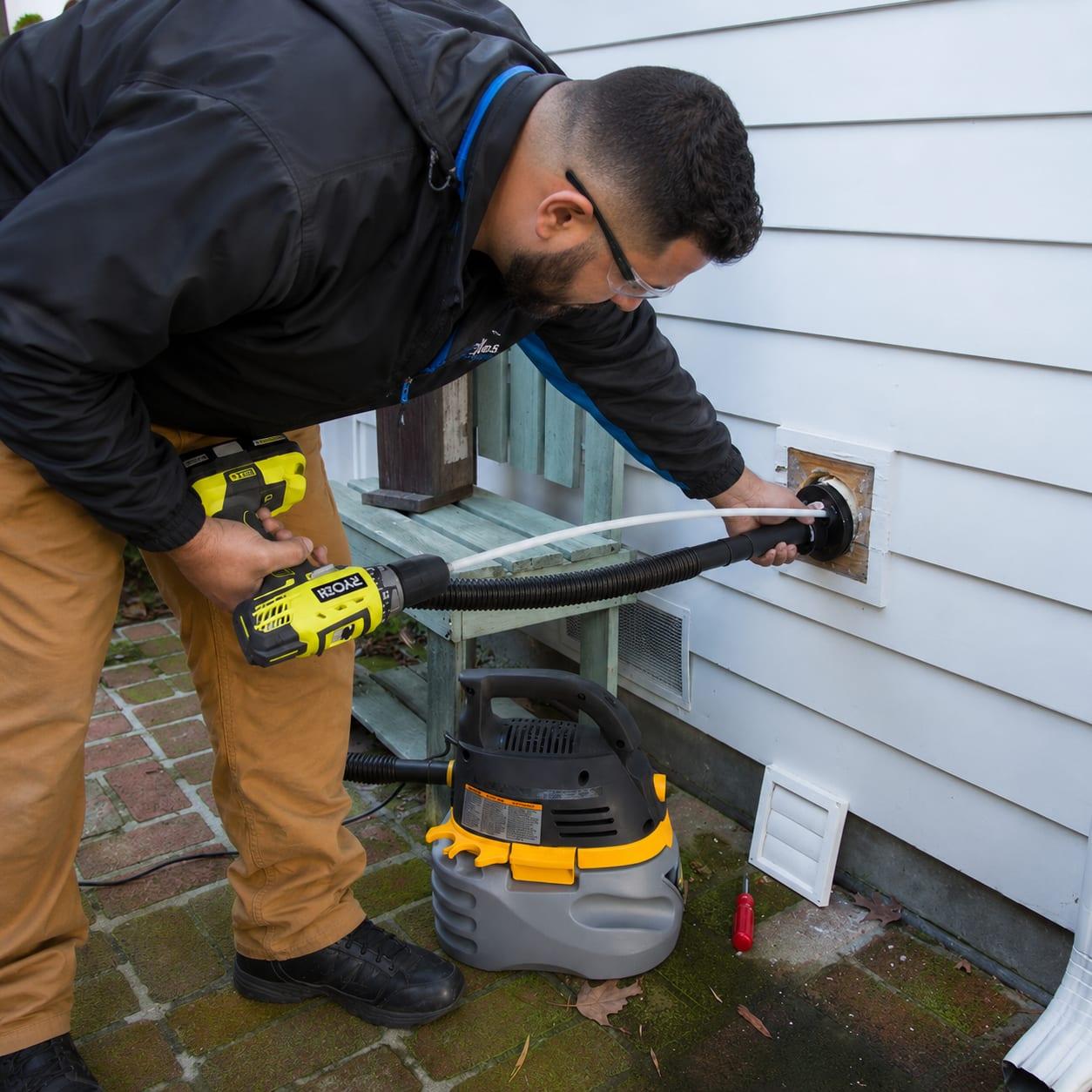
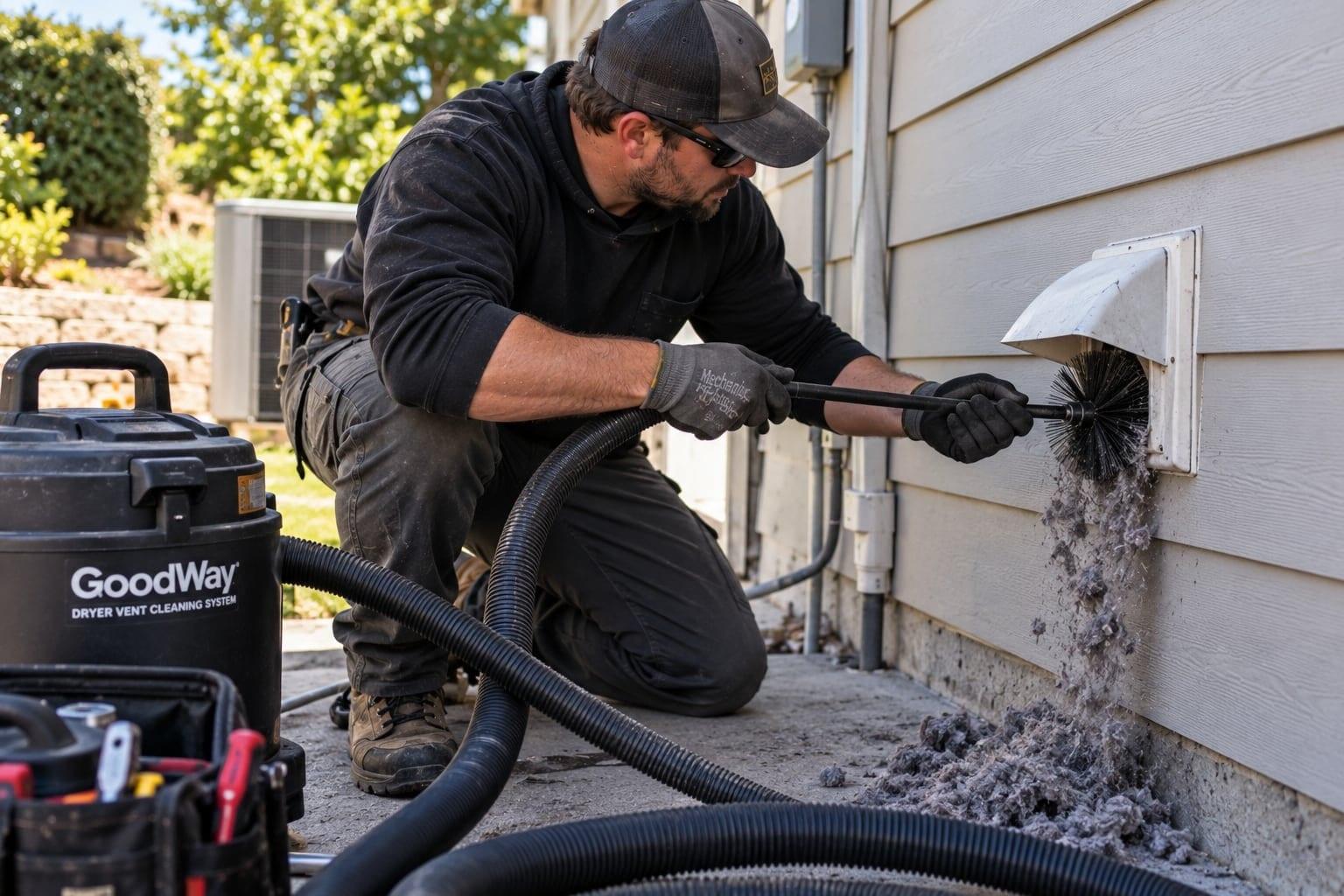
Rotary brushes and vacuum pull out lint, nest material and debris, and stuck flaps are freed.
Check for damage
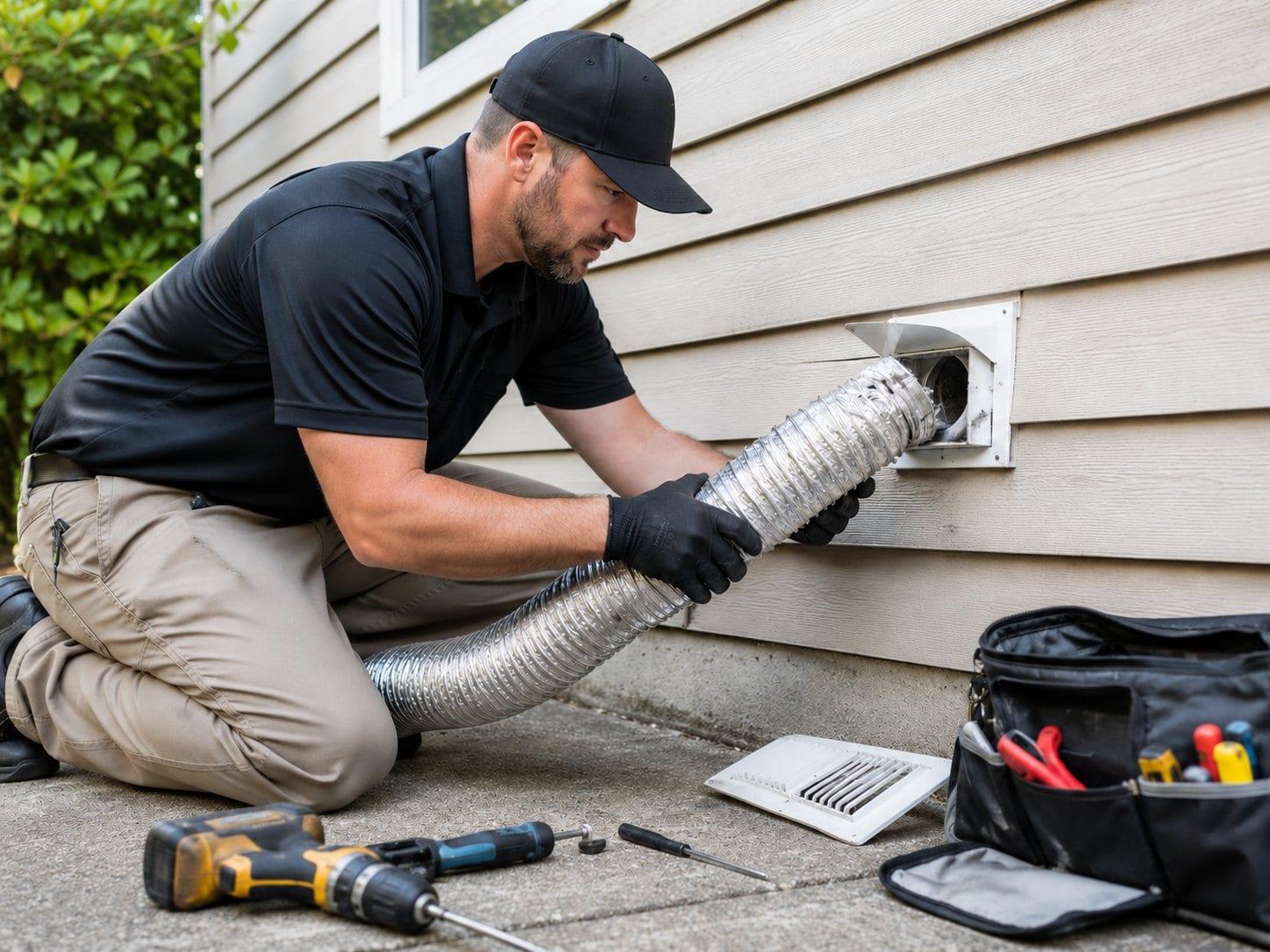
Crushed, split or disconnected sections are noted so you know if anything needs replacing.
Reconnect and test
The dryer goes back in place and airflow is checked again at the exterior.
What the technician checks
Points checked during the visit
- Connector behind the dryer
- Crushed or kinked sections
- Airflow at the outside hood
- Outside hood, flap and screen
- Joints and foil tape
- Vent length and number of bends
Dryer vent safety and maintenance
Why a blocked vent shouldn't wait
Lint is highly flammable, and a blocked vent traps it right next to the dryer's heat source. On a gas dryer, a restricted vent can also push combustion exhaust back toward the laundry room. If you smell burning, stop using the dryer until the vent is cleared.
Burning smell?
If you smell burning while the dryer runs, turn it off and unplug it until the vent is checked.
Keeping a new clog from forming
- Empty the lint screen every load.
- Glance at the outside flap now and then to confirm it opens while the dryer runs and closes when it stops.
- Avoid crushing the transition hose when you push the dryer back against the wall.
A duct too damaged to clear is a job for dryer vent repair, and if you are unsure whether the whole run is sound, a vent inspection with airflow testing answers that.
Getting ready for the visit
- If the dryer isn't overheating or smelling of burning, you can run an empty load first to compare airflow before and after.
- Clear space around the dryer so it can be pulled out.
- Make sure the outside vent hood can be reached.
Getting the blockage cleared
We accept emergency calls, and same-day visits are available when the schedule allows. Estimates are free, and we handle property-manager and commercial laundry vents as well as homes. Call or request an estimate and tell us what the dryer is doing.