On this page
What gas fireplace cleaning covers
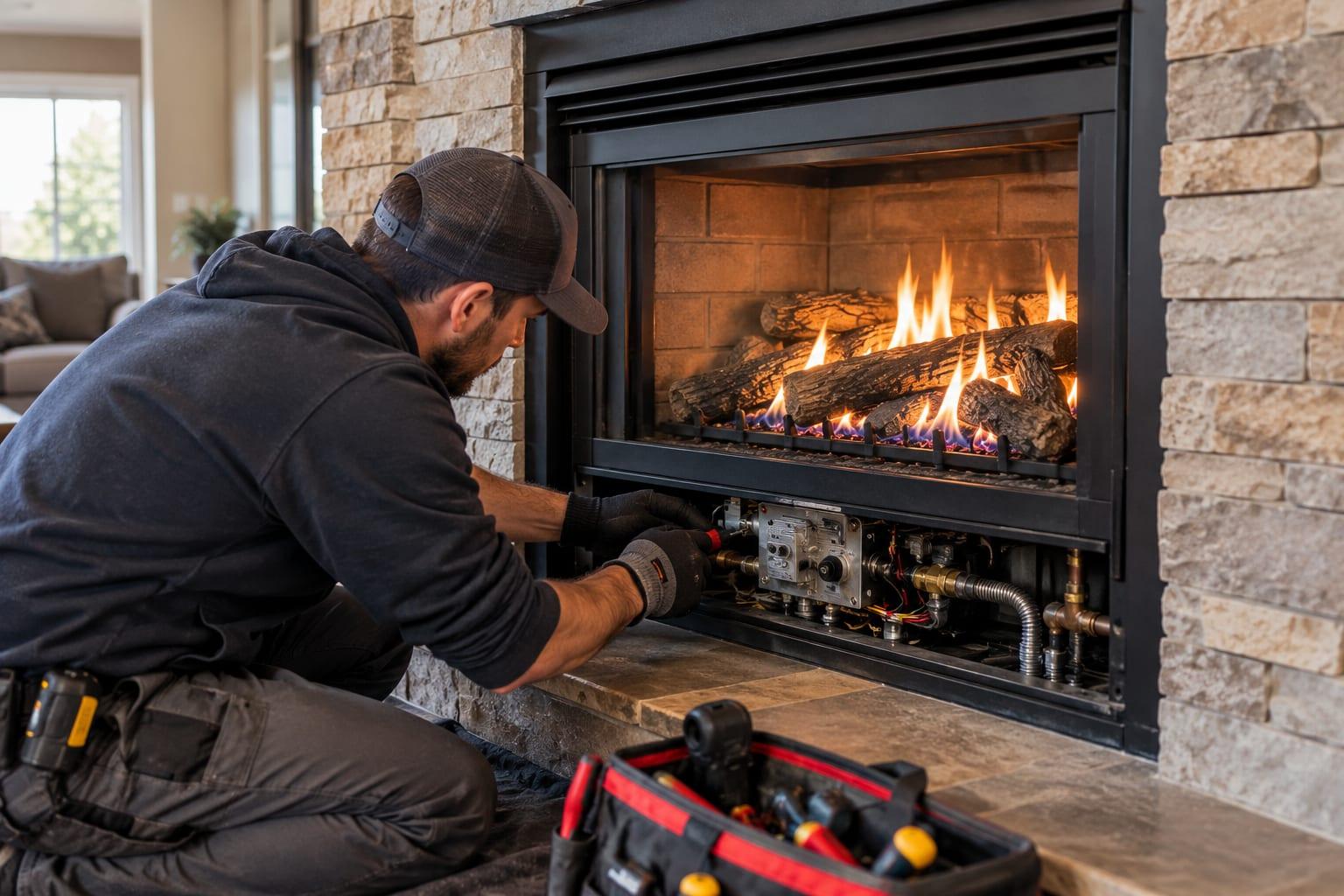
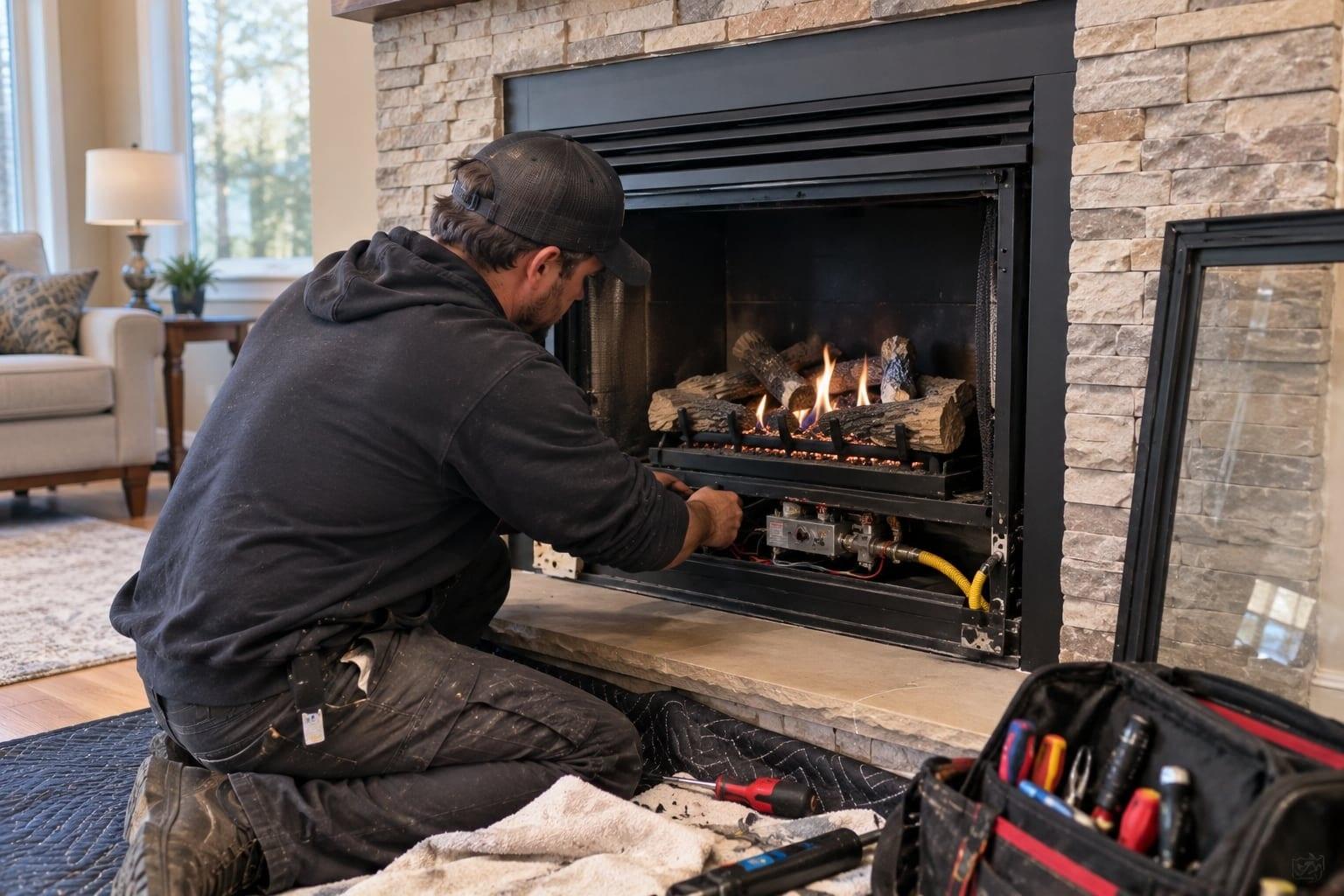
Gas fireplace cleaning is hands-on maintenance of the parts that get dirty in normal use. A white or gray film builds up on the inside of the glass. Dust and pet hair settle on the logs and burner. Small burner ports and the pilot assembly can clog, and the vent or flue can collect debris, leaves or a nest. Cleaning removes all of that, and we check the parts we handle along the way.
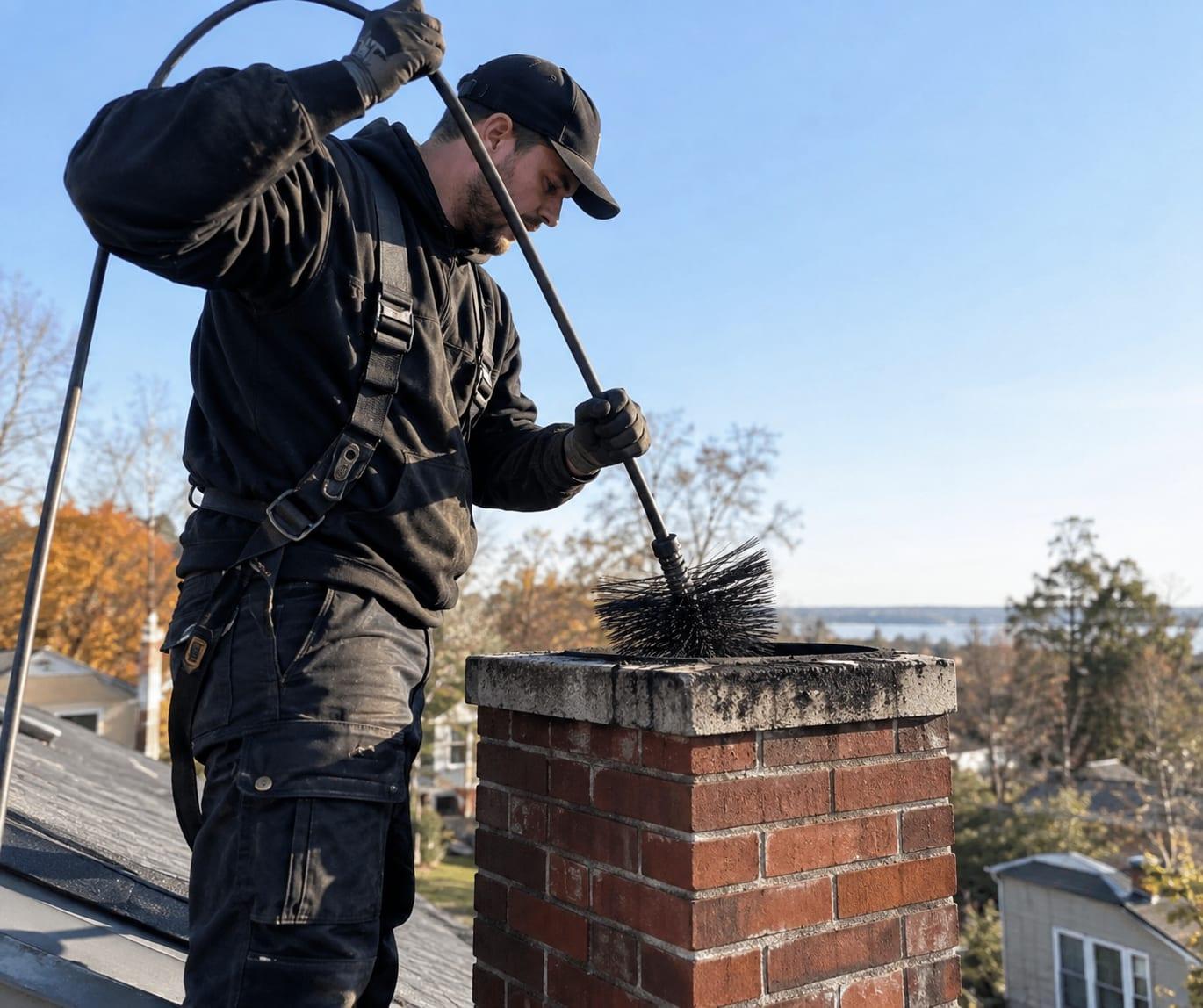
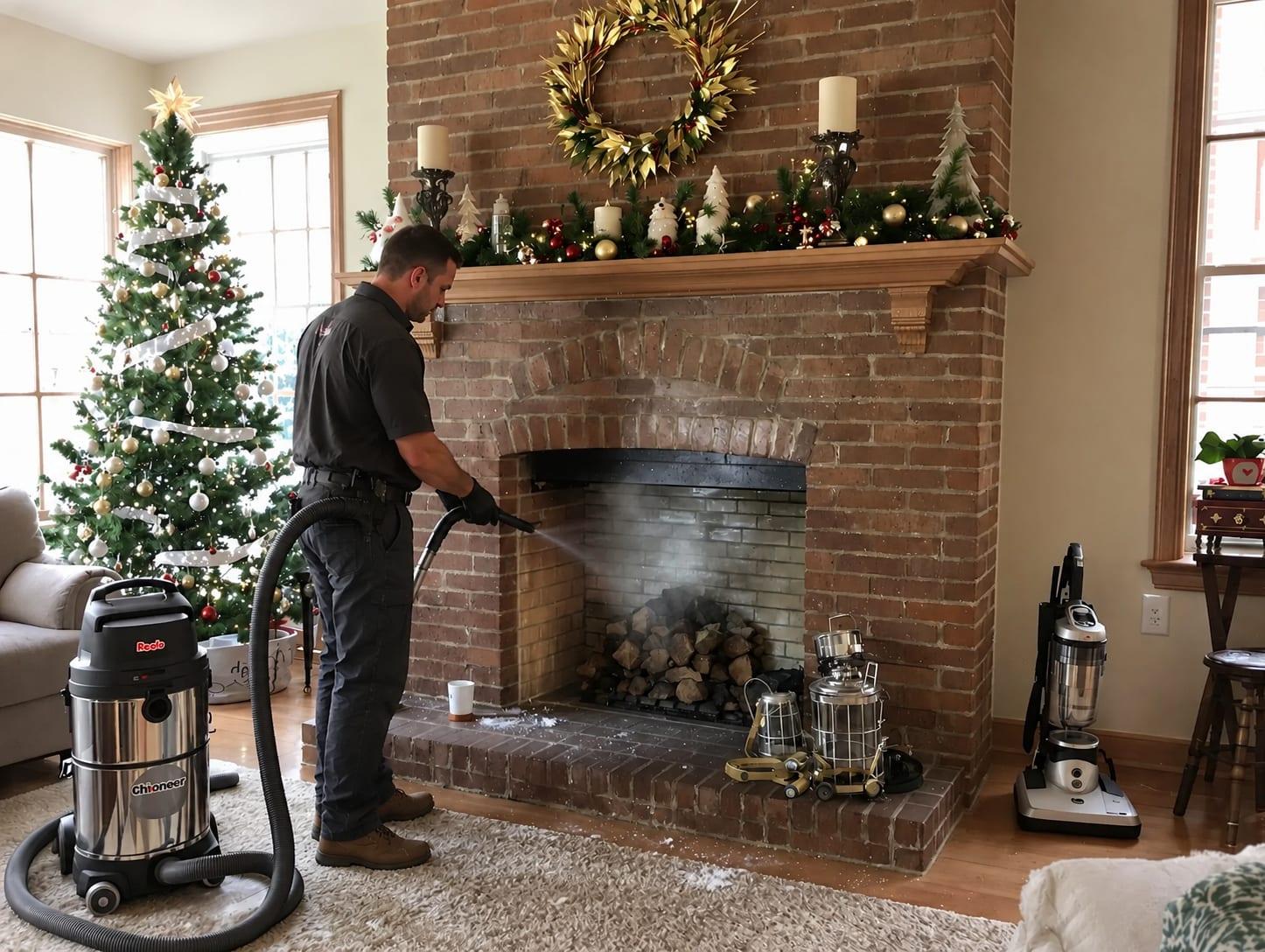
It is a narrower job than cleaning a wood-burning fireplace. There is usually far less soot, and the work focuses on the gas components and the venting. One exception is a masonry chimney that burned wood before gas logs were added. That flue can still hold old creosote, and it needs attention too.
If you smell gas
Leave the building right away and take everyone with you. Don't flip light switches, use phones or light any flame inside. Once you are outside and away from the house, call your gas utility or 911.
Signs your gas fireplace needs cleaning
Most gas fireplaces show they need attention in ways you can see or hear. Common signs include:
Signs that point to a cleaning
- A cloudy white or gray haze on the inside of the glass that won't wipe off from the outside
- Black soot on the logs, the glass or the firebox walls
- Flames that look lazy, uneven or more yellow and orange than they used to
- Burner ports that light unevenly, with some sections not lighting at all
- A pilot light that is weak, flickers or goes out
- A dusty or burning smell when you first turn the fireplace on for the season
- Debris, leaves or signs of animals at the vent cap outside
- The fireplace hasn't been serviced in a year or more
Some of these signs come from a part that has failed rather than from dirt. If the fireplace won't light, the igniter clicks with no flame, or the valve or controls misbehave, you need gas fireplace repair instead of a cleaning. Our guide to signs a gas fireplace needs repair can help you tell the two apart.
What the visit involves
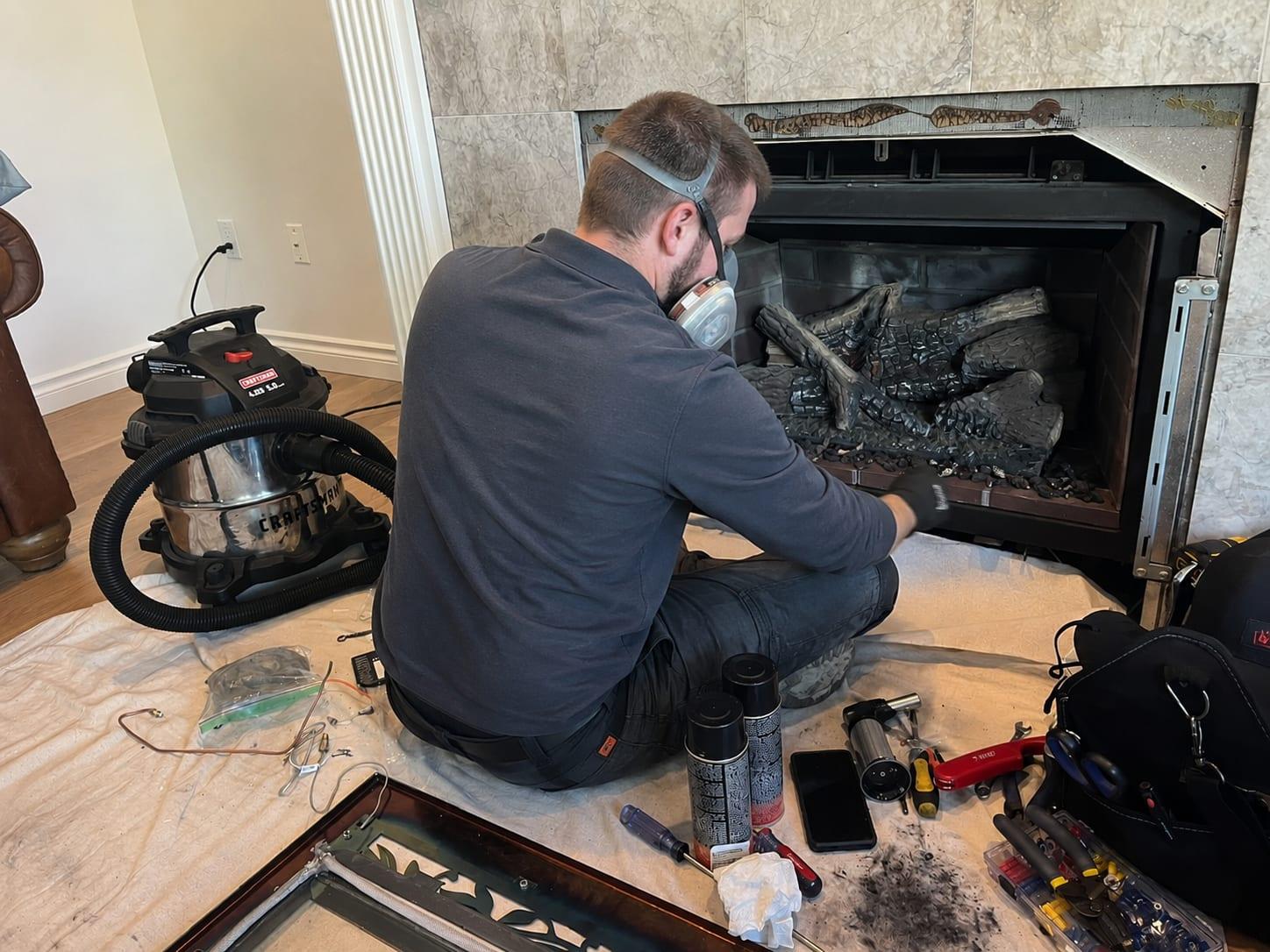
A gas fireplace cleaning, step by step
Shut off and cool down
We turn off the gas to the fireplace and let the unit cool fully before touching anything.
Remove the glass
We take out the glass front and clean the inside film with a cleaner made for fireplace glass, not household glass cleaner. We also look over the glass and its gasket for cracks or wear.
Lift out the logs and media
We note how the logs, embers or glass media are arranged, remove them, and clean off dust and soot.
Clean the firebox and burner
We vacuum the firebox and the burner and clear clogged burner ports so the flame spreads evenly.
Clean the pilot assembly
We gently clean dust and buildup from the pilot area, since a dirty pilot is a common cause of a weak flame or a pilot that won't stay lit.
Check the vent
We look at the vent or flue and the outside termination for blockages such as debris or nests and clear what we find.
Reassemble and test
We put the logs back in the layout the manufacturer specifies, reinstall the glass, turn the gas back on and run the fireplace to check the flame pattern and color.
Walk you through it
We tell you what we cleaned and point out anything that looked worn or damaged, so you can decide what to do next.
Parts that get cleaned
| Part | What builds up | Why it matters |
|---|---|---|
| Glass front | White or gray film, soot | Blocks the view and can etch the glass if left for years |
| Logs or media | Dust, soot, pet hair | Can burn off as odor and affect how the flame looks |
| Burner and ports | Dust, debris, rust flakes | Clogged ports cause uneven or poor flames |
| Pilot assembly | Dust and buildup | Can cause a weak pilot or one that goes out |
| Vent or flue | Debris, leaves, nests | A blocked vent keeps exhaust from leaving the house |
Safety and maintenance
Clean, properly vented combustion matters for safety, not just looks. When a burner is dirty or the logs are out of place, the flame can burn poorly and leave soot. When a vent is blocked, exhaust has a harder time leaving the home. A routine cleaning and a check of the vent deal with both problems.
- Keep working carbon monoxide detectors in your home, and test them on the schedule in their instructions.
- Don't rearrange the logs yourself. Their placement affects the flame and how cleanly it burns.
- Keep the area in front of the fireplace clear, and keep children and pets away from hot glass.
- Book a cleaning before you start using the fireplace each season, rather than after a problem shows up.
A cleaning is not a full safety evaluation. If you are buying a home, haven't used the fireplace in years, or want the whole system and its venting checked, our article on gas fireplace safety inspections explains what that involves. If you are still choosing a fireplace, see comparing gas and wood fireplaces. For ongoing upkeep, read about our gas fireplace service and maintenance.
Booking a gas fireplace cleaning
Call or request an estimate and tell us what you are seeing: a hazy glass, sooty logs, a flickering pilot, or simply a fireplace that is overdue. Same-day visits are available where the schedule allows, though they are never guaranteed, and we accept emergency calls. We work on all major brands of gas fireplace. We also take commercial and property-manager work, so you can schedule cleanings for several units or buildings at once.