Chimney services Roswell homeowners can book
Most calls from Roswell fall into a few groups: a fireplace that hasn't been cleaned in a while, a chimney showing wear or letting water in, a gas unit that won't behave, or a dryer that takes too long to dry a load. You can book a chimney sweep in Roswell to clear soot and creosote, schedule chimney repair for homes in Roswell when the brick, crown or flashing needs work, or arrange fireplace repair in Roswell for problems inside the firebox, damper or doors.
If you aren't sure what's wrong, a chimney inspection is the place to start. It tells you what condition the flue and structure are in before you spend money on anything else.
What the housing-age figure tells you
About 2% of the housing units in Roswell were built before 1960, according to the U.S. Census Bureau, American Community Survey 2019–2023 5-year estimates, table B25034 (Year Structure Built). Put the other way, roughly 98 out of every 100 homes in Roswell were built in 1960 or later.
For chimney and fireplace work, that means very few chimneys in Roswell date from before 1960. Age is only part of the story, though. Chimneys wear from use, heat and rain regardless of when they were built, and the parts that fail first are usually the ones exposed to weather or high heat.
Parts worth checking on a chimney of any age
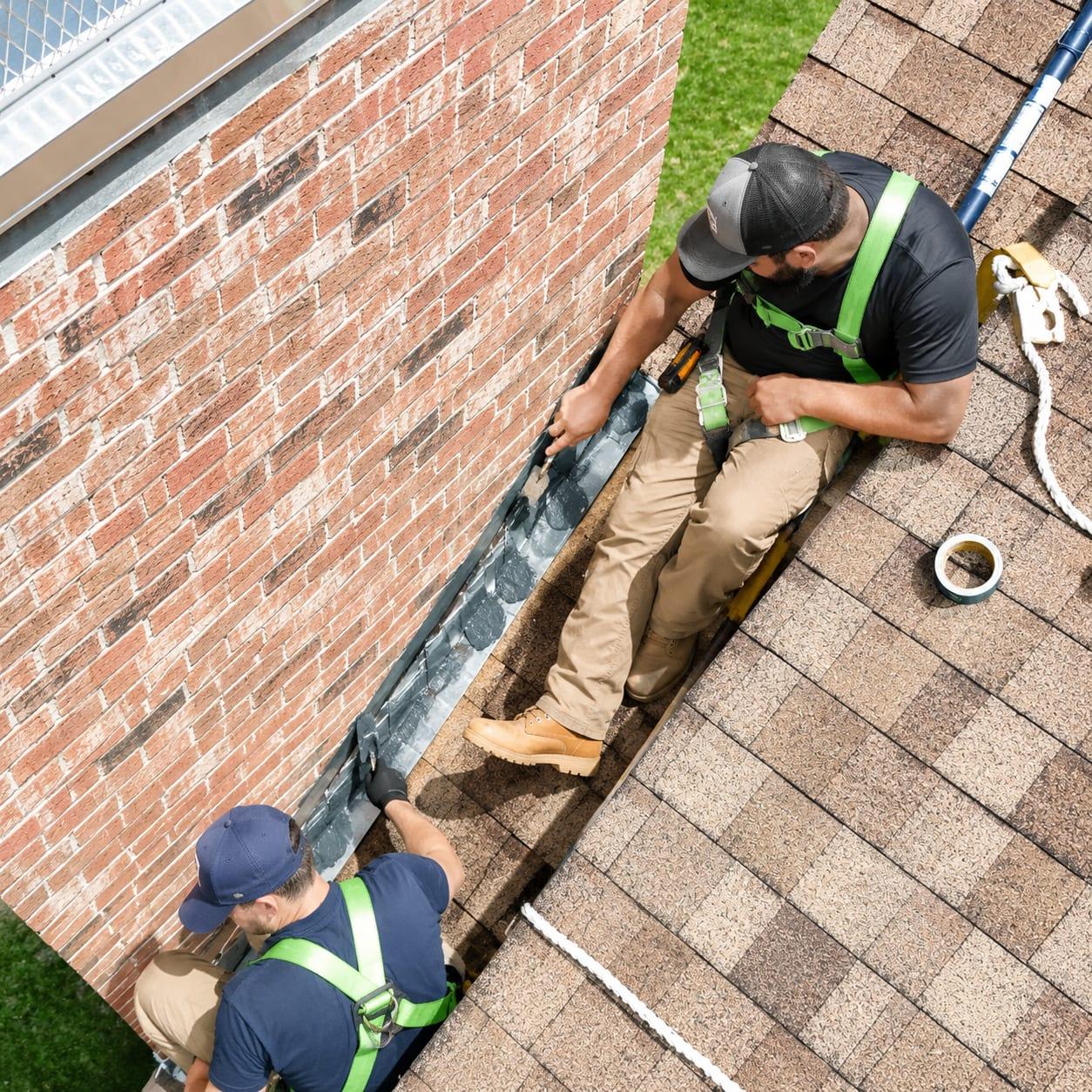
- Flashing where the chimney meets the roof, which can pull loose and let water in
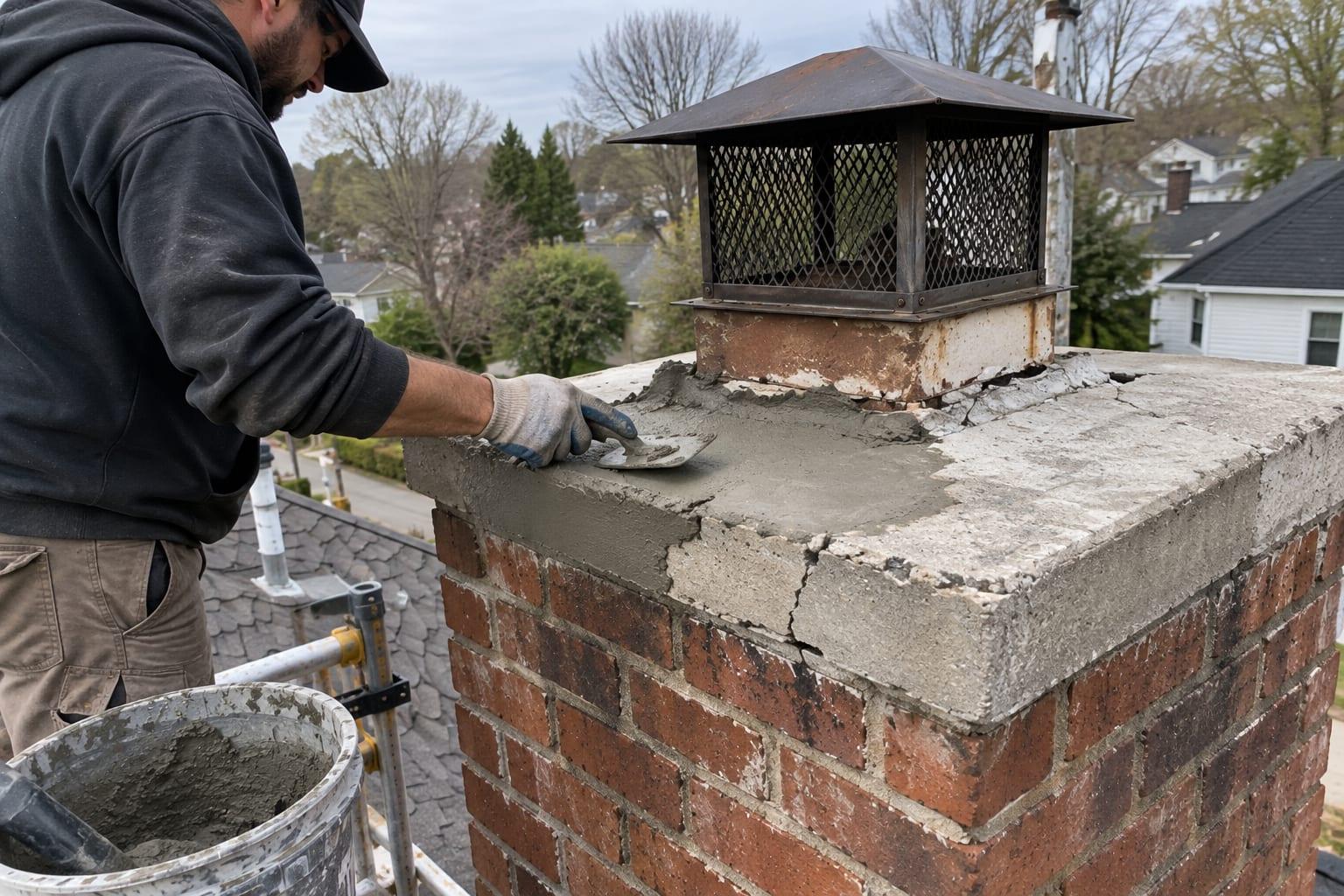
- The crown or chase cover on top, which can crack or rust
- The cap, which keeps out rain, leaves and animals
- The flue liner, which can crack or build up creosote
- The damper, which can stick open or closed
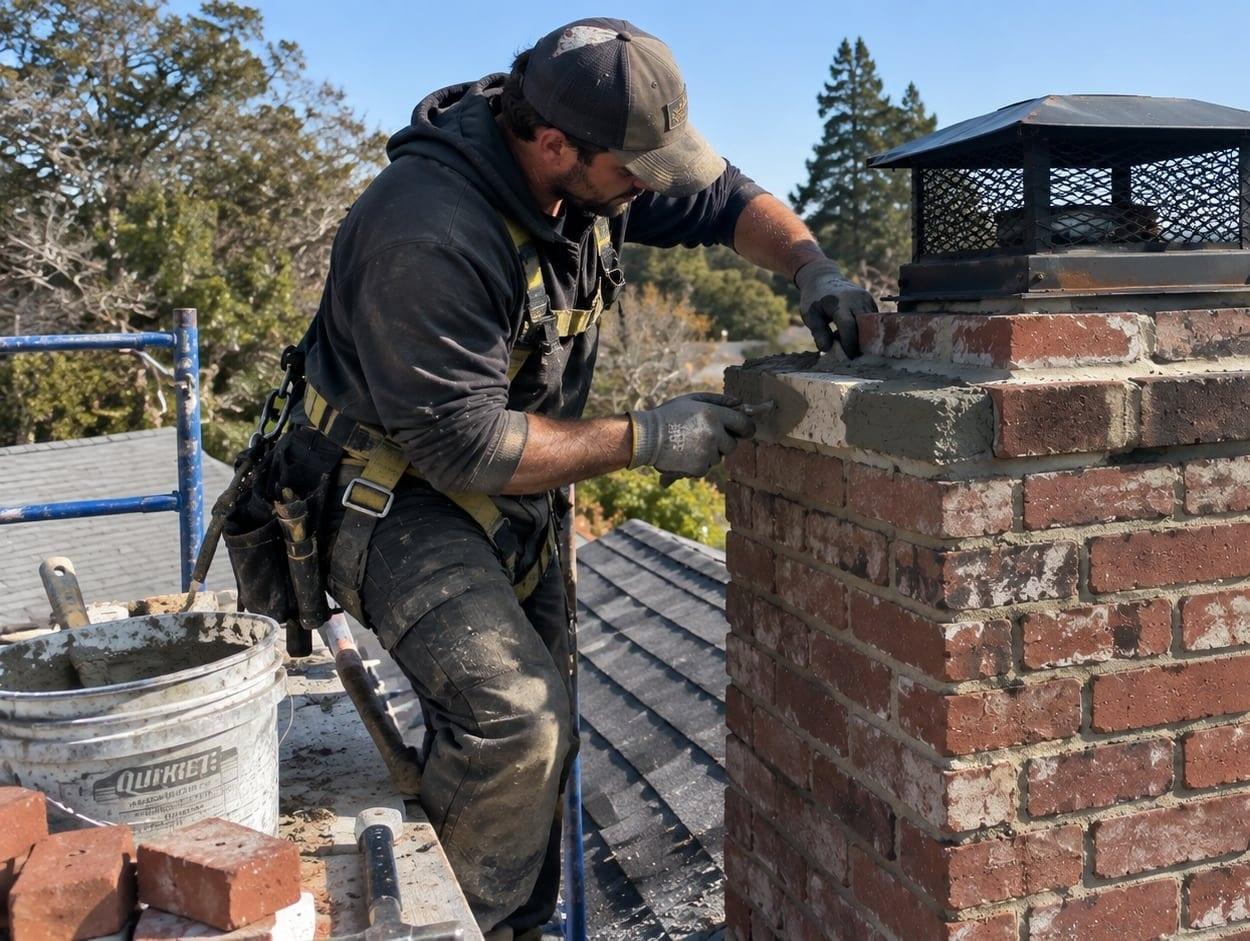
- Mortar joints, which erode over time
If your home is one of the older ones
Masonry chimneys from before 1960 were often built with clay tile liners or, in some cases, no liner at all, and their mortar has had decades to wear. If you own one of these homes and haven't had the chimney looked at recently, have the flue checked before you light a fire. A missing or cracked liner can let heat and gases reach the surrounding structure.
Ash, soot and a firebox that needs attention
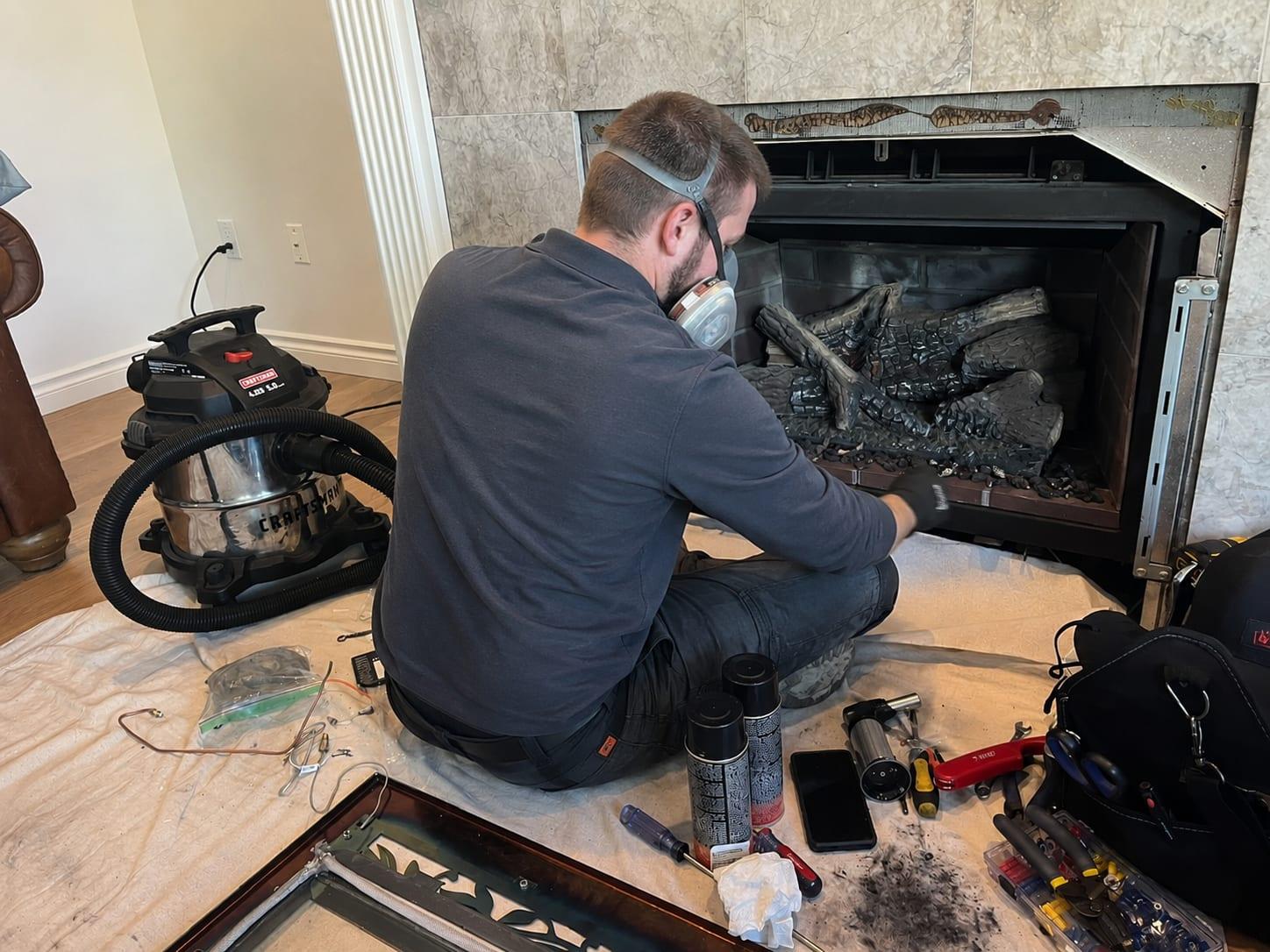
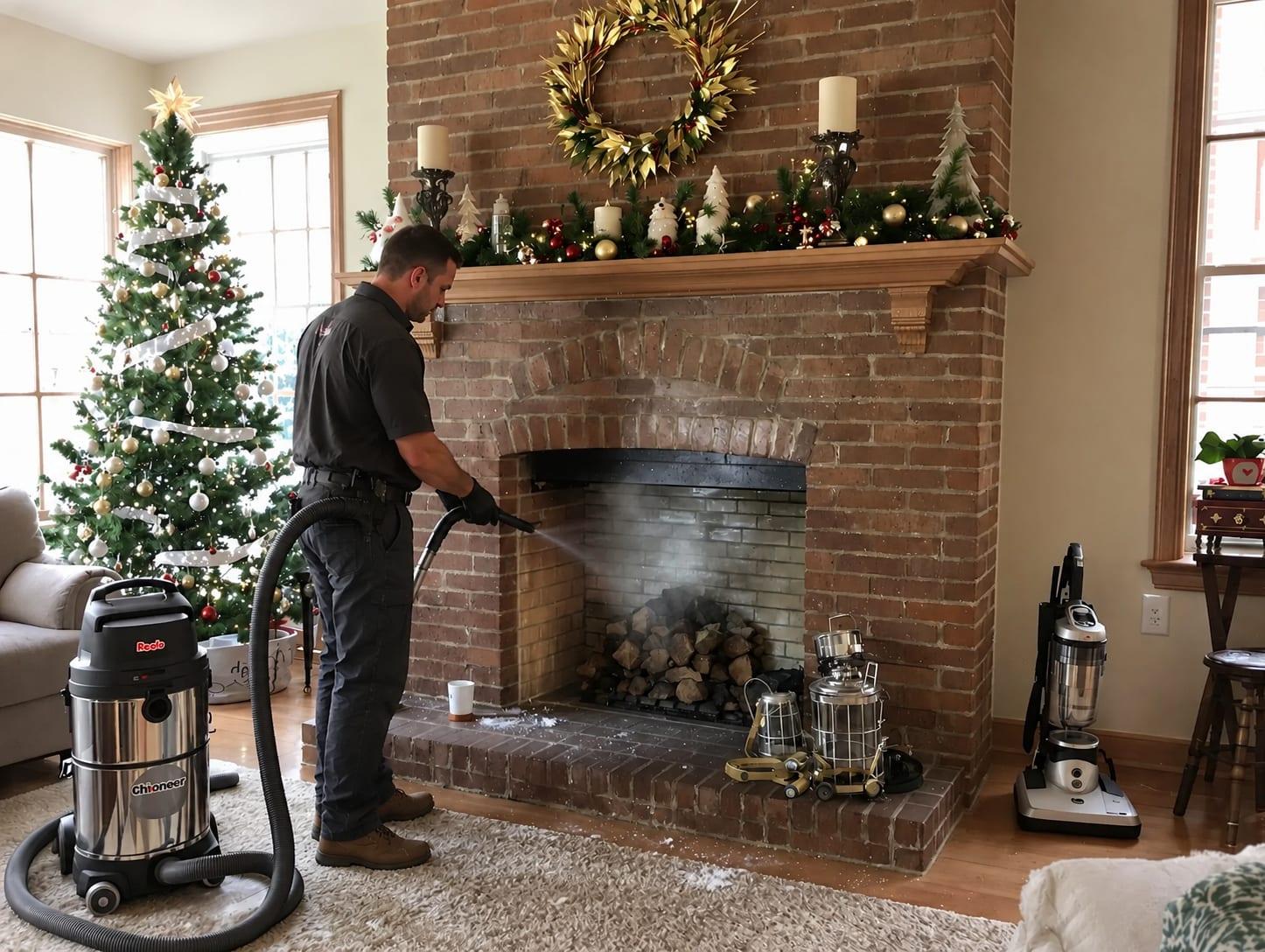
A wood-burning fireplace collects ash in the firebox and soot on the walls, doors and smoke shelf. Left alone, that buildup can cause smoky fires and stale odors, especially in humid weather. Our fireplace cleaning service clears out the firebox and surrounding surfaces; if the flue itself has heavy creosote, a sweep is the better booking.
When a gas unit won't light or stay lit
Gas fireplace and gas appliance work is offered. Common complaints include a pilot that keeps going out, a burner that lights unevenly, sooty glass, or a unit that clicks but never ignites. Those usually trace back to a dirty pilot assembly, a worn thermocouple or thermopile, or a venting problem. Our gas fireplace service covers diagnosis, repair and routine maintenance. If you smell gas, leave the house and call your gas utility first.
Water around the chimney after rain
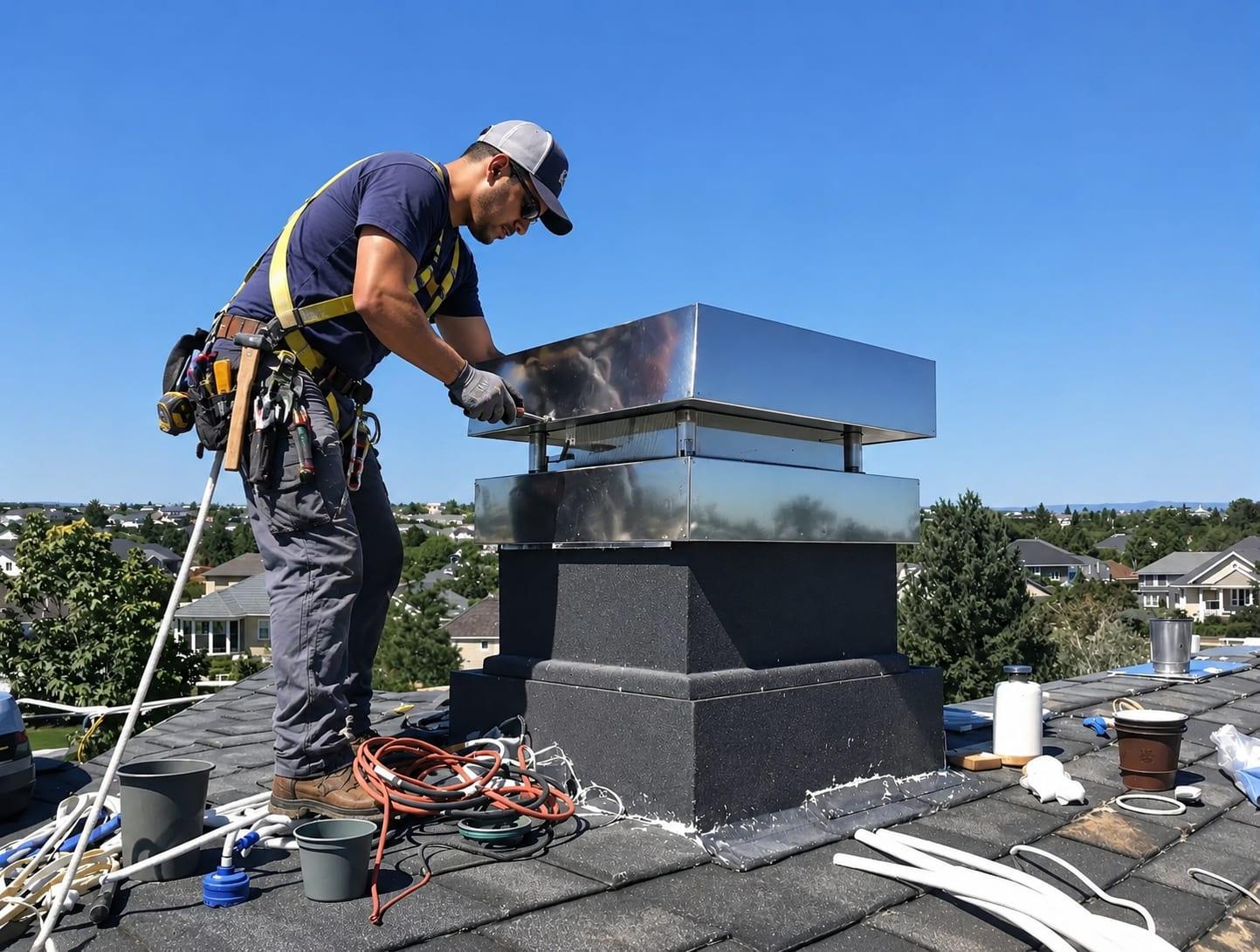
Stains on the ceiling near the chimney, damp drywall beside the fireplace, or water dripping into the firebox usually mean rain is getting past the flashing, crown, cap or masonry. Finding the entry point matters more than patching the stain, because water can travel along framing before it shows up. A missing or damaged cap is one of the simpler fixes, and chimney cap installation also keeps out leaves and animals. Cracked crowns, loose bricks and eroded mortar call for masonry repair.
Sources (1)
Facts and figures on this page come from these references.
- 1U.S. Census Bureau, American Community Survey 2019–2023 5-year estimates, table B25034 (Year Structure Built)