On this page
- What a fireplace inspection is and what it covers
- Getting ready for the visit
- When to book fireplace inspection
- What we look at
- When homeowners need a fireplace inspection
- What the visit involves, step by step
- What happens after the fireplace inspection
- How often to schedule an inspection
- Booking a fireplace inspection
What a fireplace inspection is and what it covers
A fireplace inspection is a structured check of the parts that contain the fire and move smoke out of the house. It's about condition and safety, not cleaning or fixing. You come away knowing what's sound, what's worn and what needs attention. Masonry fireplaces, prefab units, inserts and gas fireplaces each have their own weak points, and our guide to type of fireplace explains how they differ.
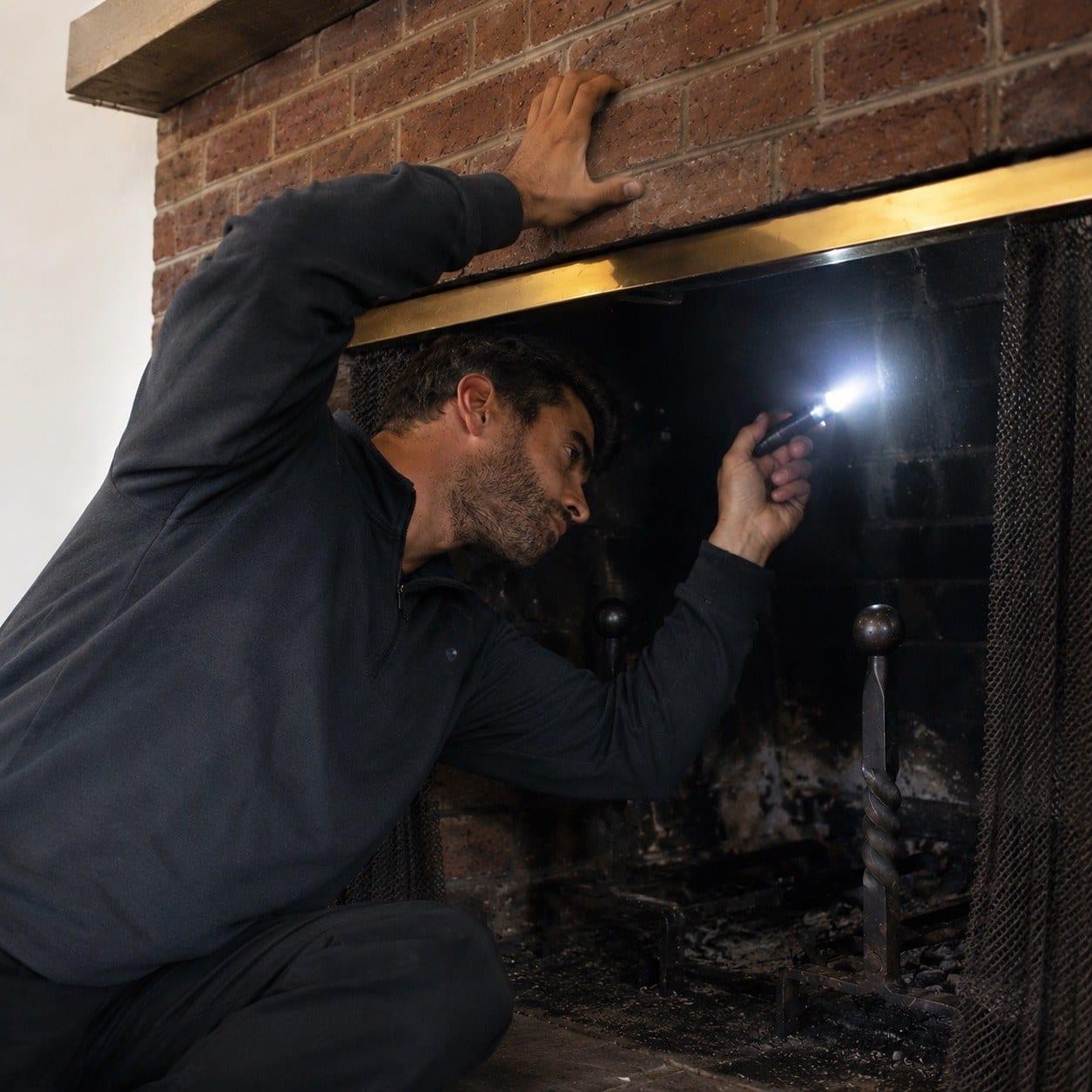
- Firebox: cracked or missing firebrick, open mortar joints, or warped and cracked refractory panels in prefab units.
- Damper: whether it opens fully, closes tightly and isn't rusted through.
- Smoke chamber and lower flue: heavy deposits, gaps or damage visible from below.
- Doors and glass: cracked glass, failing gaskets and loose frames.
- Hearth and surround: cracks, and clearance from wood trim, mantels and flooring.
- Gas components: burner, logs, pilot and visible connections. Gas units can also have a dedicated gas fireplace inspection.
Getting ready for the visit
- Let the fireplace or stove cool completely — ideally no fire for 24 hours before the visit.
- Keep pets in another room while the work area is open.
- Write down what you've noticed and when it happens — smells, smoke, sounds or stains.
- Move rugs, photos and anything fragile away from the work area.
When to book fireplace inspection
- A storm, earthquake or chimney fire may have damaged it
- You're switching fuel or adding an insert or stove
- It has been more than a year since the last inspection
- You've just bought the home or are about to sell it
What we look at
- Damper operation and seal
- Firebox walls, floor and joints
- Flue liner for cracks, gaps and missing mortar
- Clearances to framing and combustibles, where visible
- Flashing where the chimney meets the roof
Carbon monoxide
A blocked or damaged flue can push carbon monoxide into the home. If an alarm sounds or anyone feels dizzy or sick near the fireplace, get everyone outside and call 911.
When homeowners need a fireplace inspection
Schedule one when
- You've bought a home, or are about to, and don't know the fireplace's history
- The fireplace hasn't been used in a year or more
- Smoke comes into the room, or fires won't stay lit
- You see fallen mortar, brick fragments or rust flakes in the firebox
- A storm has hit the house or chimney
- There was a chimney fire, or you suspect one
- You're planning an insert, a fuel change or a refacing project
What the visit involves, step by step
How the inspection runs
Ask about use
How often you burn, what fuel you use and any problems you've noticed help focus the check.
Inspect the firebox and hearth
Surfaces are examined with a light, and clearances to combustibles are checked.
Test the damper and doors
Moving parts are opened and closed, and seals and glass are looked over.
Look up into the smoke chamber
The area above the damper is examined, and a camera can be used when something needs a closer look higher up.
Check gas parts if present
The burner, pilot and logs are checked for condition and soot patterns.
Walk through the findings
You hear what was found, what's urgent and what can wait.
What happens after the fireplace inspection
You get a plain explanation of the fireplace's condition: safe to use, safe once something is fixed, or not safe until repaired. Anything that needs work is described along with what fixing it involves, and the estimate is free. The next step depends on what turned up:
- Heavy soot or creosote calls for a fireplace cleaning before the next fire.
- Cracked firebrick, a failed damper or broken glass is a fireplace repair job.
- If you want to switch from wood to gas, a fireplace conversion is the work to discuss.
- If the unit is beyond saving, or you want something new, look at how fireplace installation works.
How often to schedule an inspection
Once a year is the standard guideline for any fireplace that gets regular use, ideally before the burning season. An annual fireplace inspection keeps that on a routine. Don't wait for the yearly visit after a chimney fire, a storm that hits the chimney, a long stretch of disuse or a home purchase. Enhancing fireplace safety covers the habits that help between visits.
The fireplace and the chimney work as one system
A fireplace inspection looks at the firebox and what you can see from below. The flue, crown and cap are covered by a chimney inspection service, and the two are often done together before a fireplace goes back into use.
Booking a fireplace inspection
Call or request an estimate to set up a visit. Estimates are free, same-day appointments are possible when the schedule allows, and emergency calls are accepted. We inspect all major brands of prefab and gas fireplaces as well as masonry ones, and we take on commercial and property-manager work.