On this page
What a chimney sweep does
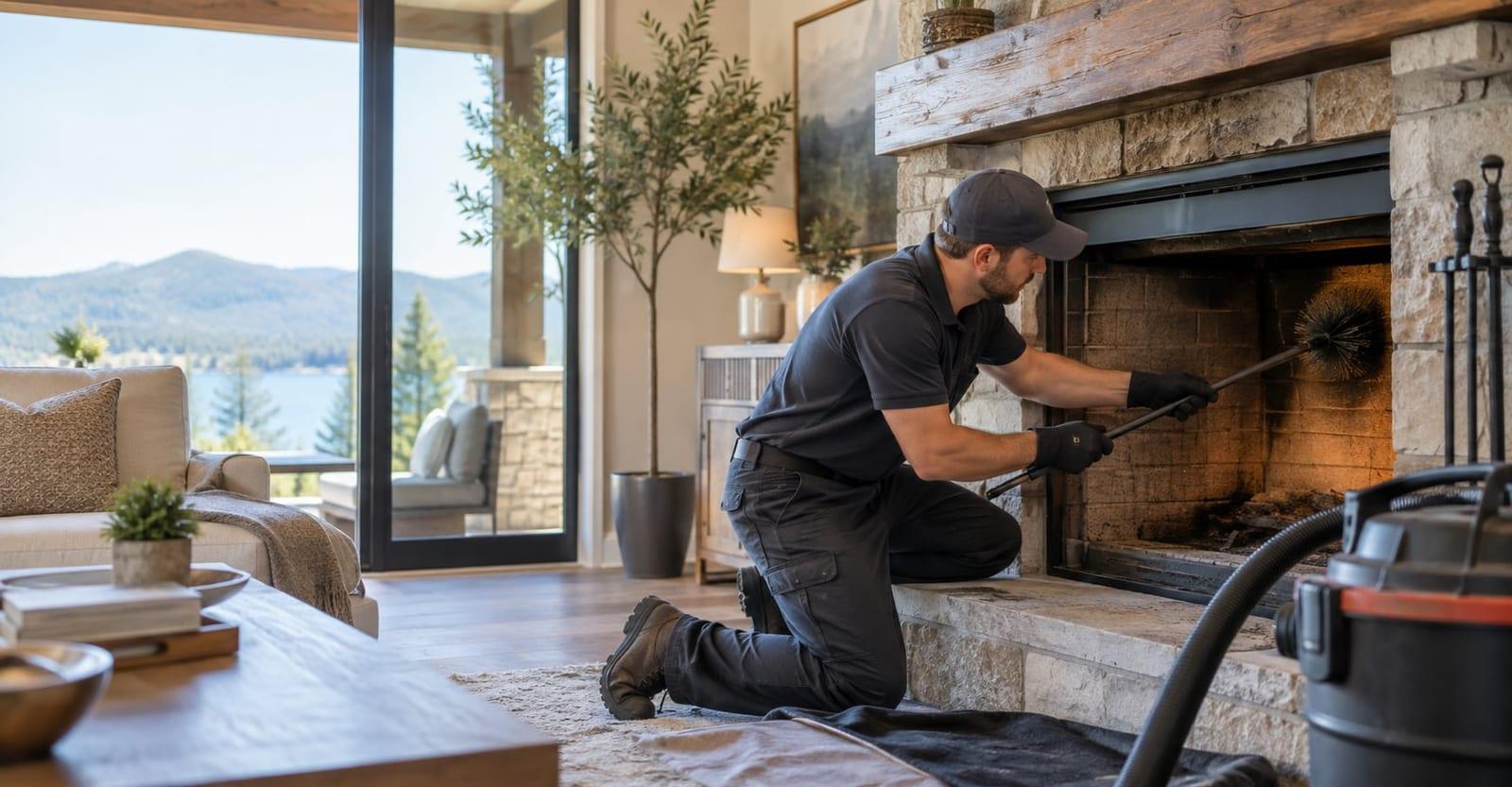
A chimney sweep cleans the inside of the whole chimney system. That includes the flue that carries smoke out, the smoke chamber above the damper, the damper itself and the firebox where the fire burns. Burning wood leaves soot and creosote on all of those surfaces. Over time that layer narrows the flue, weakens the draft and becomes fuel for a chimney fire. Sweeping removes it with brushes and rods sized to your flue, plus a vacuum that keeps the dust out of the house.
Chimney cleaning and chimney sweeping: same job, full scope
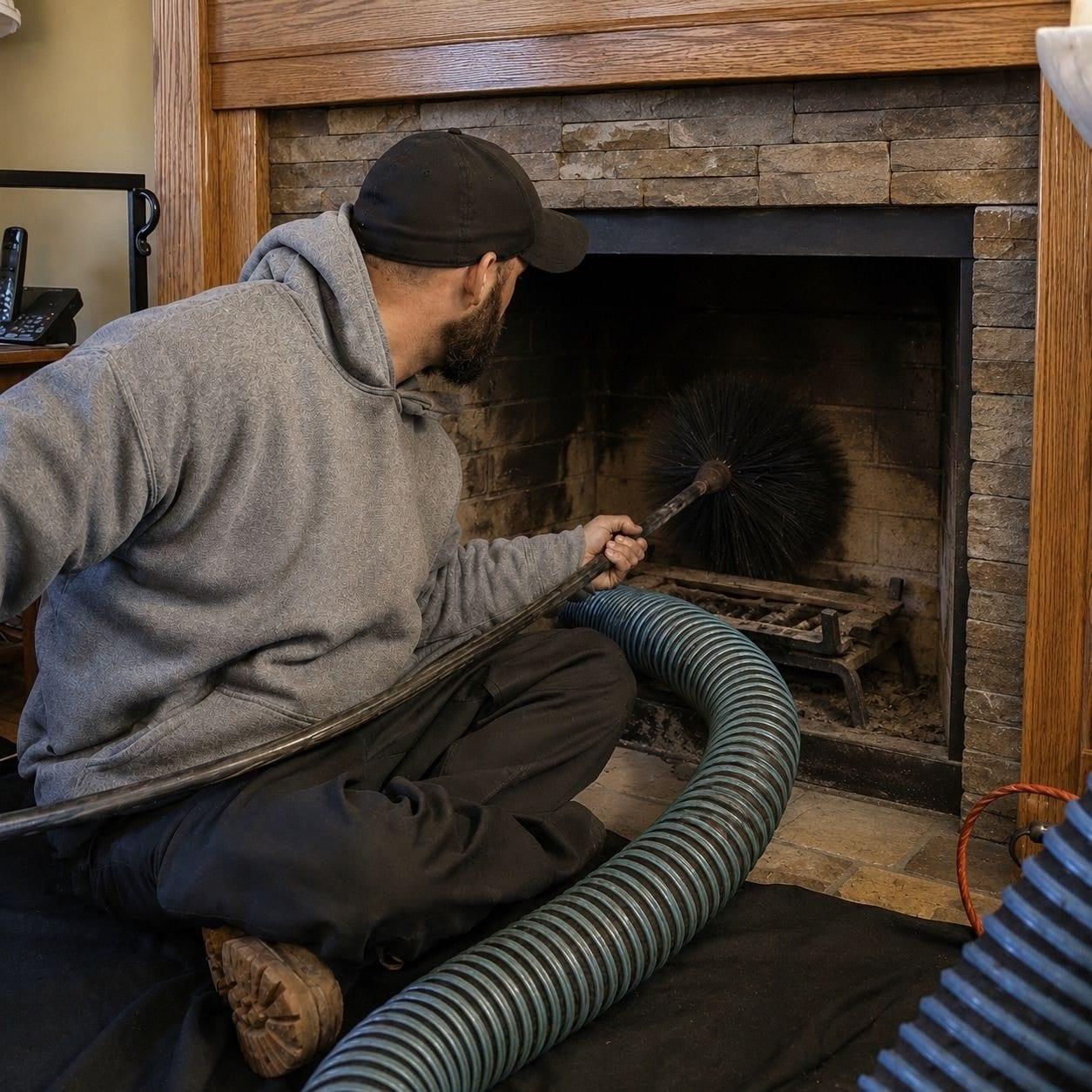
"Chimney sweep," "chimney sweeping" and "chimney cleaning" all describe the same work. "Sweep" is the older word, and people use it for both the person and the service. What matters is the scope. A complete cleaning covers the flue, smoke chamber, smoke shelf, damper and firebox, not just a brush pushed up the chimney.
Chimney flue cleaning
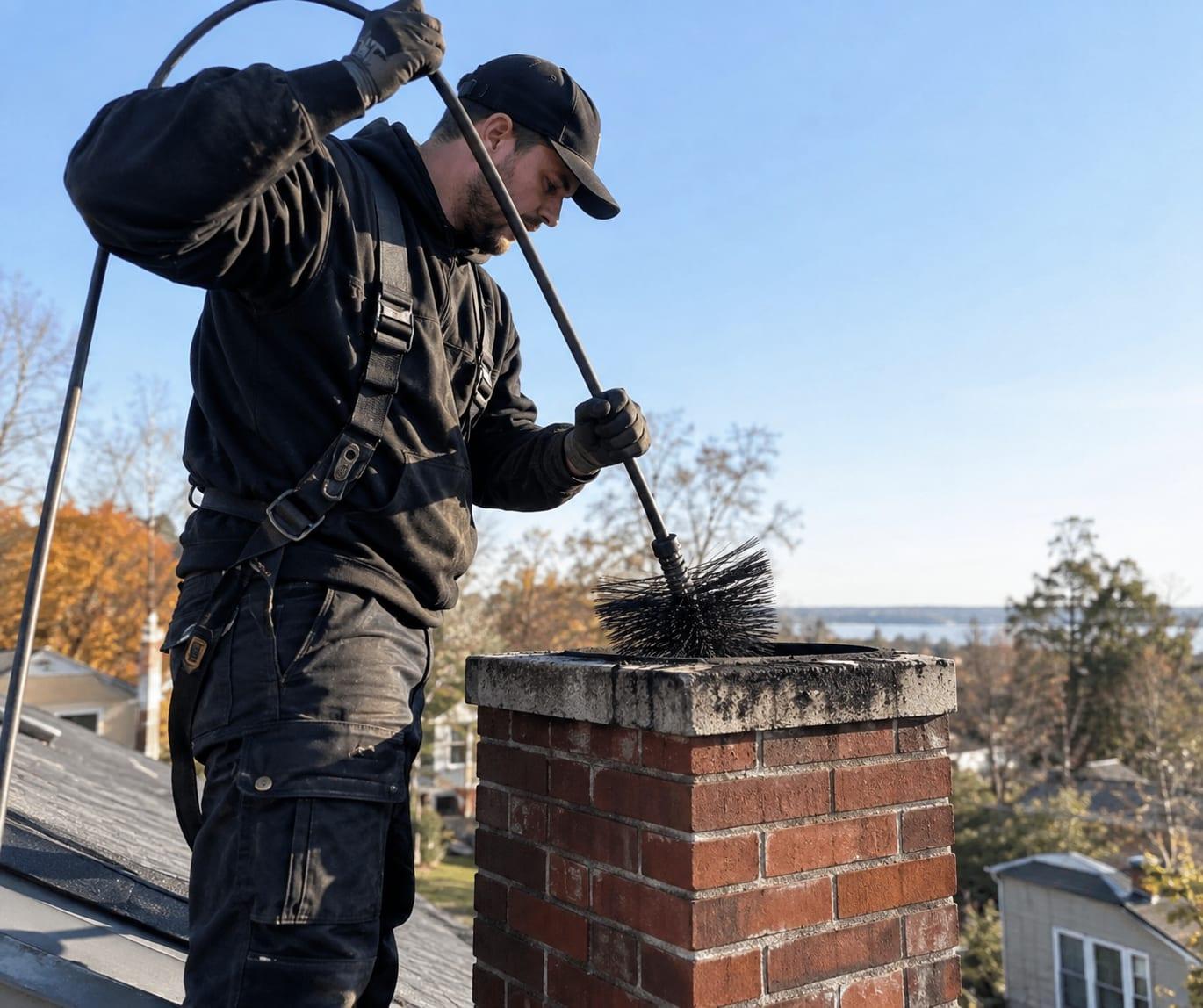
The flue is the core of the job. It is the channel that carries smoke and gases above the roof. In masonry chimneys it is usually clay tile. In factory-built and relined chimneys it is usually metal. Flue cleaning means running a brush matched to the flue's size, shape and material along its full length, so deposits come off without damaging the liner. A square tile flue takes a different brush than a round metal one.
Signs your chimney needs sweeping
Call for a sweep when you notice
- Black flakes or crumbly bits falling into the firebox
- A campfire or tar smell from the fireplace, especially when it isn't in use
- Smoke drifting into the room instead of going up the flue
- Fires that are hard to start or keep going, a sign of weak draft
- Dark, shiny or tarry creosote stains on the damper, the smoke chamber or around the fireplace opening
- Scratching, chirping or nesting material coming down the chimney
- A full season of regular fires, or no idea when the chimney was last cleaned
Sometimes smoke backs up suddenly, or the fireplace won't draw at all. In that case the cause may be a nest or debris rather than buildup. These signs of a blocked chimney can help you tell the difference. We handle chimney blockage removal and animal and nest removal as well as sweeping.
How creosote builds up
Creosote forms as smoke cools on its way up and its tars and unburned particles stick to the flue walls. It builds fastest with three conditions: wet or unseasoned wood, low-air fires that smolder, and a flue that stays cool, such as one on an exterior wall or one that is oversized for the fireplace. It shows up in three stages:
- First stage: dry, flaky soot that a standard sweep brushes off easily.
- Second stage: crunchy, tar-coated flakes that take more brushing and sometimes rotary tools.
- Third stage: a hard, glazed coating that looks like dripped tar and resists brushing. This is the most flammable form.
A normal sweep takes care of chimney soot removal and most first- and second-stage deposits. Glazed buildup usually calls for heavy or glazed creosote removal. That work uses chemical treatments or rotary equipment beyond a routine brushing.
Why a chimney smells
A smelly chimney is usually creosote. The deposits give off a sharp, smoky odor that gets stronger in humid air. It also gets stronger when the house pulls air down the flue, for example when exhaust fans run in a tightly closed house. Other causes include a dead animal or old nest, leaves rotting in the smoke chamber, or rainwater soaking into the masonry and the deposits.
Sweeping removes the deposits that hold the odor. We also handle chimney odor removal and animal removal when those are the source. If moisture keeps the smell coming back, a chimney cap and waterproofing the masonry deal with the cause.
What happens during a chimney sweep visit
The visit, step by step
Protect the room
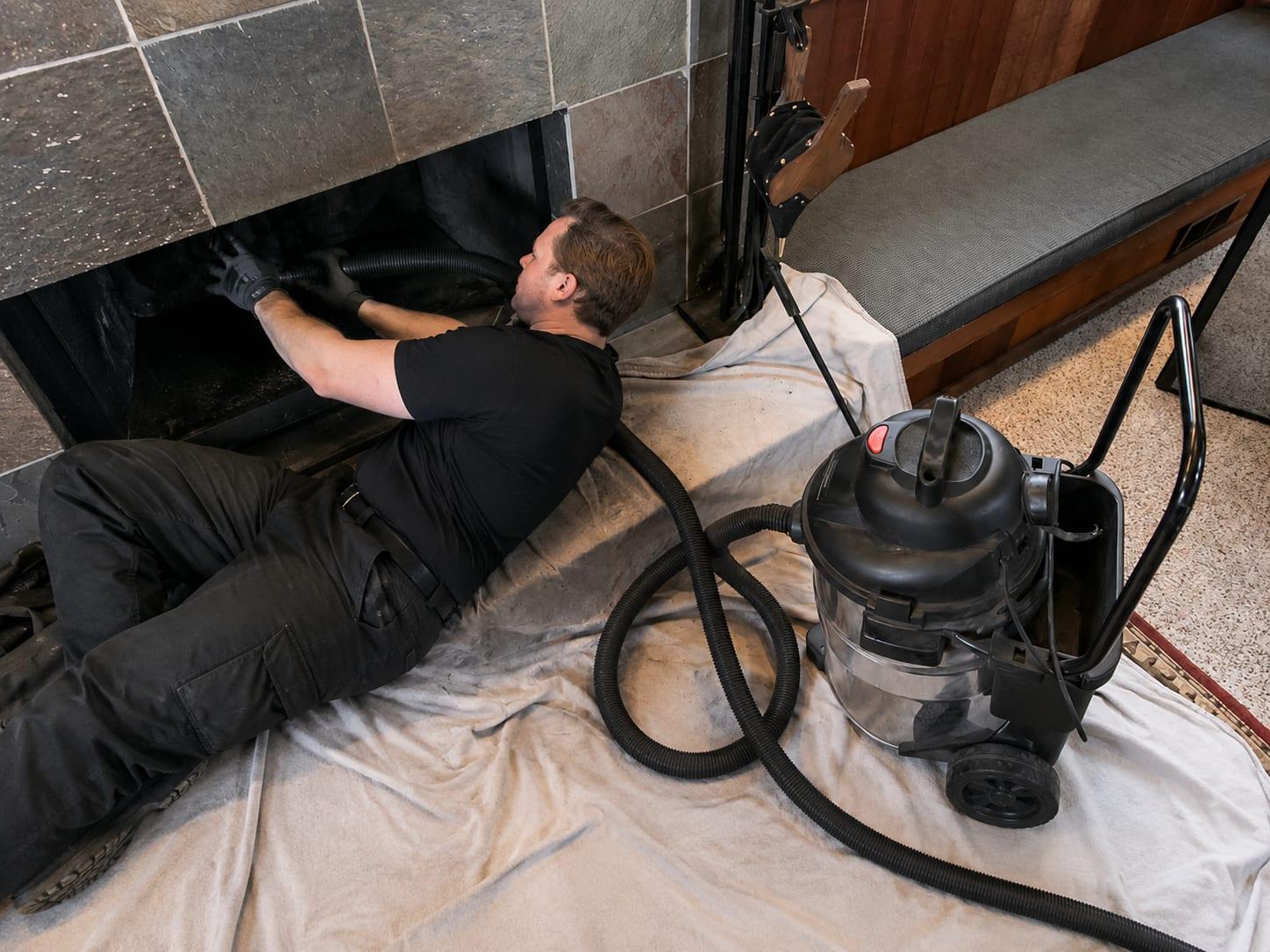
Drop cloths go down over the hearth and the path to the door. The fireplace opening is covered so dust stays in the chimney. A vacuum with fine filtration runs while the work is done.
Look before cleaning
We check the firebox, damper and visible flue. This shows what kind of deposits are there and whether anything looks damaged or blocked.
Sweep the flue
Brushes and rods sized to the flue go through its full length. Depending on the chimney, we work from the top, the bottom or both.
Clean the smoke chamber and damper
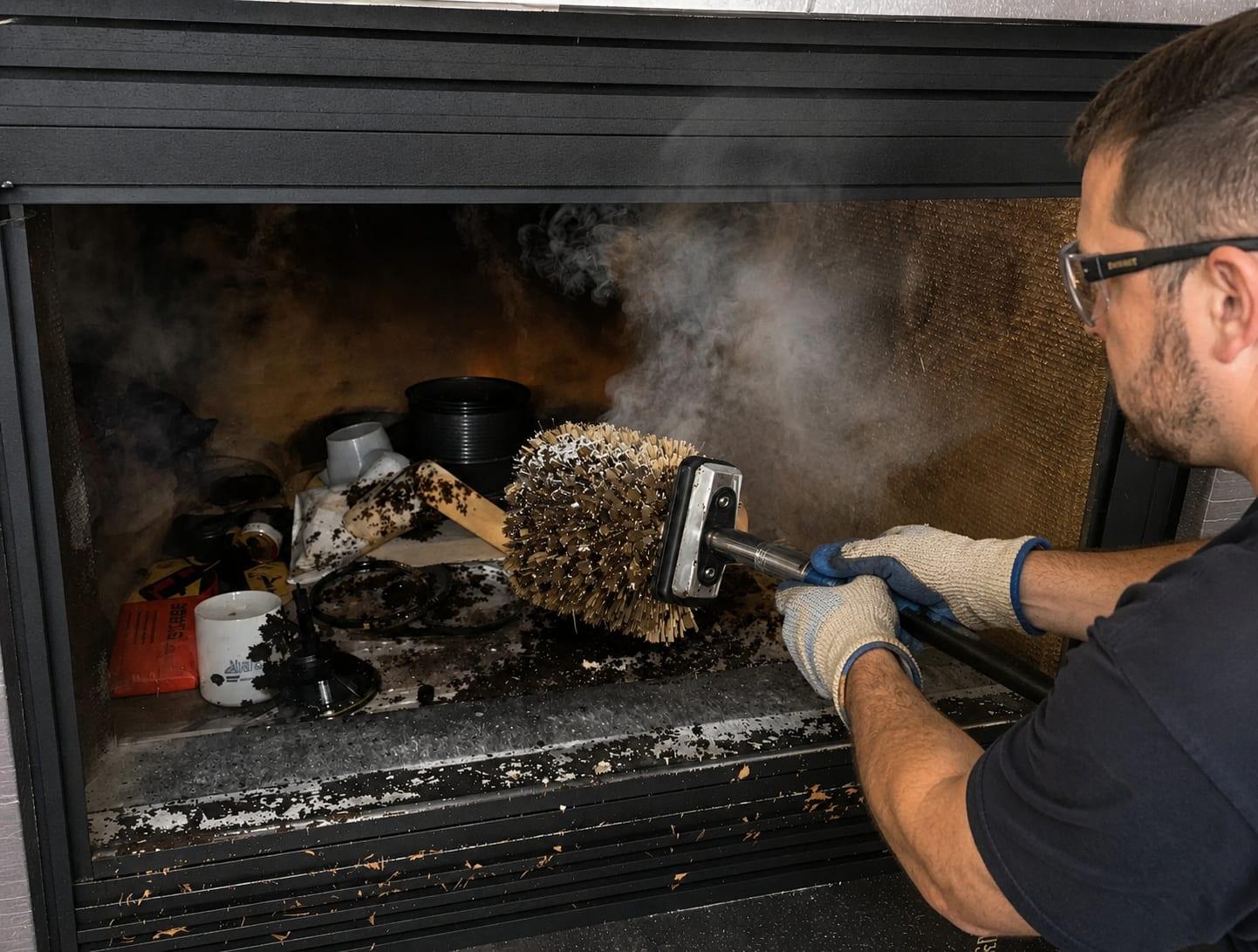
The area just above the damper collects heavy deposits, so it gets brushed out. We also clean the damper and smoke shelf so the damper opens and closes freely.
Clear out the firebox
Ash and debris that came down the flue are vacuumed up and carried out.
Walk through what we found
You hear what the flue looked like and how much creosote was there. We also point out anything worth attention, such as a missing cap, cracked tiles or a sticking damper.
For the hearth, glass doors and firebox surfaces, a full fireplace cleaning can be done alongside the sweep.
A sweep is not a condition report. During a chimney fire, get everyone out and call 911 first. If you need a documented look at the whole system, such as before buying a home or after a chimney fire or storm, that's a chimney inspection. If the sweep turns up cracked liner tiles, a crumbling crown or leaks at the roofline, that's repair rather than cleaning. Chimney repair and safety basics explains what those problems mean.
Chimney types and fuels we clean
Masonry chimney cleaning
Brick and stone chimneys usually have clay tile liners joined with mortar. Above the firebox is a smoke chamber built of brick and mortar. Masonry chimney cleaning means brushing tile flues without chipping the joints. It also means scraping the rough walls of the smoke chamber, where creosote tends to collect.
Factory-built and metal flues
Prefab fireplaces and many stoves vent through metal pipe instead of tile. These flues take brushes made for metal so the inside surface isn't scratched.
Wood, gas, pellet and inserts
- Wood-burning fireplaces leave the most creosote and need the most regular sweeping.
- Wood stoves and fireplace inserts vent through narrower liners, where deposits close off the opening quickly when fires are kept low.
- Pellet stoves produce fine ash that collects in the venting and inside the stove.
- Gas fireplaces don't make creosote, but their venting can collect nests, debris and corrosion. Gas fireplace and gas appliance work is offered.
Chimney cleaning and air duct cleaning
These are separate systems. A chimney carries smoke and combustion gases out of the house. Air ducts carry heated and cooled air through it. Chimney deposits are soot and creosote, while duct buildup is dust, lint and debris. Air duct cleaning is also one of our services, but one job doesn't take care of the other. If you need both, mention it when you get in touch.
Safety and maintenance
Creosote is fuel. A chimney fire can be loud and obvious, with a roaring sound and dense smoke. If you hear roaring or see flames or sparks from the top of the chimney, get everyone out and call 911. It can also be slow and quiet, cracking flue tiles without anyone noticing. A blocked or restricted flue can also push carbon monoxide back into the house, especially from gas appliances.
If you suspect a chimney fire
Get everyone out of the house and call the fire department. Don't open the fireplace doors or try to put the fire out from inside. Have the chimney checked before you use it again.
Habits that slow buildup
- Burn split hardwood that has dried thoroughly
- Give fires enough air and avoid long, smoldering burns
- Don't burn trash, cardboard, wrapping paper or treated wood
- Keep a cap on the chimney to stop rain, leaves and animals
- Keep working smoke and carbon monoxide alarms in the home
Emergencies
Emergency calls are accepted. Same-day visits are available where the schedule allows.
Booking a chimney sweep
Estimates are free. When you get in touch, tell us what you burn and how often. Also mention when the chimney was last cleaned and anything you've noticed, like smells, smoke in the room or debris in the firebox. Commercial and property-manager work is offered, so rental units and multi-unit buildings can be scheduled too.
Outside the city, you can book chimney sweep service in Alpharetta or chimney sweeping for Marietta homes.
Ready to schedule a sweep?
Call or request an estimate to get your chimney cleaned.
Related work covered on this page
- Chimney Flue Cleaning