On this page
- What chimney waterproofing is and what it involves
- Signs your chimney needs waterproofing
- Chimney crown waterproofing
- Chimney cap sealant
- Masonry waterproofing for brick and mortar
- Components and materials involved
- Chimney water leak repair: finding the source first
- What the visit involves, step by step
- Keeping a chimney dry over time
- Schedule chimney leak repair service
What chimney waterproofing is and what it involves
Chimney waterproofing is a protective treatment for the parts of a chimney that sit out in the weather: the brick or stone, the mortar joints, the concrete crown on top and the joint where the cap meets the crown. The goal is to keep liquid water from soaking into the masonry while still letting moisture already inside the brick escape as vapor.
That second part matters. A chimney sealed with the wrong product, such as paint or a plastic-like coating, can trap moisture inside the brick. When that trapped water freezes or keeps the masonry damp, faces of the brick can flake off and mortar can crumble faster than if nothing had been applied at all. We use vapor-permeable water repellents made for masonry, not film-forming coatings.
Waterproofing is not a repair on its own. Cracked crowns, open mortar joints and failed flashing have to be fixed first, or the sealer simply covers the problem. If you want the longer case for doing this work, our write-up on the benefits of sealing a chimney against water covers it in more detail.
Signs your chimney needs waterproofing
Water damage on a chimney usually shows up slowly. These are the signs that tell us the masonry is taking on water:
Common signs of chimney water problems
- Water stains on the ceiling or wall next to the chimney, or damp spots after rain
- White, chalky deposits (efflorescence) on the outside brick or inside the firebox
- Brick faces flaking, chipping or popping off
- Mortar joints that are sandy, recessed or missing
- Cracks across the concrete crown on top of the chimney
- Rust on the damper, firebox doors, cap or chase components
- Water pooling in the firebox or dripping onto the damper
- A musty or smoky smell in the room, often worse in humid weather
What leaky chimneys cause
A chimney that keeps taking on water does damage in two places. Outside, wet masonry breaks down: mortar washes out, bricks spall and the crown cracks wider. The longer it goes, the more the job shifts from sealing to rebuilding.
A leaky and smelly chimney
Creosote and soot inside the flue absorb moisture. When water gets into the chimney, those deposits give off a sour, smoky odor that can drift into the house, especially when the air is humid or the fireplace hasn't been used in a while. Stopping the water is part of fixing the smell; a sweep to remove the damp deposits is usually the other part.
Chimney crown waterproofing
The crown is the concrete or mortar slab that caps the top of the brick and surrounds the flue. It takes direct rain and standing water, and it is one of the most common places a chimney starts leaking. Small hairline cracks let water run straight down into the brick below.
For a crown in sound shape, we clean it and apply a flexible crown sealant that bridges hairline cracks and sheds water. Only use a product rated for direct flame in a firebox, as a short-term fix for a hairline gap; open joints and larger cracks need a proper repair before the next fire. A crown that is badly cracked, crumbling or built flat with no overhang needs repair or rebuilding of the crown before any coating will hold up.
Chimney cap sealant
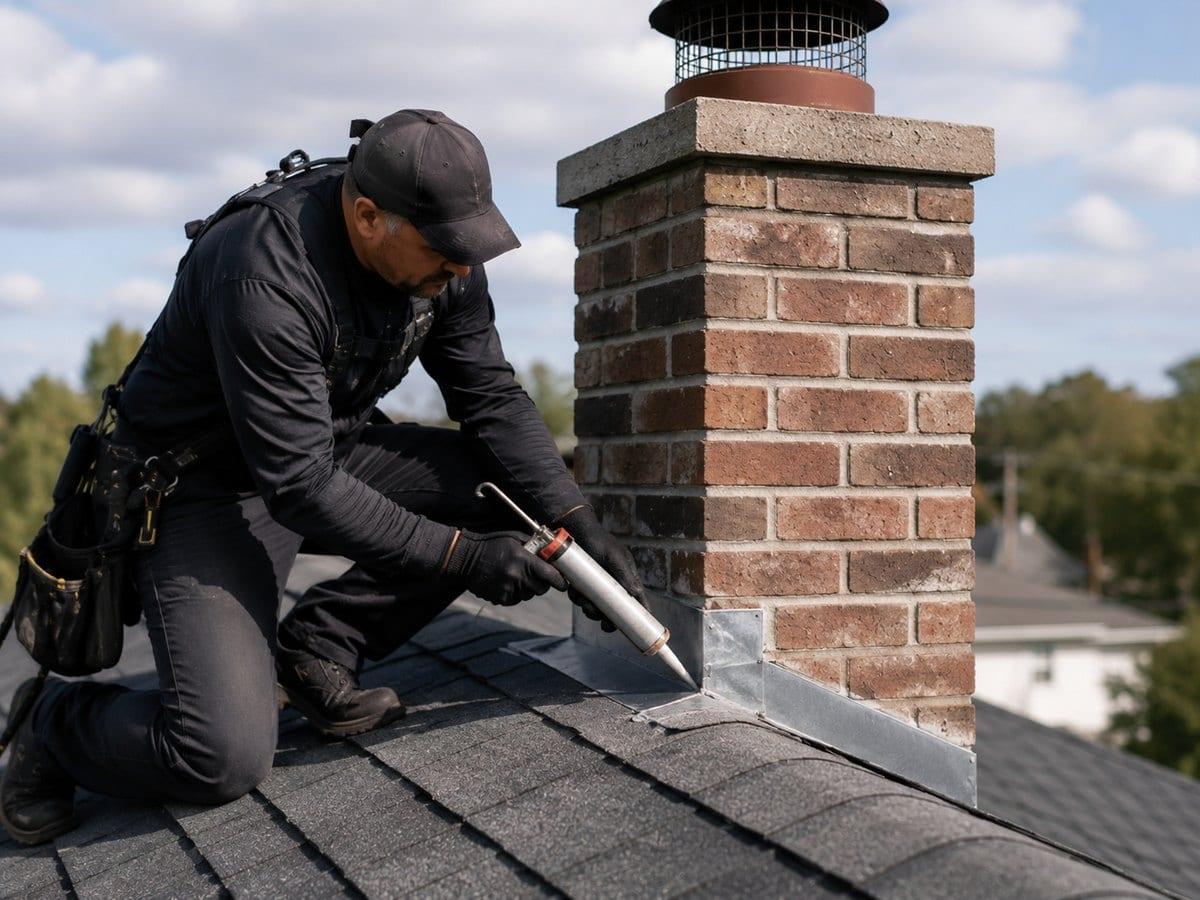
A leaking chimney cap is often not the cap itself but the seam where it meets the crown or flue tile. Over time the original sealant dries out, shrinks or pulls away, and water gets under the cap's base. We remove failed sealant, check that the cap is secure and the right size for the flue, and reseal the joint with a sealant made for that use.
If the chimney has no cap at all, rain falls directly into the flue. A cap is one of the simplest ways to cut down on water inside the chimney; our guide to the benefits of chimney caps and dampers explains why.
Masonry waterproofing for brick and mortar
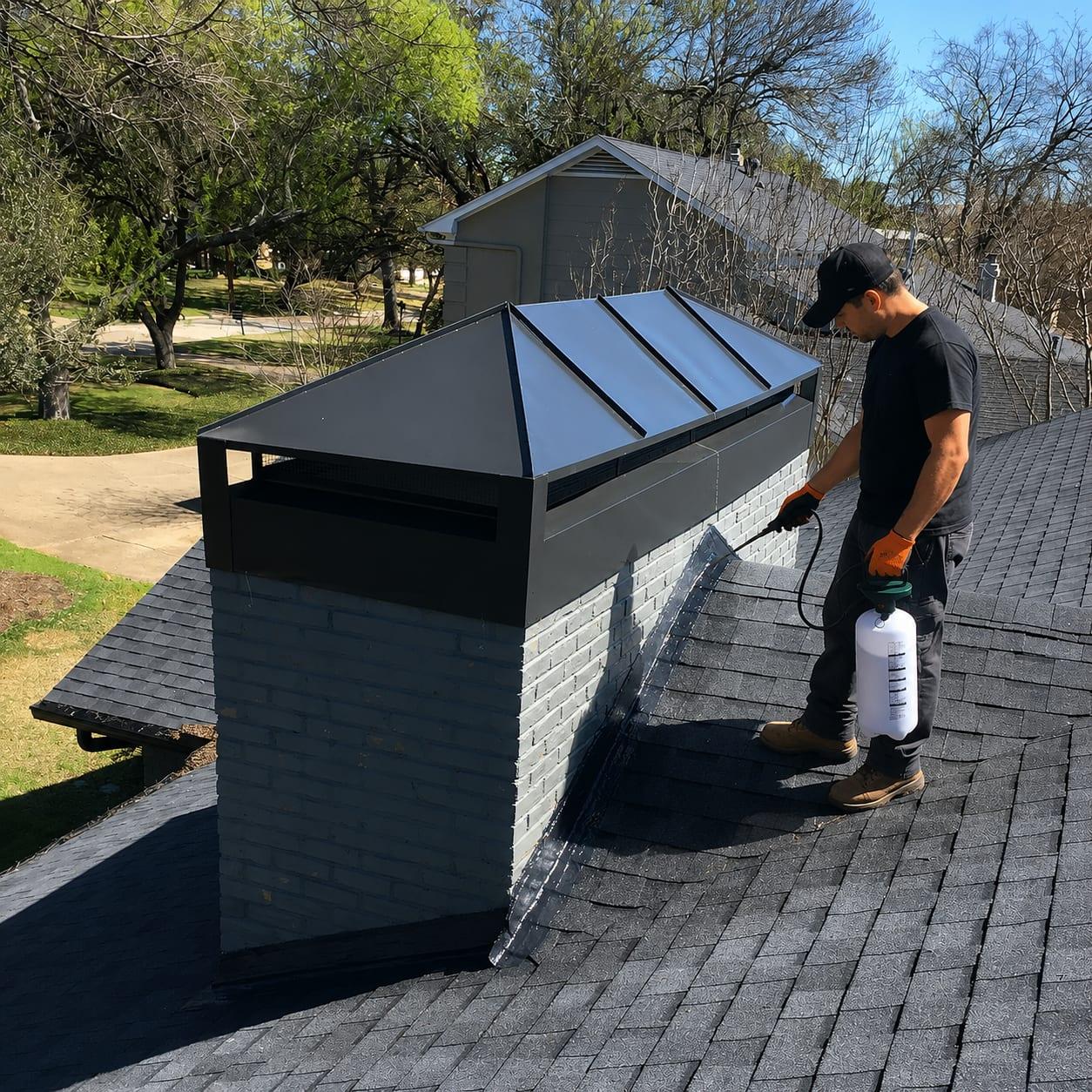
For the chimney walls, we apply a penetrating water repellent that soaks into the brick and mortar rather than forming a film on top. Applied correctly, it generally dries clear and doesn't change the look of the brick much, while making rain bead up and run off.
Repellent only works on sound masonry. Loose or missing mortar needs tuckpointing first, and damaged bricks need replacing. That work falls under our chimney masonry repair service, and we often do both in the same project.
Components and materials involved
| Component | What we use | Why |
|---|---|---|
| Brick or stone walls | Vapor-permeable penetrating water repellent | Keeps rain out while letting trapped moisture escape |
| Mortar joints | Tuckpointing where needed, then the same repellent | Sealer can't fill open or crumbling joints |
| Crown | Crack repair, then flexible crown sealant | Stops water entering from the top of the chimney |
| Cap-to-crown joint | Fresh sealant after removing the old material | Closes the seam where many cap leaks start |
| Flashing | Repair or resealing of the flashing itself | Roof-line leaks need flashing work, not a masonry sealer |
Chimney water leak repair: finding the source first
Not every chimney leak is a masonry leak. Water can come in through the crown, the cap, the brick, the flashing where the chimney meets the roof, or condensation inside the flue. Each one has a different fix, and waterproofing only addresses some of them. That's why we look for the actual entry point before recommending anything.
If you're dealing with active dripping or stains right now, our page on tracking down and stopping a chimney leak walks through the usual causes.
Flashing leaks need flashing work
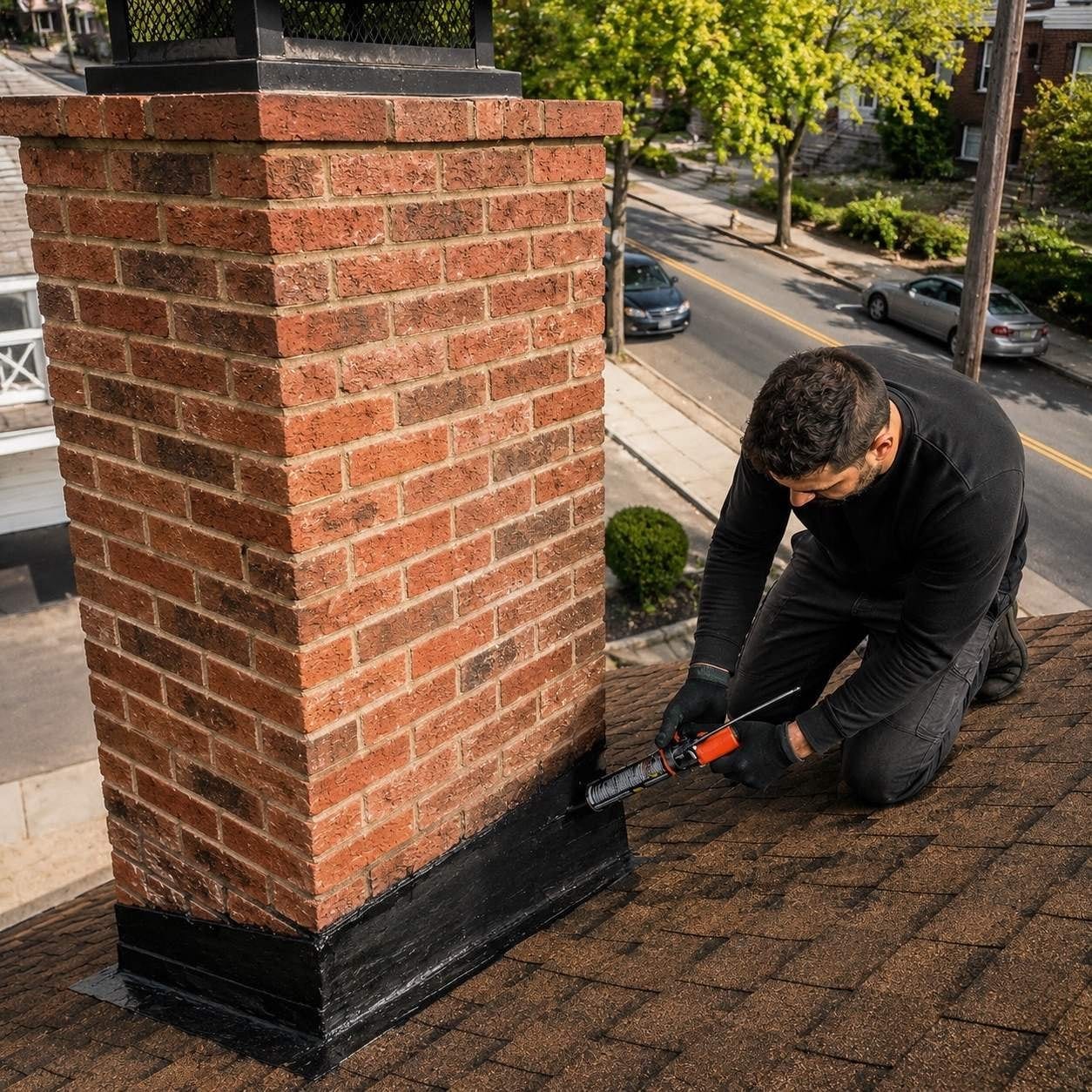
If water shows up where the chimney passes through the roof, the flashing is a likely suspect. Sealing the brick won't stop a flashing leak; we repair the flashing as part of the job when that's the cause.
What the visit involves, step by step
How a chimney waterproofing job goes
Inspect inside and out
We look at the crown, cap, brick, mortar, flashing and the inside of the chimney for signs of where water is getting in and how much damage it has done.
Explain what we found
You get a plain explanation of the problem and a free estimate, including any repairs that need to happen before sealing.
Repair first
Cracked crowns, open mortar joints, damaged brick, failed cap seals and flashing problems are fixed before any repellent goes on.
Clean and let the masonry dry
Dirt, moss and loose material are cleaned off. Repellent needs dry masonry to soak in properly, so we schedule application around the weather.
Apply sealants and repellent
The crown gets its sealant, the cap joint is resealed and the walls are treated with a breathable water repellent.
Final check
We check the finished work and let you know what to watch for going forward.
Keeping a chimney dry over time
Waterproofing works best as part of regular upkeep. An annual inspection catches new crown cracks, loose mortar and dried-out sealant while they are still small. Keeping a cap on the chimney, keeping the damper in working order and having the flue swept also reduce moisture problems and odors inside the chimney.
Schedule chimney leak repair service
If you've noticed stains, flaking brick or a damp smell, the next step is having the chimney looked at so you know whether it needs sealing, repairs or both. Emergency calls are accepted, and same-day visits are available where the schedule allows (never guaranteed). Call or request an estimate to get on the schedule.