On this page
What gas line installation is and what it involves
Gas line installation means extending your home's gas piping to a new appliance location. For natural gas, that usually means tapping into existing piping. For propane, the line starts at the tank supply. The line has to be sized for the appliance's heat output and the length of the run. An undersized line starves the burner and leaves you with a weak flame.
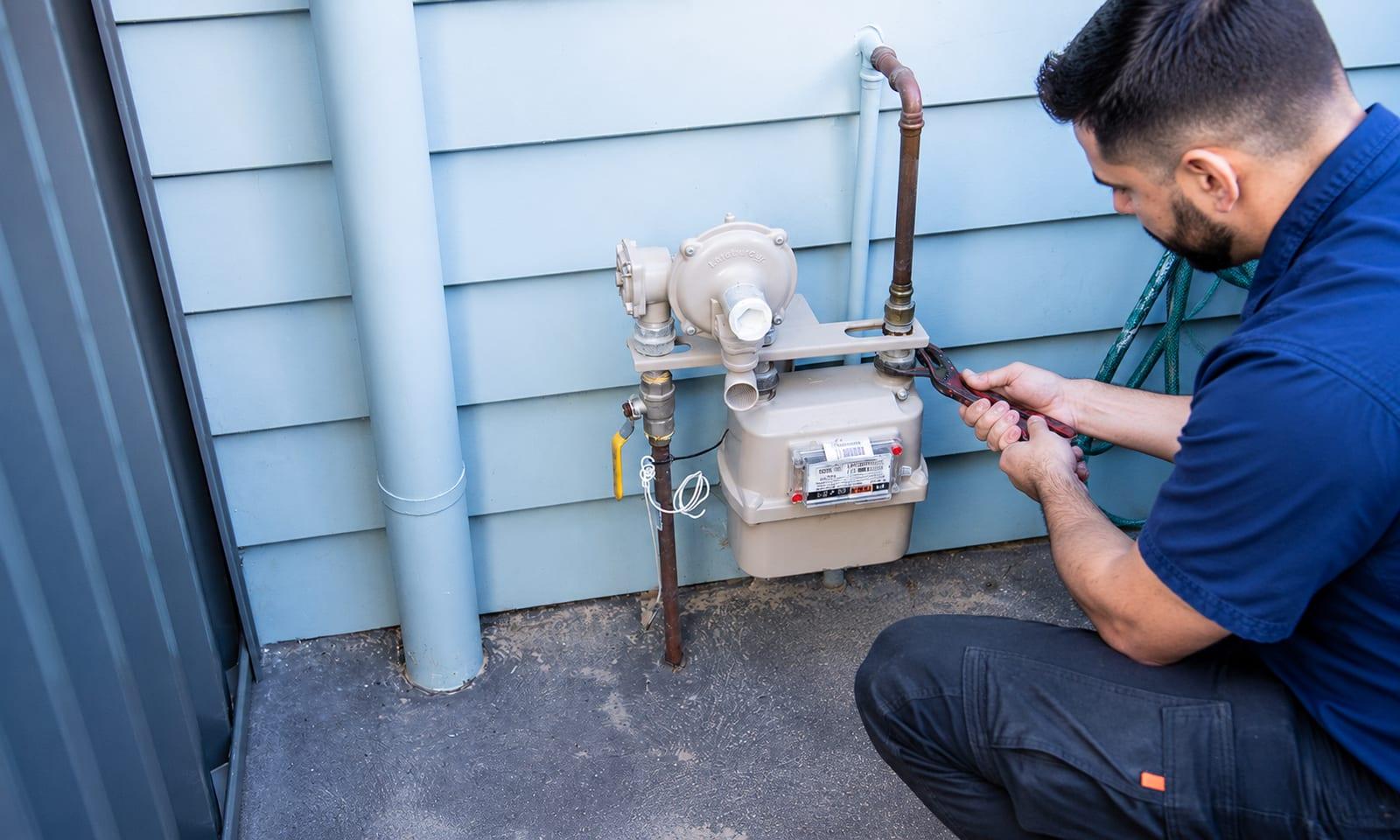
- Black iron pipe is the traditional rigid choice for exposed and straight runs.
- A short approved flexible connector joins the line to the appliance.
- An accessible shutoff valve near the appliance lets the gas be turned off for service.
Before any appliance is connected, the new line is pressure-tested, and every joint is checked for leaks after the connection is made.
Carbon monoxide
A blocked or damaged flue can push carbon monoxide into the home. If an alarm sounds or anyone feels dizzy or sick near the fireplace, get everyone outside and call 911.
Getting ready for the visit
- Write down what you've noticed and when it happens — smells, smoke, sounds or stains.
- Note the make and model of any insert, stove or gas unit if you have it.
- Clear a few feet of space in front of the hearth or appliance.
- Keep pets in another room while the work area is open.
What the technician checks
- Permit requirements
- Hearth extension and protection
- Opening or framing dimensions
- Vent or liner route and length
- Gas supply or electrical needs
When homeowners need gas line installation: the signs and problems that call for it
If you smell gas
Leave the building immediately. Don't operate switches, use a phone or strike a flame indoors. Call the gas utility or 911 from outside, at a safe distance.
- You are adding a gas fireplace to a room with no gas supply. Our gas fireplace installation service covers the unit itself.
- You want gas logs in a wood-burning fireplace. See how gas log installation works for that side of the job.
- You are switching from wood to gas and are still deciding; our guide to gas vs wood fireplace installation can help.
- A fireplace or gas appliance is moving to a new spot in the house.
- An existing connector is old, kinked or corroded, or the flame seems starved for fuel.
A weak or uneven flame isn't always a supply problem.
What the visit involves, step by step
Running a new line
Map the route
We find the nearest suitable gas source and plan the path through walls, floors or the crawlspace.
Size the line
We work out pipe size from the appliance rating and the length of the run.
Free estimate
You get a written estimate before work begins.
Install and test
We run the pipe, fit the shutoff valve and pressure-test the line before any connection.
Connect and check
We connect the appliance, leak-check every joint and light it to confirm a steady flame.
Safety and maintenance context
Know where the shutoff valve is for each gas appliance, and keep it reachable rather than boxed in behind furniture or storage. Don't hang anything from gas piping or use it as a support. Keep carbon monoxide alarms working in the house. Have connectors and valves looked at along with the appliance; our guide to gas fireplace safety inspections explains what a yearly check includes.
Booking gas line installation
Let us know which appliance the line is for, whether you use natural gas or propane, and roughly where it will go. Estimates are free, same-day visits are available where the schedule allows, and emergency calls are accepted. We handle residential, commercial and property-manager gas work across Greater Atlanta. Once the line is in, our gas fireplace service can take care of the appliance at the end of it.