On this page
What fireplace refacing is and what it involves
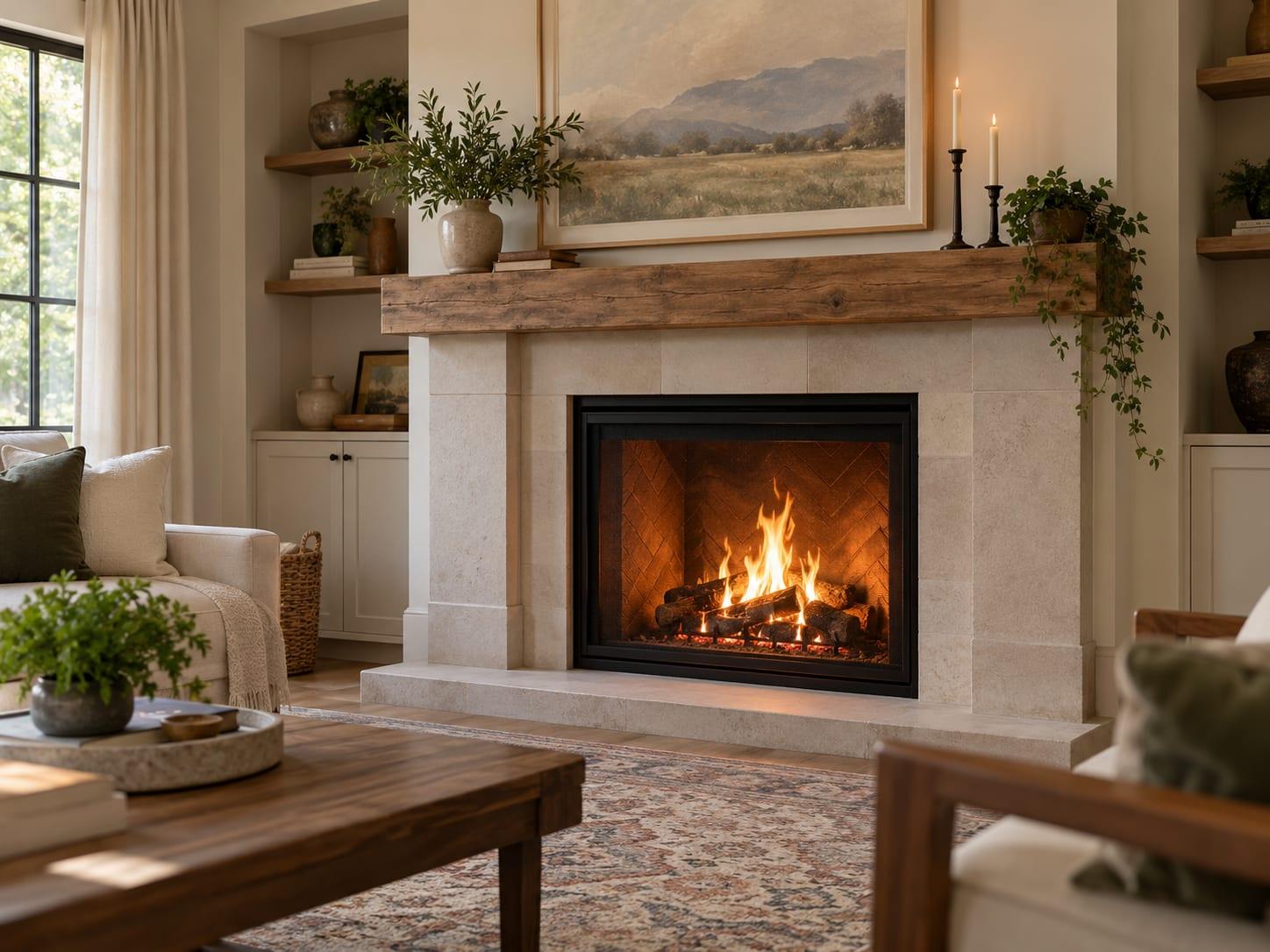
Refacing changes the visible face of a fireplace: the surround around the opening, the hearth in front of it and often the mantel. The firebox, damper and chimney stay as they are. That makes refacing a cosmetic project with real practical limits, because whatever goes on has to handle heat near the opening and sit at safe distances from the fire. The benefits of fireplace refacing covers why homeowners choose it over a full replacement.
Signs a fireplace is ready for refacing
- The brick or tile looks dated, and the rest of the room has been remodeled.
- Tiles are cracked, loose or missing around the opening.
- Painted brick is peeling, and you'd rather start fresh than repaint.
- The surround is scuffed or chipped beyond what cleaning can fix.
- You want a mantel, a taller surround or a different look in the room.
Some problems belong to a different job. Dark smoke staining above the opening often points to a draft issue that needs fireplace repair first, so the new surface doesn't stain the same way. If you want a different firebox or fuel altogether, fireplace installation is the right starting point.
Materials commonly used for fireplace refacing
| Material | Look | Good to know |
|---|---|---|
| Natural stone | Rugged or refined, depending on the stone | Heavy. The wall and hearth have to carry the weight. |
| Manufactured stone veneer | Stone appearance at a lighter weight | Applied over a prepared backing, with a wide range of styles |
| Ceramic or porcelain tile | Clean and modern, or patterned | Heat-tolerant and easy to wipe down |
| Thin brick veneer | Classic brick without full-depth masonry | Can refresh existing brick with a new color or pattern |
| Plaster or stucco-style finish | Smooth, minimal surround | Applied over a suitable backing near the opening |
| Wood mantel | Warm accent above the opening | Has to sit at a safe distance from the fire |
Seeing your type of fireplace helps narrow the choice. Prefab units, for example, often have manufacturer limits on what can surround the opening.
What the visit involves, step by step
How a refacing project runs
Consult and measure
The surround, hearth and wall are measured, and you talk through materials and the look you want.
Confirm the fireplace is sound
The firebox and opening are checked so the new face doesn't go over a problem.
Protect the room
Floors and furnishings are covered, and dust is contained.
Prepare the surface
Old tile or loose material is removed, or the existing surface is prepared, and a backing goes on where the new material needs one.
Install the new face
Stone, tile or veneer is set, and the hearth and mantel are fitted.
Finish and cure
Joints are grouted or pointed, the area is cleaned, and you're told when the fireplace can be used again.
Safety and upkeep
Materials close to the firebox opening need to be noncombustible, and mantels and wood trim need proper clearance from the fire. These details matter as much as the look. Our guide to enhancing fireplace safety covers the rest. Once the new face is in, a fireplace cleaning service before the burning season keeps soot from dulling it.
Starting a refacing project
Request a free estimate to talk through materials and what the work would involve for your fireplace. The work is the same whether you have a masonry fireplace or a gas unit from any major brand, and commercial and property-manager projects are welcome too.
What gets checked
- Firebox
- Flue and liner
- Crown and cap
- Flashing
- Damper
Carbon monoxide
A blocked or damaged flue can push carbon monoxide into the home. If an alarm sounds or anyone feels dizzy or sick near the fireplace, get everyone outside and call 911.
Getting ready for the visit
- Move rugs, photos and anything fragile away from the work area.
- Write down what you've noticed and when it happens — smells, smoke, sounds or stains.
- Note the make and model of any insert, stove or gas unit if you have it.
- Clear a few feet of space in front of the hearth or appliance.