The problem in plain words
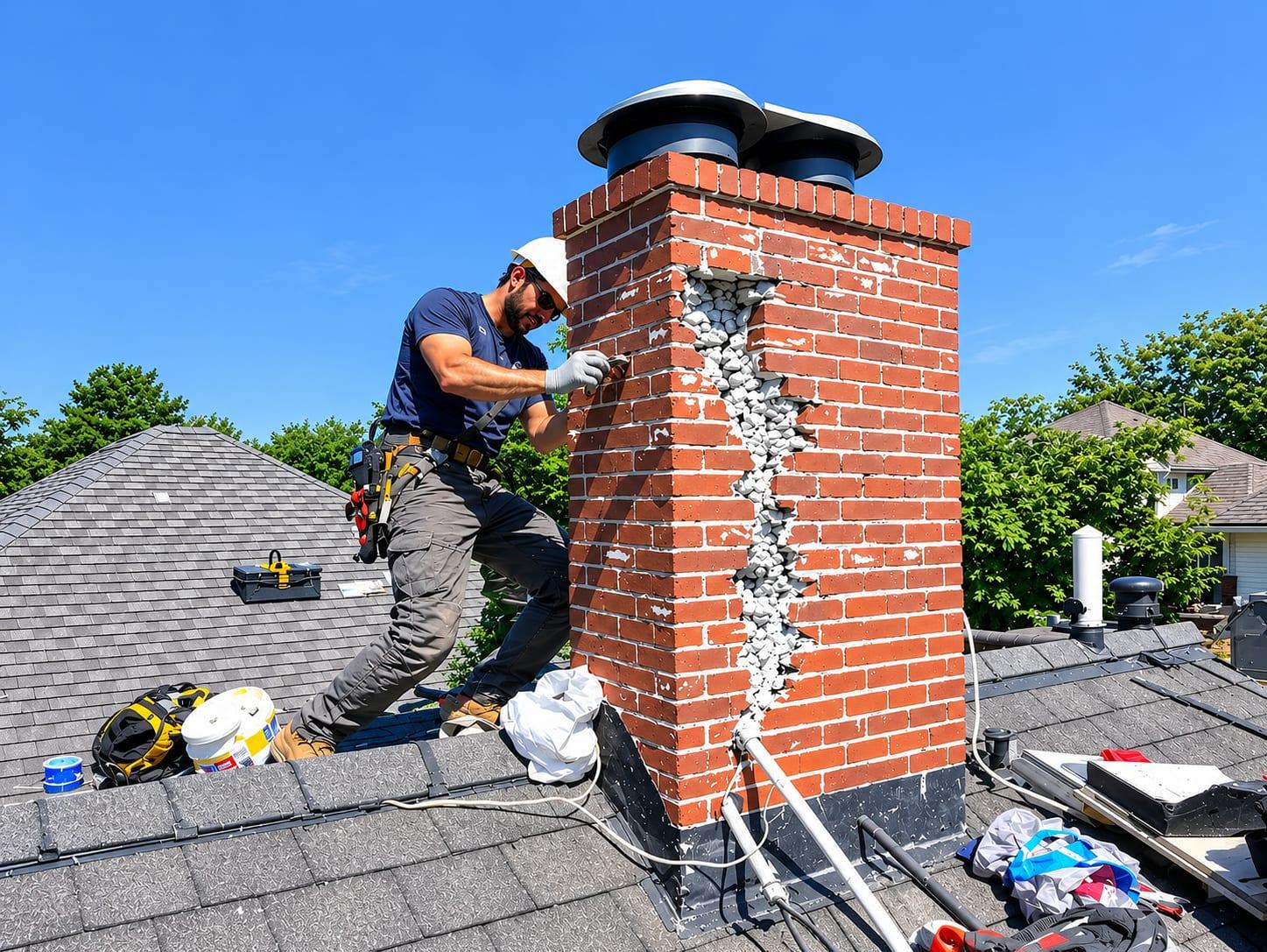
A masonry chimney is extremely heavy, and it stands on its own footing rather than on the house. If that base sinks or shifts, or the masonry above it weakens, the chimney starts to tip, usually away from the wall. Because it's attached to the house at the roof and sometimes at the walls, the movement pulls on flashing, siding and framing as it goes.
What the visit covers
A chimney pulling away from the house opens gaps that let water and heat reach the framing. Loose masonry high on a leaning stack can fall onto the roof, a walkway or a driveway. If bricks are falling or it looks like it could come down, keep everyone away from the area below it and call 911.
Look at the whole stack
The lean, the gap at the house and the condition of the masonry from the ground and the roof where safe.
Find the cause
Footing, masonry failure or the attachment — the cause decides the repair.
Explain the options
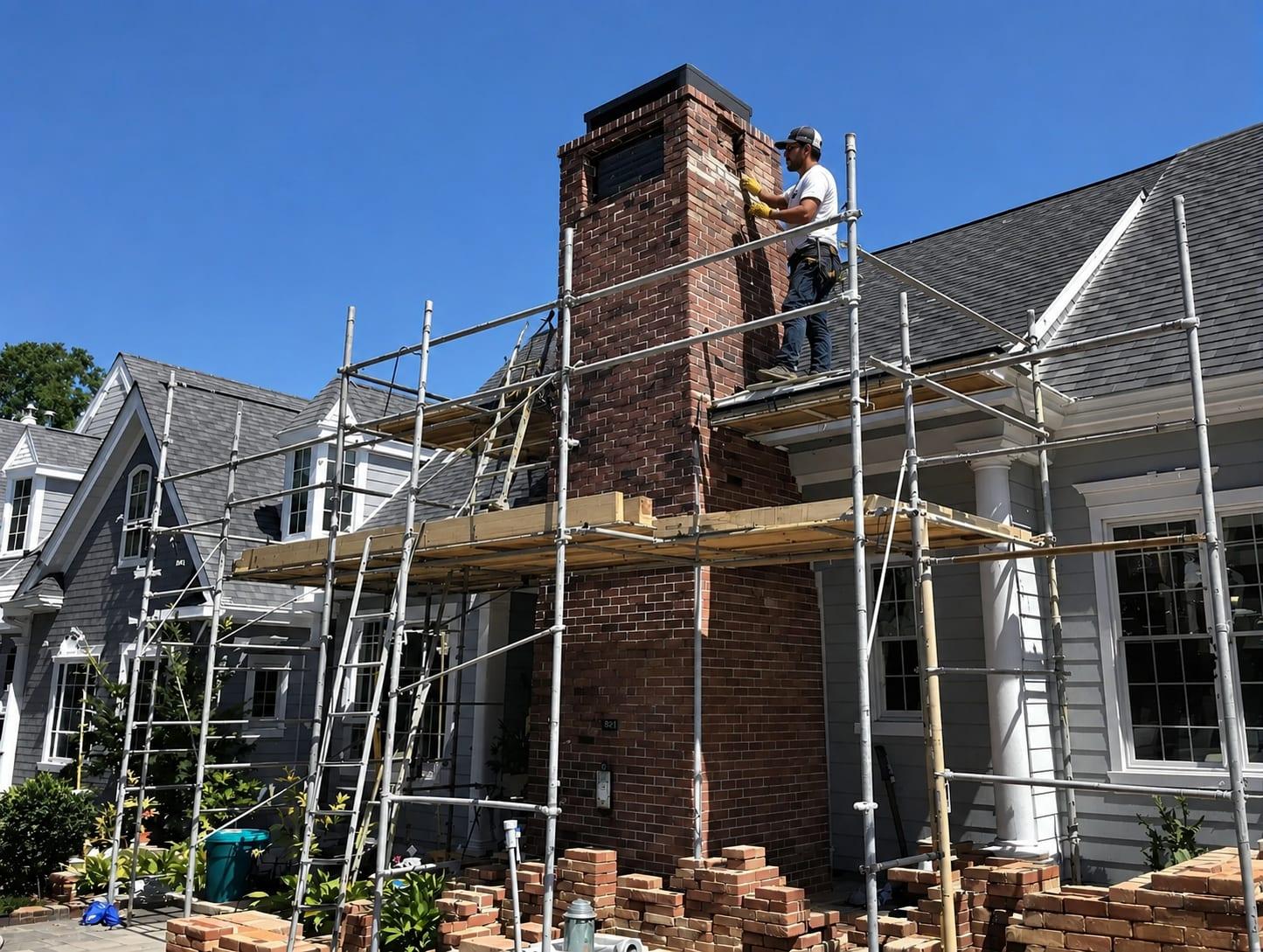
Stabilizing, a partial rebuild from the roofline, or a rebuild from the footing.
Plan the work
The scope and any temporary measures to keep the area safe are agreed before work starts.
If the chimney is moving
Stop using the fireplace and keep everyone away from the area below the chimney. If bricks are falling or it looks like it could come down, call 911.
What we look at
- Degree of lean and how fast it changes
- Gap at the house and roof
- Flashing and roof connection
- Masonry joints and cracks
- Flue and liner alignment
Common signs of a leaning chimney
- A visible gap between the chimney and the exterior wall, wider at the top than the bottom
- The chimney looking out of plumb when you stand back and compare it with the corner of the house
- Flashing pulled loose or torn where the chimney meets the roof
- Stair-step cracks in the mortar or cracks through the brick
- Cracks or separation where the fireplace surround or hearth meets the wall or floor inside
- New leaks around the chimney after rain
Possible causes
Only an inspection can confirm why a chimney is leaning, and the cause decides the repair. Common reasons include:
- A footing that was undersized or too shallow when the chimney was built
- Soil under the footing that has settled, eroded or stayed saturated from poor drainage
- Water breaking down the mortar so the masonry can no longer hold its shape
- Storm damage or impact from a falling tree
- Original construction that wasn't tied to the house properly
Leaning, leaking or questionable safety: how urgent it is
Treat it as urgent. Stop using the fireplace, because a moving chimney can crack the flue and let heat and gases reach the wall framing. Keep people, pets and parked cars away from the side of the house where the chimney would fall. If the gap is growing, bricks are dropping, or the chimney has shifted after a storm, call right away. Emergency calls are accepted, and same-day visits are available when the schedule allows. A leak around a leaning chimney is often a symptom of the movement, so patching the roof alone won't hold.
When a leaning chimney needs rebuilding
Leaning chimney repair depends on how far the chimney has moved and why. A chimney that has shifted only slightly, with sound masonry, may be stabilized with chimney masonry repair work and related repairs to flashing and other parts. Once it has pulled noticeably away from the house, or the brick is badly cracked, a chimney rebuild is usually the lasting fix. That can mean taking it down to sound masonry or all the way to the base. If the footing is what failed, it has to be addressed before any rebuild, or the new chimney will lean again.
Once it's straight and sound, keeping water out of the masonry helps it stay that way, as explained in our guide to the benefits of chimney waterproofing.
What not to do
- Don't fill the gap with caulk or foam and call it fixed, since that hides the movement.
- Don't strap or brace the chimney to the house, which can pull the wall along with it.
- Don't keep burning fires while the chimney is moving. If bricks are falling or it looks like it could come down, keep everyone away from the area below it and call 911.
- Don't climb onto the roof to inspect a chimney that may be unstable.