On this page
- What gas fireplace inspection is and what it involves
- Before the technician arrives
- Checked on every visit
- Do gas fireplaces need chimney inspections?
- When homeowners need gas fireplace inspection: the signs and problems that call for it
- What the visit involves, step by step
- Safety and maintenance between inspections
- Booking a gas fireplace inspection
What gas fireplace inspection is and what it involves
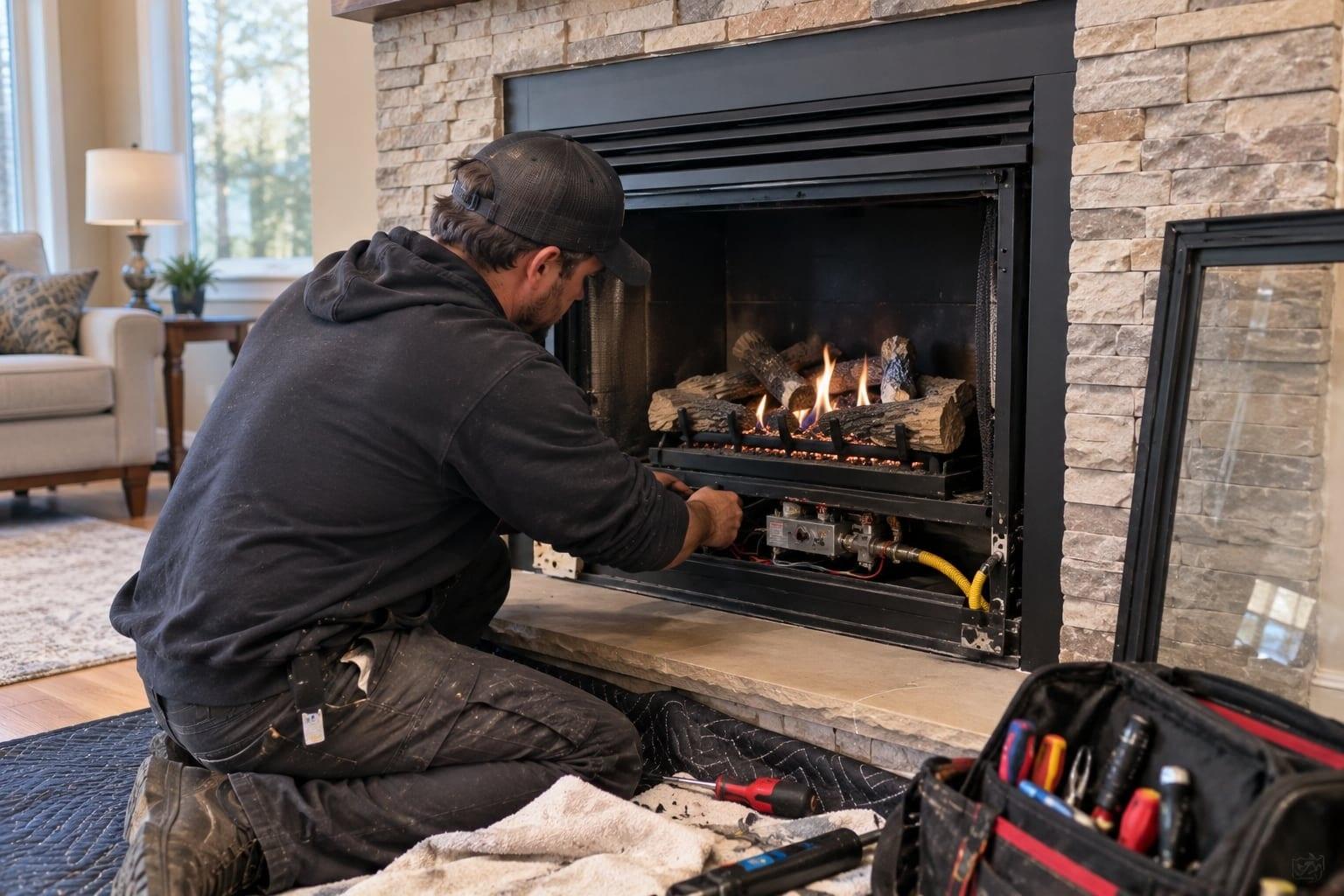
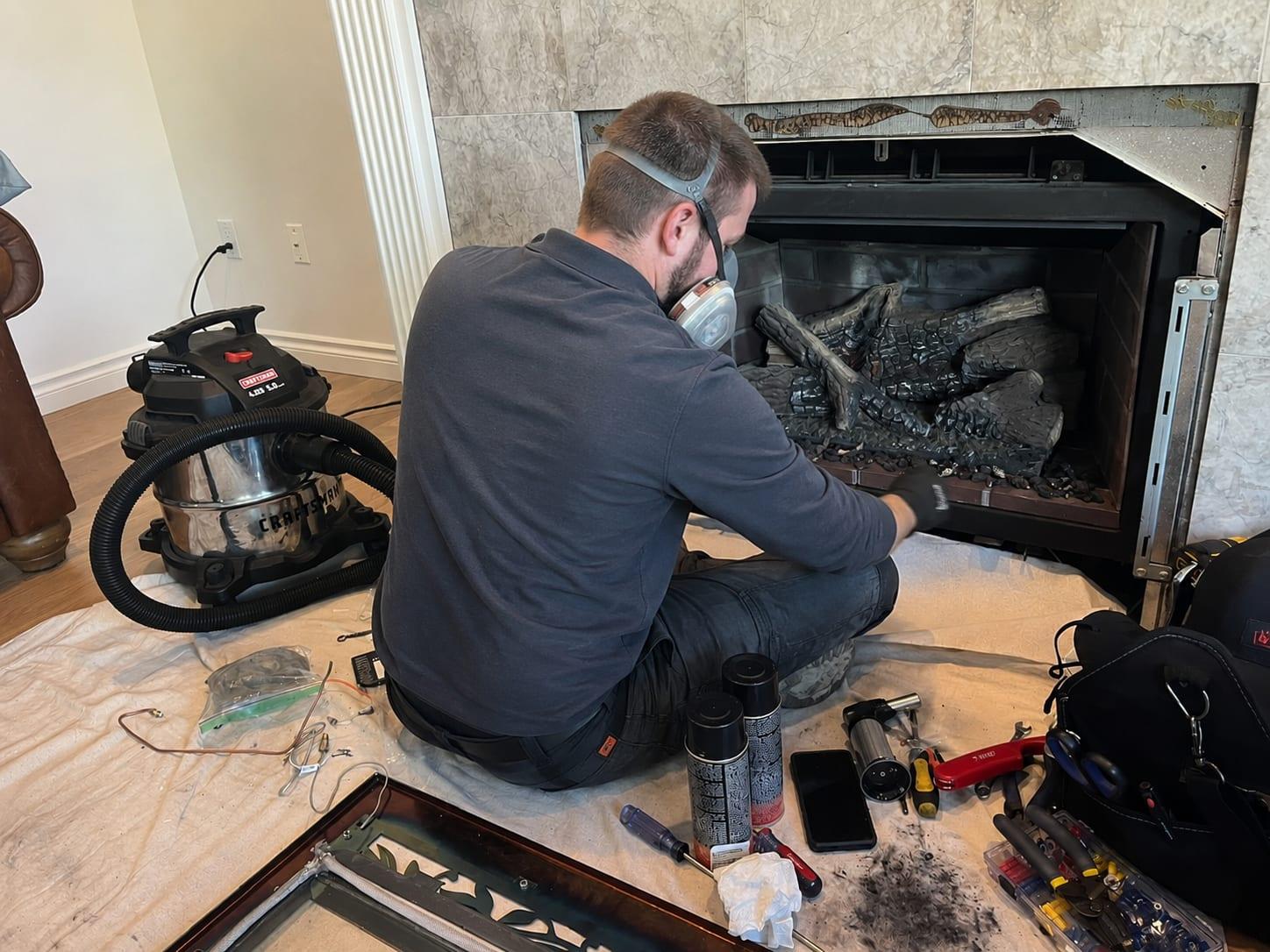
A gas fireplace inspection is a hands-on check of every part that handles gas, flame or exhaust. A wood fireplace inspection looks for creosote and firebox damage. A gas inspection looks for the quieter faults: weak ignition, poor combustion, a failing seal or exhaust that isn't leaving the house the way it should. Our guide to gas fireplace safety inspections explains why each of these matters.
What gets looked at
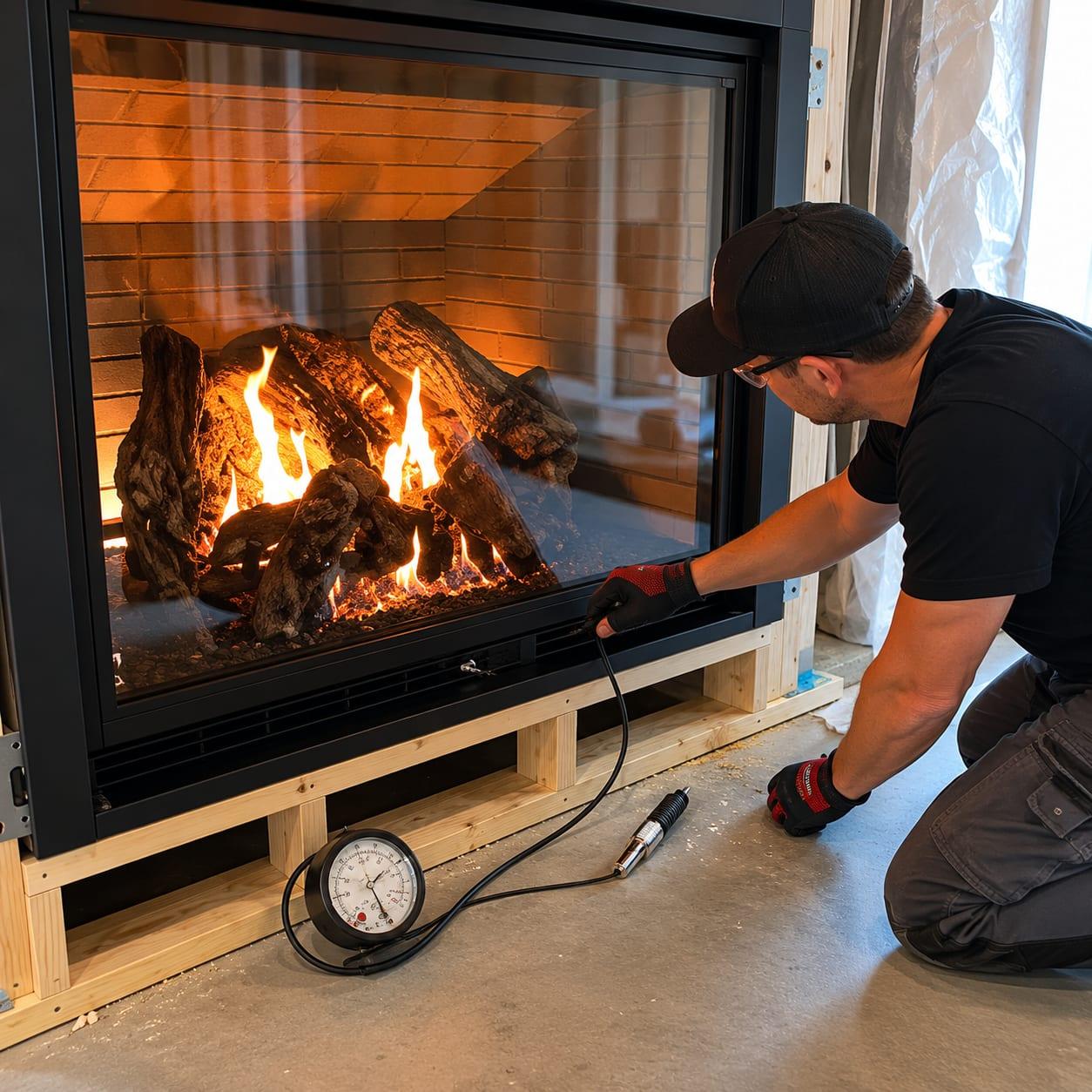
- Gas connection, flexible connector and the shutoff valve
- Burner, burner ports and flame pattern
- Pilot assembly, thermocouple or thermopile, and electronic ignition
- Log or media placement on the burner
- Glass panel, gasket and latches on sealed units
- Vent pipe and outside termination on direct-vent units
- Chimney, flue and damper clamp where gas logs vent through a chimney
- Soot, heat discoloration or rust inside the firebox
Before the technician arrives
- Move rugs, photos and anything fragile away from the work area.
- Keep pets in another room while the work area is open.
- Write down what you've noticed and when it happens — smells, smoke, sounds or stains.
- Clear a few feet of space in front of the hearth or appliance.
Stay off the roof
Looking from the ground or with binoculars is safe. Climbing a steep or wet roof to inspect a chimney is not — leave that to someone with the right equipment.
Checked on every visit
- Cap, screen and spark arrestor
- Firebox walls, floor and joints
- Smoke chamber and smoke shelf
- Damper operation and seal
- Clearances to framing and combustibles, where visible
- Crown for cracks and pooling water
Do gas fireplaces need chimney inspections?
Yes, if the fireplace vents through a chimney or flue, and the venting still needs a check if it doesn't. Gas logs in a masonry fireplace and many gas inserts send exhaust up an existing chimney, and gas doesn't stop birds from nesting there, debris from collecting or a loose cap from letting water in. Gas exhaust carries a lot of moisture, which can wear down an old liner over time. Direct-vent units have no chimney, but their vent pipe and outside cap can still be blocked or come apart.
Homes with both a wood-burning and a gas fireplace can have both looked at on one visit; our fireplace inspection service covers the wood side.
When homeowners need gas fireplace inspection: the signs and problems that call for it
If you smell gas
Leave the building right away. Don't flip light switches, use phones or light anything while you are inside. Once you are outside and away from the house, call the gas utility or 911.
- Flames have turned tall, lazy and yellow, or soot is building up on the glass or logs.
- The pilot won't stay lit, or the burner takes several tries to ignite.
- An odor lingers beyond the brief dusty smell of the first fire of the season.
- A carbon monoxide alarm has sounded. Get everyone outside and call 911 first.
- The fireplace hasn't been checked in a year or more, or ever.
- You are buying or selling a home, or a storm has hit the roof or vent cap.
When the inspection finds a specific fault, gas fireplace repair is the next job.
What the visit involves, step by step
How the inspection runs
Talk it through
You tell us what you have noticed and how the fireplace is used.
Cold check
With the gas off, we look at the valve, connector, burner, logs, glass and gasket.
Venting check
We look at the vent pipe and outside cap, or the chimney, flue and damper clamp for vented logs.
Running check
We light the fireplace and watch ignition, flame color and how it shuts down.
Findings
You get a plain explanation of what we found, and an estimate for any work it needs.
Safety and maintenance between inspections
- Keep working carbon monoxide alarms on every level and near bedrooms.
- Leave the glass front in place and keep children and pets clear of it while it's hot.
- Don't rearrange logs or add rocks or other material to the burner.
- Keep plants, mulch and stored items away from the outside vent cap.
- Book a gas fireplace inspection once a year, before the first cold night if you can.
For routine upkeep beyond the inspection, see our gas fireplace service.
Booking a gas fireplace inspection
Request a visit and tell us whether you have a sealed unit, an insert or a log set. Estimates are free, same-day visits are available where the schedule allows, and emergency calls are accepted. We work on all major brands and handle commercial properties and property-manager portfolios across Greater Atlanta.