On this page
What chimney cap installation is
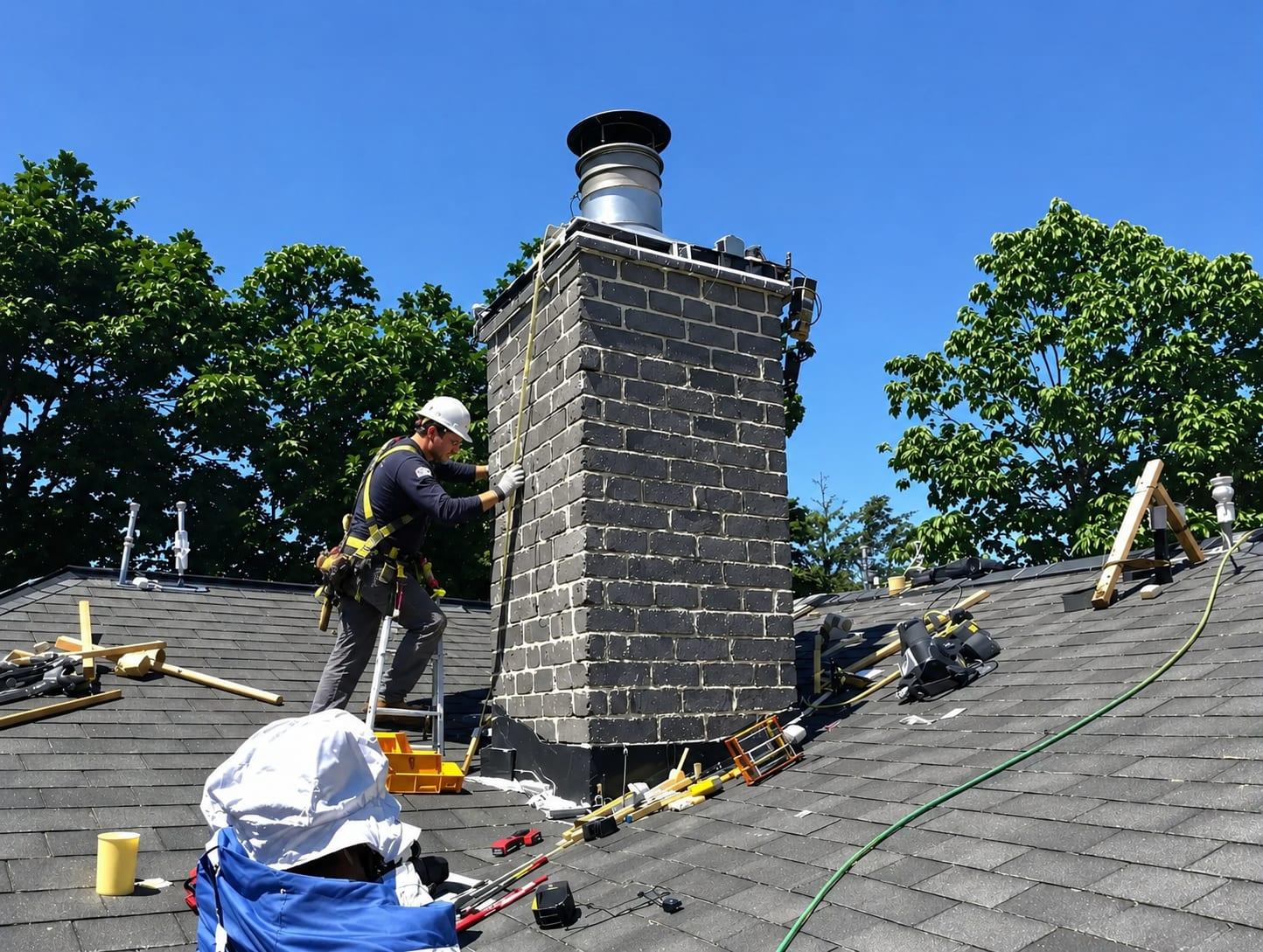
A chimney cap is a metal hood that sits on top of the flue. It has a solid lid to shed rain and a mesh screen around the sides that lets smoke and gases out. Chimney cap installation means fitting that cap to a chimney that has no cap now. We measure the flue tile or liner, choose a cap sized to fit it, and fasten it so wind can't lift it off.
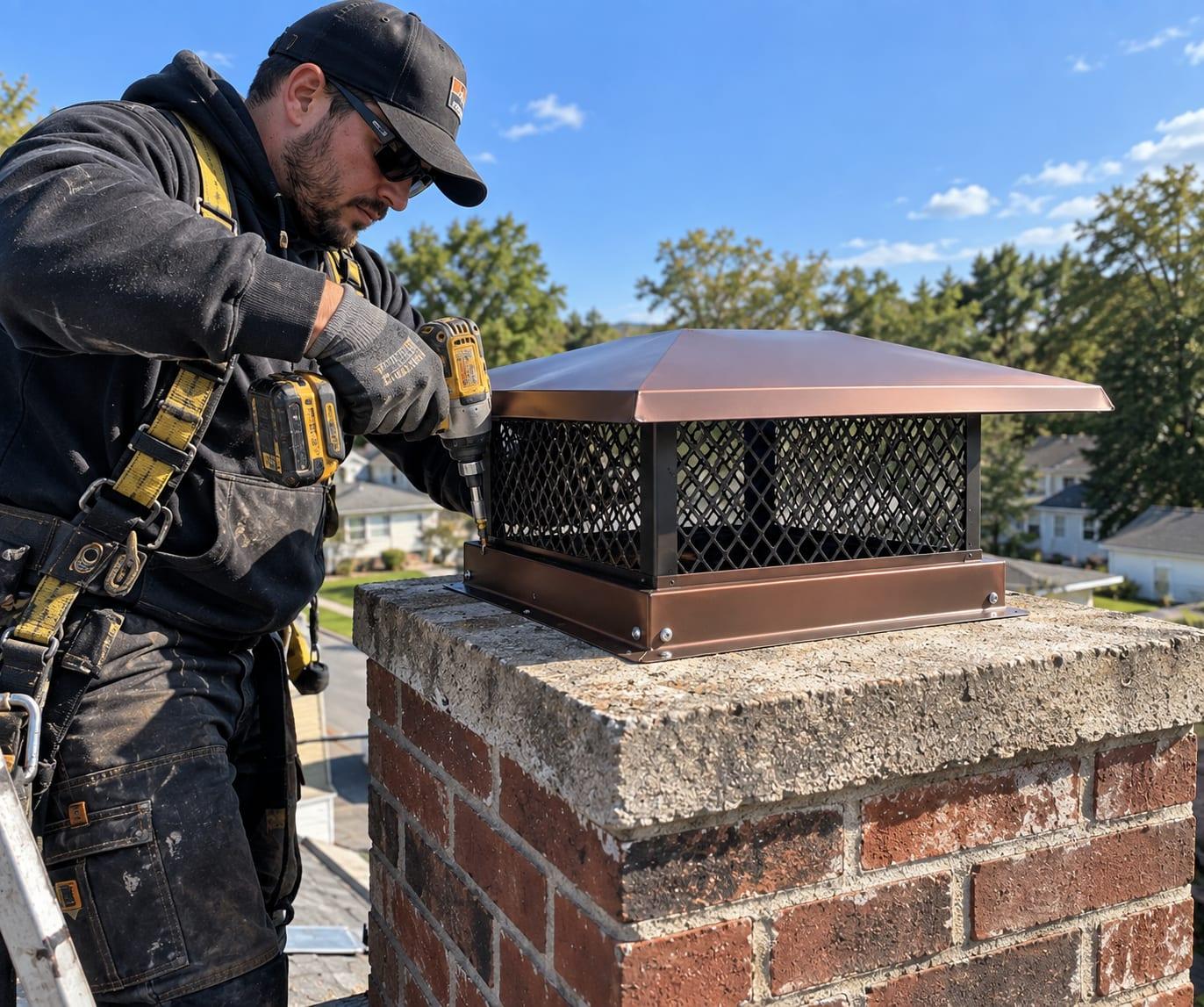
If your chimney already has a cap that is rusted through, bent or missing its screen, the job is Chimney Cap Replacement instead.
Signs your chimney needs a cap
Most homeowners start thinking about a cap after one of these shows up:
Common reasons to install a cap
- Scratching, chirping or rustling sounds inside the chimney
- Twigs, leaves or nesting material falling into the firebox or onto the damper
- Water dripping into the firebox or rust on the damper after rain
- A musty or animal smell coming from the fireplace
- You can see open sky when you look up the flue from the firebox
- An unused fireplace you never check, which gives animals a quiet place to settle
Sounds and debris often mean something is already living in the flue. In that case the animal or nest has to come out before the cap goes on.
Humane animal and nest removal before capping
Humane chimney animal removal
Capping a chimney with an animal still inside traps it, and that causes a bigger problem than the one you started with. Before we install a cap, we check the flue and the smoke shelf for signs of life. If an animal is there, we work to get it out of the chimney humanely first. Only then do we seal the top with a screened cap so it can't come back. More detail on getting animals out of a chimney covers what that visit looks like.
Humane chimney nest removal
Nests block the flue and are fuel sitting right where heat and sparks travel. We remove nesting material from the flue and the smoke shelf. If young birds or animals are still in the nest, removal has to be handled carefully and sometimes timed. We'll tell you what we find and what the safe order of work is before anything goes on top.
Why unused chimneys attract animals
A chimney that never sees a fire stays quiet, dry and sheltered. Birds, squirrels and raccoons look for exactly that kind of spot. A cap with a proper screen is the simplest way to keep them out of a fireplace you don't use.
Materials and cap types
Stainless steel chimney cap installation
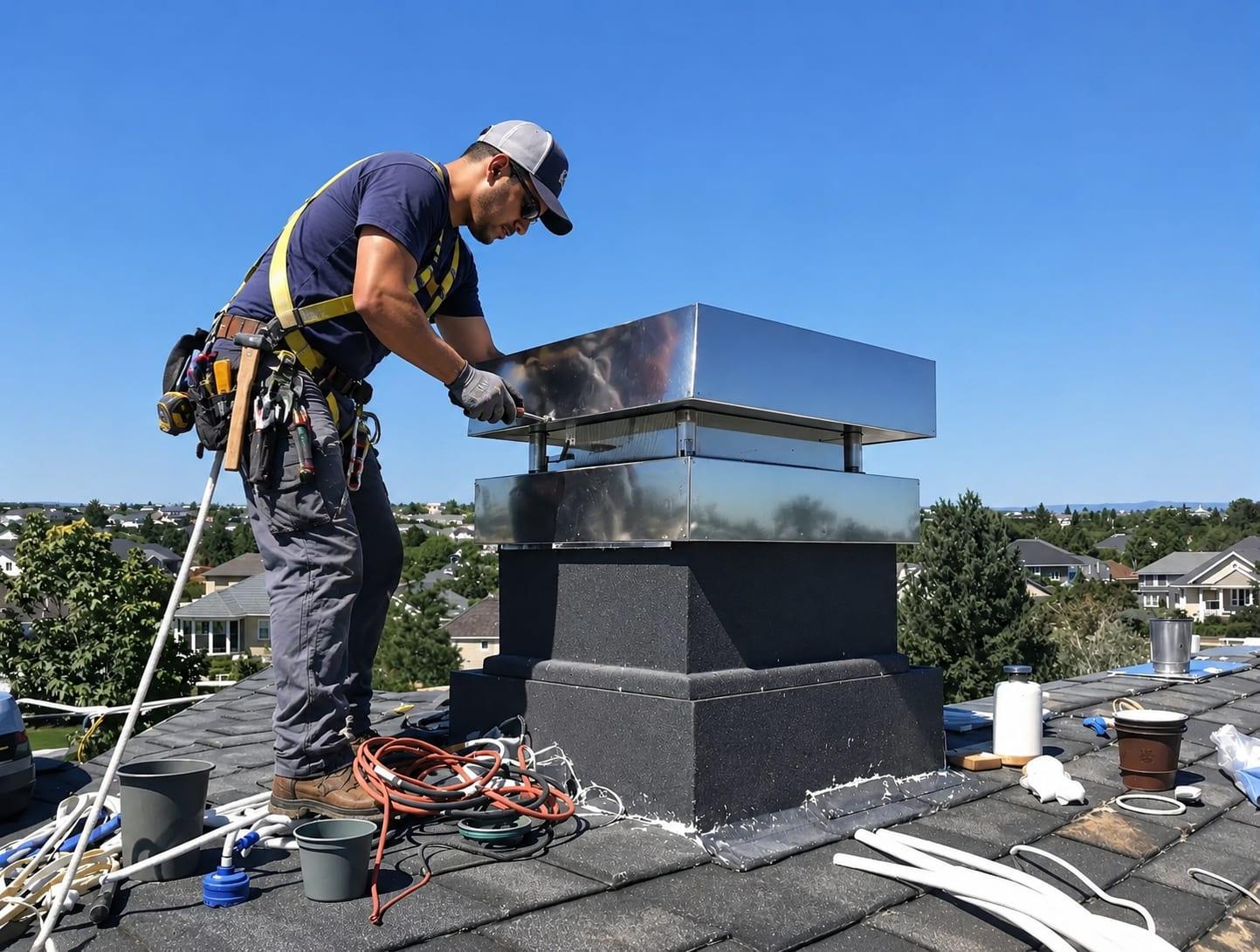
Stainless steel is the material we generally suggest for most homes. It resists rust much better than galvanized steel. That matters on a part that sits in the rain, in the sun and in flue gases every day. Stainless caps come in single-flue styles that clamp or fasten to the flue tile. They also come in wider styles that cover the whole top of the chimney.
| Feature | Single-flue cap | Multi-flue / top-mount cap |
|---|---|---|
| Covers | One flue tile | All flues and the top of the crown |
| Attaches to | The flue tile or liner | The crown or chimney top |
| Best for | A chimney with one flue sticking above the crown | Chimneys with two or more flues side by side |
Covers
- Single-flue cap
- One flue tile
- Multi-flue / top-mount cap
- All flues and the top of the crown
Attaches to
- Single-flue cap
- The flue tile or liner
- Multi-flue / top-mount cap
- The crown or chimney top
Best for
- Single-flue cap
- A chimney with one flue sticking above the crown
- Multi-flue / top-mount cap
- Chimneys with two or more flues side by side
Masonry chimney cap install
It is fastened to the flue, or mounted on the crown for wider caps. A masonry chimney cap install depends on the crown being sound. If the concrete crown is badly cracked, it should be fixed first, or the cap will be fastened to something that is breaking apart.
Factory-built (prefab) chimneys are different. They are usually covered by a metal chase cover with the cap attached to it. If you're not sure which one your home has, our guide to chimney caps vs chase covers explains the difference.
Crown repair before a cap goes on
When the crown is cracked or crumbling, we can repair it as part of the same project. That way the new cap has a solid base and water isn't getting into the masonry under it.
What the visit involves, step by step
How a chimney cap installation goes
Look at the chimney
We check the top of the chimney, the crown and the flue. We also look up from the firebox for nests, animals or blockages.
Clear the flue if needed
Any animal, nest or debris comes out before the cap goes on, so nothing is trapped inside.
Measure
We measure the flue tile or liner and the crown so the cap fits snugly and the screen has no gaps.
Fit and fasten the cap
The cap is set over the flue and fastened securely so wind and animals can't move it.
Walk you through it
We tell you what we installed and anything else we noticed, such as crown cracks or heavy buildup in the flue.
Safety and maintenance
A cap keeps out rain and animals, but it doesn't keep the flue clean. Soot and creosote still build up from fires. The cap's screen can also clog with creosote or leaves over time, which slows the draft. Have the cap and screen looked at whenever the chimney is swept or inspected.
Don't use a fireplace you suspect has a nest
Nesting material is flammable and can block smoke from leaving the house. If you hear animals or see debris falling, hold off on lighting a fire until the flue has been checked.
A cap protects the top of the flue. The liner protects the inside. If you haven't had the liner checked, it's worth reading why every chimney needs a liner.
Booking a chimney cap installer
Get in touch to request an estimate. Same-day visits are available where the schedule allows (never guaranteed). Emergency calls are accepted, which helps if an animal has just gotten into the chimney. Commercial and property-manager work is offered too.
We also do chimney cap installation in Brookhaven and chimney cap installation for homes in Dunwoody.