On this page
- What commercial chimney services cover
- Signs a commercial property needs chimney work
- How we inspect a commercial chimney
- What a commercial visit involves, step by step
- Masonry on commercial chimneys
- Fuel types and components we work on
- Keeping commercial fireplaces safe between visits
- Booking commercial chimney work
What commercial chimney services cover
Commercial chimney services are the same core trades we do on houses: inspection, cleaning, repair and installation. They are organized around how a business or rental property operates. Commercial and property-manager work is offered. That includes single buildings with one showpiece fireplace and properties with many units that each have their own flue.
The work usually falls into these groups:
- Inspections, from a routine visual check to a camera inspection of the flue, plus Level 2 and Level 3 inspections when a closer look is needed.
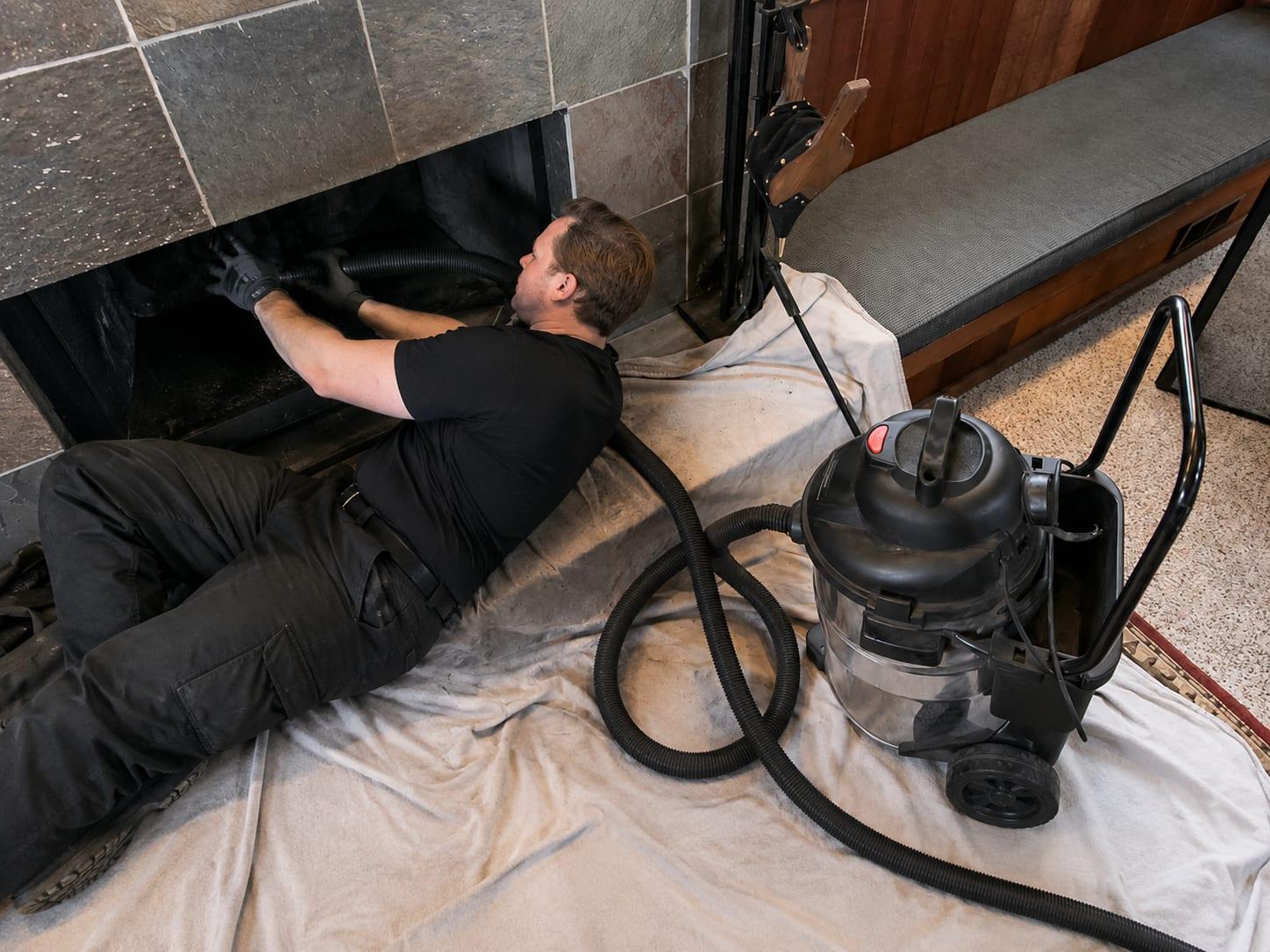
- Cleaning: sweeping, creosote removal, blockage and nest removal, and cleaning of fireplaces, inserts and wood stoves. The details are covered under our chimney sweep service.
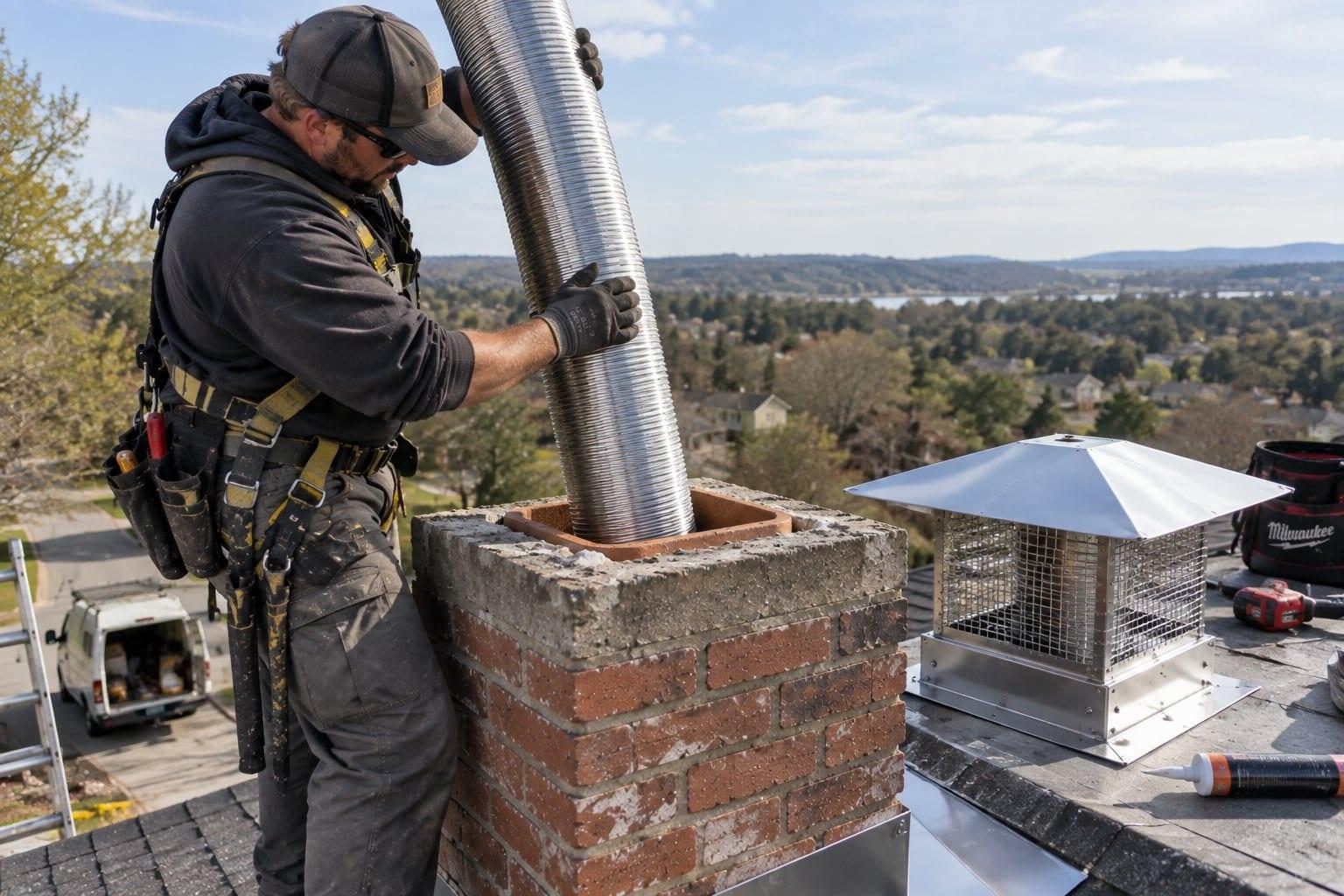
- Repairs to masonry, crowns, flashing, liners, dampers, caps and chase covers.
- Gas fireplace and gas appliance work, including service, repair and installation.
- Replacement or installation of fireplaces, inserts, liners and chimneys when repair no longer makes sense.
We work on all major fireplace and stove brands, so a property with a mix of older and newer units doesn't need a different crew for each one.
Signs a commercial property needs chimney work
On a business or rental property, problems often reach a manager through a tenant complaint or a staff comment rather than a direct look at the chimney. Any of these is worth a call:
Common warning signs
- Smoke drifting into the room instead of drawing up the flue
- A strong smoky or musty odor, especially in humid weather or after rain
- Black, flaky or shiny buildup inside the firebox or at the damper
- Water stains on ceilings or walls near the chimney, or rust on the damper or firebox
- Cracked, crumbling or missing mortar and brick, or a cracked crown
- Animal noises, nesting material or debris falling into the fireplace
- A gas fireplace that won't light, shuts off, or has a flame that looks wrong
- A damper that sticks, won't close or won't open fully
- A chimney cap or chase cover that is missing, loose or rusted through
If you smell gas
Shut off the appliance if you can do so safely, get people out of the building and call your gas utility or emergency services first. Once the immediate danger is handled, get in touch with us about the fireplace or appliance.
How we inspect a commercial chimney
Most commercial jobs start with an inspection, because it tells you what is actually wrong before money goes into cleaning or repair. The visit follows the process used in our chimney inspection service, scaled to the number of units and how the building is used.
What we look at
01Flue and liner
- What you may notice
- Poor draft, smoke spillage, odor, heavy buildup
- How it’s confirmed
- Visual check from the firebox and the top, with a camera inspection of the flue when cracks, gaps or blockages are suspected
02Creosote and debris
- What you may notice
- Black or glazed deposits, falling debris, nests
- How it’s confirmed
- Inspection of the firebox, smoke chamber and flue walls to judge whether sweeping or deeper creosote removal is needed
03Masonry and crown
- What you may notice
- Loose brick, open mortar joints, cracked crown, staining on the exterior
- How it’s confirmed
- Close look at brickwork, mortar joints and the crown from the roof
04Water entry points
- What you may notice
- Ceiling stains, damp smells, rust on metal parts
- How it’s confirmed
- Check of flashing, cap, crown and chase cover for gaps and wear
What a commercial visit involves, step by step
From first call to finished work
Tell us about the property
Let us know the type of building, how many fireplaces or appliances there are, whether they burn wood or gas, and what problems people have noticed.
Free estimate
Estimates are free. We look at the system and explain what we found and what we recommend, in plain terms.
Plan around the building
For occupied units or a business that's open to the public, we schedule the work to fit how the property runs and which areas need to be cleared.
Protect the work area
Floors and furnishings near the fireplace are covered before cleaning or repair begins.
Do the work
Cleaning, repair, gas service or installation is carried out as agreed in the estimate.
Walk-through
We show you or your site contact what was done and point out anything that should be watched or handled later.
Masonry on commercial chimneys
Masonry chimneys take weather on every side. Over time mortar joints open up, crowns crack and water gets into the brick, and freeze-thaw cycles and moisture make that damage worse. Catching it early usually means tuckpointing or crown repair rather than a partial or full rebuild. The process is explained under how chimney masonry repair works. Once the brick is sound, waterproofing can help slow future damage. Our guide to the benefits of chimney waterproofing covers when it's worth doing.
Fuel types and components we work on
| System | Typical work |
|---|---|
| Wood-burning masonry fireplaces | Sweeping, creosote removal, firebox and smoke chamber repair, damper repair, masonry and crown repair |
| Gas fireplaces and gas logs | Service and maintenance, inspection, repair, installation, gas line installation |
| Prefab fireplaces and chases | Chase and chase cover repair or replacement, prefab fireplace replacement |
| Wood and pellet stoves | Cleaning, repair, installation |
| Liners, caps and screens | Liner repair or installation, cap installation and replacement, animal screens, spark arrestors |
Keeping commercial fireplaces safe between visits
A fireplace that runs most evenings in a restaurant or hotel builds up deposits faster than one lit a few weekends a year. A common recommendation is to inspect chimneys yearly and clean them when buildup calls for it, and heavily used systems may need attention more often. Staff should know where the damper control is, keep combustibles clear of the hearth and report smoke or odor right away. Chimney cleaning and safety basics are worth sharing with whoever lights the fire.
Booking commercial chimney work
Call or request an estimate and tell us about the property. Same-day visits are available where the schedule allows (never guaranteed), and emergency calls are accepted. Property managers with several buildings or units can tell us about the whole portfolio, so the work can be planned together rather than one call at a time.
Related work covered on this page
- Industrial Chimney