What a chimney fire is, in plain words
A chimney fire is a fire inside the flue itself, not in the fireplace or stove. Usually it starts when creosote catches fire. Creosote is the tar-like residue that wood smoke leaves on the inner walls of the chimney. Some chimney fires are loud and dramatic. Others burn slowly and quietly, and nobody notices until damage turns up later.
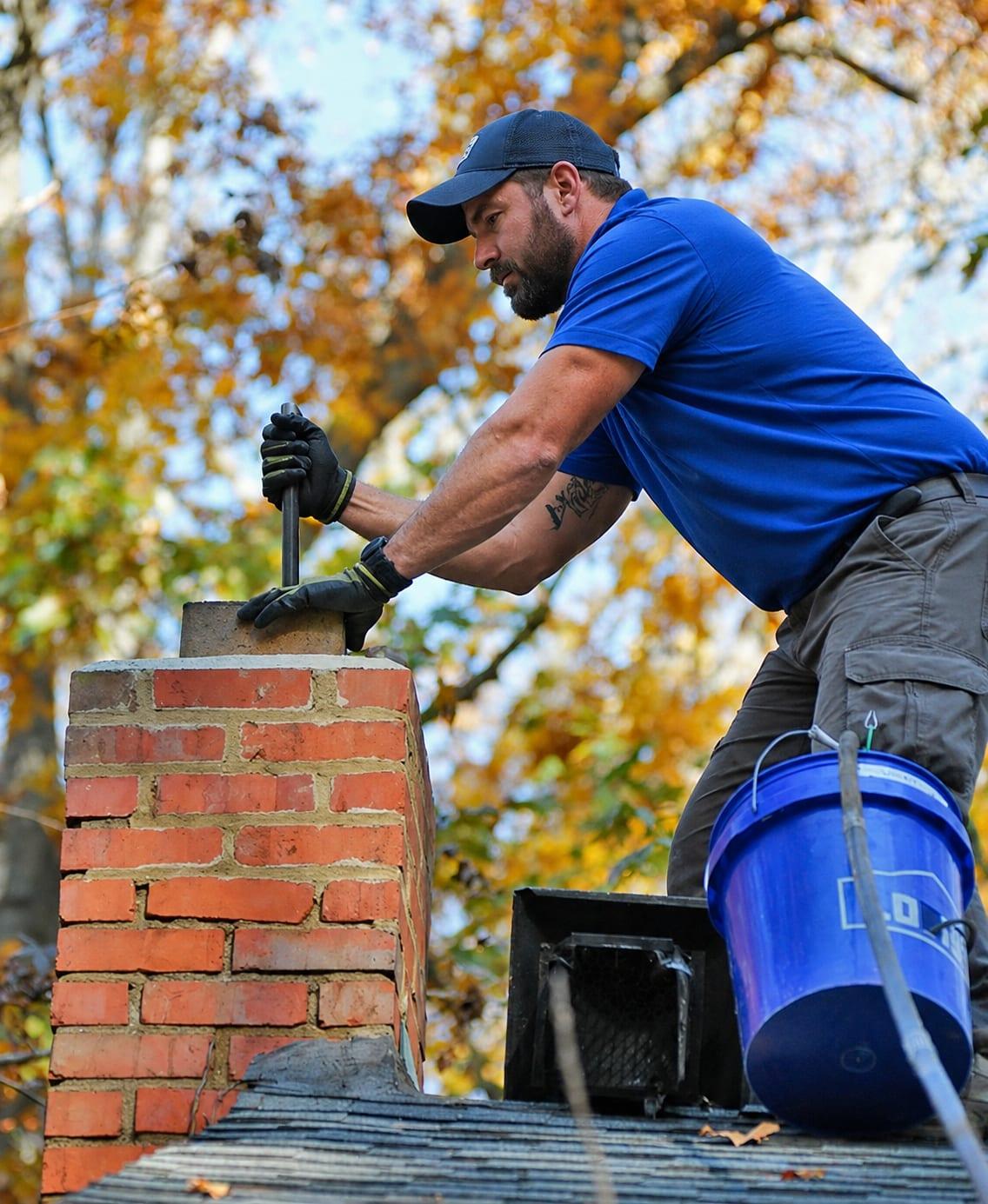
Either kind can crack flue tiles, warp metal parts and weaken masonry. That means the next fire you light may not stay inside the chimney where it belongs.
If a chimney fire may be burning right now
Get everyone out of the house and call 911. Don't climb onto the roof, and don't spray water into the flue or firebox. After the fire is out, don't use the fireplace or stove again until the chimney has been inspected.
Common signs of a chimney fire
Signs while it is burning
- A loud roaring or rumbling sound from the chimney, often compared to a passing train or a low-flying plane. If you hear roaring or see flames or sparks from the top of the chimney, get everyone out and call 911.
- Loud popping or cracking noises from inside the flue
- Dense smoke pouring into the room or out of the chimney top
- Flames or sparks shooting out of the top of the chimney. If you hear roaring or see flames or sparks from the top of the chimney, get everyone out and call 911.
- A strong, hot smell, or a wall or chimney breast that feels unusually hot
Signs it may have happened already
Clues a quieter chimney fire may have burned
- Puffy, honeycomb-looking creosote, or flaky black chunks that fall into the firebox
- Pieces of broken flue tile in the firebox or on the smoke shelf
- A damper, chimney cap or spark screen that looks warped, bent or discolored
- Cracks in the exterior masonry, or smoke seeping through the bricks when a fire is lit
- Damaged roofing or scorch marks near the chimney
- A fire that suddenly drafts poorly or smokes into the room
Possible causes
Only an inspection can confirm what led to a particular chimney fire. These are the usual possibilities:
- Heavy creosote buildup. Creosote is the fuel in most chimney fires, and it builds up faster when a chimney goes a long time between cleanings.
- Burning wet or unseasoned wood. Damp wood burns cool and smoky, which leaves more residue on the flue walls.
- Slow, smoldering fires. Turning the air down for a long, low burn cools the smoke and helps creosote collect.
- Restricted draft. Leaves, debris or birds and animals nesting in the flue can trap smoke and speed up buildup. Nesting material can also catch fire itself.
- A damaged, missing or poorly sized liner. A cracked liner lets heat reach parts of the chimney it shouldn't. A flue that is too large for the appliance can run cool and collect creosote faster.
How urgent it is, and when to stop using the fireplace
Treat a suspected chimney fire as urgent, even if it went out on its own. Stop using the fireplace, insert or wood stove right away. A cracked flue or warped damper may look fine from below, and a damaged chimney can let heat or embers reach the framing around it.
| What you notice | What to do |
|---|---|
| Roaring, flames or sparks from the chimney top right now. If you hear roaring or see flames or sparks from the top of the chimney, get everyone out and call 911. | Get everyone out and call 911 |
| The fire is out, but you heard or saw signs of a chimney fire | Don't light another fire, and call for an inspection |
| Flaky creosote, broken tile or a warped cap, with no fire you remember | Stop using the system until it has been inspected |
| Smoke leaking through bricks or into other rooms | Don't use it, and have the chimney checked before the next fire |
What normally fixes chimney fire damage
From a suspected fire to a usable chimney
Inspect the full flue
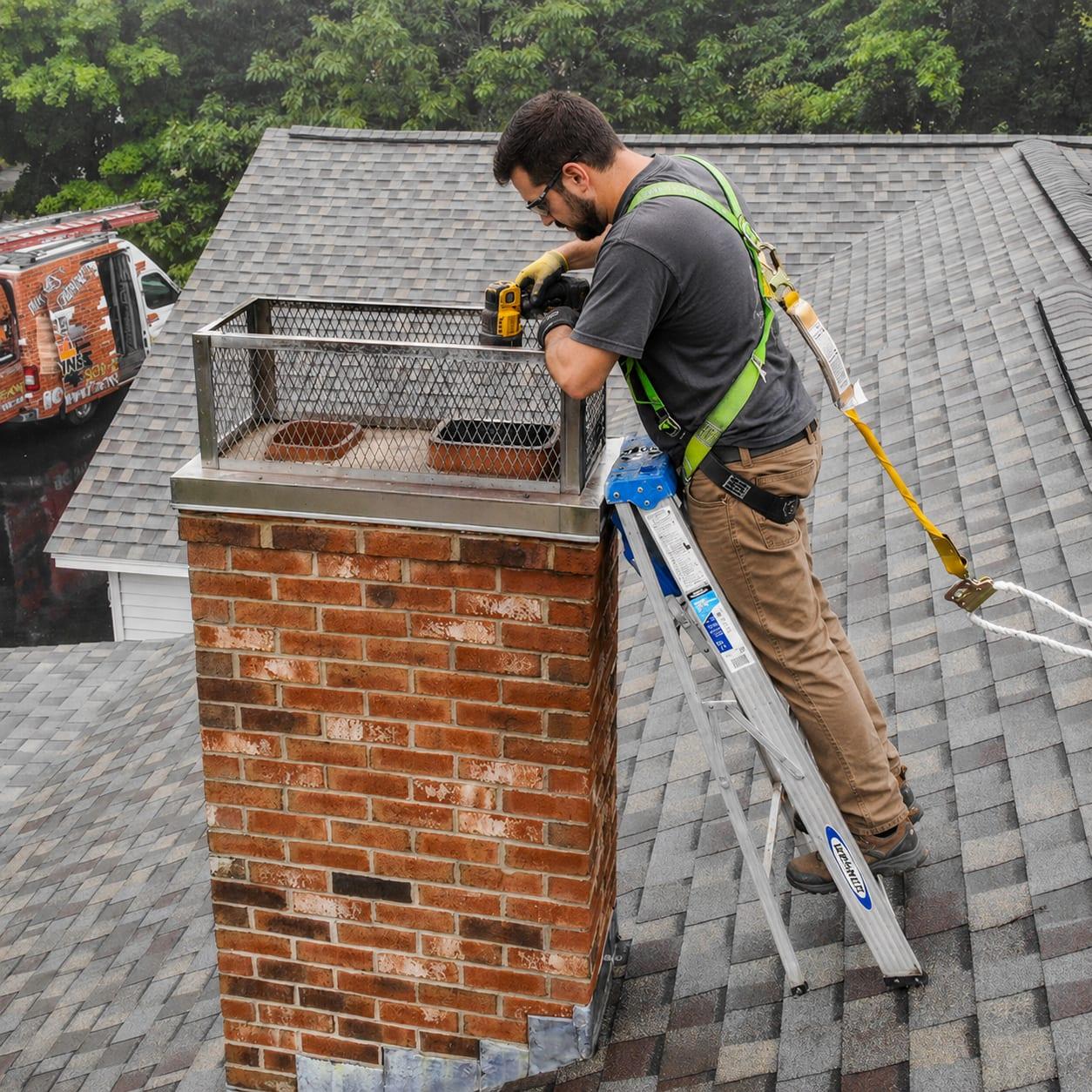
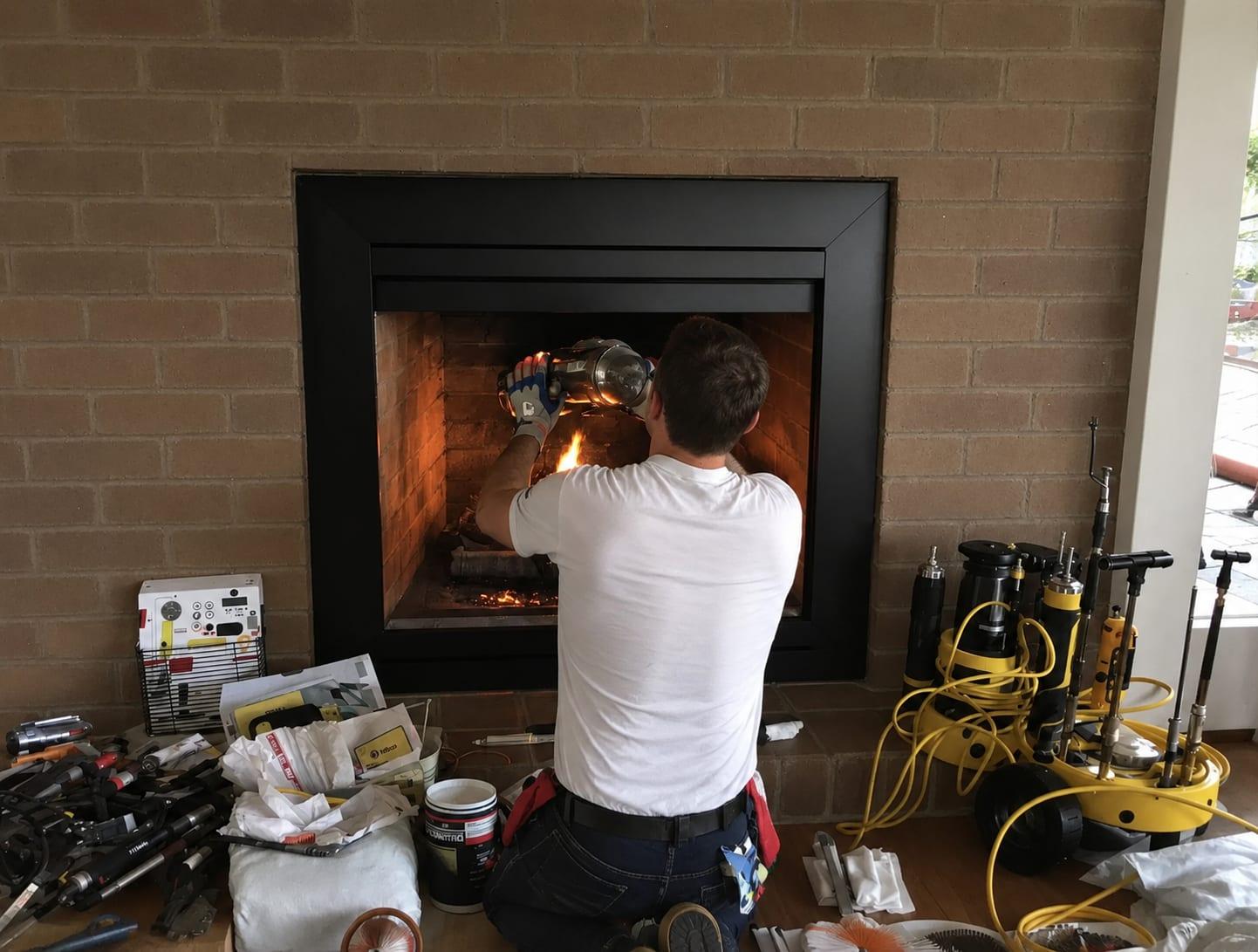
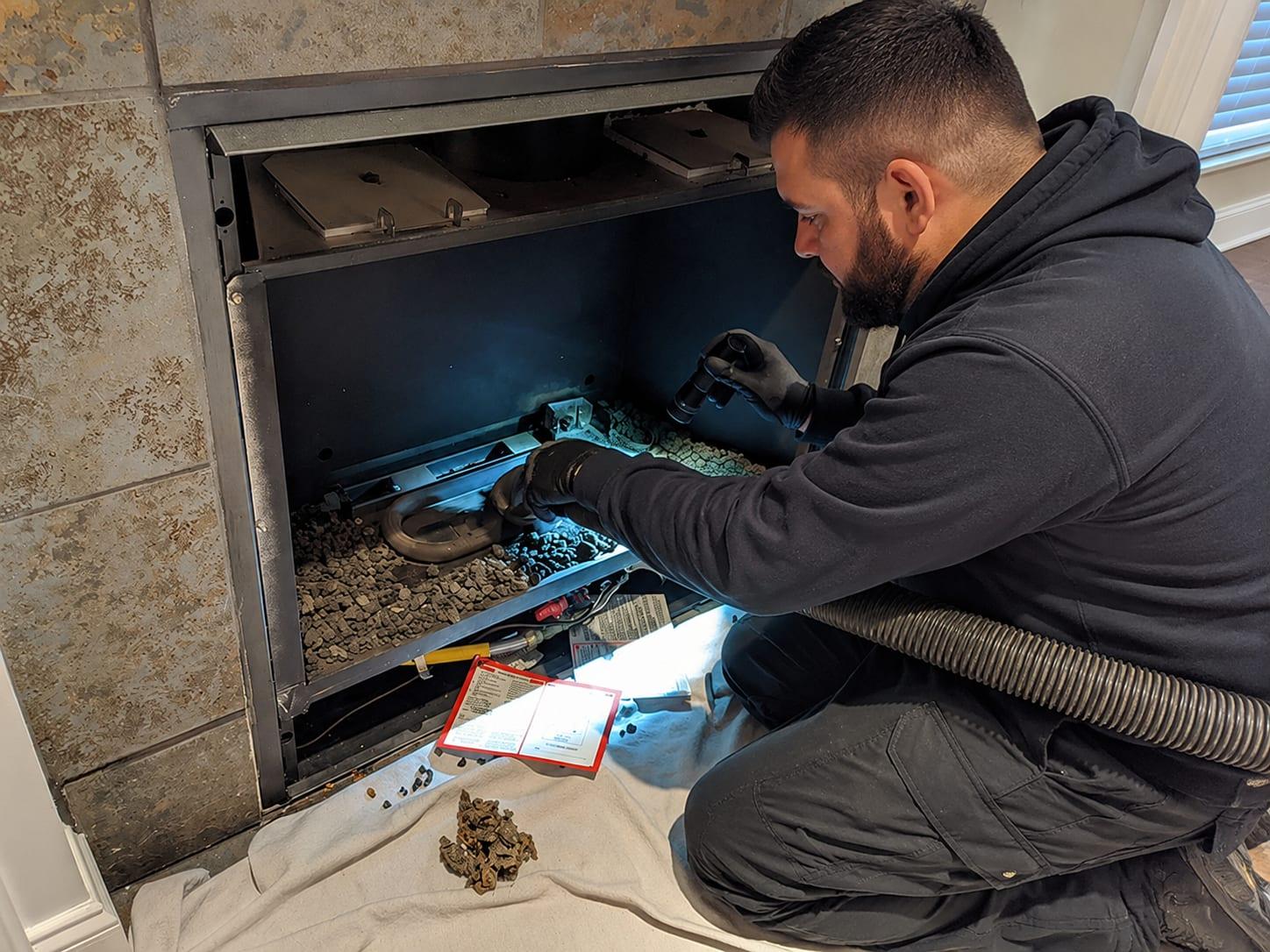
The first step is a close look at the whole chimney, usually with a camera run up the flue to find cracks, gaps and heat damage. Our chimney inspection service covers the firebox, smoke chamber, liner, damper, crown and cap.
Clean out the creosote
Burned and leftover creosote is removed so the flue can be seen clearly and doesn't feed another fire.
Repair what the inspection finds
Depending on the damage, that can mean liner repair, damper repair, a new chimney cap, crown repair, tuckpointing or other masonry repair. A rebuild is only needed when the damage is severe.
Reline the chimney if the flue is cracked
Cracked clay tiles are often replaced with a new liner sized for your fireplace or stove. You can read about how a new chimney liner is installed before deciding.
Return to safe use
Once repairs are done, regular sweeping and dry, seasoned wood help keep creosote from building up again.
Heat can also loosen masonry. If the chimney has started to tilt or pull away from the house, what causes a leaning chimney is worth understanding, because that needs its own assessment. After masonry repairs, keeping water out of the bricks protects the work. Here are the benefits of chimney waterproofing.
What not to do
- Don't light "one small test fire" to see if the chimney still works
- Don't spray water into a hot flue or firebox, because sudden cooling can crack tile and masonry
- Don't climb onto the roof to look while a fire may be burning
- Don't assume the chimney is fine because the fire went out on its own
- Don't burn trash, cardboard or wet wood once the chimney is back in service
Get the chimney checked before the next fire
Emergency calls are accepted, and same-day visits are available where the schedule allows, though they can't be guaranteed. We also handle wood stoves, inserts, gas fireplaces and commercial or property-manager work.