Work Chattahoochee Hills homeowners can book
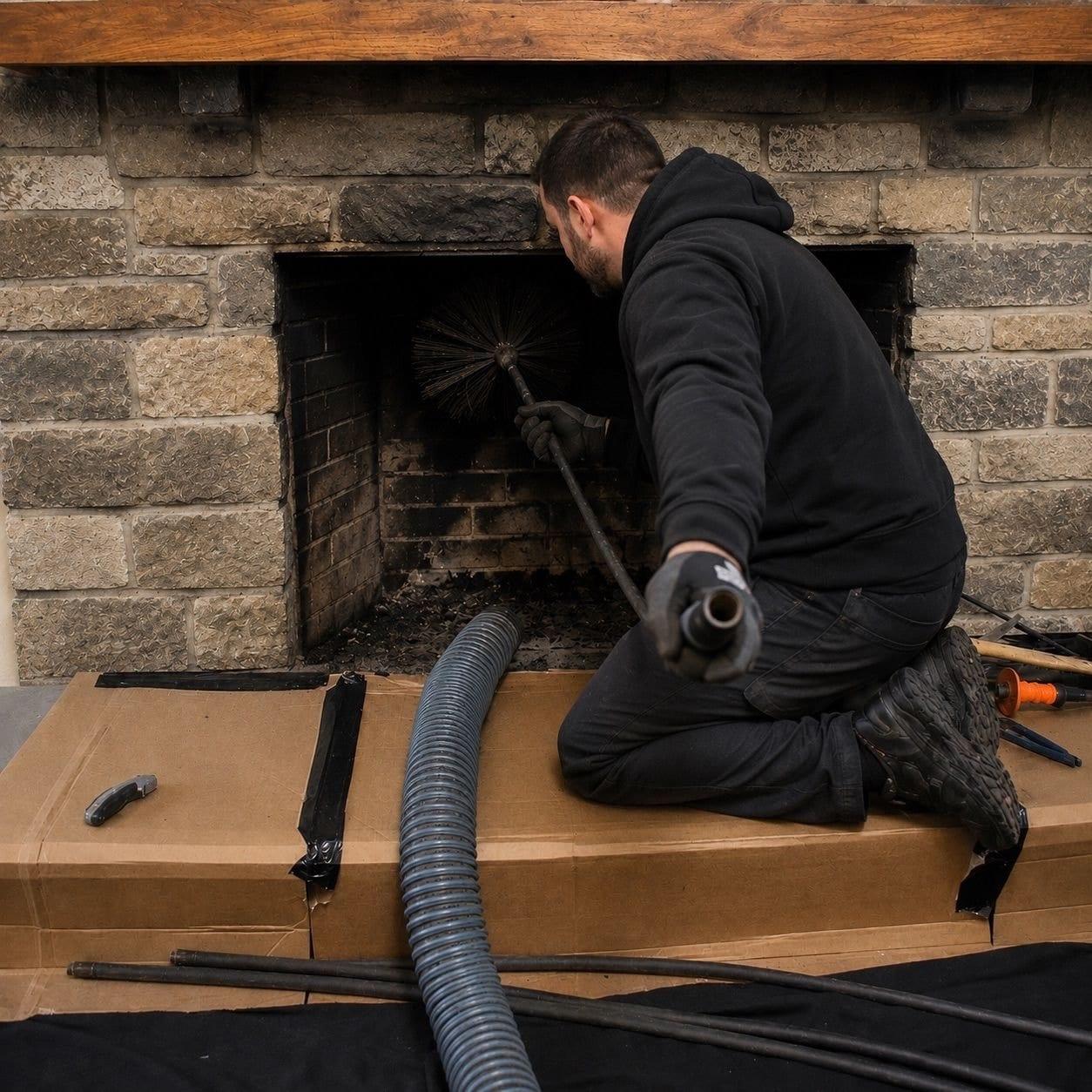
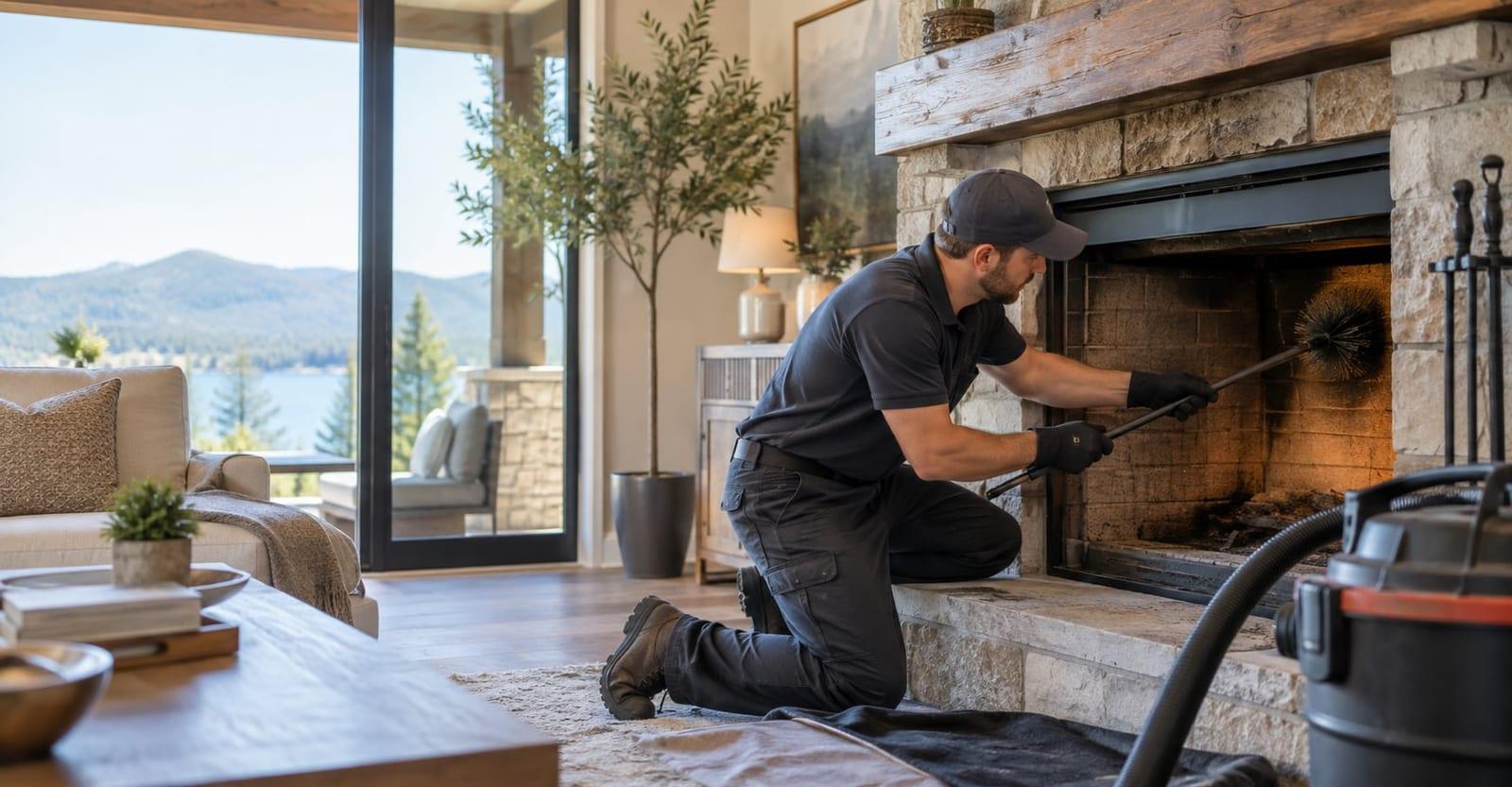
Most requests start with the flue itself: our chimney sweep service clears soot, creosote, debris and nesting material so smoke and gases have a clear path out. From there, the work can cover the whole system. That includes fireplaces, inserts and wood stoves, gas fireplaces and gas logs, chimney caps and chase covers, and the dryer vent that runs from the laundry room to the outside wall or roof.
When something looks wrong, such as a water stain near the chimney, a smoky room or loose bricks, the first step is a chimney inspection to find the cause. Any chimney repair work is planned from what that inspection shows, not from guesswork.
What the housing figures mean for chimney work
About 14% of the housing units in Chattahoochee Hills were built before 1960, and about 12% in 1939 or earlier (U.S. Census Bureau, American Community Survey 2019–2023 5-year estimates, table B25034, Year Structure Built). That means a real share of the town's homes have chimneys that have been through many decades of fires, weather and settling.
In general, chimneys from that era were built of brick and mortar. Many were built without a flue liner, or with clay tile liners that can crack or shift over time. Older masonry chimneys often show the same kinds of wear:
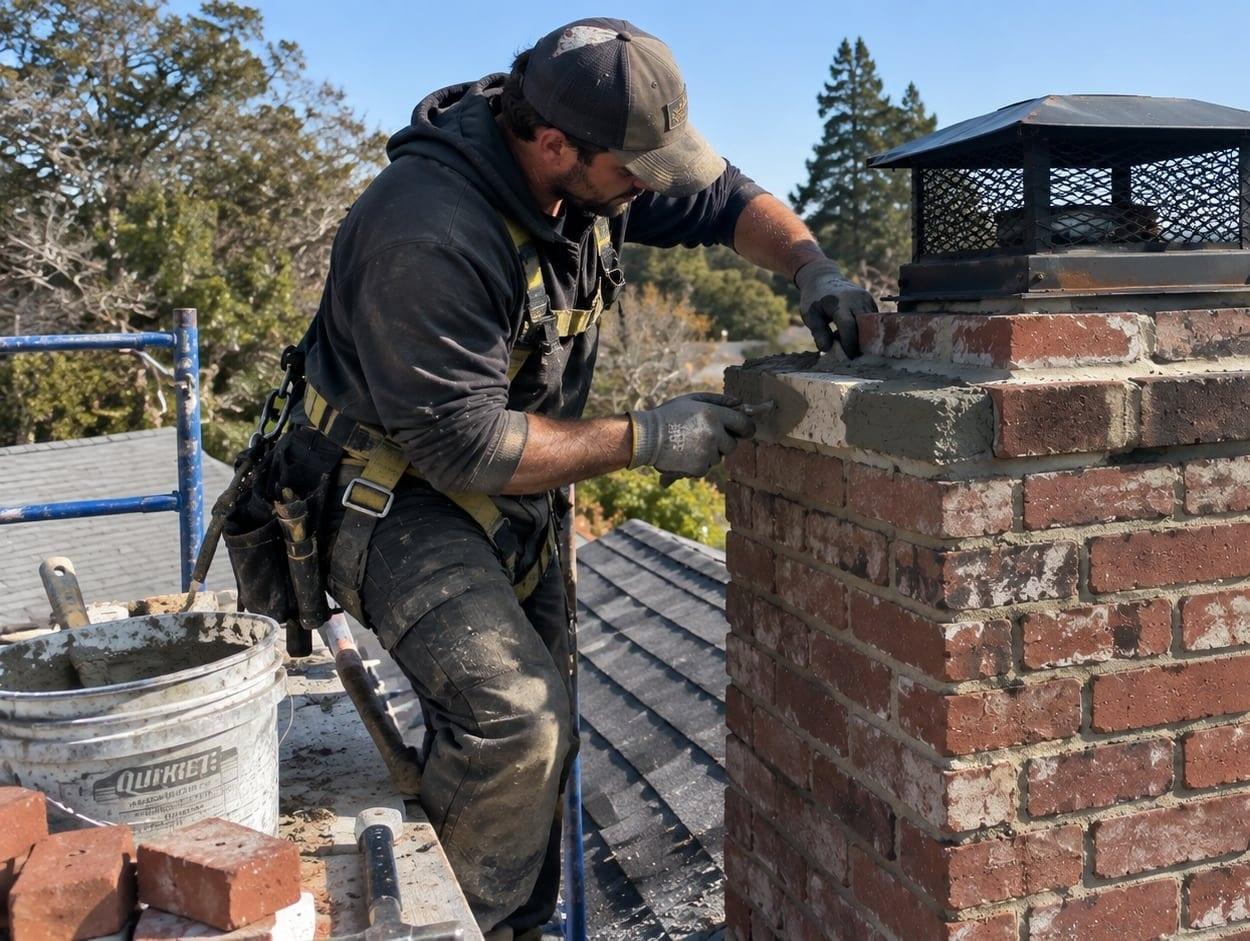
- Mortar joints that have eroded or crumbled, letting water into the brick
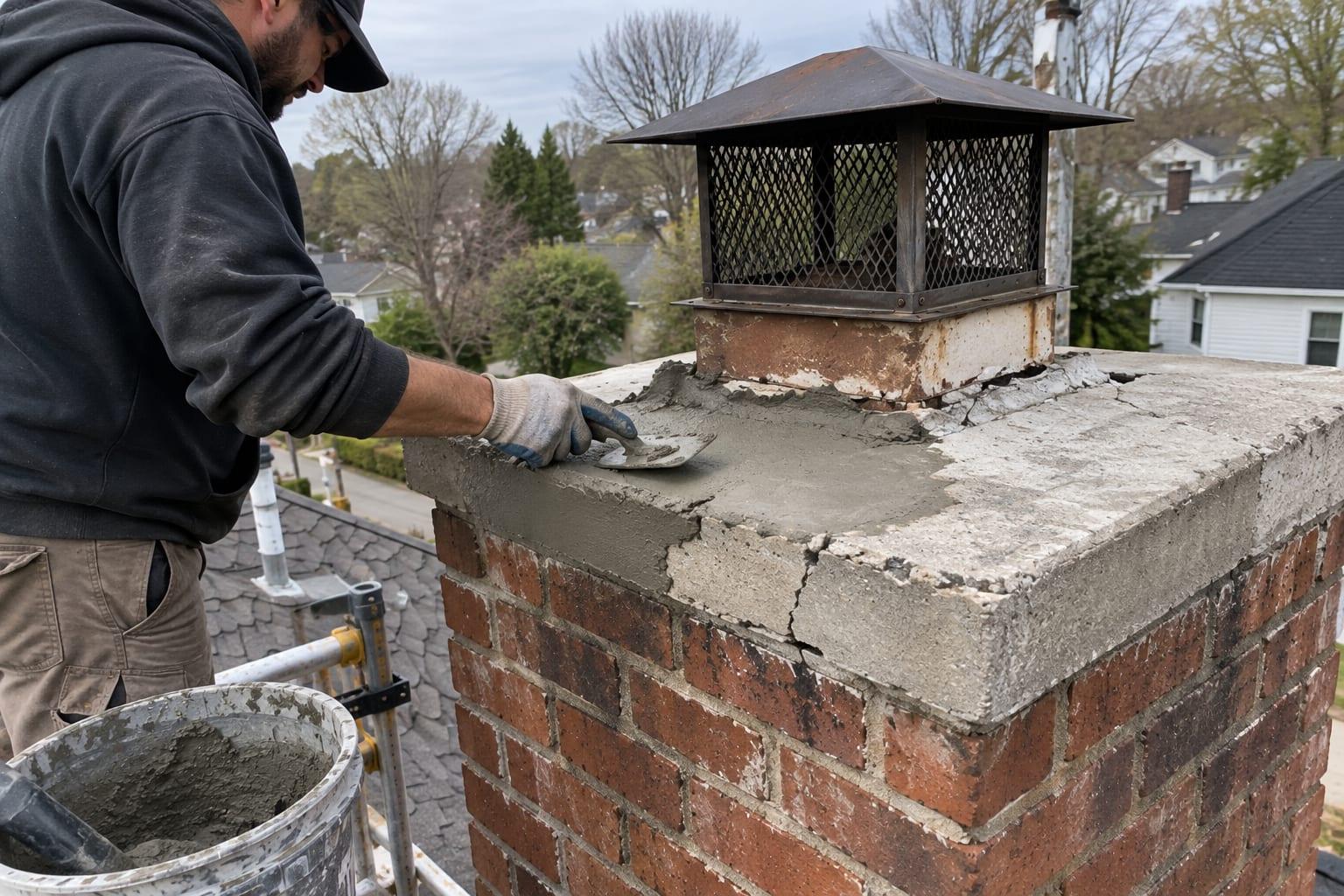
- A cracked or crumbling crown at the top of the chimney
- A missing, cracked or gapped flue liner
- A rusted or stuck damper
- Worn flashing where the chimney meets the roof, a common source of leaks
- An unused flue that has collected debris or animal nests over the years
None of that can be judged from the living room. For a pre-1960 house, especially one built before 1940, an inspection is the sensible starting point, and a camera run through the flue shows the liner and joints that can't be seen otherwise. To learn what the visit involves, read how a chimney inspection works.
If the inspection turns up problems, older chimneys can usually be brought back into safe use. Options include repointing worn mortar, repairing the crown, installing a new liner or, when the damage is extensive, rebuilding the upper section. For details on these steps, see how chimney repair works.
Fireplace hasn't been used in years?
Don't light it to test it. A flue that has sat unused can hold nests, fallen debris or hidden cracks that let smoke and carbon monoxide escape into the house. Have it checked and cleaned before the first fire.
Homes built in 1960 or later
By the same Census figures, most homes in Chattahoochee Hills were built in 1960 or later. These newer houses are more likely to have factory-built fireplaces with metal flues, gas units or inserts. They still need regular cleaning and checks of the chase cover, cap, glass and gas components. Their dryer vents also deserve attention, since lint buildup in a long vent run restricts airflow and is a fire risk.
Sources (1)
Facts and figures on this page come from these references.
- 1U.S. Census Bureau, American Community Survey 2019–2023 5-year estimates, table B25034 (Year Structure Built)