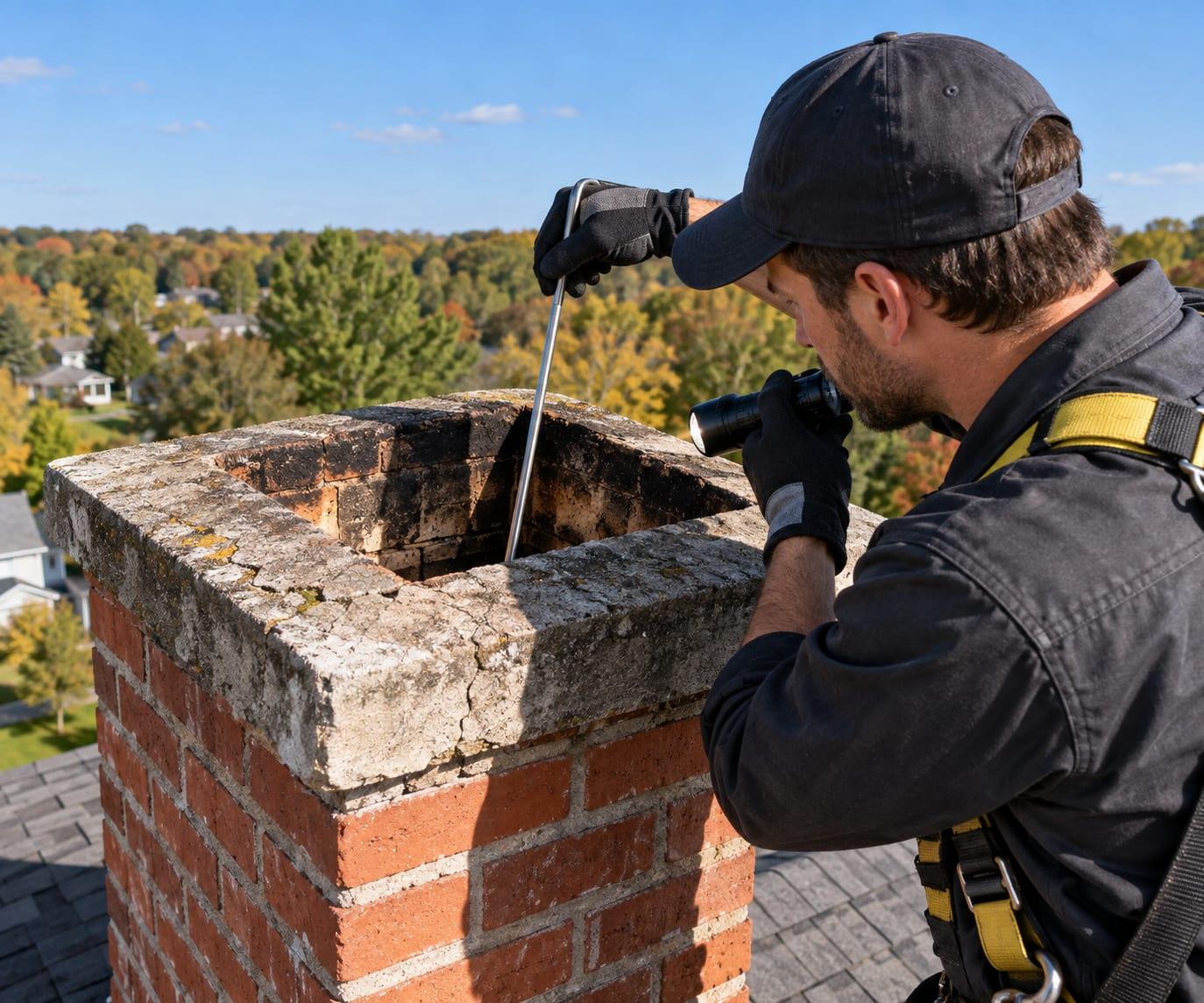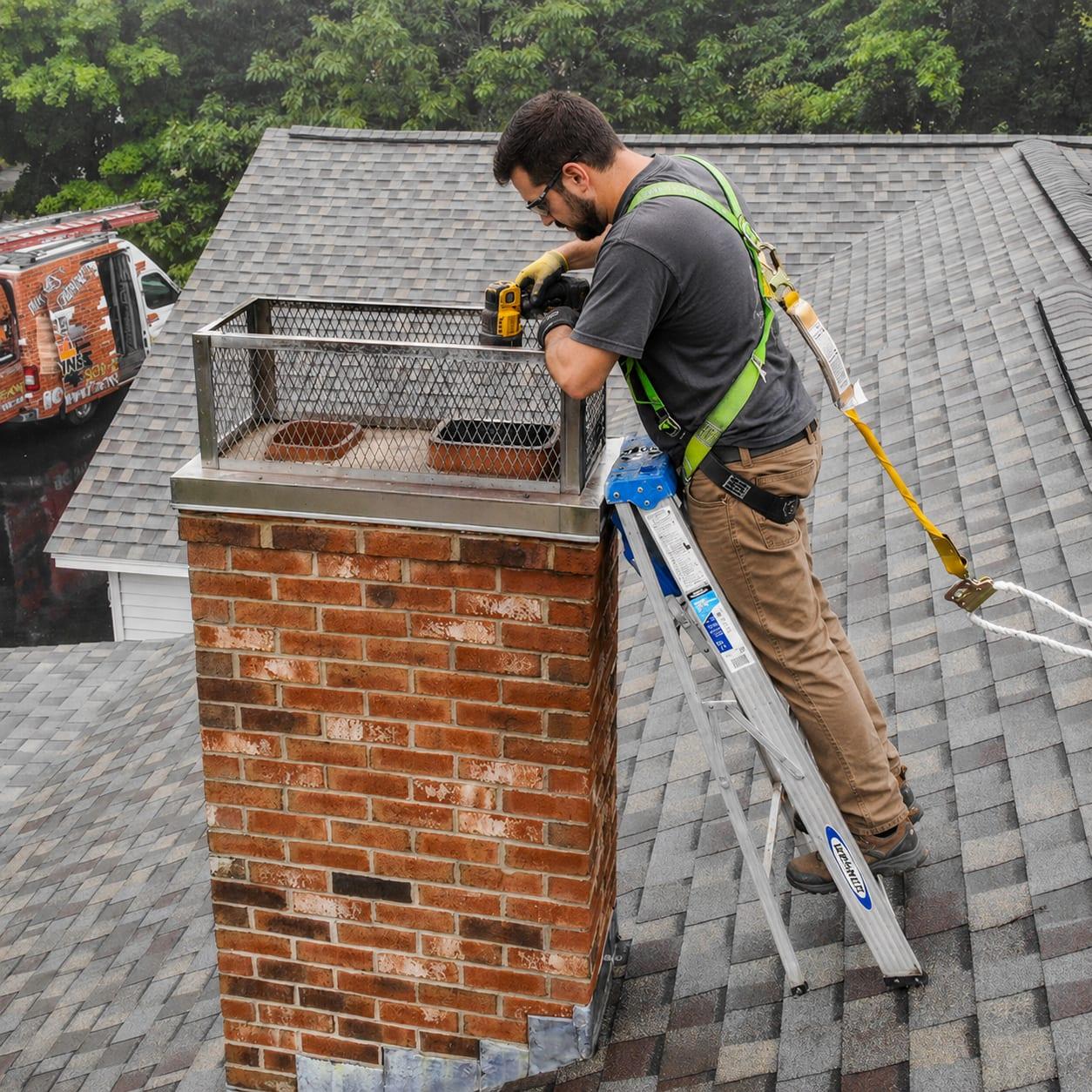
We handle chimney inspection for homes in Fayetteville, with close attention to the roof flashing and the smoke chamber. If you've had a chimney fire, or you're planning to reline the flue or add an insert, an inspection is the sensible first step. Request a free estimate to get started.
Where the chimney meets the roof
On the roof, we look at the metal flashing that seals the joint between the chimney and the shingles. That includes the step flashing worked into the roof courses, the counterflashing set into the mortar joints, and any sealant holding them. We check for lifted or rusted edges, open joints, old caulk smeared over gaps, and mortar that has let the counterflashing pull loose. If there are water stains on a ceiling or in the attic near the chimney, we compare what's on the roof with what's below. That helps you decide two things. First, whether a stain traces to the flashing or to the crown or brick above it. Second, whether resealing will do or the flashing needs replacing.
Inside the smoke chamber
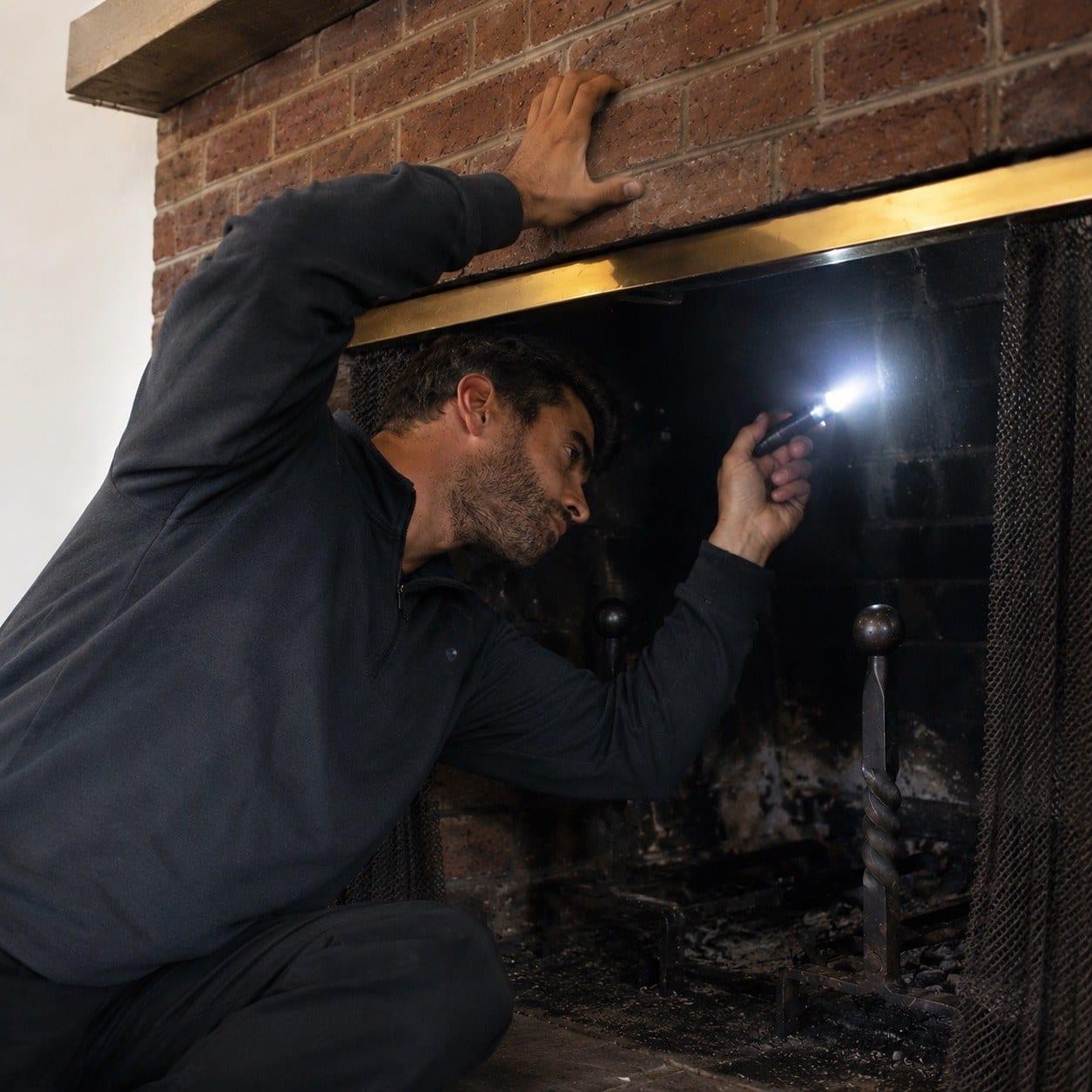
The smoke chamber is the sloped space above the damper where the firebox narrows into the flue. We use a light, and a camera where access is tight, to look for four things: cracked or missing parging, stepped brick left rough by the original build, heavy creosote on the walls, and gaps that let heat reach the framing around it. A rough or cracked chamber can make a fireplace draw poorly and hold creosote. What we find tells you whether the chamber can be used as it is, needs cleaning first, or should be smoothed and sealed before you keep burning. It also matters before any relining or insert, since both sit on top of it.
What Census data shows about local housing
About 1% of the housing units in Fayetteville were built before 1960, according to the U.S. Census Bureau, American Community Survey 2019–2023 5-year estimates, table B25034 (Year Structure Built). So for most homes here, the chimney doesn't date from the oldest building era, and the age of the house alone won't tell you what an inspection will find. The actual condition of the flashing, smoke chamber and flue is the better guide.
Checking for damage after a chimney fire
After one, inspection can involve three checks:
- A camera run down the full flue to find split or shifted tiles and gaps
- A look at the smoke chamber and damper for heat damage
- A check of the flashing and crown for cracks
The goal is to decide whether the system can be cleaned and used, needs repair, or needs a new liner before the next fire. Don't light the fireplace until it has been checked. We accept emergency calls.
Work an inspection can lead to
- Chimney liner installation is the right job when the inspection finds cracked or missing flue tiles, fire damage, or a liner that doesn't suit a new insert or stove.
- Chimney spark arrestor installation fits when the top of the flue has no screen, or the existing mesh has rusted through, and you want embers kept off the roof.
- Chimney sweep in Fayetteville comes first when heavy creosote has to be removed before the flue and smoke chamber can be seen clearly.
Also served nearby
We also do chimney inspections in Decatur, Avondale Estates and Austell.
The full service and everything else in the area
For the complete overview of inspection types, the visit itself and every component checked, read how chimney inspection works. You can also browse everything we offer in Fayetteville.
Booking an inspection in Fayetteville
Call or request an estimate, and tell us what prompted the inspection: a leak, a draft problem, a past fire or a planned insert. Same-day visits are available where the schedule allows (never guaranteed), and emergency calls are accepted. We also offer gas fireplace and gas appliance work, and we work on all major brands.
Sources (1)
The sources of the Fayetteville facts on this page.
- 1U.S. Census Bureau, American Community Survey 2019–2023 5-year estimates, table B25034 (Year Structure Built)