On this page
What chimney spark arrestor installation is
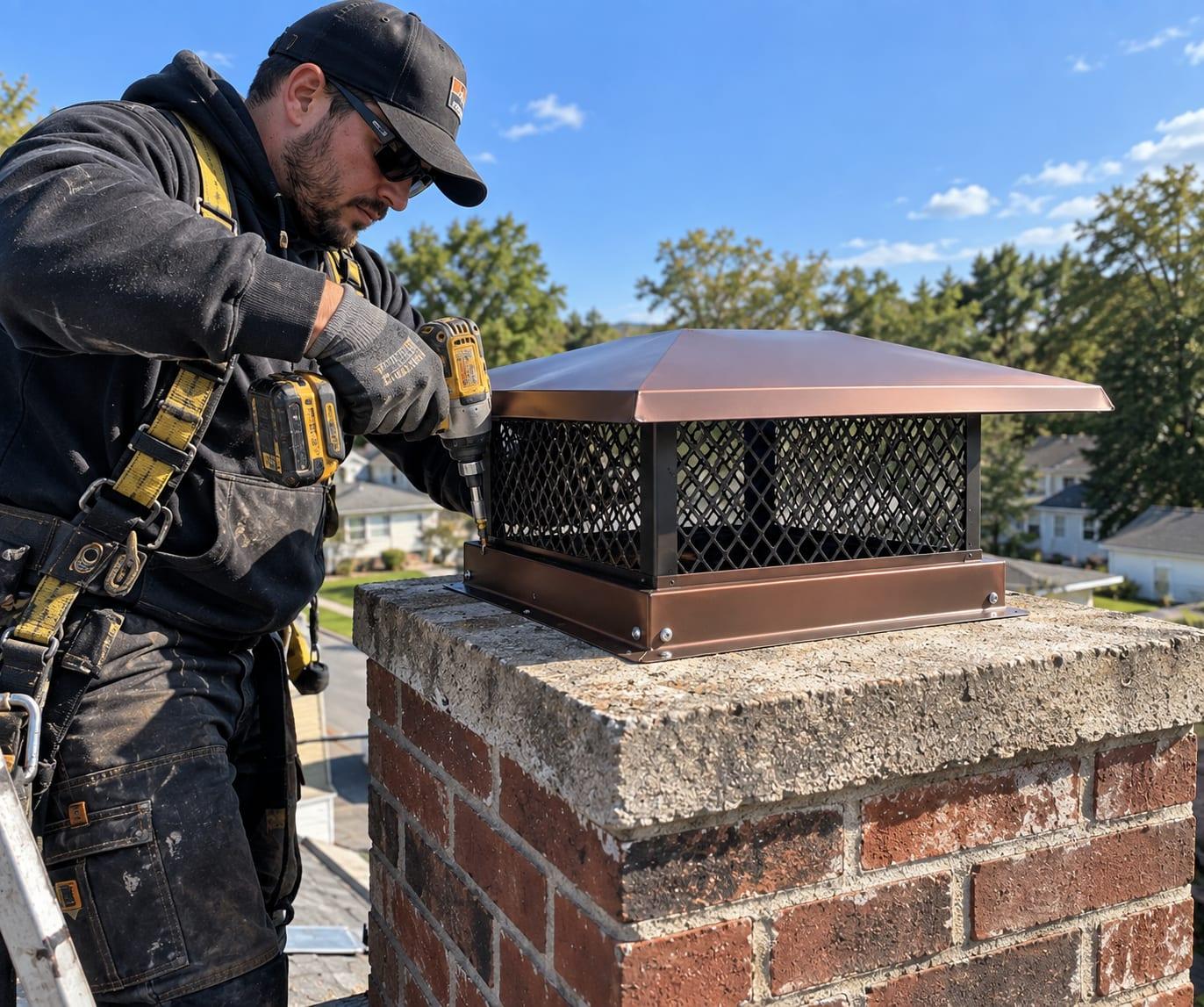
Chimney spark arrestor installation means fastening a metal mesh screen over the top of the flue so smoke can pass but embers can't. Most arrestors are the wrap-around screen on a chimney cap, with a solid top that keeps rain out; others are a screen alone, fitted to the flue tile. The job is measuring the flue, choosing the right size and mounting style, and attaching it so wind and storms won't knock it loose. Because the screen and the cap are usually one unit, the work often goes hand in hand with chimney cap installation. The same mesh also keeps birds and squirrels out of the flue.
When homeowners need a spark arrestor
- The flue is open at the top, with no cap or screen at all.
- You find ash, scorch marks or burnt flecks on the roof near the chimney.
- The existing mesh is rusted through, torn or pulled away from the cap.
- Your cap has a rain cover but no screen around it.
- You burn wood often, and trees, leaves or pine straw sit near the roof.
- A storm bent or loosened the hardware on top of the chimney.
What the visit involves, step by step
Fitting a new arrestor
Check the top of the chimney
We look at the flue tile or pipe, the crown and any existing cap or screen, and note damage that would affect how a new one mounts.
Measure every flue
Each flue opening is measured, since a screen that's too small or loose won't stay put.
Free estimate
You get the recommended arrestor style, material and scope before any work.
Clear and install
Old or broken screens come off, and the new arrestor is fastened to the flue or crown.
Confirm draft
We make sure the new screen doesn't restrict the flue and that smoke leaves freely.
Materials, mesh and fuel types
Arrestors come in stainless steel, galvanized steel and copper. Stainless steel resists rust well and suits most homes; galvanized costs less but corrodes sooner; copper is chosen mostly for looks. Mesh size is a balance: openings that are too large let embers through, while mesh that's too fine clogs with soot and creosote and chokes the draft.
Wood-burning fireplaces and stoves are where arrestors matter most. Factory-built chimneys usually take a top made for that specific system, a point covered in chimney caps vs chase covers. If the flue tile under the cap is cracked or missing, a new arrestor won't fix the deeper problem, and chimney liner installation may need to come first. The reasons are laid out in our guide to every chimney needs a liner.
Keeping it working
An arrestor needs the same attention as the rest of the chimney. Soot and creosote collect on the mesh over time, and a clogged screen is a common reason a fireplace that used to draw well starts to smoke. Have the screen checked and brushed whenever the chimney is swept. The benefits of chimney caps and dampers explains how a screened cap fits with the rest of the system.
The next step
Same-day visits are available when the schedule allows, and emergency calls are accepted. We also handle commercial and property-manager work. If the arrestor is part of a bigger project, such as a new chimney, it can be planned into the chimney installation service. Call or request an estimate to get started.
Before the technician arrives
- Note any animal sounds or debris in the firebox.
- Make sure the roof can be reached from the driveway or yard.
- Keep the fireplace unused the day of the visit.
Animals in the flue
Don't light a fire to drive an animal out. Keep the fireplace cold and closed off and have the animal removed first.
Signs it's time for chimney spark arrestor installation
- A cap that's missing, bent, rusted or leaning
- Rain dripping into the firebox
- Mesh that's torn, rusted through or clogged with creosote
- Rust stains running down the chimney
- Animals or nesting material in the flue
Checked on every visit
- Clearance between the hood and the flue
- Mesh size and condition
- Rust or corrosion
- Flue size and tile condition
- Fasteners and mounting