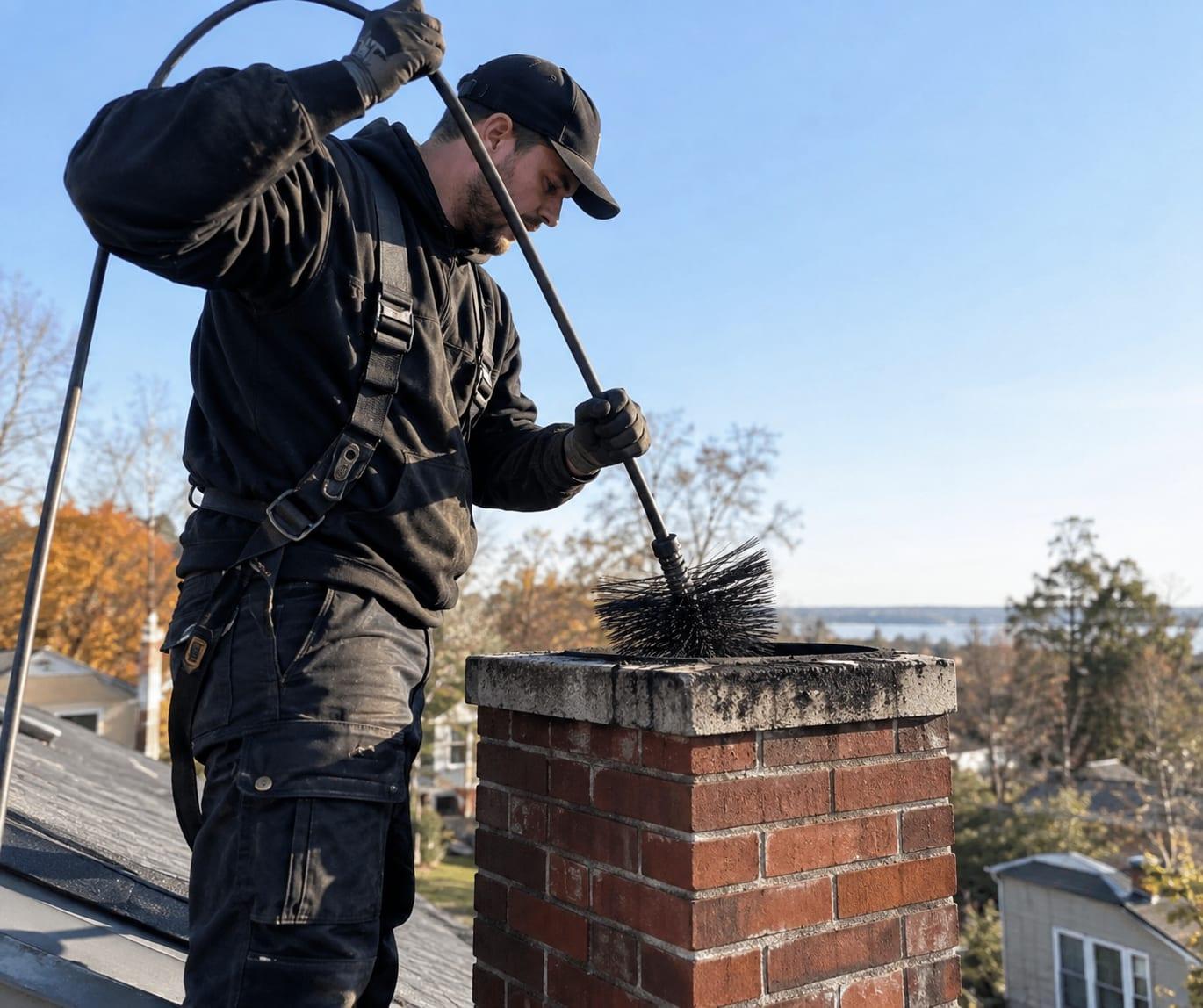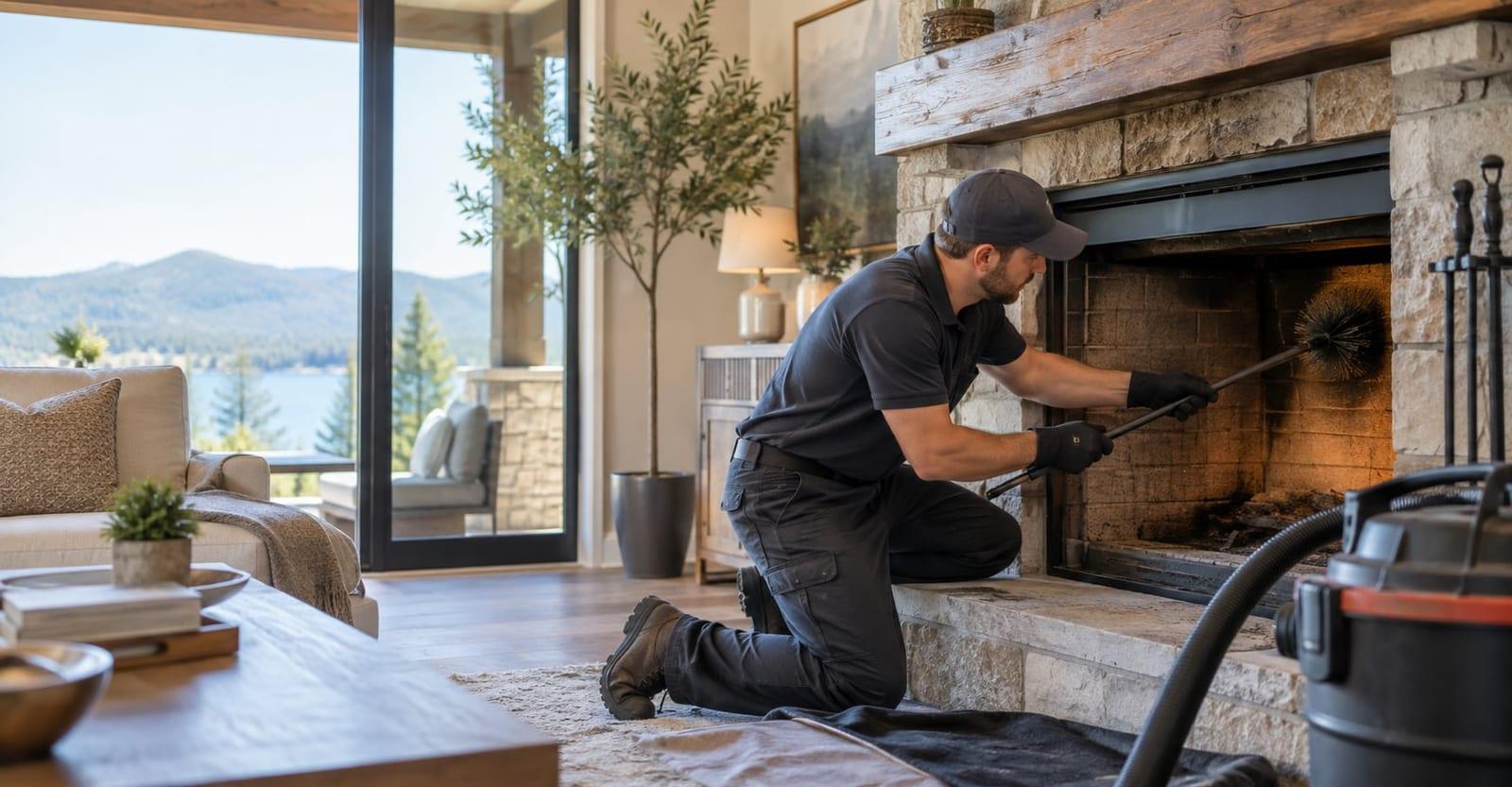
We clean chimneys for homes in South Fulton. This page covers the parts of a visit that most often change a homeowner's plans: hardened, glazed creosote in the flue, what the firebox cleanout turns up, and a fireplace that smells strongly. When you're ready, request a free estimate and we'll set up a visit.
When the flue has glazed creosote
Most soot brushes off. Glazed creosote does not. It is a shiny, tar-like coating that has hardened onto the flue walls, and it burns hotter than loose soot if it ignites. When the sweep finds it, we note where it sits and how far it runs. We also check how thick it is and whether ordinary brushing has made any dent in it.
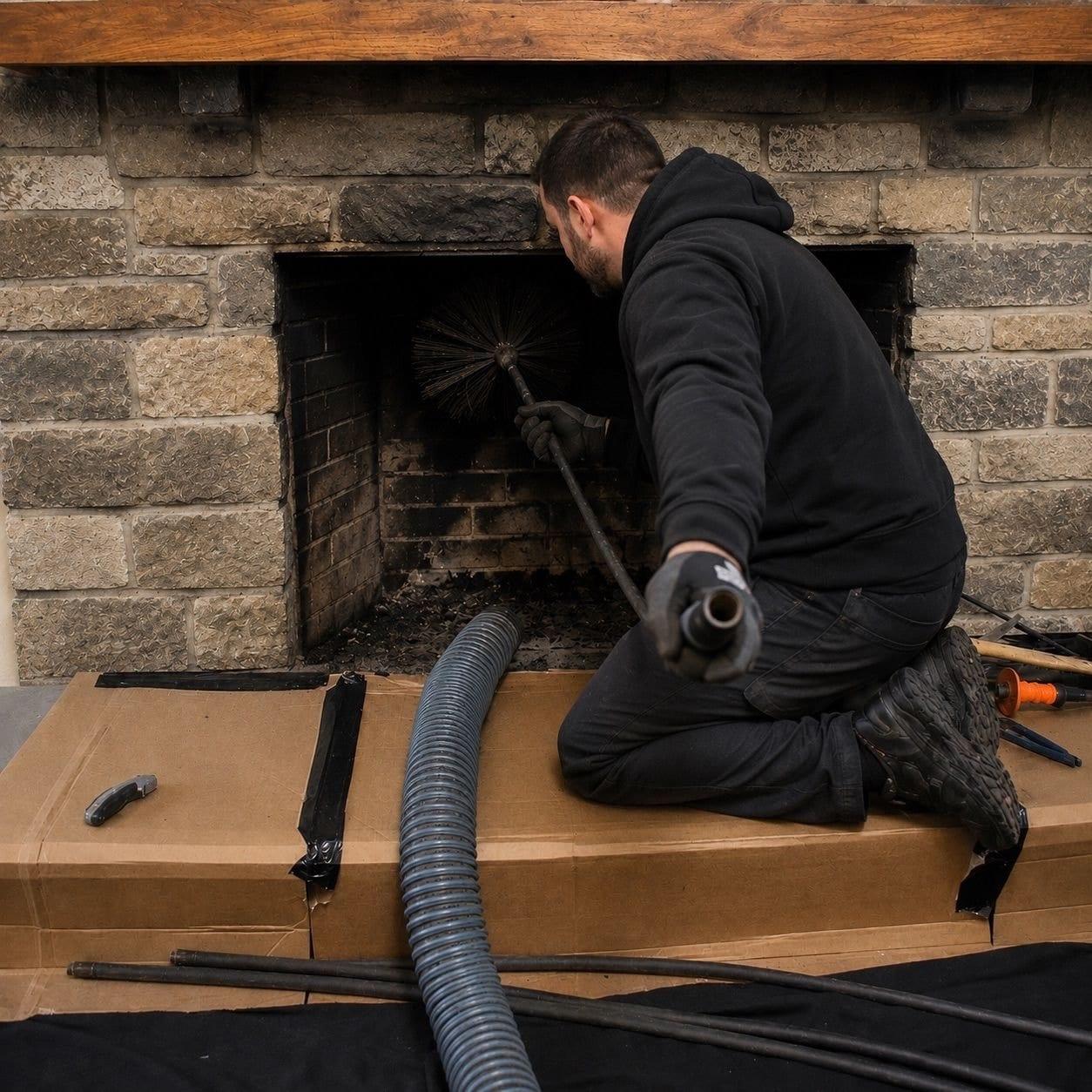
Heavy glazing may need a treatment that softens it first, and sometimes more than one visit, before the flue is clear. What we find helps you decide three things: whether to stop burning for now, whether your burning habits are feeding the problem, and whether the flue should be checked for damage once it is clean.
What the firebox cleanout shows
The firebox is where ash, half-burned logs and the debris knocked loose from the flue all end up, so clearing it is part of every sweep. With the box empty, we can see the firebrick and mortar joints, look at the damper from below and spot anything that fell from higher up, such as nesting material or loose masonry.
This step helps you decide whether the fireplace is ready for the season as it is. Cracked brick, open joints or a damper that won't seal are usually small fixes, but they are worth handling before regular fires start.
What the housing data says about South Fulton
About 3% of the housing units in South Fulton were built before 1960 (U.S. Census Bureau, American Community Survey 2019–2023 5-year estimates, table B25034, Year Structure Built). So nearly all homes here date from 1960 or later. A home's age doesn't tell us what kind of chimney it has, though, so every visit starts by confirming whether the flue is masonry or a factory-built metal system. That decides how it is cleaned and which follow-up work applies.
A fireplace with a strong odor
A smoky or sour smell can come from creosote deposits in the flue, from debris or a nest trapping moisture, or from a damper that lets air from the chimney into the room. A sweep for this problem can involve cleaning the deposits out, clearing whatever is lodged in the flue and checking whether water is getting in from the top. If the smell is strongest when the house is closed up, we also look at how well the damper seals. Sometimes a chimney cap is the sensible next step after cleaning.
When the job turns into something else
- Repairs to masonry chimneys are the right job when the sweep turns up cracked flue tiles, open mortar joints or a damaged crown.
- Repairs to factory-built chimneys and chases are the right job when a metal flue, its chase or the chase cover is damaged, rusted or leaking.
We also offer chimney sweeping for homes in College Park, Douglasville and Austell.
For the full picture of the work, including the types of cleaning, how a visit runs and what gets checked, see our complete chimney sweep service guide. For everything else we handle locally, visit the page on our work in South Fulton.
Booking a sweep for your home
Call or request an estimate, and tell us whether you've noticed a smell, heavy buildup or debris in the firebox. We also handle gas fireplace work, as well as jobs for commercial clients and property managers.
Sources (1)
The sources of the South Fulton facts on this page.
- 1U.S. Census Bureau, American Community Survey 2019–2023 5-year estimates, table B25034 (Year Structure Built)