The short answer
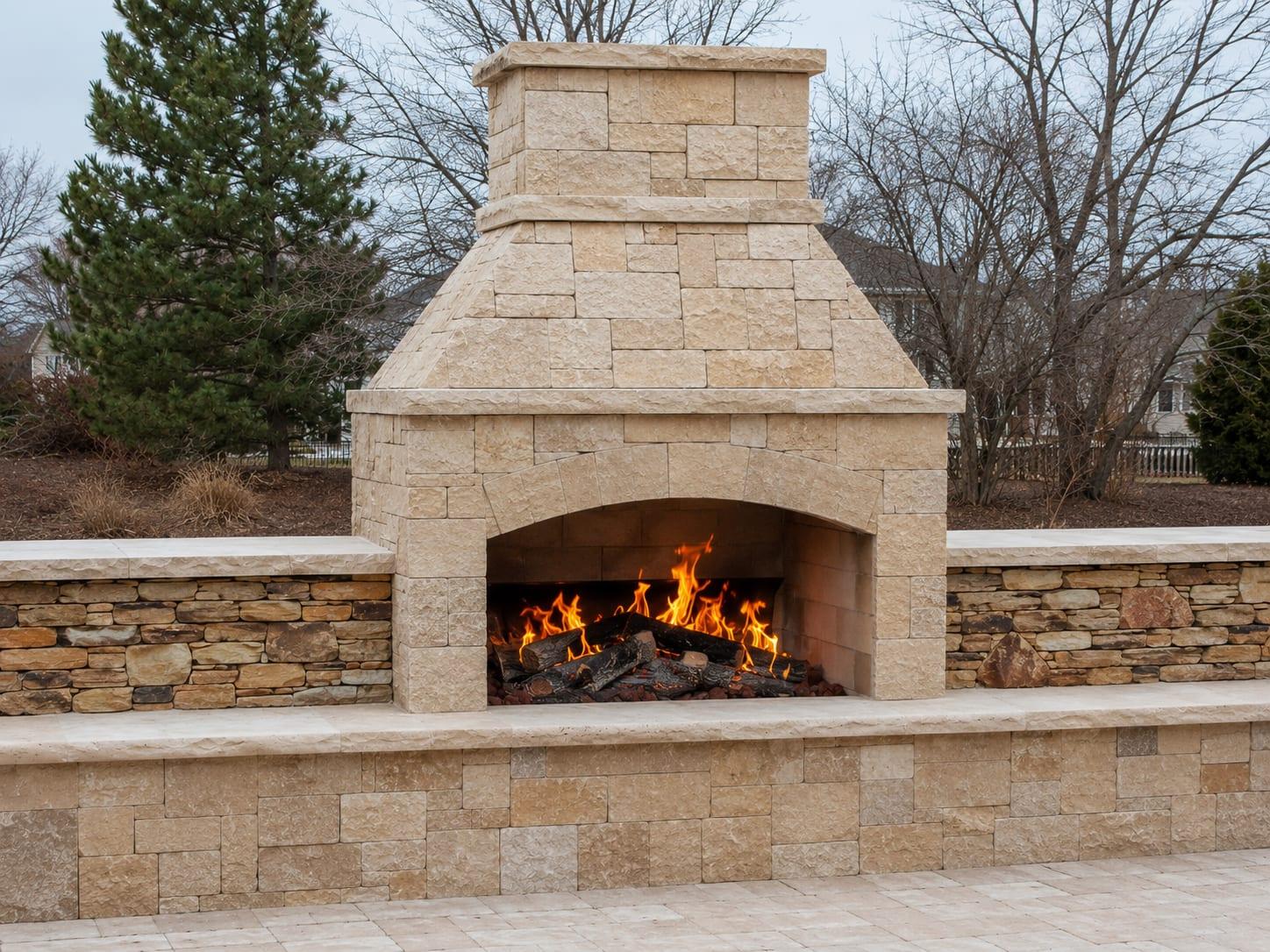
Choose an outdoor fireplace if you want smoke carried up and away, heat aimed at a seating area, and a permanent focal point that works as a wall for your patio. Choose a fire pit if you want a casual, open fire that people can circle, in a smaller footprint, and you don't mind moving your chair when the wind shifts. Neither is better in general. The right one depends on how you use the space, how much room you have, and how much smoke you're willing to live with.
How the two compare, point by point
| Feature | Outdoor fireplace | Fire pit |
|---|---|---|
| Smoke | A chimney carries most smoke up and out of the seating area when it drafts well | Smoke drifts wherever the wind sends it, often into someone's face |
| Heat | The firebox reflects heat forward toward the people facing it | Heat goes out in every direction, and much of it rises and is lost |
| Seating | Arranged in front, like a living room | A full circle around the flame |
| Footprint | A substantial structure that needs a solid base | Small, and some are movable |
| Look and feel | A backdrop, privacy wall and visual anchor for the patio | Low profile and open, keeps sight lines clear |
| Project scope | A construction project that needs planning, a foundation and clearances | Often simpler, though built-in gas pits still need planning |
| Fuel | Wood, natural gas or propane, depending on the design | Wood, natural gas or propane, depending on the design |
| Upkeep | Firebox, chimney, cap and masonry need periodic attention | Ash cleanout and keeping the bowl or burner clear |
Smoke
- Outdoor fireplace
- A chimney carries most smoke up and out of the seating area when it drafts well
- Fire pit
- Smoke drifts wherever the wind sends it, often into someone's face
Heat
- Outdoor fireplace
- The firebox reflects heat forward toward the people facing it
- Fire pit
- Heat goes out in every direction, and much of it rises and is lost
Seating
- Outdoor fireplace
- Arranged in front, like a living room
- Fire pit
- A full circle around the flame
Footprint
- Outdoor fireplace
- A substantial structure that needs a solid base
- Fire pit
- Small, and some are movable
Look and feel
- Outdoor fireplace
- A backdrop, privacy wall and visual anchor for the patio
- Fire pit
- Low profile and open, keeps sight lines clear
Project scope
- Outdoor fireplace
- A construction project that needs planning, a foundation and clearances
- Fire pit
- Often simpler, though built-in gas pits still need planning
Fuel
- Outdoor fireplace
- Wood, natural gas or propane, depending on the design
- Fire pit
- Wood, natural gas or propane, depending on the design
Upkeep
- Outdoor fireplace
- Firebox, chimney, cap and masonry need periodic attention
- Fire pit
- Ash cleanout and keeping the bowl or burner clear
When an outdoor fireplace makes more sense
- Smoke bothers you or your guests, and you want it routed up a chimney rather than across the patio.
- You want a room-like layout, with sofas and chairs facing one warm focal point.
- You need to block a view, a neighbor's window or the wind, and a tall structure can do that job too.
- You plan to use the space often in cool weather and want heat directed at the seats.
- You want the fire to feel like a permanent part of the house and landscape.
When a fire pit makes more sense
- You want a casual gathering spot where everyone sits in a circle and faces each other.
- Your yard or patio is small, and a tall structure would crowd it.
- You want to keep open views across the yard.
- You like the idea of moving the fire, or of starting with something simple.
Wood or gas: the second decision
Both options come in wood-burning and gas versions, and the fuel changes the experience as much as the shape does. Wood gives you crackle, scent and real flame, but it means hauling and storing firewood, cleaning out ash and dealing with sparks and smoke. Gas lights at the turn of a knob or the press of a button, makes little smoke and is easy to shut off. It needs a gas supply run to the spot, and its ignition parts need care over time. If you already have a gas unit, our guide to a gas fireplace that won't light covers the usual reasons for ignition trouble.
Placement and safety to settle first
Before you choose a spot
- Distance from the house, fences, sheds and anything else that can burn
- Overhead clearance from roof overhangs, pergolas, awnings and tree branches
- A level, non-combustible base that can carry the weight
- How the wind usually moves across that part of the yard
- Where the seating will go and how people will walk around the fire
- Whether a gas line can reach the location, if you want gas
- Rules from your local building department and any homeowners association
Open flames and covered spaces
A fire pit is an open flame meant for open sky, so don't set one under a roof, pergola or low branches. An outdoor fireplace can sometimes sit closer to a covered area, but only when the chimney height and clearances follow the manufacturer's instructions and the applicable code.
What helps you decide
A simple way to work it out
Picture a typical evening
Think about who is there, where they sit, and whether they face each other or face the fire.
Measure the space
Mark the footprint and the clearances on the ground. A fireplace that looks fine on paper can crowd a small patio.
Decide how much smoke you'll tolerate
If smoke in the eyes would spoil it for you, that alone points toward a chimney.
Pick the fuel
Choose wood for the full fire experience, or gas for convenience and less cleanup.
Get the site looked at
Have someone check the base, the clearances and the gas access before you commit. Reading up on how outdoor fireplace installation works helps you know what to ask.
Some people start out wanting an outdoor fire and realize the hearth they actually use is indoors. If yours looks dated, the benefits of fireplace refacing may be worth a look before you build something new outside.
Living with an outdoor fireplace
An outdoor fireplace is a real fireplace, so it needs the same kind of attention. A wood-burning unit needs its ash cleared and its chimney kept clean. Its cap and masonry take weather year-round, so check them for cracks and loose joints. If smoke rolls out the front instead of going up, the causes are often the same as indoors, and our explainer on what causes a smoky fireplace covers them. Cracked firebox walls, a loose cap or damaged masonry call for a fireplace repair service before small problems spread.
If an outdoor fireplace fits your plans, or you'd rather put a new fireplace installation inside the house, estimates are free, so get in touch to talk it through.