On this page
What outdoor fireplace installation involves
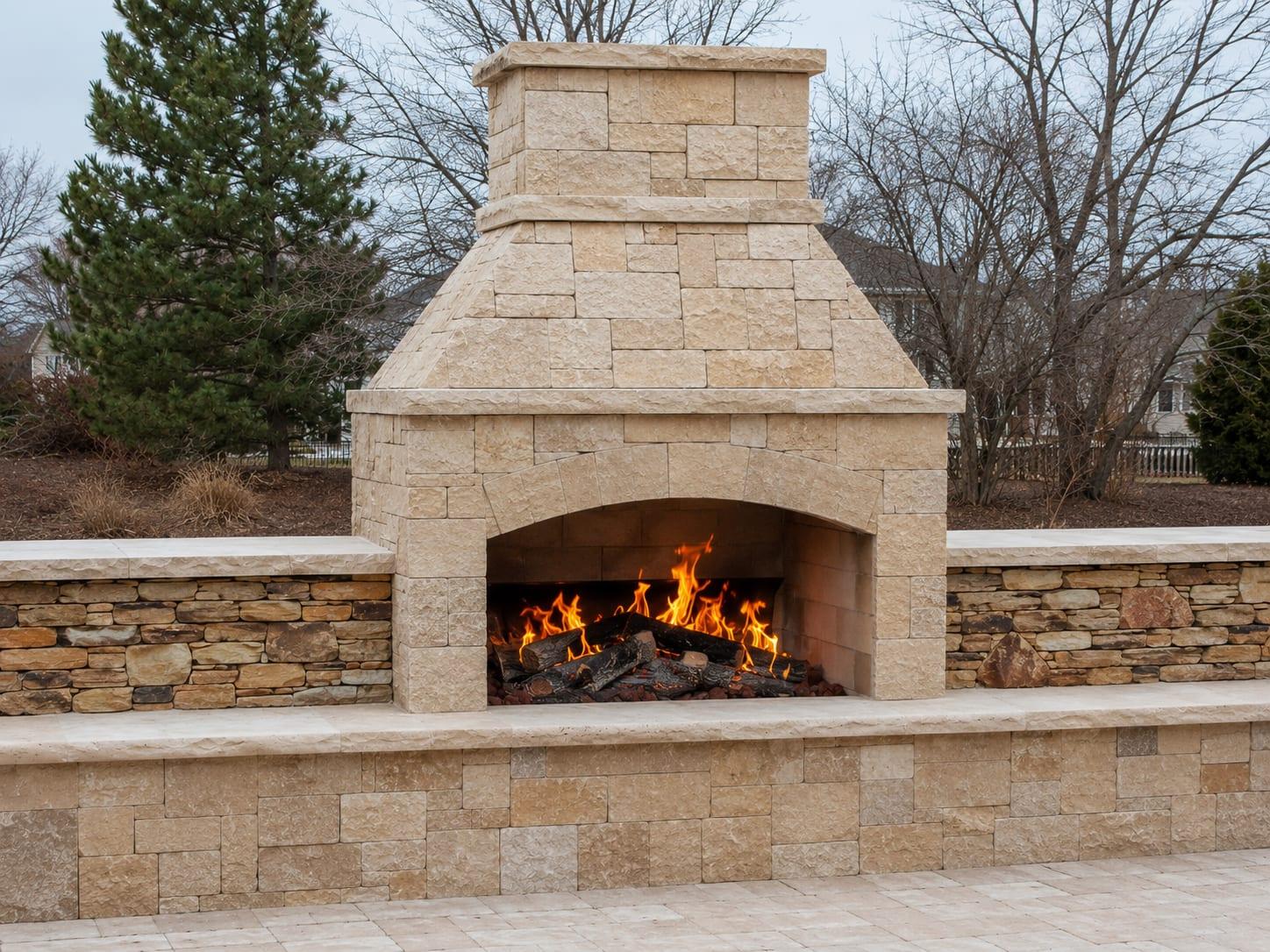
An outdoor fireplace is a contained firebox with a chimney that carries smoke up and away from your seating area. That chimney is what sets it apart from an open fire pit. Installing one means more than setting a unit on the patio. It needs a solid, level base that can carry the weight, a firebox lined with heat-resistant material, a properly sized flue, safe distances from the house and anything that can burn, and, for gas models, a fuel supply run to the unit.
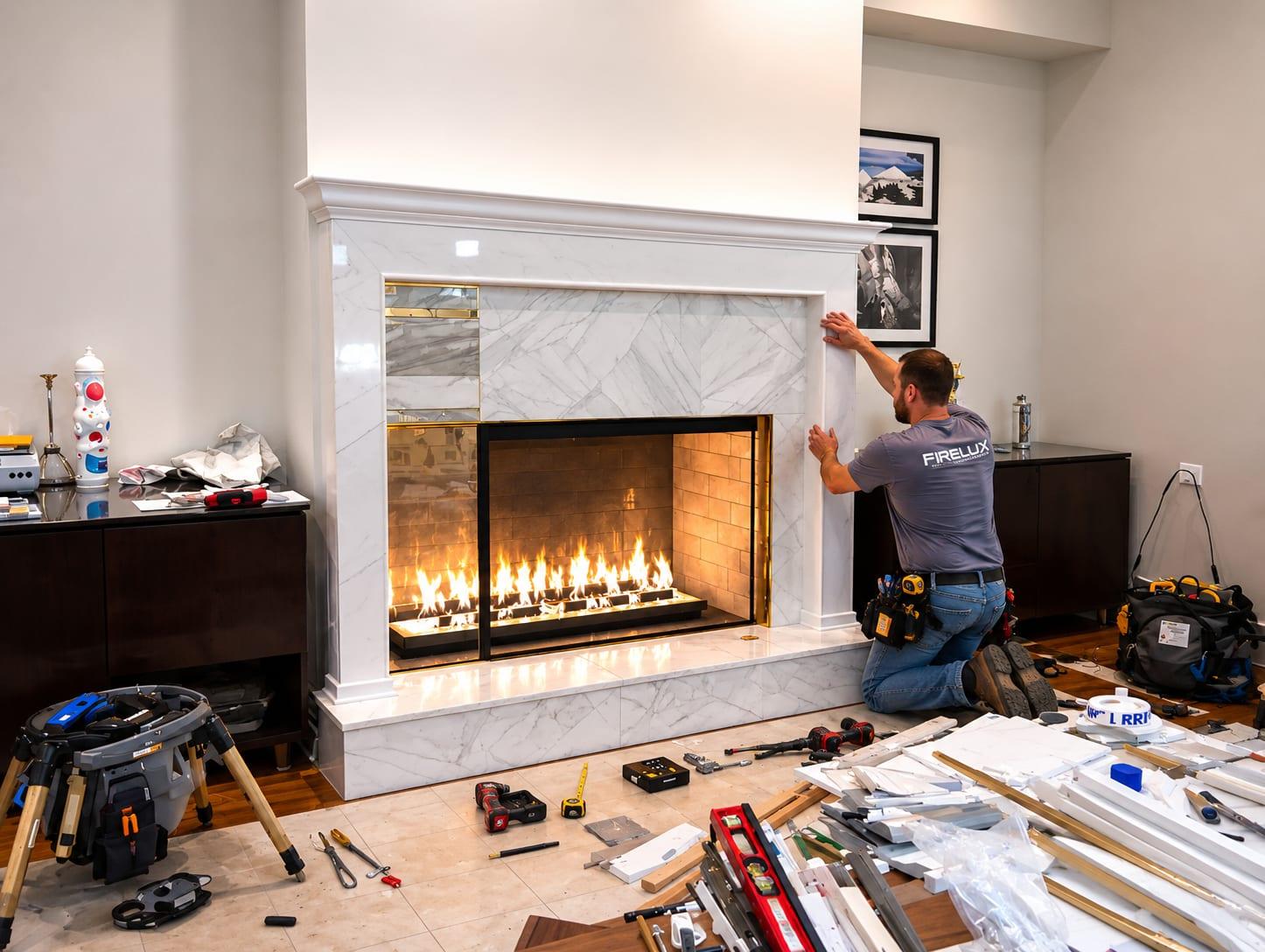
There are two main ways to build one. A site-built masonry fireplace is built in place from brick or stone around a firebrick-lined firebox. A prefabricated outdoor unit is a factory-made firebox and flue, usually finished with stone, stucco or brick veneer. Both can look substantial when finished. Which one fits depends on your space, budget priorities, fuel choice and the look you want, and we talk through those at the estimate.
If you're still weighing your options, our guide to outdoor fireplace vs fire pit explains how the two differ in smoke, heat, footprint and how people actually use them.
When an outdoor fireplace is the right project
Homeowners usually call about outdoor fireplace installation for one of these reasons:
- Smoke from a fire pit keeps drifting into faces and seating, and you want the smoke carried up and out of the way.
- You want to use the patio or deck on cool evenings and in the shoulder seasons, not just in summer.
- An older outdoor fireplace has cracked, settled or crumbled to the point where repair no longer makes sense.
- You want an outdoor fire that starts with a switch or a key, which points toward a gas unit.
- You're planning an outdoor kitchen or covered living area and want the fireplace designed in from the start.
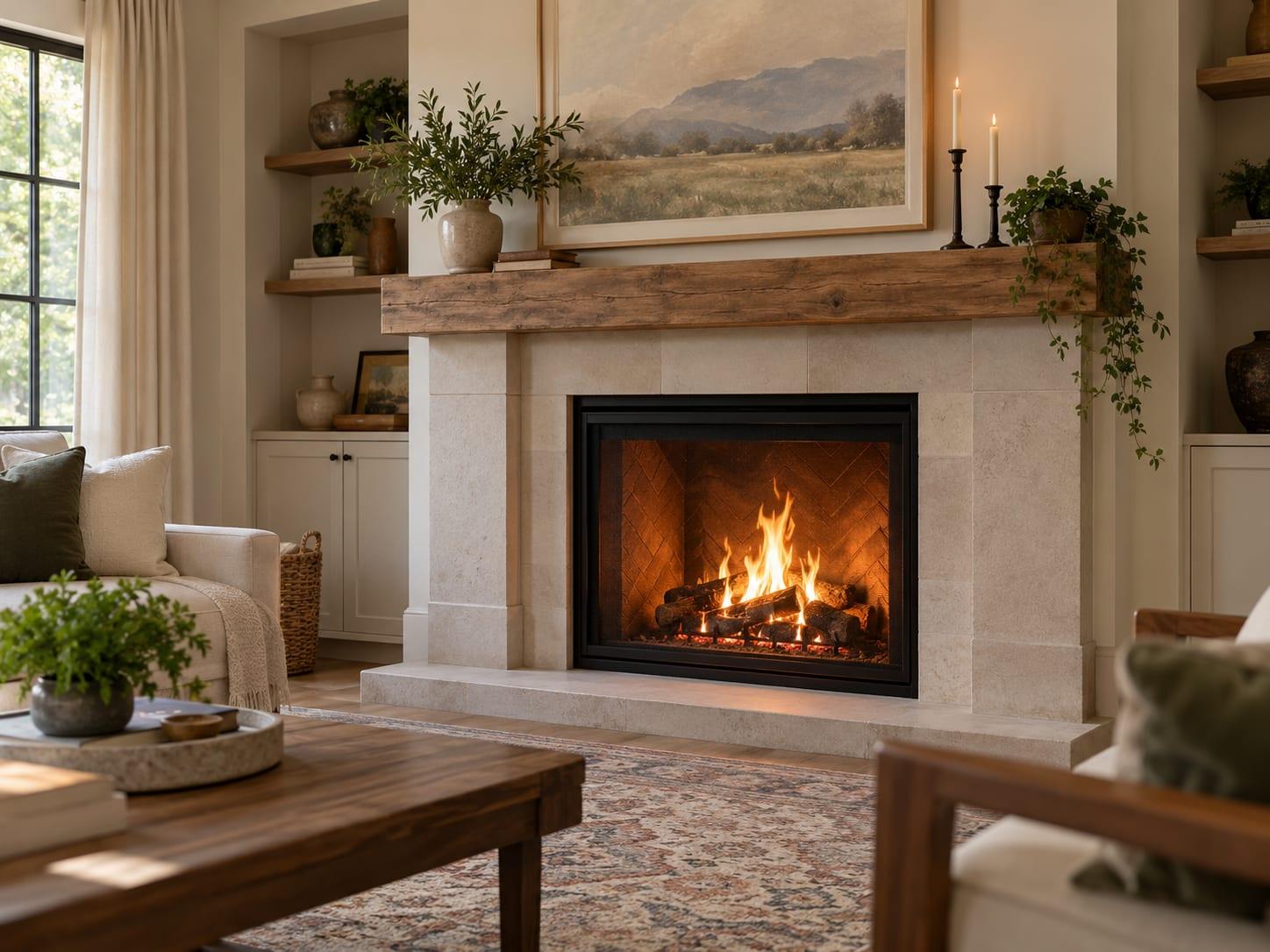
If your goal is warmth or atmosphere inside the house, an indoor project may suit you better. Our fireplace installation service covers wood and gas fireplaces indoors. For rooms without a chimney, electric fireplace installation is another option.
What the work involves, step by step
From first visit to first fire
Estimate and site walk
We look at where you want the fireplace and check the ground, the distance to the house, rooflines, overhangs and trees. We ask how you plan to use the space. The estimate is free.
Design and fuel choice
We settle on masonry or prefab, wood or gas, the size of the firebox, the chimney height and the finish material, so the plan matches both the yard and the way you'll use it.
Foundation and base
A fireplace is heavy. We prepare a base that can carry the full weight without settling, since a shifting base is what cracks masonry later.
Firebox and chimney
For a masonry build, we lay the firebrick firebox, the smoke chamber and the chimney. For a prefab unit, we set the firebox and flue to the manufacturer's instructions and build the surround.
Gas connection, if applicable
For a gas fireplace, we run the gas line to the unit, connect the burner and test for leaks before the first fire.
Cap, finish and walkthrough
We finish the exterior, install the chimney cap and spark screen, check the draft with a test fire and show you how to use and care for the fireplace.
Covered patios and porches need extra care
A fireplace under a roof, pergola or overhang has to meet the clearance and venting requirements for that setup, and prefab units must be listed for that use. We check this during the site walk, before anything is built.
Materials and fuel types
| Choice | What it means | Worth knowing |
|---|---|---|
| Wood-burning | Real logs in a firebrick-lined firebox | Classic crackle and smell; needs ash cleanup, a spark screen and periodic chimney cleaning |
| Natural gas or propane | Burner with logs or media, fed by a gas line or tank | Easy on and off with no ash; the burner and connections need periodic service |
| Masonry (brick or stone) | Built in place around a firebrick firebox | Very durable and fully custom; mortar joints and the crown face the weather |
| Prefab outdoor unit | Factory-built firebox and flue with a finished surround | Quicker to build; must be installed to the manufacturer's listing |
Gas fireplace and gas appliance work is offered, so we can handle the burner, the gas line and the hookup as part of the same job. We work on all major brands of prefab and gas units.
Outdoor brick fireplaces
Brick is a popular choice because it holds up to heat and weather and blends with most homes. The details that matter most outdoors are the ones that shed water: a sloped crown on top of the chimney, tight mortar joints and a cap that keeps rain out of the flue. Water working into brick and then freezing is what breaks it down over time. If you already have a brick fireplace that's showing loose or spalling brick, fireplace brick repair may save it before replacement is needed. If you're planning a taller freestanding chimney as part of the build, you can read how chimney installation works.
Safety and upkeep
Habits that keep an outdoor fireplace safe
- Burn only dry, seasoned firewood, and never use gasoline or lighter fluid to start a fire.
- Keep the spark screen in place and the area in front of the firebox clear of cushions, leaves and furniture.
- Make sure the fire is fully out before you leave it.
- Have a wood-burning chimney cleaned and checked periodically, since creosote builds up outdoors too.
- Have a gas unit's burner and connections serviced, and shut off the gas if you ever smell it.
Many of the same habits from our chimney cleaning tips for older fireplaces apply to an outdoor wood-burning chimney as well.
Booking your outdoor fireplace estimate
Call or request an estimate and tell us where you'd like the fireplace and whether you're leaning toward wood or gas. Estimates are free. Same-day visits are available where the schedule allows, but they're never guaranteed. Commercial and property-manager work is offered too, so outdoor fireplaces for shared courtyards and common areas are also within what we do.