If you smell gas
Leave the building right away. Don't use light switches, phones or flames inside. Once you're outside, call the gas utility or 911.
When the glass won't stay clear
You light the fireplace and the flames look dull and blurry, or the glass has a white, chalky coating that a quick wipe barely touches. Some homeowners see a black or brown film building along the top edge instead. Either way, the view is gone, and it's fair to wonder whether something is wrong with the fireplace itself.
Most cloudy gas fireplace glass comes from normal combustion deposits that need proper cleaning. Some of it, especially dark soot, can be a sign that the burner, logs or air supply need attention. The color and texture of the film are good first clues.
Common signs
What homeowners usually notice
- A white or light gray haze across the inside of the glass
- A chalky film that smears instead of wiping away
- Black or brown soot, often heaviest near the top or above the logs
- Fog or moisture that appears at startup and fades after a few minutes
- Rainbow-like or frosted spots that don't come off with cleaning
- Flames that look taller, lazier or more yellow than they used to
- Soot marks on the wall or mantel above the fireplace opening
Possible causes
Each of these is a possibility, not a diagnosis. A technician looks at the glass, the burner and the flame together to confirm which one applies.
What may be clouding the glass
01Normal combustion film
- What you may notice
- Even white or light gray haze that builds over weeks of use; flames look normal.
- How it’s confirmed
- The glass is removed once the unit is off and cool, and the film is checked to see whether it comes off with a fireplace-safe cleaner.
02New-unit curing film
- What you may notice
- Heavy haze during the first hours of use on a newly installed fireplace or new logs.
- How it’s confirmed
- The technician confirms the unit's age and use, then cleans the glass once the initial burn-in period is over.
03Soot from incomplete combustion
- What you may notice
- Black or brown film, yellow or lazy flames, soot on the logs or the wall above.
- How it’s confirmed
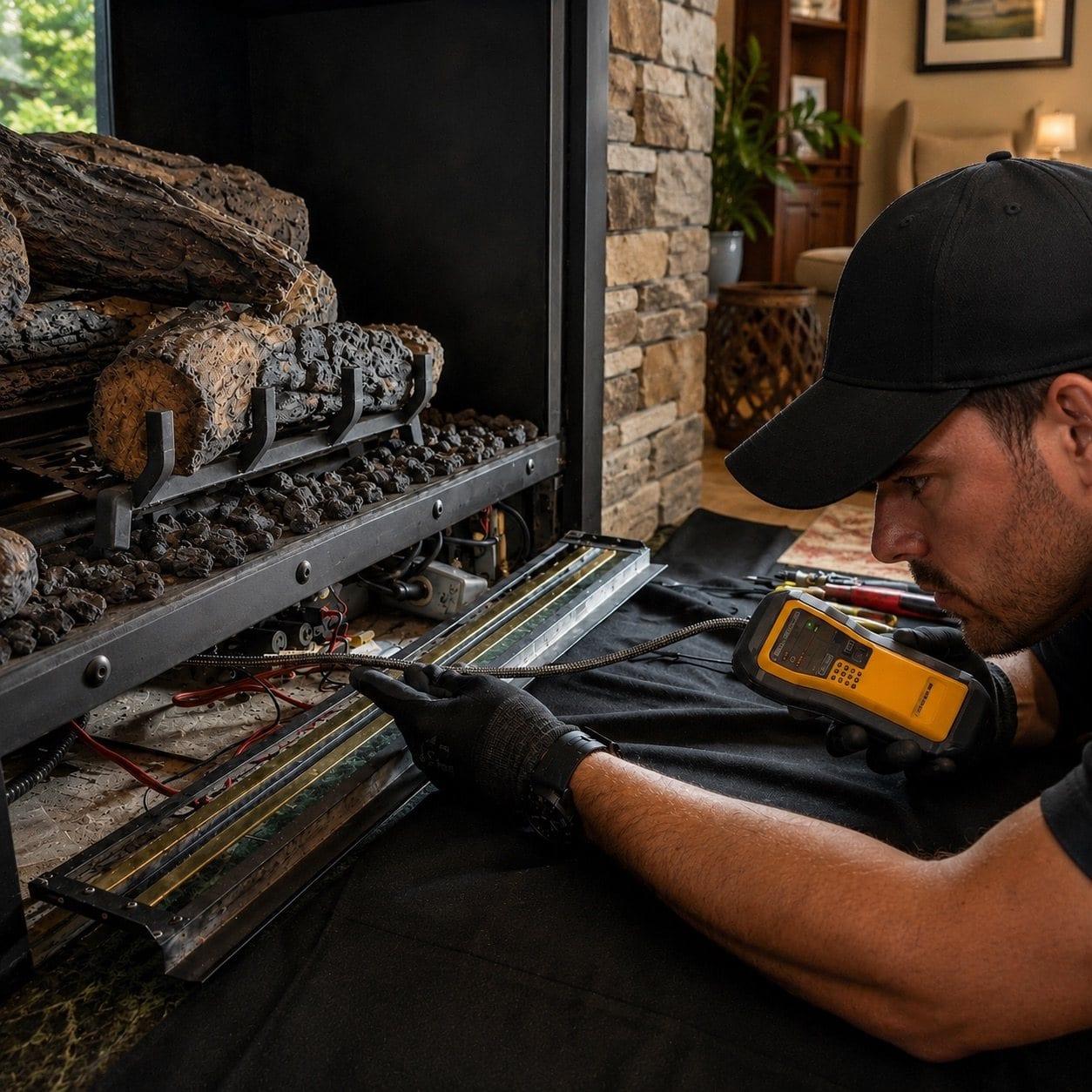
- Log placement, burner ports, air shutter setting and venting are checked while the flame is observed.
04Startup condensation
- What you may notice
- Fog when the fireplace first lights that clears within a few minutes.
- How it’s confirmed
- Usually confirmed by watching a normal startup; it's often harmless unless it leaves residue behind.
05Etched or damaged glass
- What you may notice
- Frosted, cloudy or rainbow-like spots that stay after cleaning; chips or cracks.
- How it’s confirmed
- The glass is inspected under light after cleaning, along with the gasket and frame.
How urgent it is, and when to stop using the fireplace
An even white haze with normal-looking flames is mostly a cosmetic and maintenance issue, but it shouldn't be ignored for long. Deposits left on hot glass season after season can etch into the surface, and etching doesn't clean off.
Turn the fireplace off and leave it off until it's checked if:
You see black soot building up, the flames have turned yellow or tall and wavering, the glass is cracked or chipped, or anyone in the home gets headaches or feels unwell while it runs. If you smell gas, follow the safety steps at the top of this page first.
Soot on the glass can come from the same kinds of burning problems behind a fireplace that smokes into the room, so it's worth having the whole unit looked at rather than just wiping the glass. If the fireplace also has trouble starting, the ignition side may need attention too, which is covered under why a gas fireplace won't light.
What normally fixes it
How cloudy glass is usually handled
Shut down and cool
The fireplace is turned off and allowed to cool fully before the glass panel is touched.
Remove and inspect
The glass is taken out of its frame and checked for film, soot, etching, chips and gasket wear.
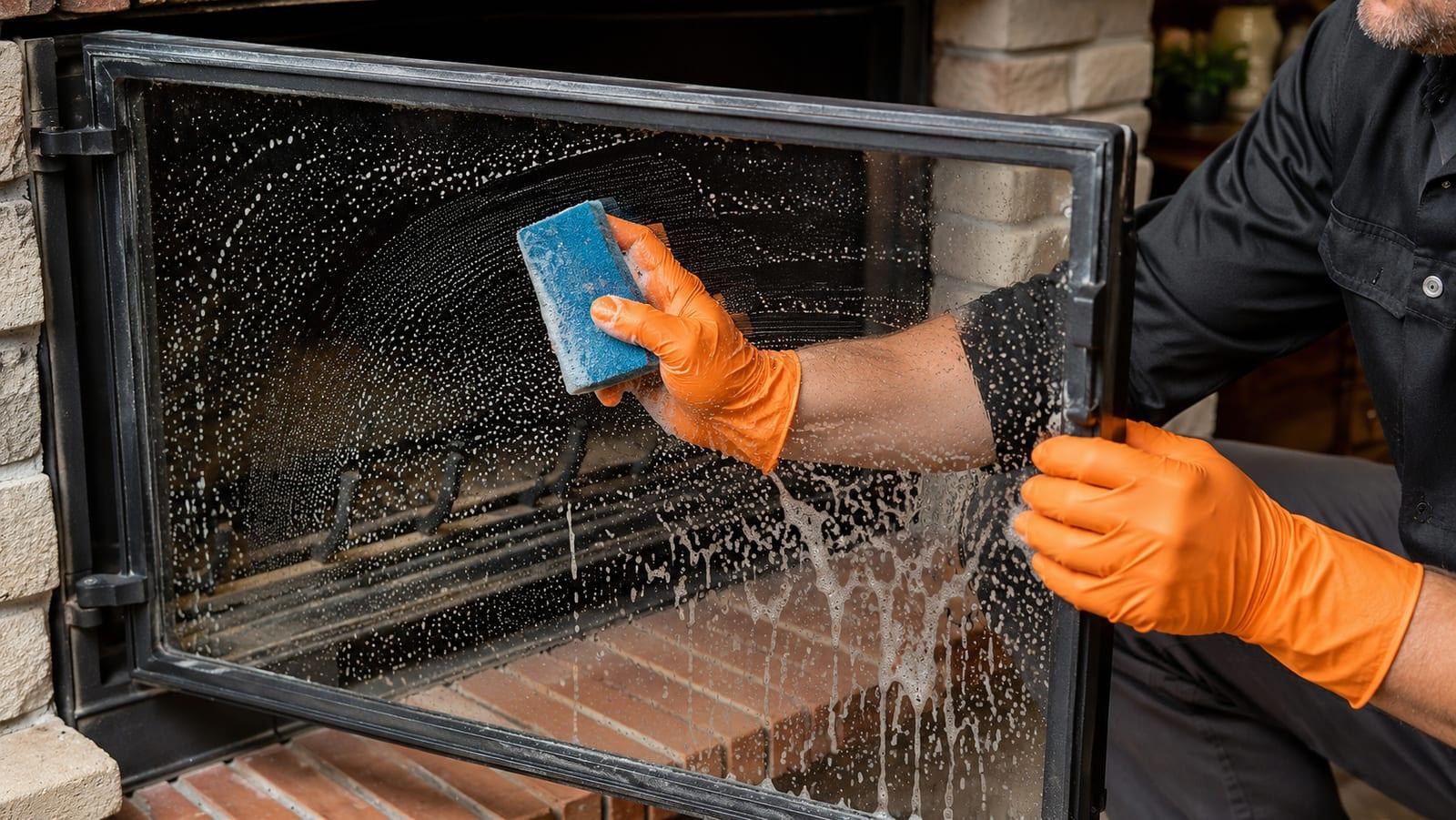
Clean with the right product
The film is removed with a cleaner made for fireplace glass, not a household window spray. Our fireplace glass cleaning service covers this step.
Look at what caused it
If soot was present, the burner, log set, air shutter and venting are checked and adjusted so the film doesn't return right away.
Repair or replace if needed
Glass that is etched, cracked or chipped, or a worn gasket, is handled through fireplace glass replacement and door repair.
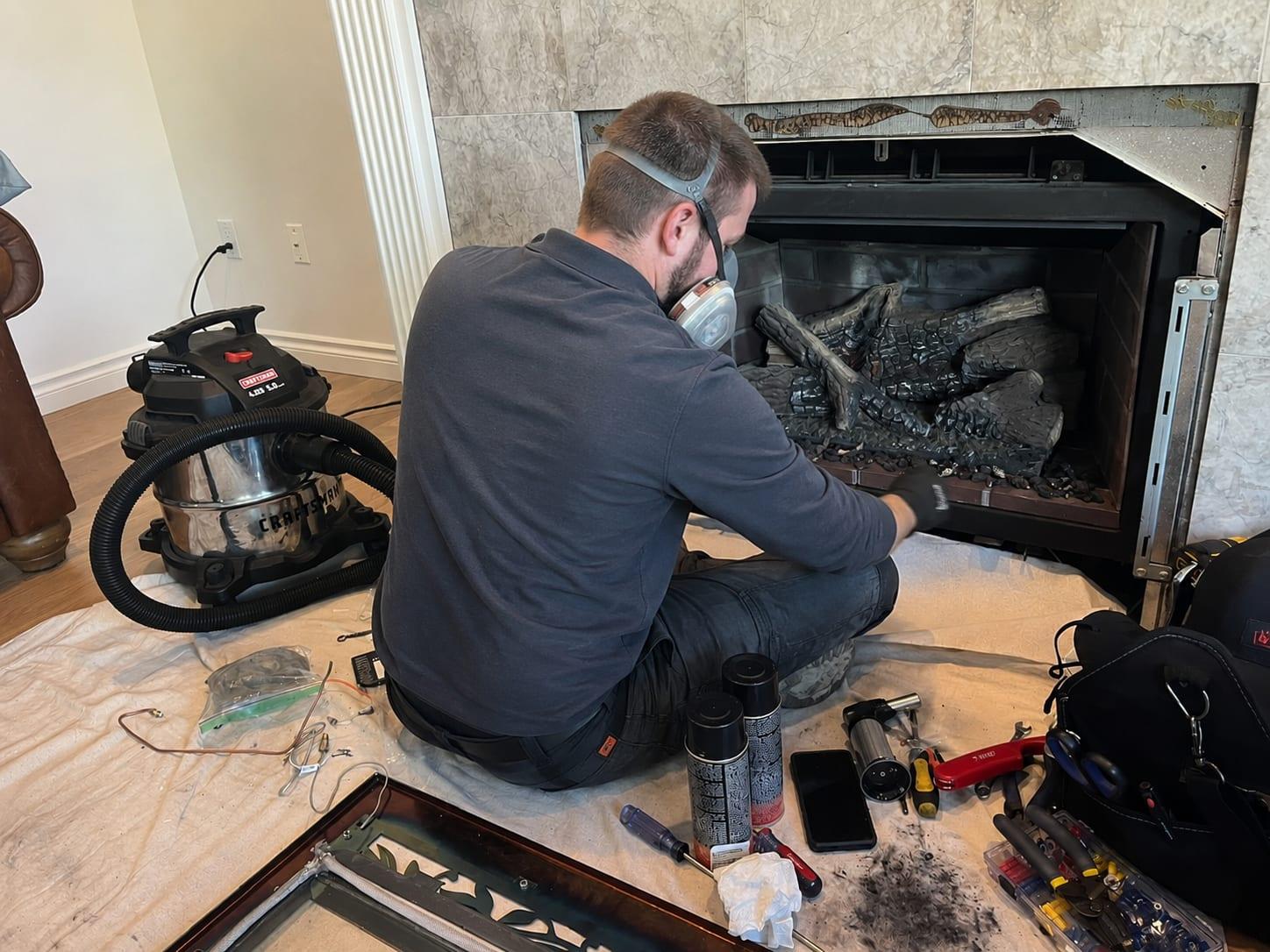
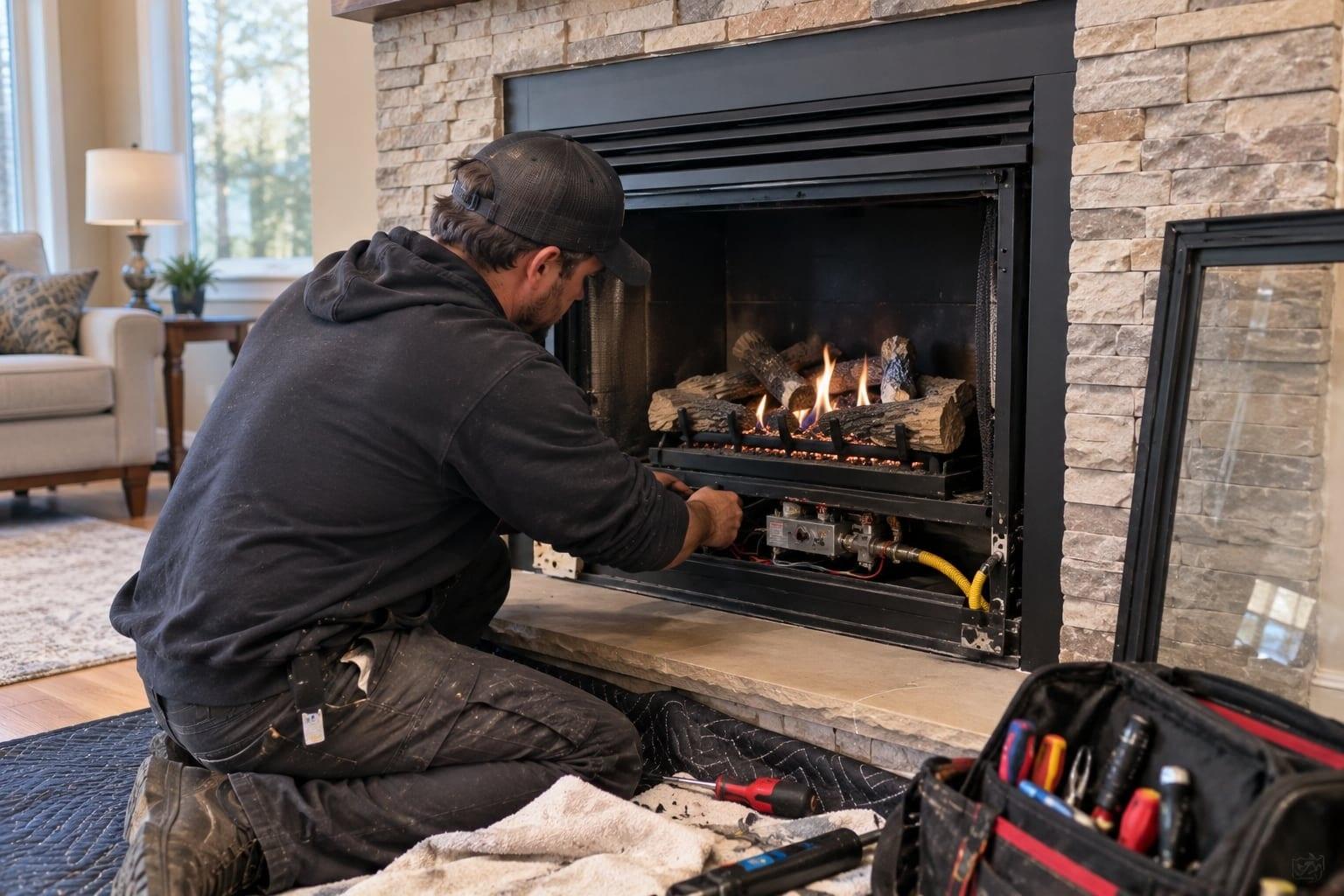
When the cause is the fireplace rather than the glass, the fix falls under gas fireplace repair and maintenance, which includes gas fireplace inspection, burner and log adjustments, and routine service. We work on all major brands. If you want to know what regular upkeep looks like, our guide to when a gas fireplace needs cleaning walks through it.
What not to do
- Don't clean or remove the glass while the fireplace is on, hot or recently used.
- Don't use ammonia-based window cleaners, abrasive pads or razor blades on fireplace glass.
- Don't run the fireplace with cracked, chipped or missing glass.
- Don't move or rearrange the logs to change the flame; log placement affects how cleanly the unit burns.
- Don't keep wiping away black soot without having the cause checked.
Commercial and property-manager work is offered as well, for buildings with several gas fireplaces to keep clear.