What a cracked chimney crown means for your home
The crown is the concrete or mortar slab that caps a masonry chimney. It sits around the flue tile and sheds rain away from the bricks below. When it cracks or starts to crumble, it stops working as a seal. Water soaks into the brick, runs down the inside of the chimney, and can reach the flue liner, the damper, the firebox and the framing around the chimney.
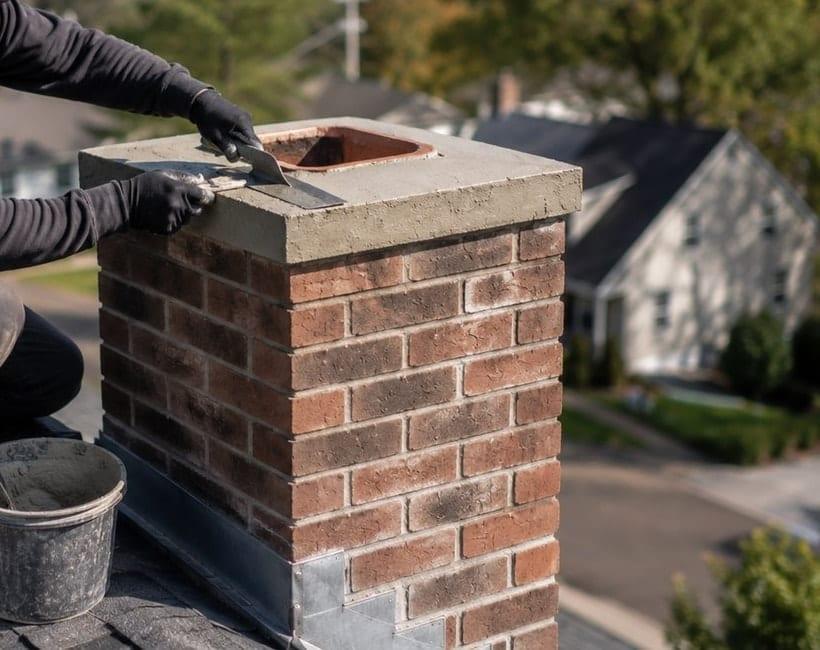
From the ground, a cracked chimney crown is easy to miss. Many homeowners only find out when they see a stain on a ceiling, hear dripping in the fireplace, or find gritty bits of concrete in the firebox.
Common signs of crown damage
Signs worth getting checked
- Visible cracks, gaps or missing pieces on the top of the chimney, often seen from a window or through binoculars
- Small chunks of concrete or gritty debris on the roof, in the gutters or in the firebox
- Water in the firebox, or a damp, musty smell from the fireplace after rain
- Water stains on ceilings or walls next to the chimney
- Rust on the damper, the firebox floor or a fireplace insert
- White, chalky staining (efflorescence) or flaking brick faces near the top of the chimney
- A gap opening up between the crown and the flue tile
Several of these signs overlap with other water problems, such as worn flashing or porous brick. If water is the main thing you're seeing, it helps to read about a chimney that leaks when it rains as well, since a leak can have more than one source.
Possible causes
Crowns crack for a few different reasons, and often more than one is at work. Only an inspection of the actual crown can confirm what happened to yours. These are the possibilities we look for:
- Freeze-thaw damage: water that seeps into small cracks expands when it freezes, widening the cracks a little more each time.
- A crown built with the wrong material: many crowns were made from ordinary bricklaying mortar instead of a proper concrete mix, and mortar wears out faster when exposed on top of a chimney.
- A crown that is too thin or too flat: without enough thickness and slope, water sits on the surface instead of running off.
- No overhang or drip edge: water runs straight down the face of the brick instead of dripping clear of it.
- Shrinkage and age: concrete can develop cracks as it cures, and all crowns weather over time.
- Settling or impact: shifting of the chimney structure, or something striking the top, can break the crown.
How urgent is it, and when to stop using the fireplace
Fine hairline cracks are not an emergency, but they are not cosmetic either. Each rain pushes a little more water into the chimney, so the sooner they are sealed, the more likely a simple repair will do.
Stop using the fireplace or stove until it is inspected if:
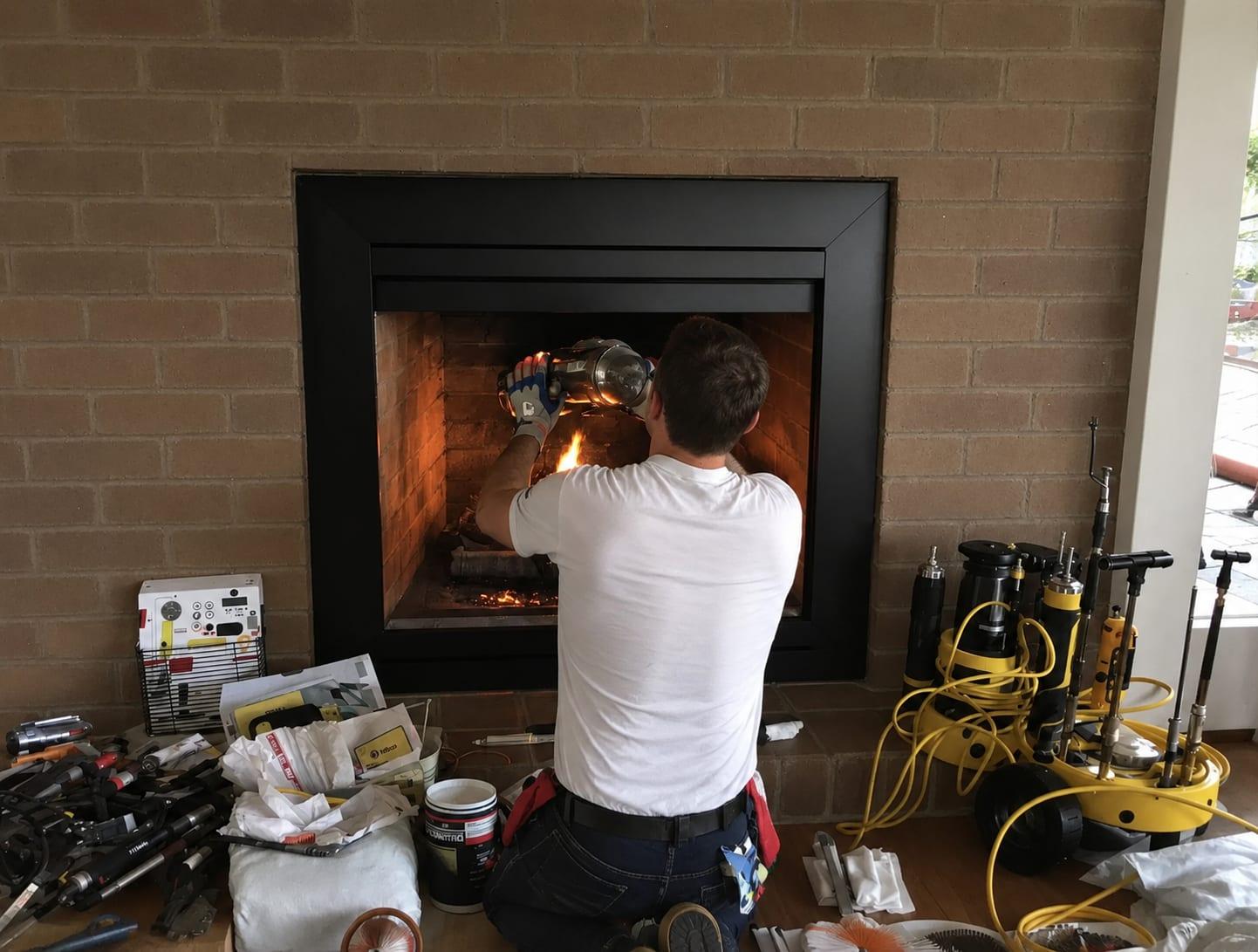
pieces of the crown are loose or falling, concrete debris is showing up in the firebox, the flue tile looks cracked or shifted, or water is getting into the firebox. Falling debris can partly block the flue, and water-damaged flue tile may no longer contain heat and smoke safely.
Emergency calls are accepted, and same-day visits are available where the schedule allows. If you're unsure whether your situation is urgent, get in touch and describe what you're seeing.
What normally fixes a cracked crown
The right repair depends on how far the damage has gone. After inspecting the crown and the flue, we recommend one of these approaches:
Typical repair paths
Seal small cracks
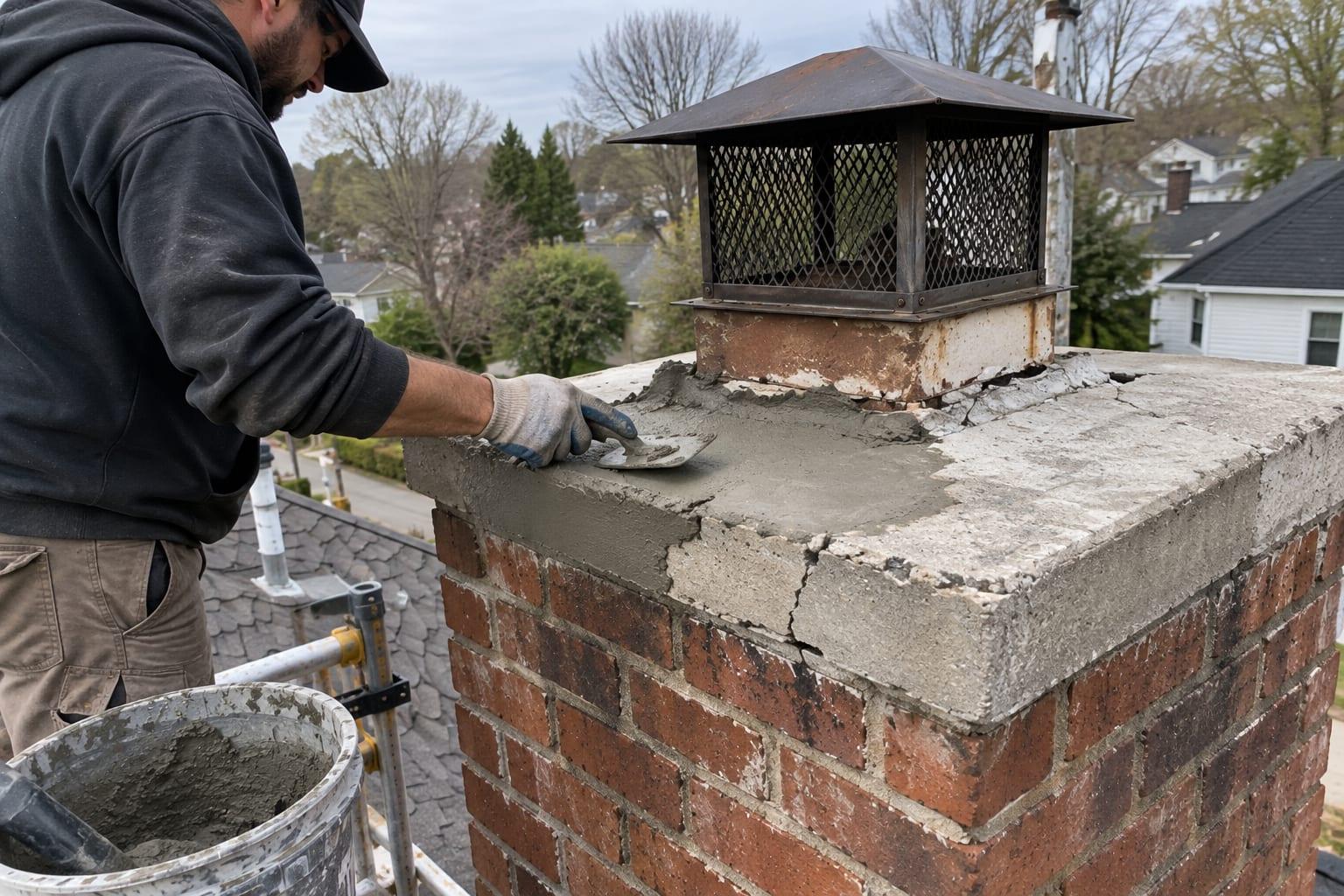
When the crown is sound and the cracks are narrow, they can be cleaned out, filled and coated with a flexible crown sealant that keeps water out and moves with the masonry.
Patch damaged areas
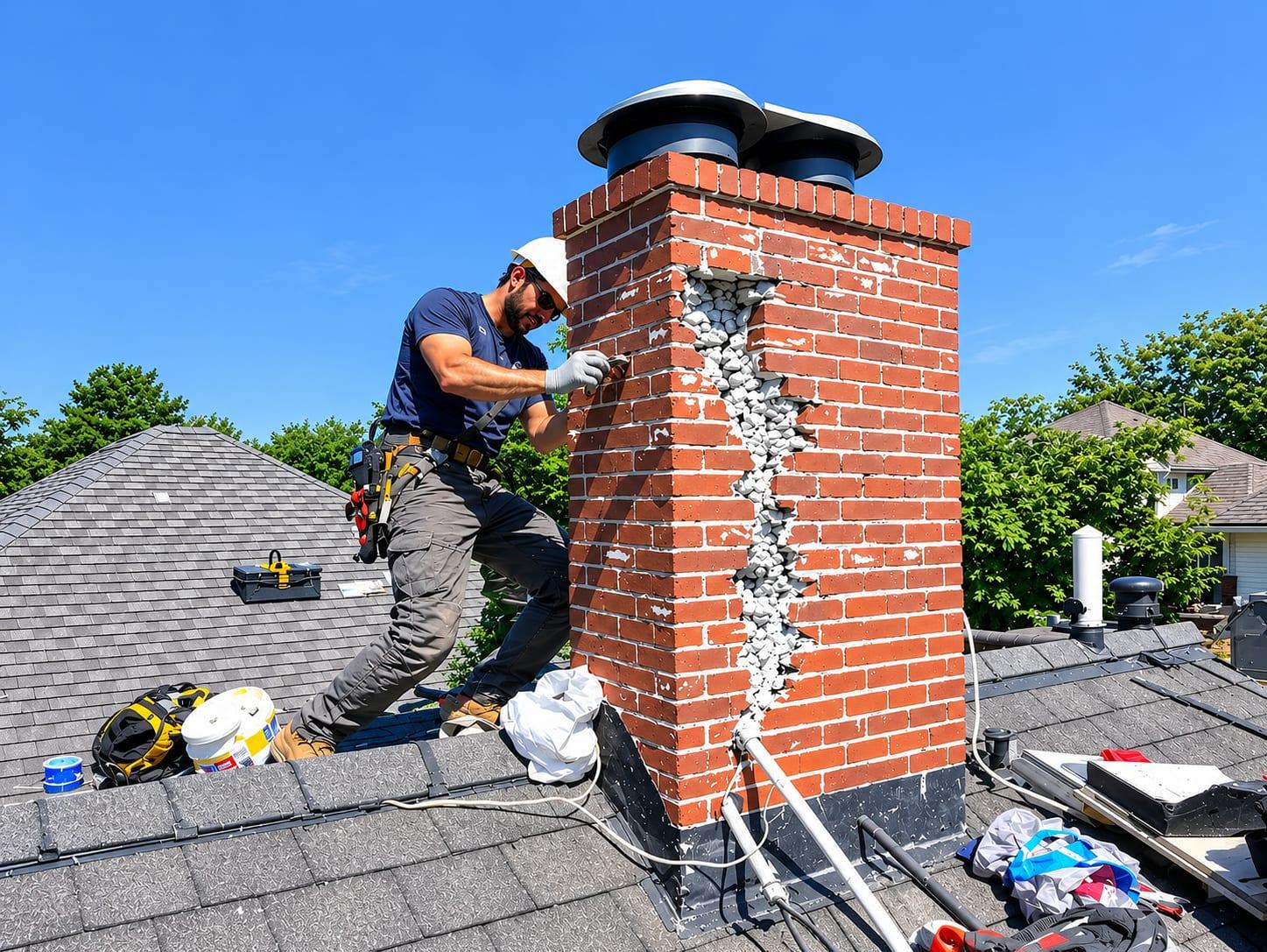
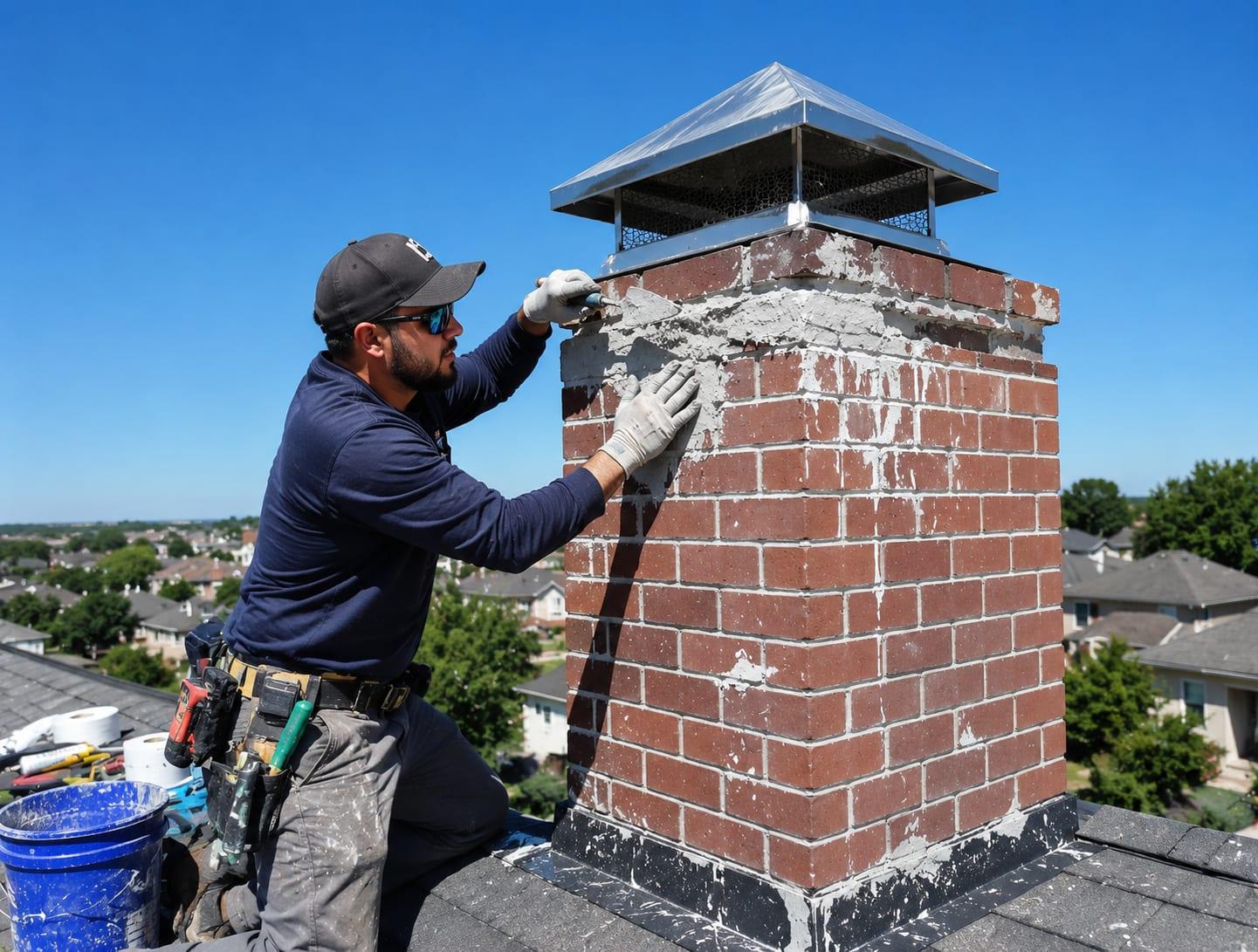
Where sections have broken away but most of the crown is solid, loose material is removed and the damaged areas are rebuilt and sealed.
Rebuild the crown
When the crown is badly crumbled, too thin or made from mortar, it is removed and replaced with a properly sloped concrete crown with an overhang and a gap around the flue tile so it can handle heat movement.
Our chimney crown repair service covers all of these, from sealing to a full rebuild. If water has already damaged the brick, mortar joints or flashing below the crown, that work falls under masonry and general chimney repair, and we can handle both in the same visit when it makes sense.
Once the crown is repaired, a chimney cap and chimney waterproofing can help keep rain out of the flue and the brick. Our guide to what chimney caps and dampers actually do explains how they fit together. If the inspection shows water has damaged the flue tile, it's worth understanding why a sound flue liner matters before deciding on next steps.
What not to do
- Don't climb onto the roof to look if you aren't comfortable and properly equipped; binoculars from the ground or a window will show a lot.
- Don't smear roofing tar or household caulk over the cracks. It tends to trap moisture, peels away, and makes a proper repair harder later.
- Don't keep burning fires if pieces of the crown are falling or debris is landing in the firebox.
- Don't pressure-wash the top of the chimney, which can force water deeper into the cracks and masonry.
Related problems
A broken crown sometimes comes with a loose or missing chimney cap, which can leave an opening at the top of the flue.