When one cycle isn't enough anymore
A dryer works by heating air, pushing it through the clothes, and sending that warm, damp air outside through the vent. If the air can't leave fast enough, moisture stays in the drum, and the clothes come out warm but still wet. Many homeowners respond by adding time or running a second cycle. That gets the laundry done, but the underlying restriction stays in place and often gets worse.
The important point is that a slow dryer is a symptom, not a diagnosis. Sometimes the vent is the cause and sometimes the dryer is. Telling them apart is the first step.
Common signs that point to a vent problem
Signs to look for
- Clothes are still damp after a cycle that used to dry them fully
- Loads regularly need extra time or a second cycle
- The top or sides of the dryer feel much hotter than usual
- The laundry room gets unusually warm or humid during a load
- A hot or burning smell while the dryer runs
- Lint collecting around the dryer door, behind the dryer, or on the floor nearby
- The flap on the outside vent hood barely opens, or doesn't open at all, while the dryer is running
- Lint packed around the outside vent opening
- The dryer shuts itself off partway through a cycle
Possible causes
These are the usual suspects when a dryer heats but dries slowly. Any of them can produce the same symptoms, so an inspection is what confirms which one, or which combination, is actually behind it.
- Dryer vent lint buildup. The lint screen catches most lint, not all of it. Over time the rest coats the inside of the duct and narrows it, and a heavily used dryer builds lint faster.
- A blocked dryer vent at the exterior hood. A flap stuck shut, a screen that traps lint, or debris packed into the opening can choke off airflow at the very end of the run.
- Nests or animals. Birds and small animals sometimes build in exterior or roof dryer vents.
- A crushed or kinked transition duct. The short flexible section behind the dryer can get flattened when the dryer is pushed back against the wall.
- A disconnected or damaged duct. A section that has come apart can dump hot, damp air and lint into a wall, crawlspace or attic instead of outside.
- A long or complicated vent route. Long runs and many bends slow airflow and give lint more places to settle, so they clog sooner.
- A clogged roof vent. Vents that exit through the roof are harder to reach and are often overlooked.
Vent or appliance? How to tell the difference
A dryer that heats but takes a long time to dry usually points to restricted airflow in the vent. A dryer that produces no heat at all, or one that has dried poorly ever since it was installed, points to the appliance itself or the way it was installed. Vent cleaning doesn't fix every slow dryer, and when the vent turns out to be clear, the dryer is the next thing to look at.
| Feature | Points to the vent | Points to the dryer or its installation |
|---|---|---|
| Heat | Dryer gets hot, sometimes hotter than normal | Little or no heat during the cycle |
| When it started | Drying times got longer gradually | Poor drying since the day it was installed |
| Outside vent | Weak airflow or a flap that barely opens | Strong airflow at the outside hood |
| Other clues | Lint around the dryer, humid laundry room | Strange noises, drum not turning, error codes |
Heat
- Points to the vent
- Dryer gets hot, sometimes hotter than normal
- Points to the dryer or its installation
- Little or no heat during the cycle
When it started
- Points to the vent
- Drying times got longer gradually
- Points to the dryer or its installation
- Poor drying since the day it was installed
Outside vent
- Points to the vent
- Weak airflow or a flap that barely opens
- Points to the dryer or its installation
- Strong airflow at the outside hood
Other clues
- Points to the vent
- Lint around the dryer, humid laundry room
- Points to the dryer or its installation
- Strange noises, drum not turning, error codes
Stop using a dryer that overheats
If the dryer is hot to the touch, you smell burning, or it shuts off mid-cycle, stop using it and unplug it (for a gas dryer, also turn off its gas supply valve if you can reach it safely). Don't run it again until the vent has been checked.
How urgent is it?
Treat it as more than an inconvenience. Lint is highly flammable, and a restricted vent traps heat inside the dryer and duct. A slow dryer with no other warning signs should be checked soon, not someday. A dryer that is overheating, smells hot, or keeps shutting off should not be used until the vent has been looked at.
Emergency calls are accepted. Same-day visits are available where the schedule allows (never guaranteed), so getting in touch early in the day gives the best chance of a quick visit.
What normally fixes it
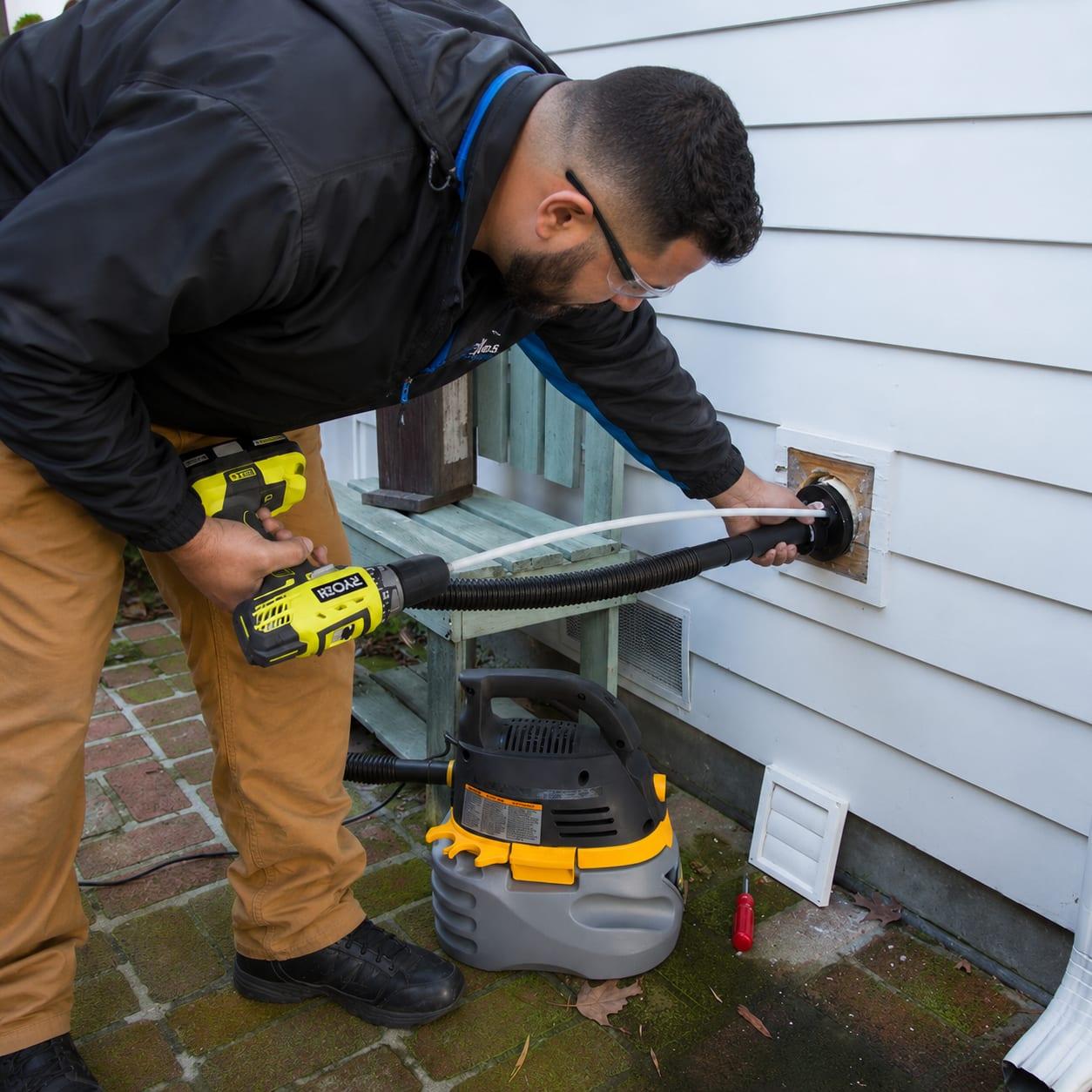
When the vent is the cause, the usual fix is a full dryer vent cleaning: clearing lint and debris from the entire duct run, from the back of the dryer to the outside hood. When the problem is physical damage, such as a crushed transition duct, a disconnected section, a broken exterior hood, or a route that is too long to stay clear, the fix is dryer vent repair or replacing the problem section.
What a typical visit looks like
Check the symptoms and the route
Where the vent runs, where it exits, and how the dryer has been behaving.
Inspect and test airflow
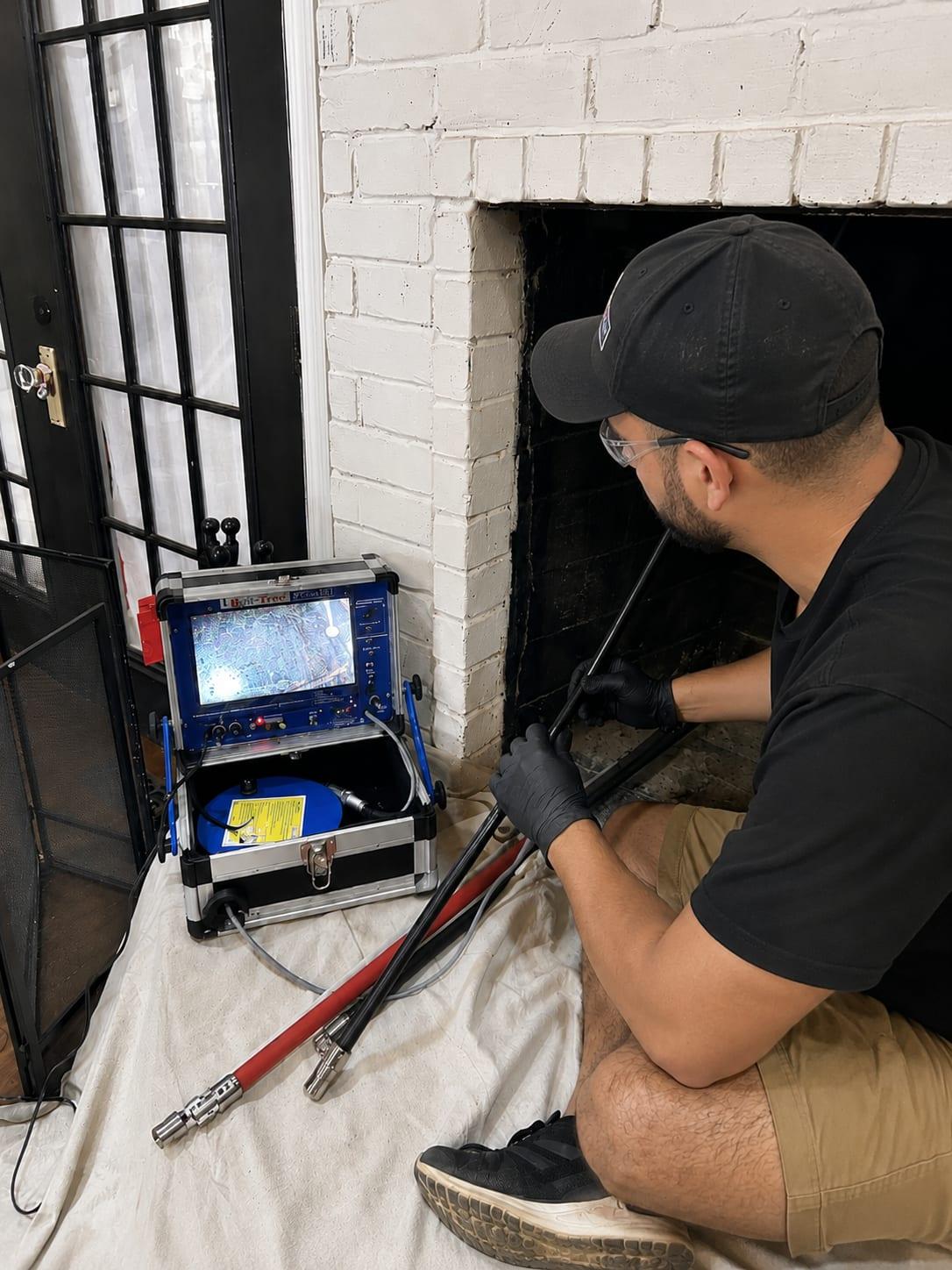
Looking at the transition duct, connections and exterior hood, and checking how well air moves through the vent.
Clean the full run
Removing lint, nests and debris from the duct and the exit point, including roof vents where present.
Point out damage
If a section is crushed, disconnected or poorly routed, you'll hear what was found and what repair would address it, with a free estimate.
Confirm airflow
Checking that air moves freely at the outside hood once the work is done.
If you'd like to know more before you call, read how dryer vent cleaning works step by step.
What not to do
- Don't keep running extra cycles to make up for a slow dryer; that adds hours of heat to a restricted vent.
- Don't ignore a burning smell or a dryer that shuts itself off.
- Don't push the dryer tight against the wall, which can flatten the duct behind it.
- Don't put a fine screen over the outside vent opening; it catches lint and can block the exit.
- Don't leave a disconnected duct venting into a wall, attic or crawlspace.
- Don't climb onto the roof to reach a roof vent; leave that to someone with the right equipment.
For habits that help keep the vent clear between cleanings, our dryer vent safety tips cover the basics, such as cleaning the lint screen every load.
Related services
- Dryer vent inspection and airflow testing, to confirm whether the vent is the cause
- Dryer vent blockage and lint removal, including roof dryer vent cleaning
- Dryer vent cover replacement for stuck or broken exterior hoods
- Dryer vent rerouting and relocation when the existing route clogs too easily, part of our dryer vent repair service
- Dryer vent cleaning for rentals and property managers
Free estimates.
Request an estimate if your dryer takes too long to dry. Commercial and property-manager work is offered as well as single homes.