When the damper handle won't move
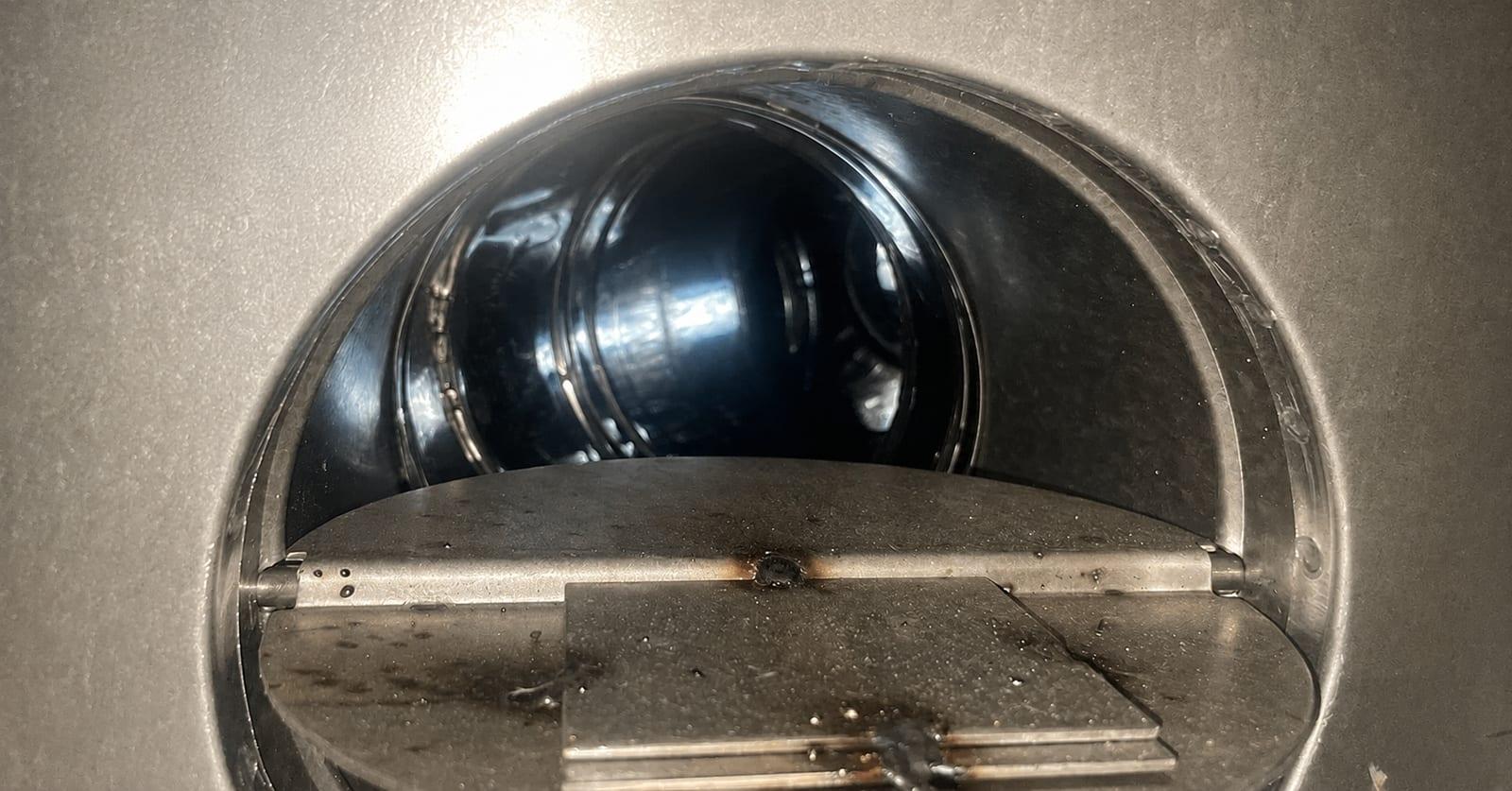
The damper is the metal plate that opens the flue when you burn a fire and closes it when you don't. When it sticks, the handle, lever or chain stops working. It may be locked tight, move only partway or swing freely while the plate itself stays put. A stuck chimney damper usually shows up at one of two moments. One is the first cold evening of the season, when the damper won't open. The other is the end of the season, when it won't close.
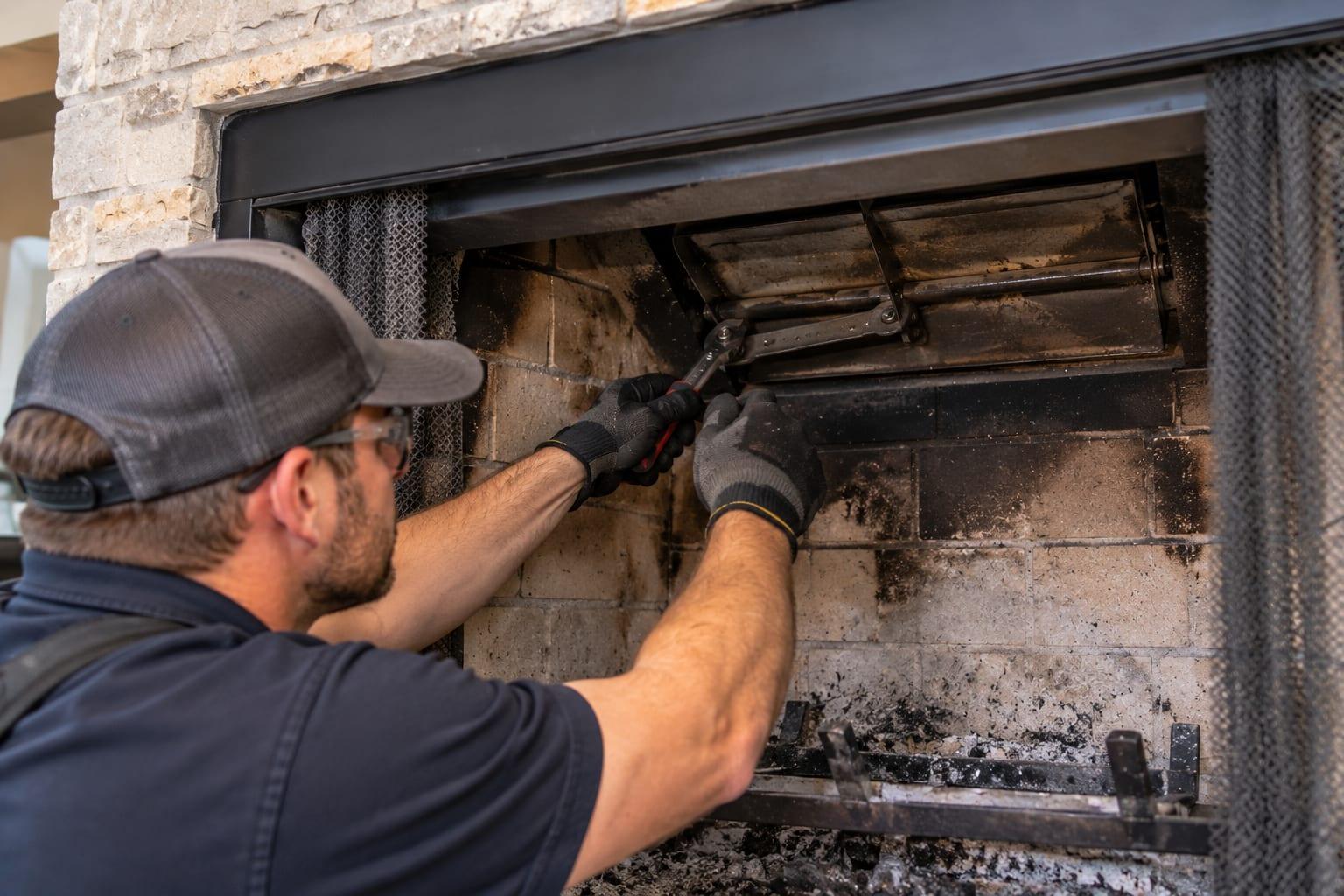
Which way it's stuck matters. A damper stuck closed or partly closed makes the fireplace unsafe to use. A damper stuck open is mostly a comfort and energy problem until it can be repaired.
Common signs of a stuck damper
What homeowners usually notice
- The handle or lever won't move, or takes far more force than it used to
- The handle moves, but the plate doesn't move with it (you can see this with a flashlight looking up past the firebox)
- Smoke rolls into the room soon after lighting a fire
- Cold drafts, a whistling sound or a sooty or musty smell come from the fireplace when it's not in use
- Grinding, scraping or a metal-on-metal catch when you work the handle
- On a top-mounted damper, the pull cable is slack, frayed or won't hold the damper shut
- Rust flakes or debris drop into the firebox when you try to move the damper
Smoke coming into the room can have other causes besides the damper. If the damper turns out to be working, read about why a fireplace smokes into the room.
Possible causes
Several things can lock up a damper, and more than one can be at work at once. An inspection confirms which one it is. The list below shows what a technician looks for, not a diagnosis.
What can make a chimney damper stick
01Rust and corrosion
- What you may notice
- Stiff handle, orange flakes in the firebox, a damper that got harder to move over time
- How it’s confirmed
- Visual check of the plate, pivot points and frame for rust and pitting, and whether water is getting into the flue from above
02Creosote and soot buildup
- What you may notice
- Black, crusty or tar-like deposits around the damper edges; the plate binds partway
- How it’s confirmed
- Inspection of the damper area and smoke chamber for buildup that glues the plate to its frame
03Warped or bent damper plate
- What you may notice
- Damper moves but won't seat flat or close fully; gaps around the edges
- How it’s confirmed
- Checking how the plate sits in the frame when closed and whether heat has distorted it
04Broken handle, linkage or cable
- What you may notice
- Handle spins or flops with no resistance; a top-damper cable is snapped or slipped
- How it’s confirmed
- Following the control from the handle to the plate to find the broken or disconnected part
05Debris or a nest on the damper
- What you may notice
- Damper opens only a little and stops against something; twigs, leaves or droppings in the firebox
- How it’s confirmed
- Looking above the damper for nesting material, fallen masonry or other debris resting on the plate
06Damage to the surrounding masonry
- What you may notice
- Cracked or shifted firebox or smoke chamber, a damper frame that looks out of line
- How it’s confirmed
- Inspection of the firebox and smoke chamber the damper is set into
When the frame itself has shifted, the damper may only be part of the issue. A cracked smoke chamber or worn firebox can be what's pulling it out of line.
How urgent is it, and when to stop using the fireplace
Stuck closed or partly closed: don't light a fire
With the flue blocked, smoke and combustion gases such as carbon monoxide have nowhere to go but into the house. Don't burn wood and don't run gas logs until the damper is opened and working. Stop adding fuel, open a window and don't relight the fire until the chimney has been checked. If the smoke is heavy, an alarm sounds or you suspect a chimney fire, get everyone outside and call 911.
Stuck open: plan a repair, but it's less urgent
An open damper doesn't block the smoke path, so the immediate danger is lower. You will lose heated and cooled air up the chimney, feel drafts and possibly let in rain, odors or animals if the top of the chimney isn't capped. If you aren't sure how far open the damper really is, treat it as partly closed and don't burn a fire.
Can't tell which way it's stuck? Shine a flashlight up past the firebox opening with the fireplace cold. You should see the plate standing open with sky or dark flue above it, or lying flat and blocking the opening. If you still can't tell, leave the fireplace unused until it's checked.
What not to do
- Don't hammer, pry or force the handle. That can snap the linkage, bend the plate or crack the masonry around the frame.
- Don't climb onto the roof to free a top-mounted damper yourself.
- Don't light a small fire to see whether it will draw. A partly closed damper can still push smoke and gases into the room.
- Don't spray household lubricants into a fireplace. Many aren't made for the heat and can burn or smoke the next time you light a fire. Only try this once the flue has been checked clear of blockages and creosote; if smoke comes into the room, stop adding fuel and don't relight.
- Don't ignore a damper that keeps getting stiffer. Moisture or buildup is usually behind it, and those don't go away on their own.
What usually fixes a stuck chimney damper
The fix depends on what the inspection finds. Here is the general order from smallest job to largest:
Typical repair path
Inspect the damper and flue
Check the plate, frame, handle or cable and the area above the damper. This confirms the cause and shows whether the chimney is safe to use.
Clean and free the damper
Remove creosote, soot, rust scale or debris holding the plate, then work the pivot points until the damper moves through its full range.
Repair or replace the controls
Replace a broken handle, rod, linkage or top-damper cable so the control actually moves the plate again.
Replace the damper if it can't be saved
A warped, rusted-through or badly damaged damper is usually replaced rather than patched, so it opens fully and seals properly when closed.
Fix what caused it
If water got in and rusted the damper, the source needs attention too. Otherwise the new parts will rust the same way.
Most of this falls under chimney damper repair. If the inspection shows the firebox or the masonry around the damper has failed, the work becomes broader fireplace repair.
Related work that sometimes goes with it
- Creosote removal and a full chimney sweep, when buildup is what's binding the damper
- Chimney cap installation or replacement, when rain or animals are getting in from the top
- Chimney waterproofing, chimney crown repair or chimney flashing repair, when water is reaching the damper and rusting it
- Chimney animal and nest removal, when nesting material is sitting on the damper
- Gas fireplace service, when the stuck damper serves a gas log set
Get the damper checked
Same-day visits are available where the schedule allows (never guaranteed), and emergency calls are accepted. Call or request an estimate to have the damper looked at.