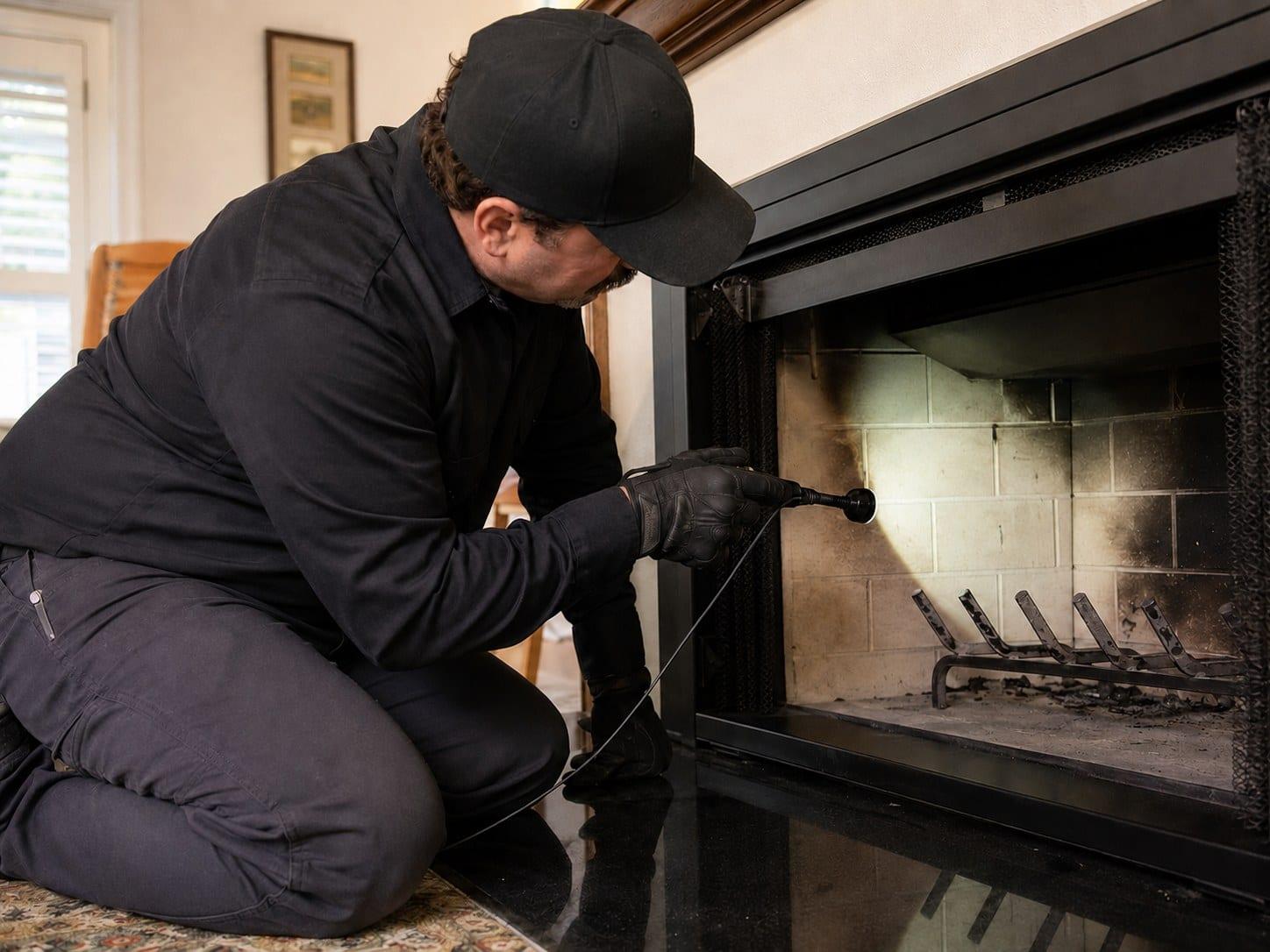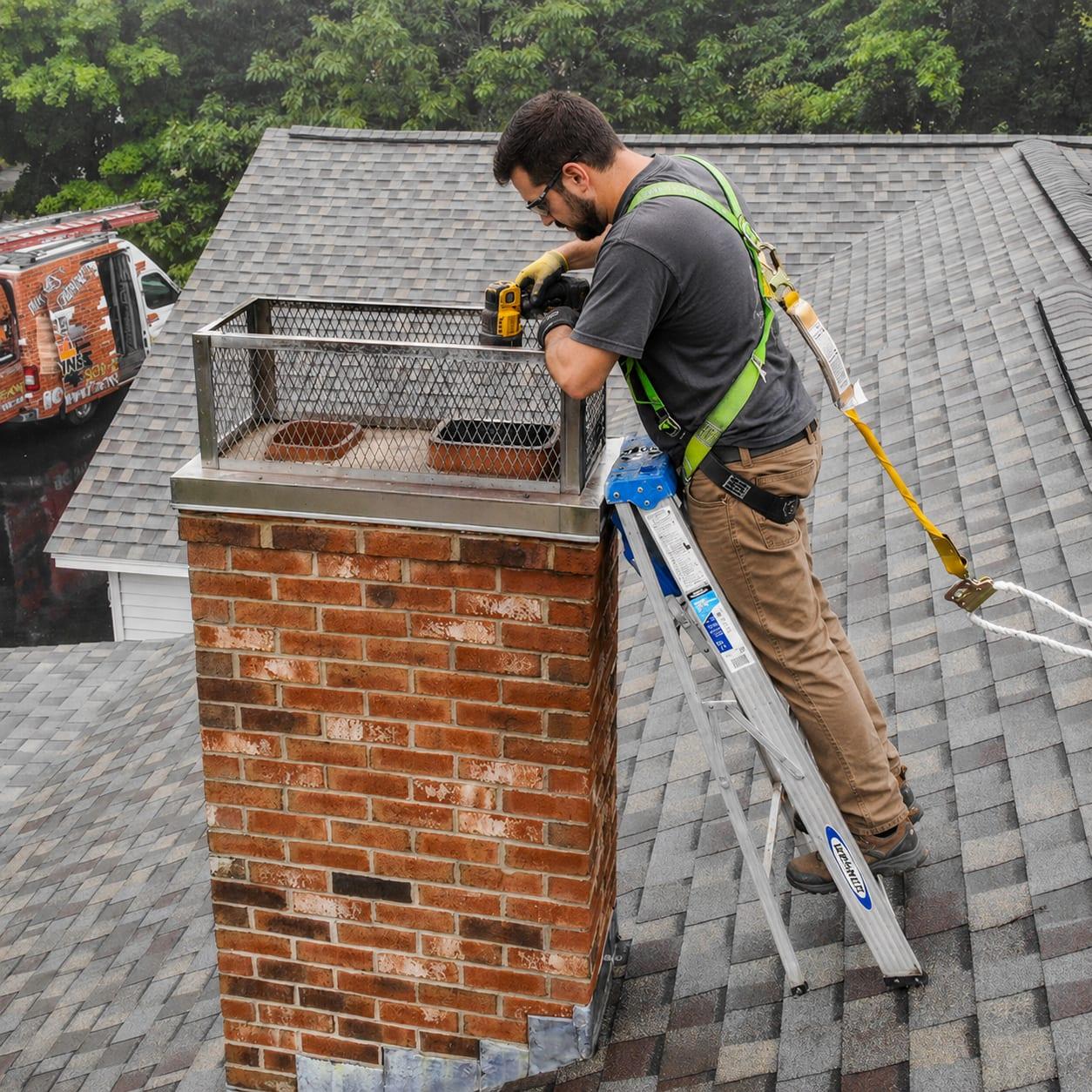
We handle chimney inspection for homes in Austell. This page covers two parts of the visit: how close the fireplace and chimney sit to wood and other materials that can burn, and the condition of the cap and screen up top. It also covers what an inspection involves after storm or quake damage. If you want a clear answer before you light a fire, request a free estimate.
Checking clearances to combustibles
Clearance is the gap between the hot parts of a fireplace, stove or chimney and anything that can burn, such as a wood mantel, trim, flooring, wall framing or attic joists. During the inspection we look at how close the mantel and side trim sit to the firebox opening. We check whether the hearth extends far enough in front to catch sparks and rolling embers. Where we can reach the attic or basement, we also check the framing around the chimney. For a prefab fireplace or a stove, we compare the setup against the unit's own listing. Where something can't be seen directly, a chimney camera inspection can help.
The result helps you decide three things. You'll know whether the fireplace can be used as is, whether a mantel or trim piece needs to change, and whether a planned insert or stove will fit the space safely.
Looking at the chimney cap and screen
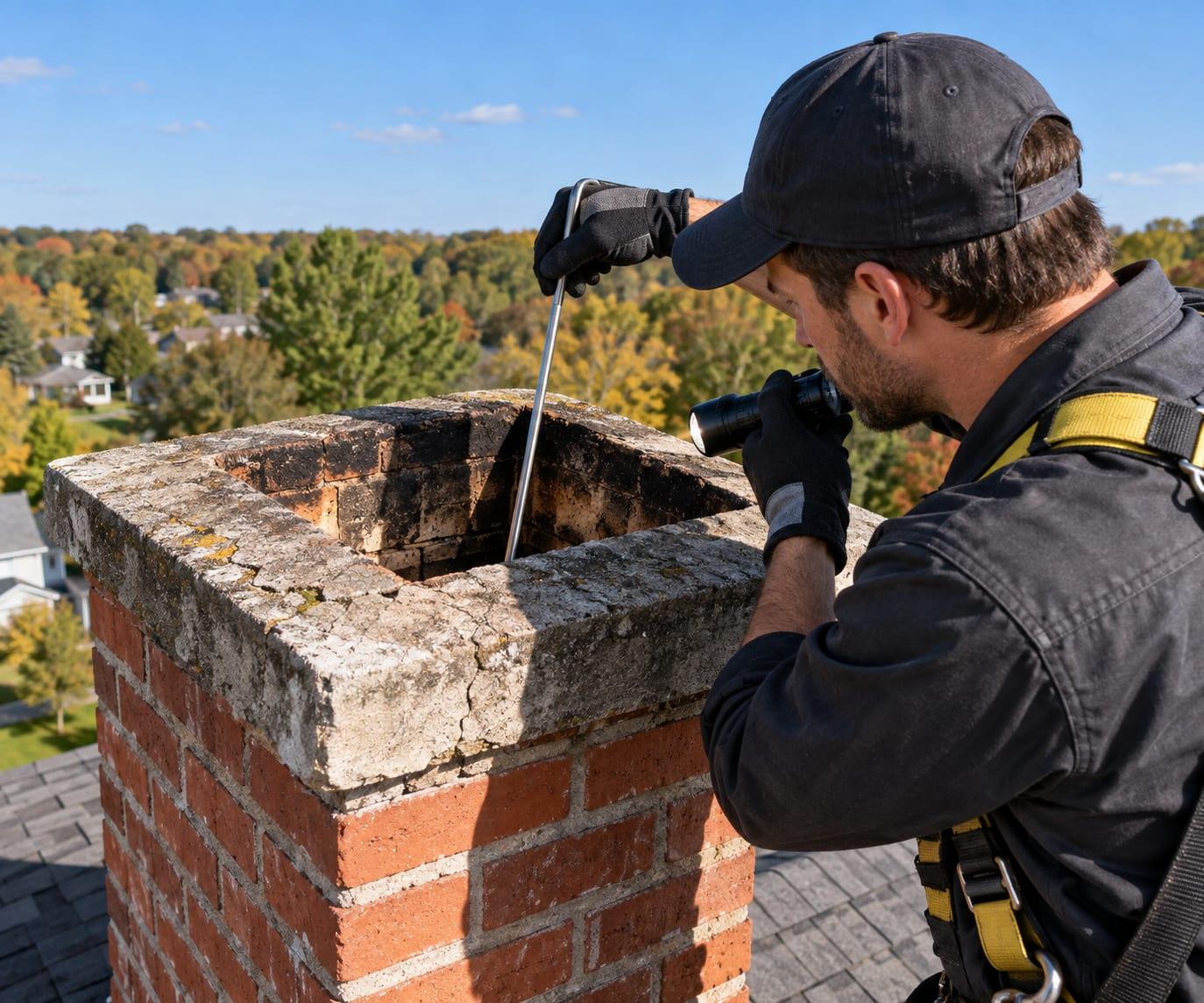
At the top of the chimney, we check whether there is a cap and whether it is fastened firmly. We look at whether the mesh screen is intact or has rusted through, bent or come loose. We also check whether the screen is clogged with soot or creosote, which can choke the draft and push smoke back into the room. We look for signs that birds or animals have gotten past it, such as nesting material, droppings or debris on the smoke shelf. If the cap covers more than one flue, each opening gets the same check.
From there, you can decide whether the cap only needs cleaning, should be replaced, or whether a capless chimney should get one before the next season.
Older houses in Austell
About 15% of the housing units in Austell were built before 1960, and about 5% in 1939 or earlier, according to the U.S. Census Bureau's American Community Survey 2019–2023 5-year estimates (table B25034, Year Structure Built). If your home is one of those older houses, the chimney may have been changed or patched over the decades. That makes the gap between the original firebox and its woodwork, and the state of the cap, worth a close look. Newer homes get the same checks, especially where a prefab unit sits inside a framed chase.
After a storm or an earthquake
A storm or a quake can damage a chimney in ways you can't see from the yard. An inspection after one can involve several checks:
- Looking for a cap that was knocked loose or blown off
- Checking the crown and bricks for cracks, and the chimney for any lean
- Finding flashing pulled away where the chimney meets the roof
- Clearing limbs or debris that have fallen into the flue
- Using a camera to check for cracked flue tiles that can't be seen from the top or the firebox
Until the chimney has been checked, it's safer to leave the fireplace unused. The findings also give you a written record of what was damaged.
When a different job fits better
- Chimney odor removal is the right job when the inspection finds nothing structural wrong, but a smoky or musty smell keeps coming into the room.
- A chimney sweep fits when the main finding is buildup in the flue or a screen clogged with soot. You can also book a chimney sweep for homes in Austell directly.
Nearby areas
We also offer chimney inspection in Smyrna, Marietta and Kennesaw.
For the full overview of inspection types, the visit and what gets checked, see how chimney inspection works.
Booking an inspection in Austell
We work on gas fireplaces and gas appliances as well as wood-burning ones, and we work on all major brands. Landlords and property managers can book commercial and rental work too.
Sources (1)
The sources of the Austell facts on this page.
- 1U.S. Census Bureau, American Community Survey 2019–2023 5-year estimates, table B25034 (Year Structure Built)