On this page
What chimney odor removal is and what it involves
Chimney odor removal isn't a spray or a deodorizer. It means finding what's producing the smell, removing it, and dealing with the reason the smell reaches the room. Almost every chimney smell comes from one of three sources: creosote and soot left by past fires, moisture soaking into masonry and debris, or organic material such as leaves, nests or an animal.
| What you notice | Likely source | What removes it |
|---|---|---|
| Campfire or ashtray smell, worse on humid days | Creosote and soot deposits in the flue and smoke chamber | A thorough chimney sweep and creosote removal |
| Musty, damp-basement smell after rain | Water in the masonry, wet leaves or soaked ash | Clearing debris, drying the flue and stopping the water |
| Sour or rotten smell, sometimes with flies | A nest, droppings or a dead animal | Animal and nest removal, then cleaning |
| Smoke smell plus poor draft | Debris or a nest blocking the flue | Chimney blockage removal |
When homeowners need chimney odor removal
- The smell is strongest in warm, humid weather, even though you haven't had a fire in months.
- It gets worse when the kitchen or bathroom fan runs, or when the house is shut tight with the AC on.
- A damp, musty smell shows up after heavy rain.
- You heard scratching or chirping in the chimney, and a bad smell followed.
- Dark streaks or stains run down the firebox walls.
- The fireplace was cleaned, but a smell still lingers.
The fan detail matters. A tightly sealed house can pull outside air down the flue to replace what fans exhaust, carrying chimney smells straight into the room. A damper that doesn't seal makes this much worse.
What the visit involves, step by step
How the source gets found and removed
Ask when the smell shows up
Weather, rain, fan use and recent sounds all narrow down the cause before anything is opened.
Look through the system
We check the firebox, damper, smoke shelf, smoke chamber and flue, using a camera where the flue can't be seen directly.
Free estimate
You hear what's causing the smell and what it will take to remove it before work begins.
Remove the source
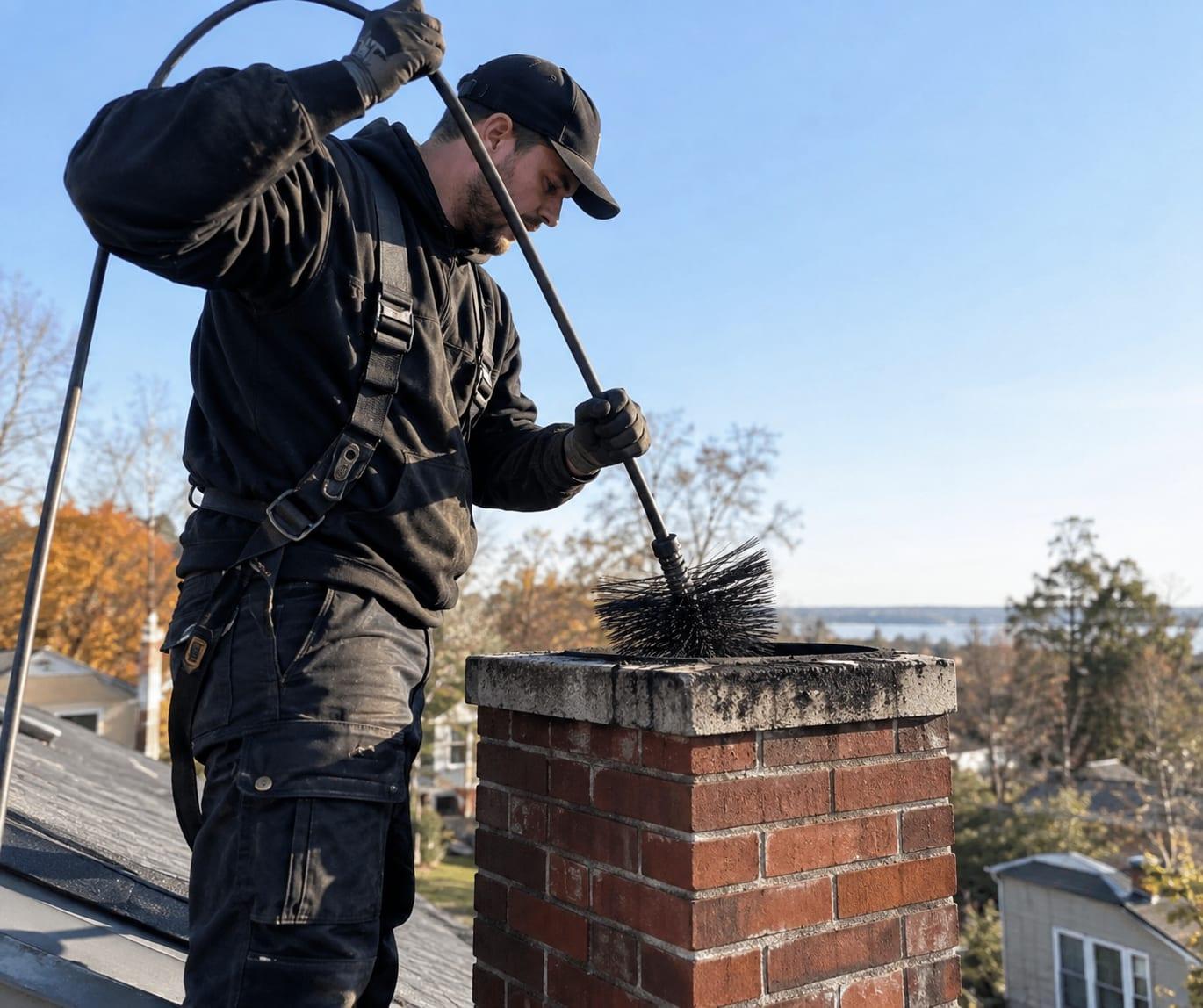
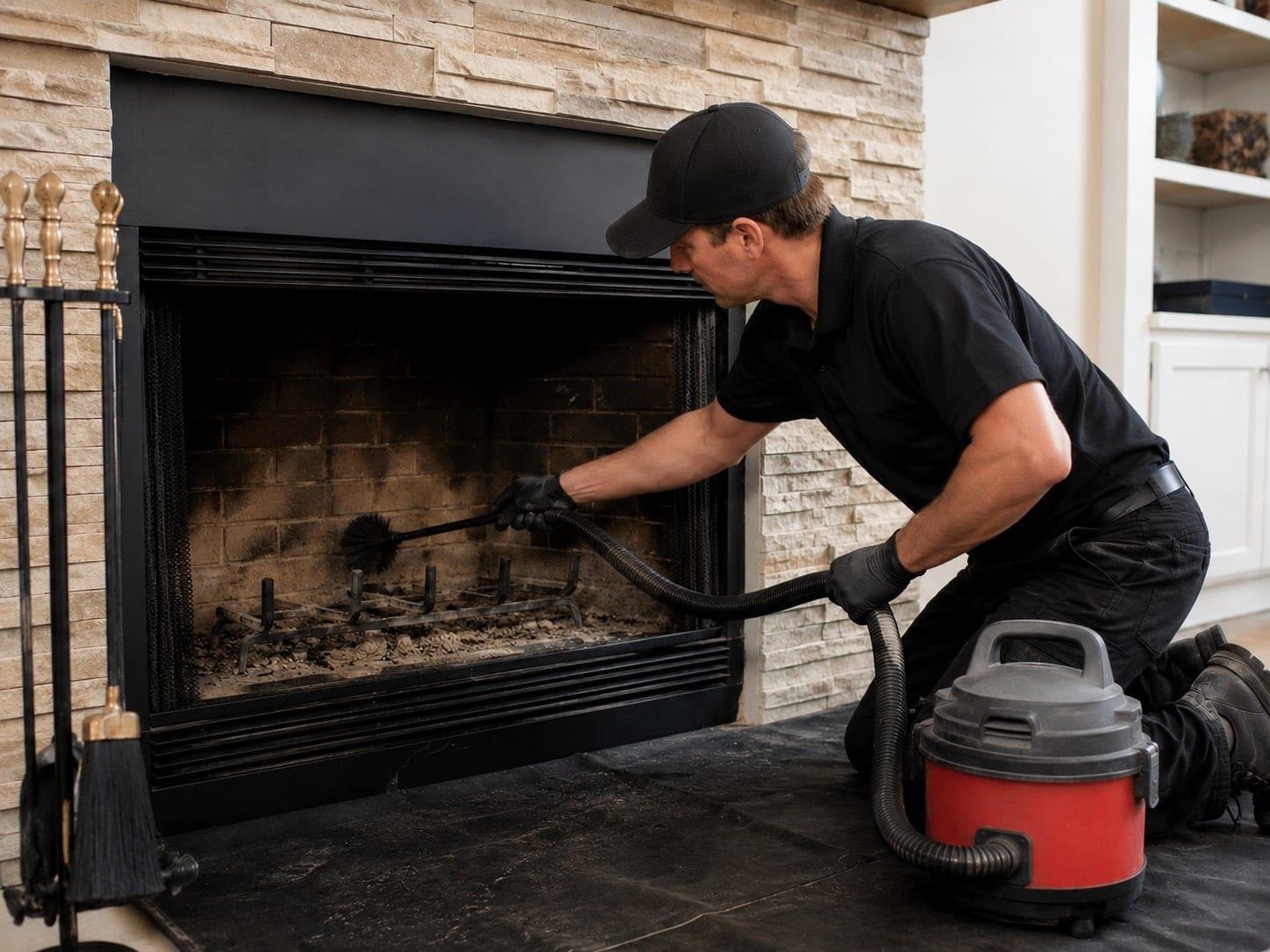
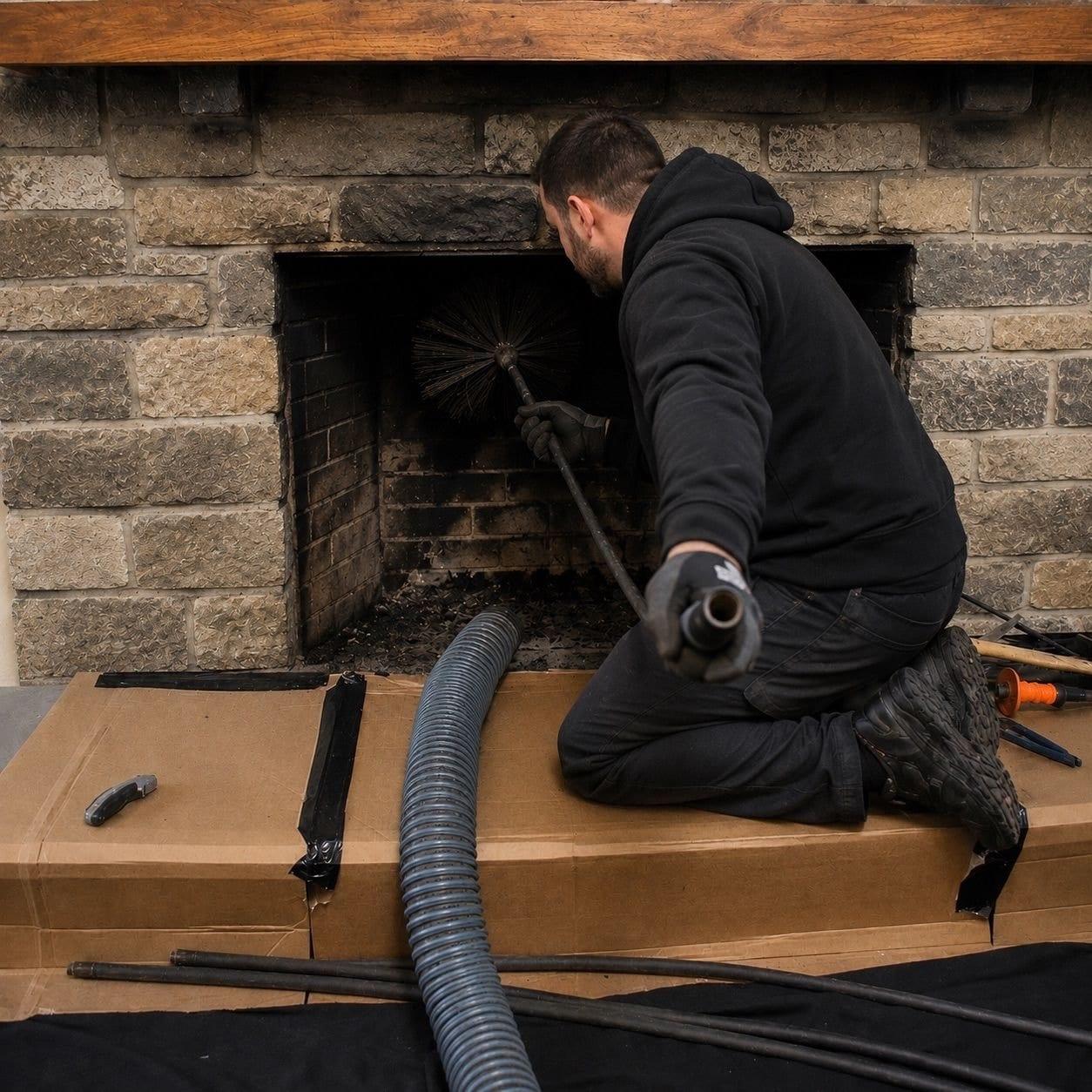
Creosote and soot are brushed and vacuumed out, debris and nests are pulled, and the firebox and smoke shelf are cleaned.
Stop it from coming back
We point out what let the smell in, such as a worn damper, a missing cap or wet masonry, and the repair that fixes it.
Keeping the smell from returning
Close the damper whenever the fireplace isn't in use, and have the chimney swept on a regular schedule so deposits never build up. Only close it once the fireplace is completely cold and no stove, furnace or water heater vents into that flue. A cap keeps out rain and animals, and a top-sealing damper blocks the downdraft that carries odor indoors. If water is behind the smell, the benefits of chimney waterproofing are worth reading. When a smell comes with smoke spilling into the room, or you suspect a cracked flue, a chimney inspection service is the right first step. For the safety side of fireplace use, our guide to chimney cleaning and safety covers the basics.
The next step
Call right away if smoke is coming into the house or an animal is trapped in the flue. We also work with property managers and commercial buildings. Get in touch to request an estimate.
When to book chimney odor removal
- Soot marks on the face of the fireplace above the opening
- Fires that are hard to start or keep going
- Smoke rolling into the room instead of drawing up
- Black, flaky or shiny glazed deposits inside the firebox or flue
- A full burning season since the last cleaning
Carbon monoxide
A blocked or damaged flue can push carbon monoxide into the home. If an alarm sounds or anyone feels dizzy or sick near the fireplace, get everyone outside and call 911.
Checked on every visit
- Draft — how readily smoke moves up the flue
- Creosote level and type in the flue
- Cap and screen condition, where it can be seen safely
- Signs of animals or nesting material
- Firebox brick or panels and mortar joints
- Damper opening, closing and seal
- Visible liner sections for cracks or gaps
How to prepare
- Write down what you've noticed and when it happens — smells, smoke, sounds or stains.
- Clear a few feet of space in front of the hearth or appliance.
- Keep pets in another room while the work area is open.
- Note the make and model of any insert, stove or gas unit if you have it.