We inspect chimneys and fireplaces for homeowners in Buford. This page covers three parts of that inspection: the cap and screen at the top of the chimney, how well the fireplace drafts, and water damage you can't see from inside the house. If any of these is on your mind, request a free estimate and tell us what you've noticed.
Checking the cap and screen
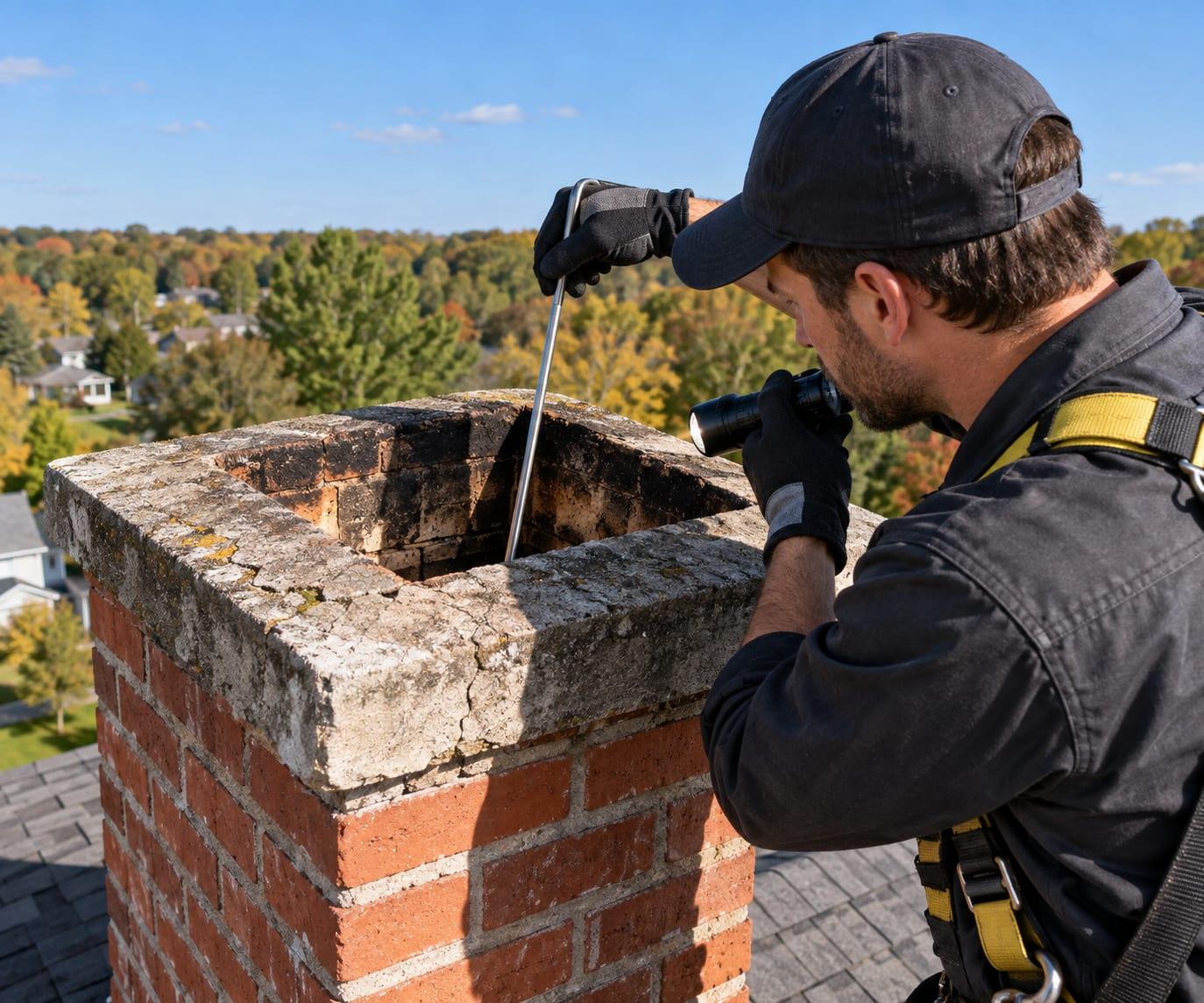
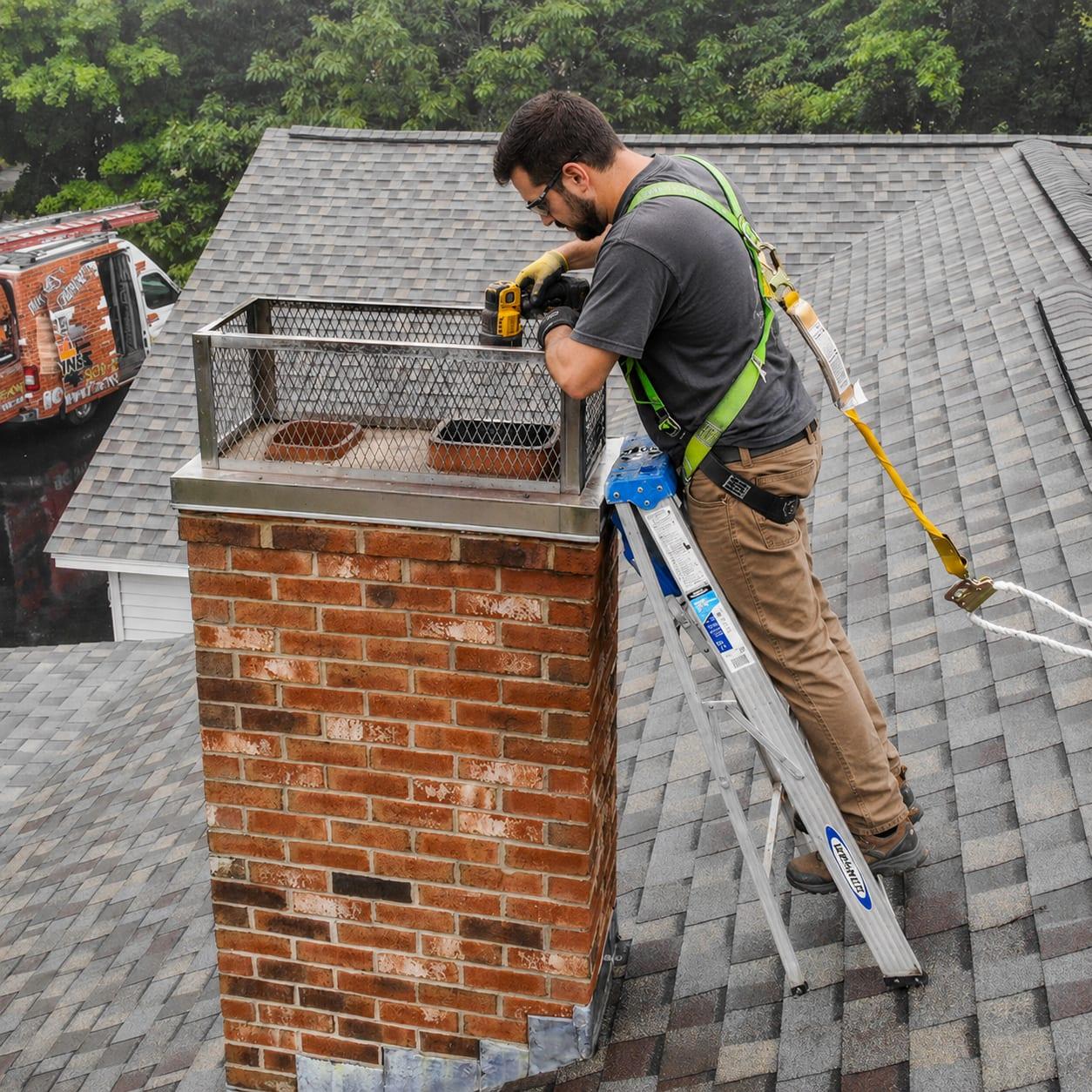
The cap and its mesh screen are the first things water, leaves, birds and squirrels reach. At the top of the chimney we look at whether the cap is still there and fastened down. We check for rust or dents in the cap, and for torn or pulled-back mesh. We also check whether the screen is packed with debris that can choke airflow, and whether the cap fits the flue it covers.
What we find helps you choose the next step:
- Sound cap, clean screen: nothing to do here.
- Clogged screen: a cleaning is enough.
- Damaged or missing cap: it should be repaired or replaced before the next heavy rain, or before an animal moves in.
When the Fireplace doesn't draft well
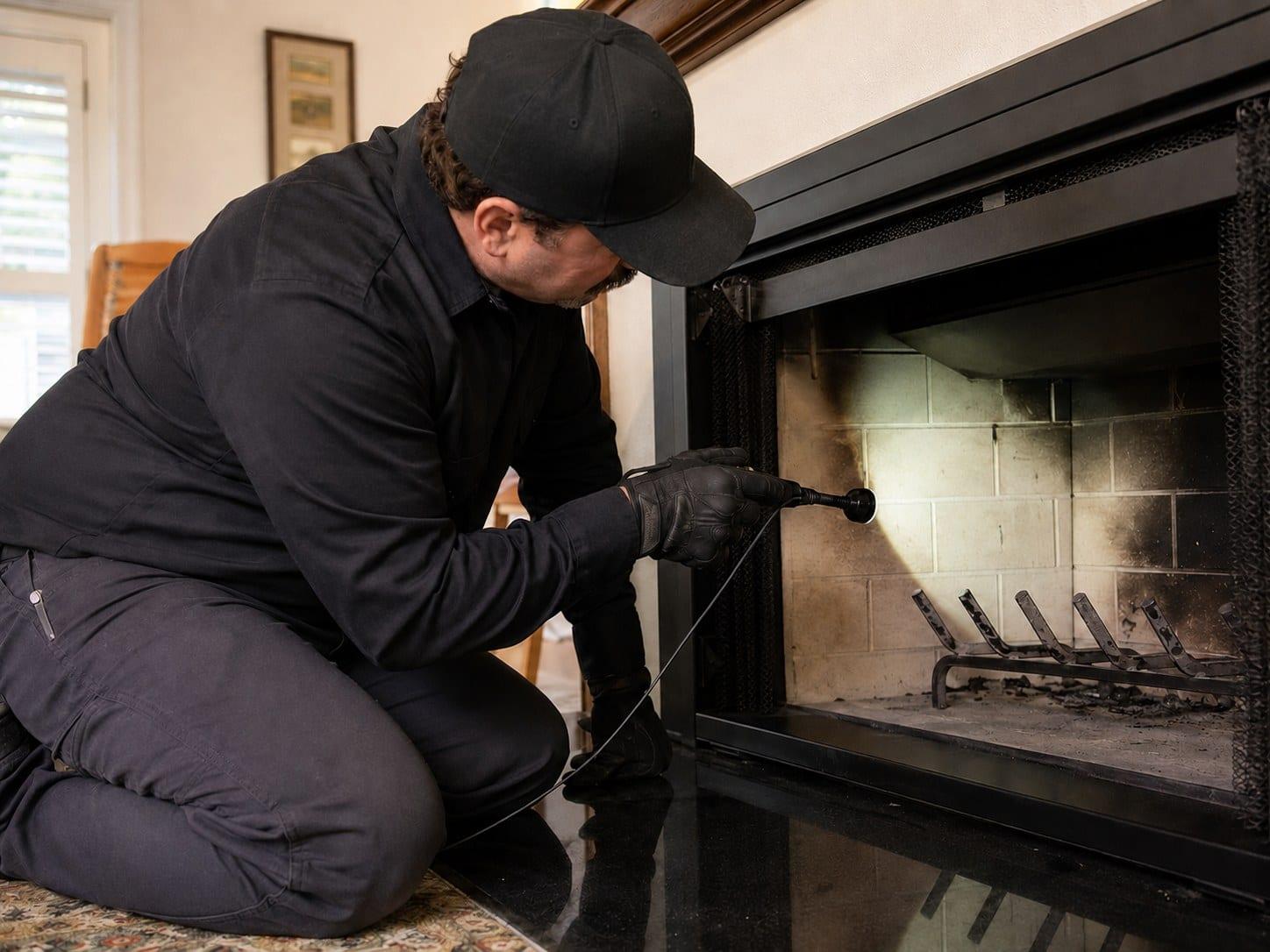
A fireplace that sends smoke into the room, is slow to light or leaves a smoky smell has a draft problem somewhere between the firebox and the top of the chimney. On this part of the visit we check that the damper opens all the way. We look for nests, debris or creosote narrowing the flue, and we check whether a clogged cap screen is holding smoke back. Where the cause isn't visible, a chimney camera inspection lets us look up the full length of the flue.
The result tells you whether the fix is simple, like clearing a blockage or a cleaning, or whether a damper or draft repair is needed first. It also tells you whether it's reasonable to keep lighting fires in the meantime.
What the local housing figures bear on
About 14% of the housing units in Buford were built before 1960, according to the U.S. Census Bureau's American Community Survey 2019–2023 5-year estimates (table B25034, Year Structure Built). If your home is one of them, its chimney has had decades to wear. An inspection shows the actual condition of its cap, crown and flue today, rather than leaving you to guess from the home's age.
Water damage you can't see from inside
Water that gets into a chimney often travels a long way before it shows. It can run through a cracked crown, a rusted chase cover on a prefab chimney, loose flashing or a missing cap. From there it can soak framing in the attic, rust the damper or loosen mortar in the firebox long before a stain shows on the wall.
When this is the concern, an inspection can involve checking the top of the chimney and the chase cover up close. It can also involve looking at the chimney from the attic where it's reachable and running a camera through the flue to look for cracked liner sections or signs of moisture.
When the inspection points to a repair
- Chimney cap repair is the right job when the cap is loose, rusted, dented or missing, or when its screen is torn and no longer keeps animals out.
- Chimney chase cover repair fits when the metal top of a prefab chimney's chase is rusting, sagging or letting water run down inside the chase.
We also inspect chimneys for homes in Lawrenceville, Duluth and Johns Creek.
For the full overview of inspection types, the process and what gets checked, read about how chimney inspection works. To see everything else homeowners can book with us locally, visit our Buford area page.
Booking an inspection in Buford
Call or request an estimate and tell us what you've noticed, such as smoke in the room, a stain near the chimney or a damaged cap. Same-day visits are available where the schedule allows, though they are never guaranteed, and emergency calls are accepted. We also work on gas fireplaces and gas appliances, and we take commercial and property-manager work.
Sources (1)
The sources of the Buford facts on this page.
- 1U.S. Census Bureau, American Community Survey 2019–2023 5-year estimates, table B25034 (Year Structure Built)