On this page
What chimney chase cover repair is and what it involves
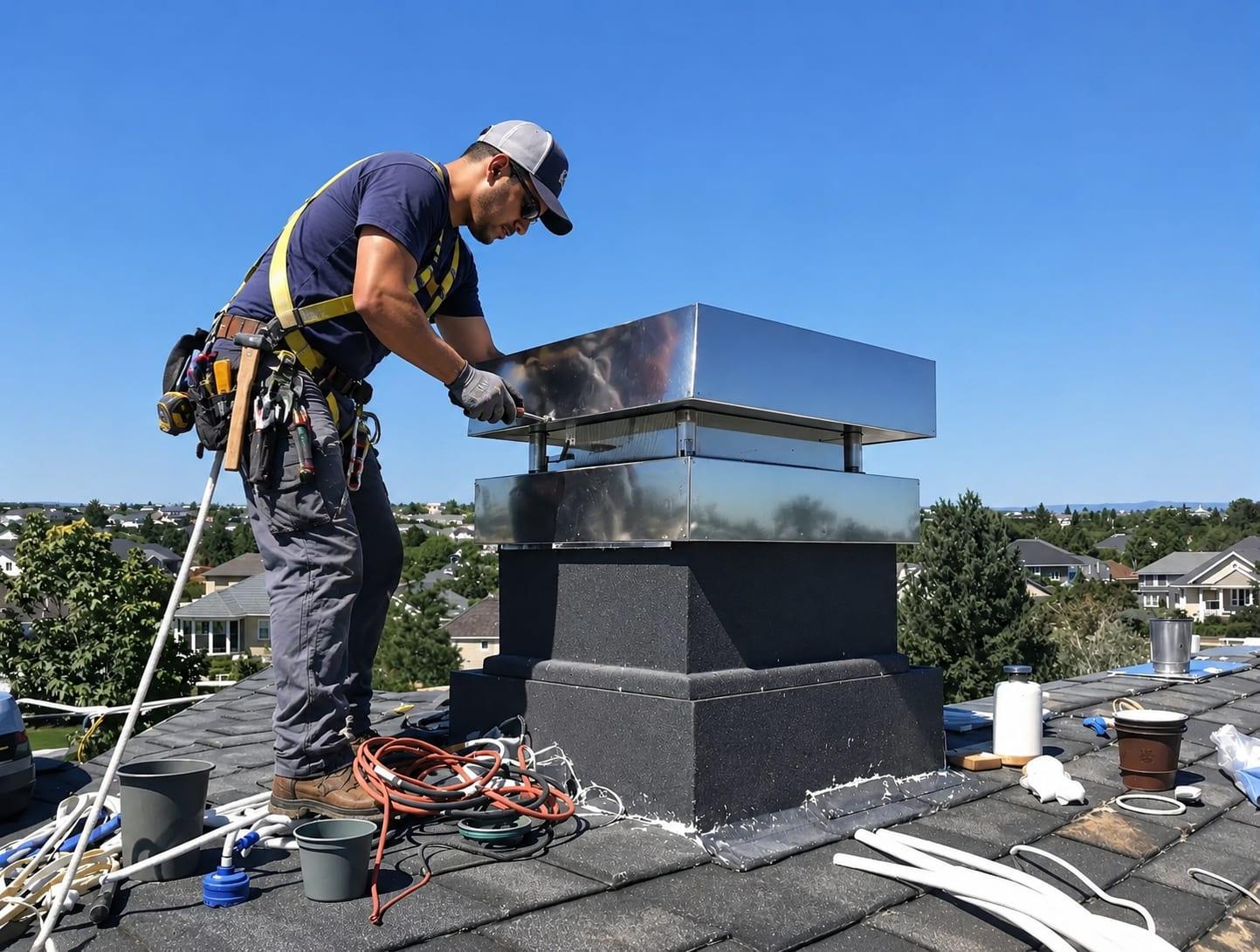
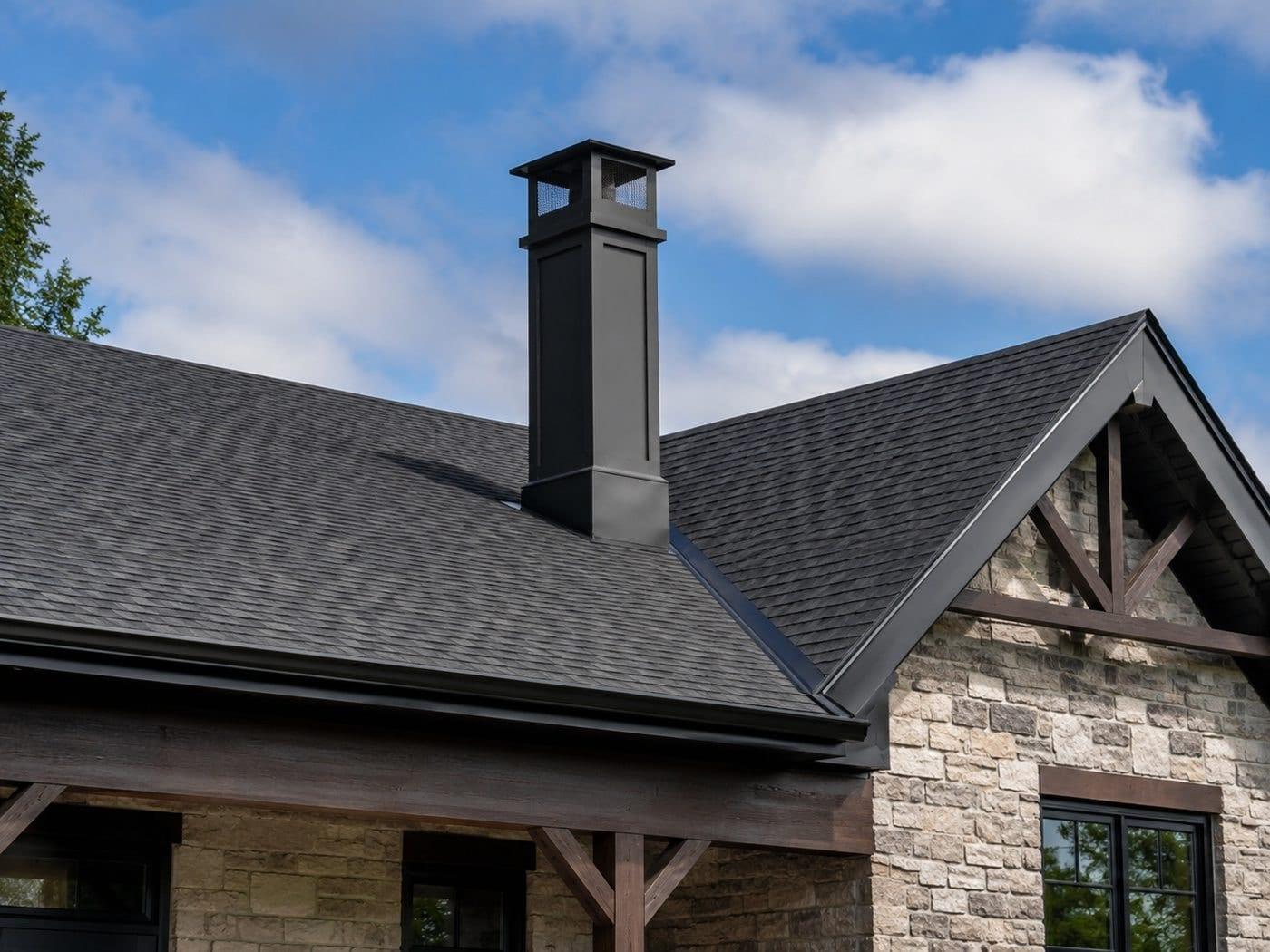
A chase cover is a metal sheet cut to fit the top of a framed chimney chase, with a collar where the flue pipe comes through. It is different from the cap that sits above the flue, and the guide to chimney caps vs chase covers explains how the two divide the work. Repair focuses on the cover's weak points:
- Resealing open seams and the joint around the flue collar and storm collar
- Refastening a cover that has lifted, shifted or rattles in the wind
- Patching small holes and treating surface rust before it goes through
- Sealing gaps at the edges where water or animals get under the pan
Repair isn't always the right call. A cover that has rusted through in several places, or a flat one that sags and holds water, usually needs chase cover replacement rather than patching.
What we look at
- Flue liner condition
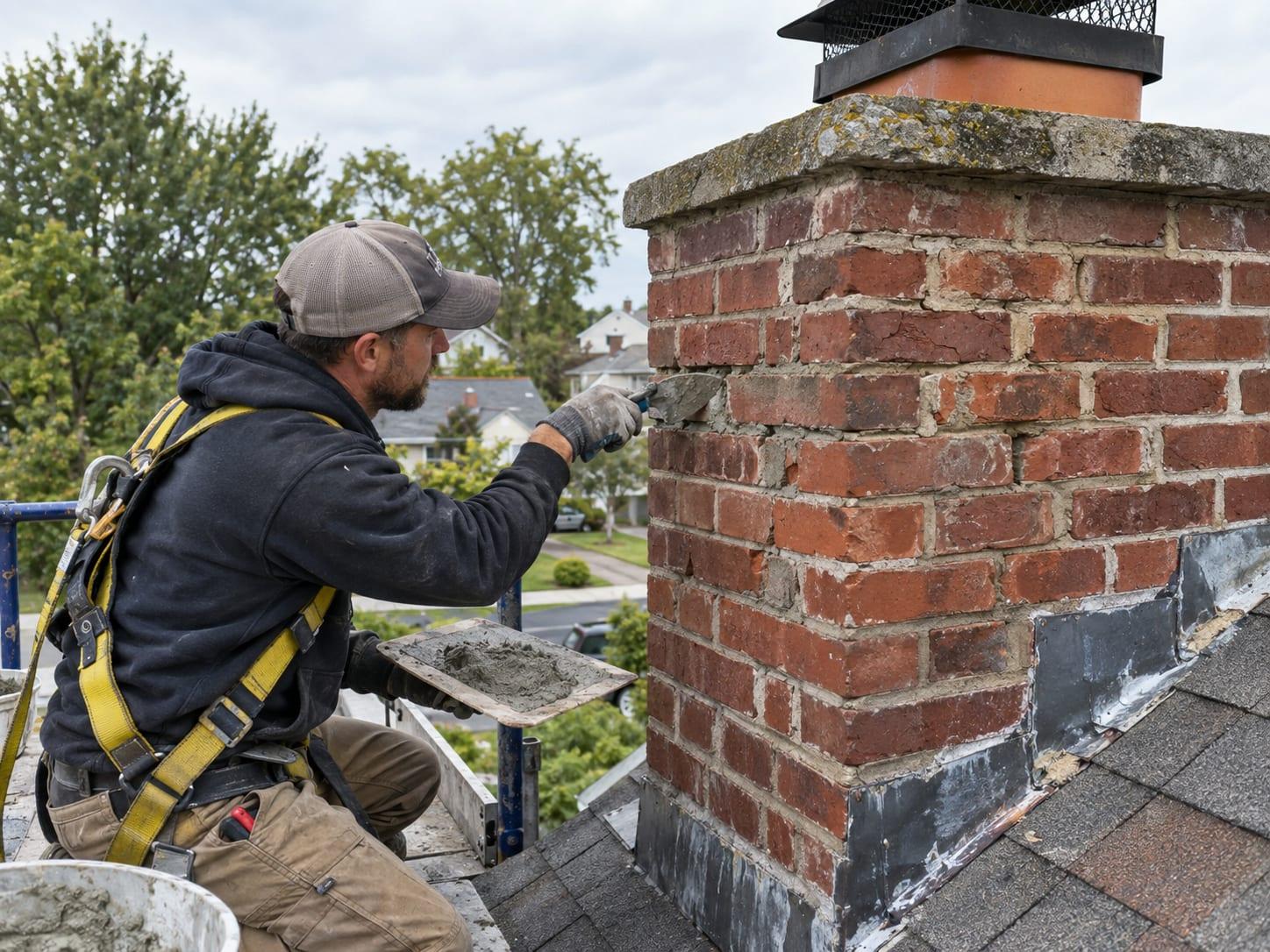
- Flashing seal at the roof
- Firebox walls and floor
- Cap, screen and chase cover
- Damper and smoke chamber
When to book chimney chase cover repair
- Water stains on the ceiling or wall beside the chimney
- A cap that is loose, rusted or missing
- Rust on the damper or firebox
Getting ready for the visit
- Note the make and model of any insert, stove or gas unit if you have it.
- Move rugs, photos and anything fragile away from the work area.
- Clear a few feet of space in front of the hearth or appliance.
- Keep pets in another room while the work area is open.
Stay off the roof
Looking from the ground or with binoculars is safe. Climbing a steep or wet roof to inspect a chimney is not — leave that to someone with the right equipment.
When homeowners need chimney chase cover repair
- Rust streaks running down the siding below the top of the chase
- Water stains on the ceiling or wall near the fireplace
- Rust flakes or water in the firebox
- Standing water on top of the cover after rain
- Visible holes, split seams or a gap around the flue pipe
- Animals getting into the chase
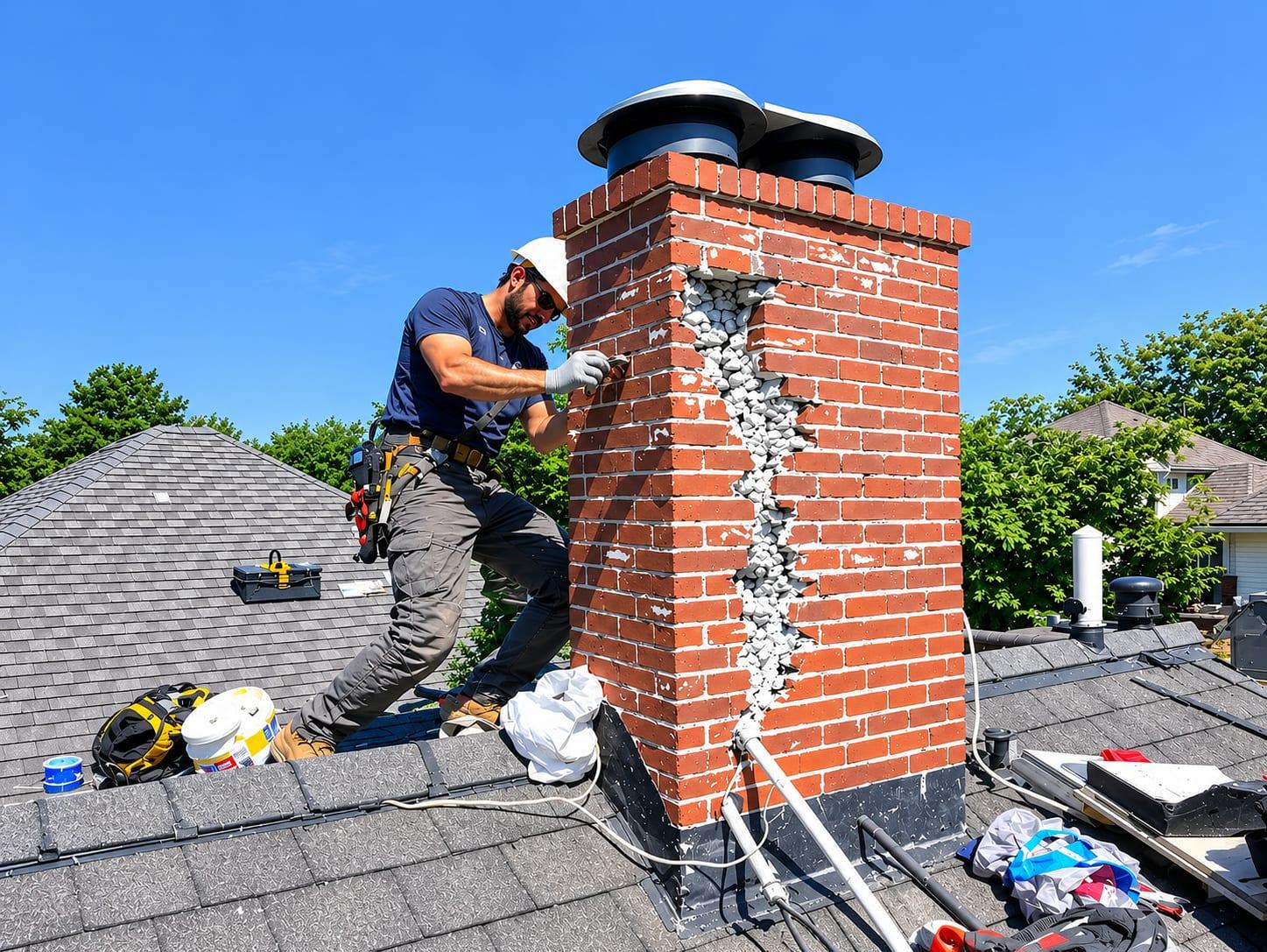
Water that gets past a chase cover soaks the framing and insulation inside the chase, and it can rust the fireplace unit itself. If the inside is already damp or rotted, prefab chimney and chase repair addresses the structure, not just the lid.
What the visit involves, step by step
Repairing a chase cover
Inspect the cover
Seams, fasteners, the collar and any rust or pooling are checked from the roof.
Check below
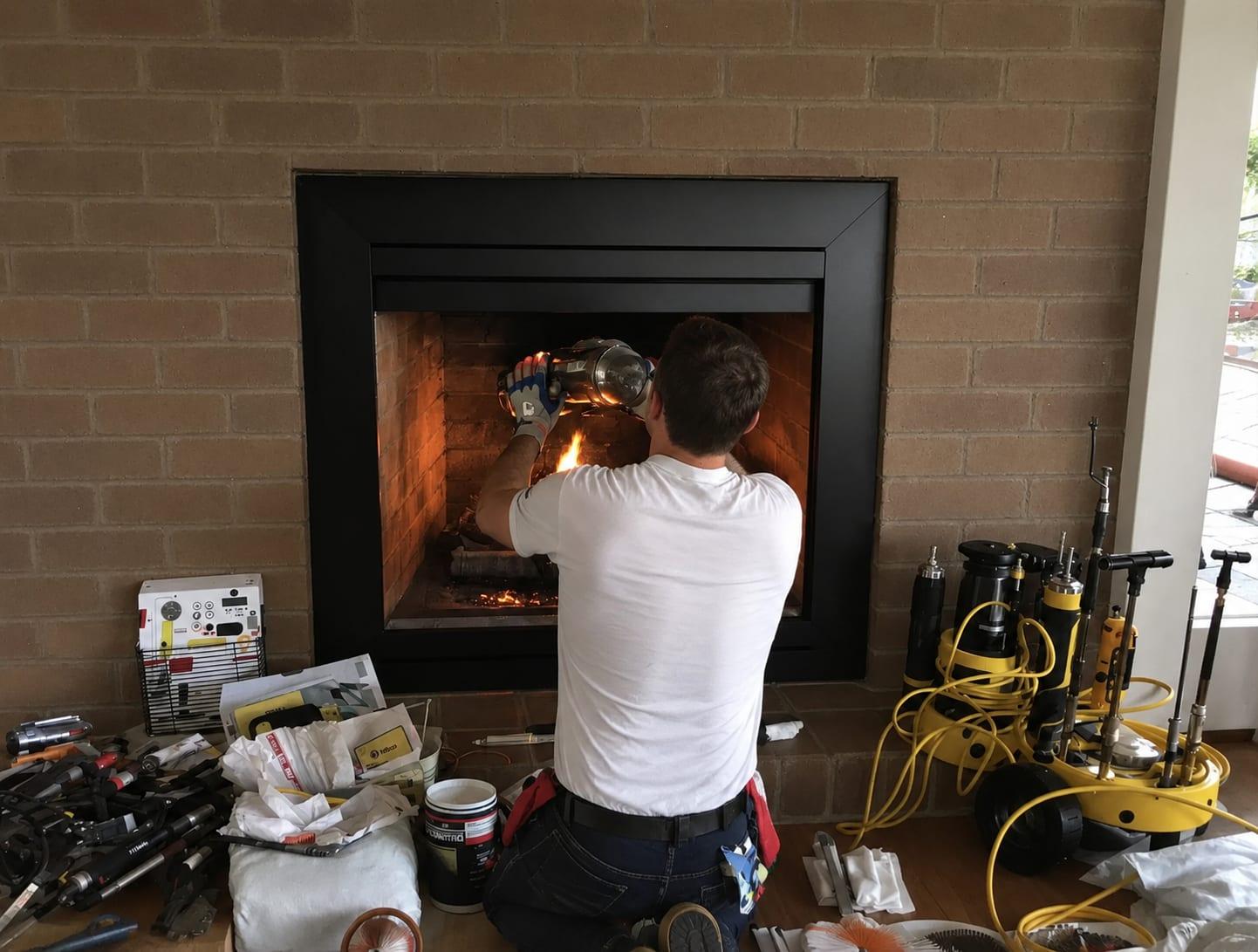
The firebox and nearby walls are looked at for signs of water that already got in.
Recommend repair or replacement
You get a free estimate and an honest call on whether patching will hold.
Make the repair
Seams and collars are sealed, loose sections fastened, and small holes patched.
Confirm it sheds water
The repaired cover is checked so water runs off the edges instead of pooling.
Scheduling chase cover repair in Atlanta
Ask for a free estimate. Same-day visits are possible when the schedule allows, and emergency calls are accepted if water is actively coming in. Prefab fireplaces from all major brands are serviced, and townhome and commercial property managers can book too. For problems elsewhere on the chimney, there's general chimney repair.