On this page
What chimney cap repair involves
A chimney cap sits over the top of the flue. It keeps rain, leaves, birds and small animals out, and its mesh helps stop sparks and embers from landing on the roof. Chimney cap repair means restoring the cap you already have so it does that job again. The work usually involves re-securing it to the flue or crown, replacing failed fasteners or clamps, straightening or reattaching a lid, and patching or replacing a damaged mesh screen.
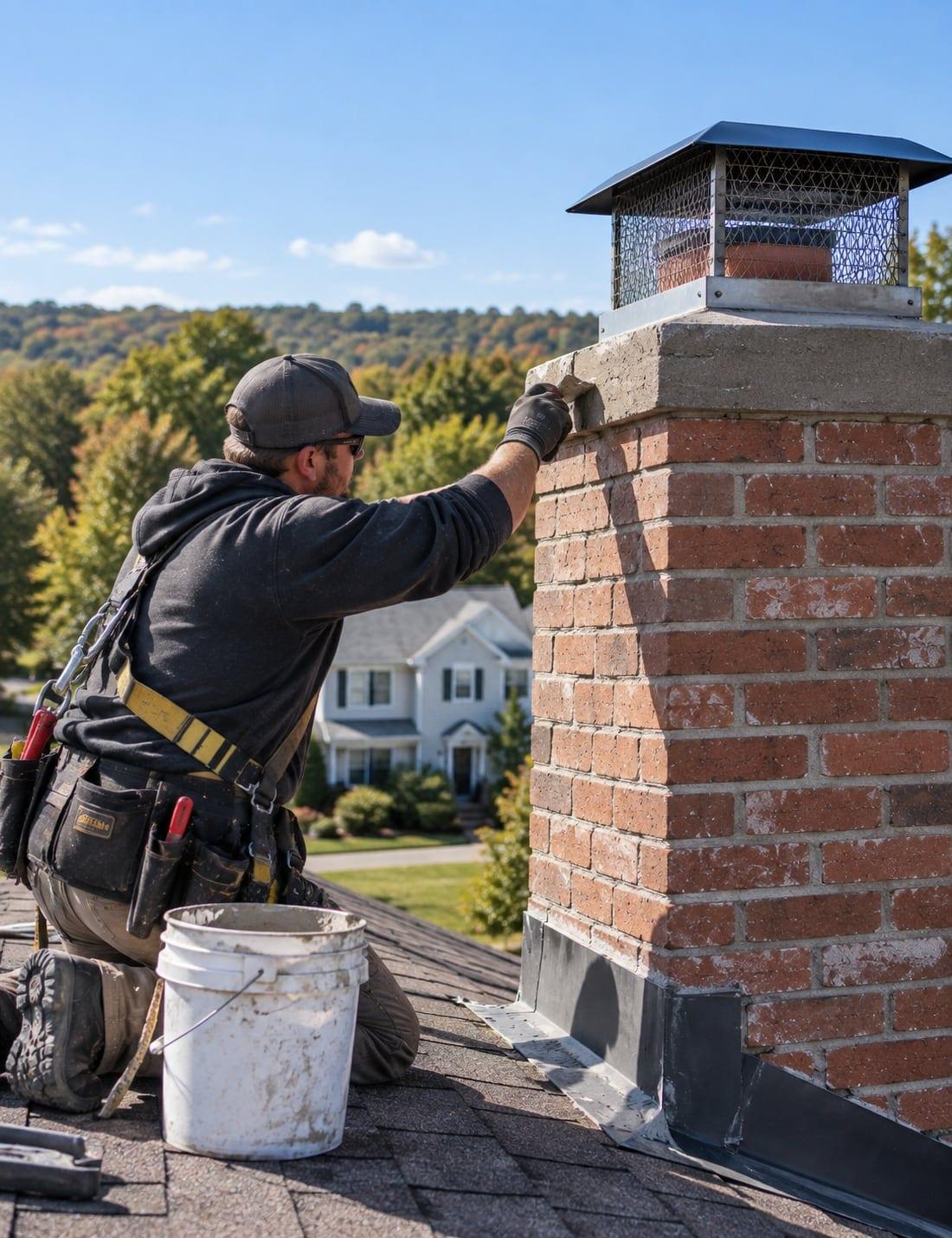
Repair makes sense when the cap body is still sound. If the metal has rusted through, the cap is the wrong size for the flue, or it has blown off and been lost, our chimney cap replacement service is the better fit. If the chimney has never had a cap, installing a new one is a different job from repairing one.
Signs your chimney cap needs repair
Most cap problems are visible from the ground or show up inside the fireplace. These are the common signs:
Signs to watch for
- The cap sits crooked, rattles in wind, or has shifted off the flue
- The lid is bent, dented or hanging loose
- The mesh screen has holes, gaps or has pulled away from the frame
- Rust on the cap, or orange-brown streaks running down the crown or brick
- Water dripping into the firebox or damper area after rain
- Leaves, twigs or nesting material falling into the fireplace
- Scratching, chirping or other animal sounds in the chimney
When a chimney cap is rusted
Rust is one of the most common reasons a cap needs attention. Galvanized or painted steel caps tend to rust sooner than stainless steel ones. Surface rust on a cap that is otherwise solid can often be treated and the cap kept in service. Rust that has eaten through the lid, the legs or the mesh is different. Once the metal is thin or flaking, patching it rarely lasts, and replacement is usually the honest recommendation.
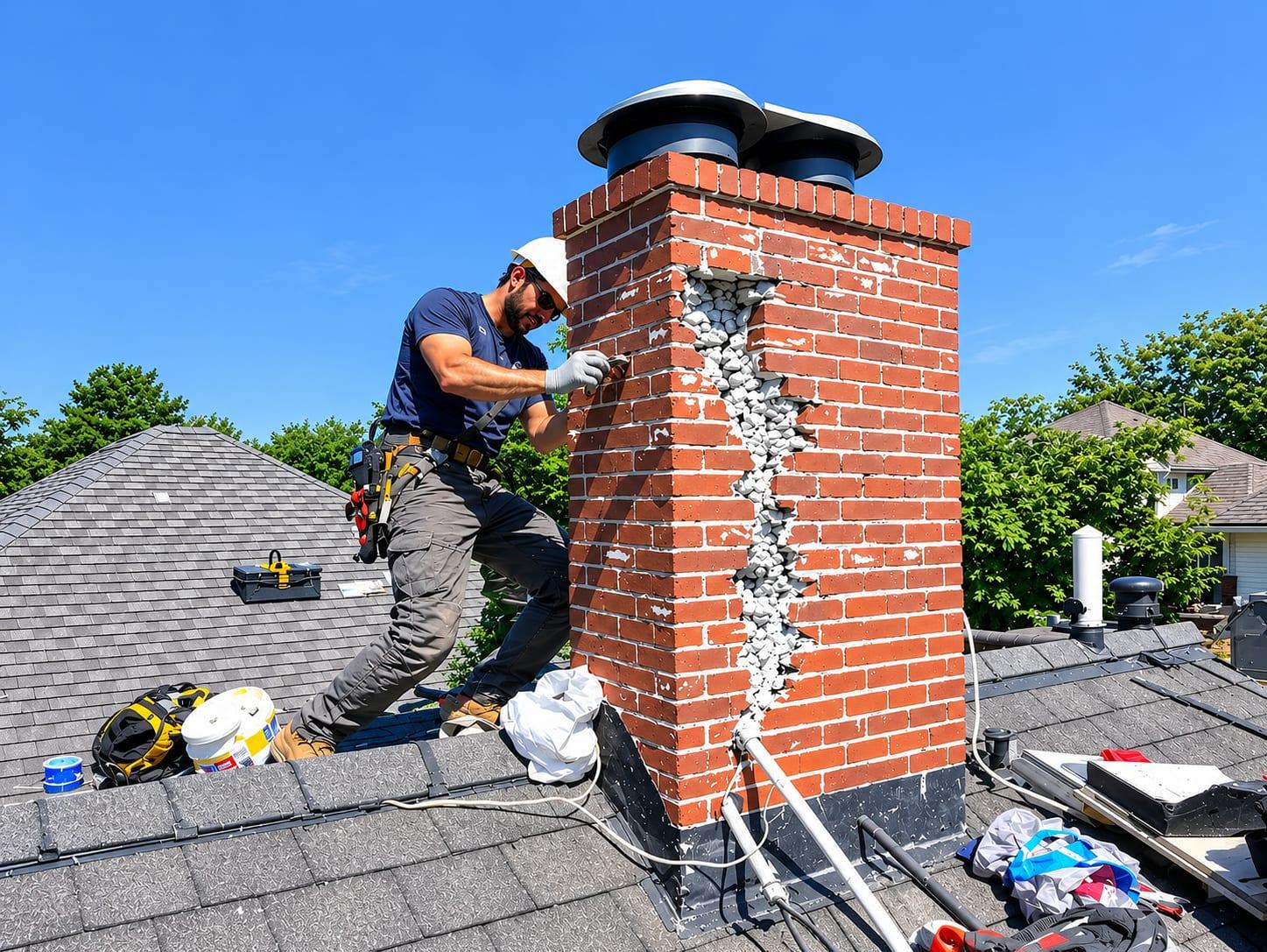
Rust streaks on the crown or brick are worth taking seriously even if the cap still looks intact. They show water has been running over the masonry, and that can lead to cracking or loose mortar. If we find that kind of damage, we can handle it through chimney masonry repair during the same project.
What the visit involves, step by step
How a chimney cap repair visit works
Free estimate
We look at the cap and the top of the chimney, note what is damaged, and tell you whether a repair will hold or whether replacement makes more sense.
Check the whole top of the chimney
We check the cap's fit, fasteners, lid and mesh, along with the crown and the flue tile or liner the cap attaches to, because a cap is only as secure as what it is mounted on.
Clear debris
Leaves, nests and other debris caught in or under the cap are cleared so the flue is open.
Make the repair
Depending on the problem, we re-secure the cap, replace clamps or screws, reattach or straighten the lid, or repair or replace the mesh screen.
Final check
We confirm the cap is tight, sits level and covers the flue properly, then walk you through what we did and anything else we noticed.
Types of chimney caps and materials
The right repair depends on the type of cap and what it is made of.
| Cap type | Where it fits | Repair notes |
|---|---|---|
| Flue chimney cap (single-flue) | Clamps or screws onto one tile | Fasteners loosen over time; often just needs re-securing |
| Liner cap | Attaches directly to a stainless steel chimney liner | Must match the liner diameter; check the liner connection too |
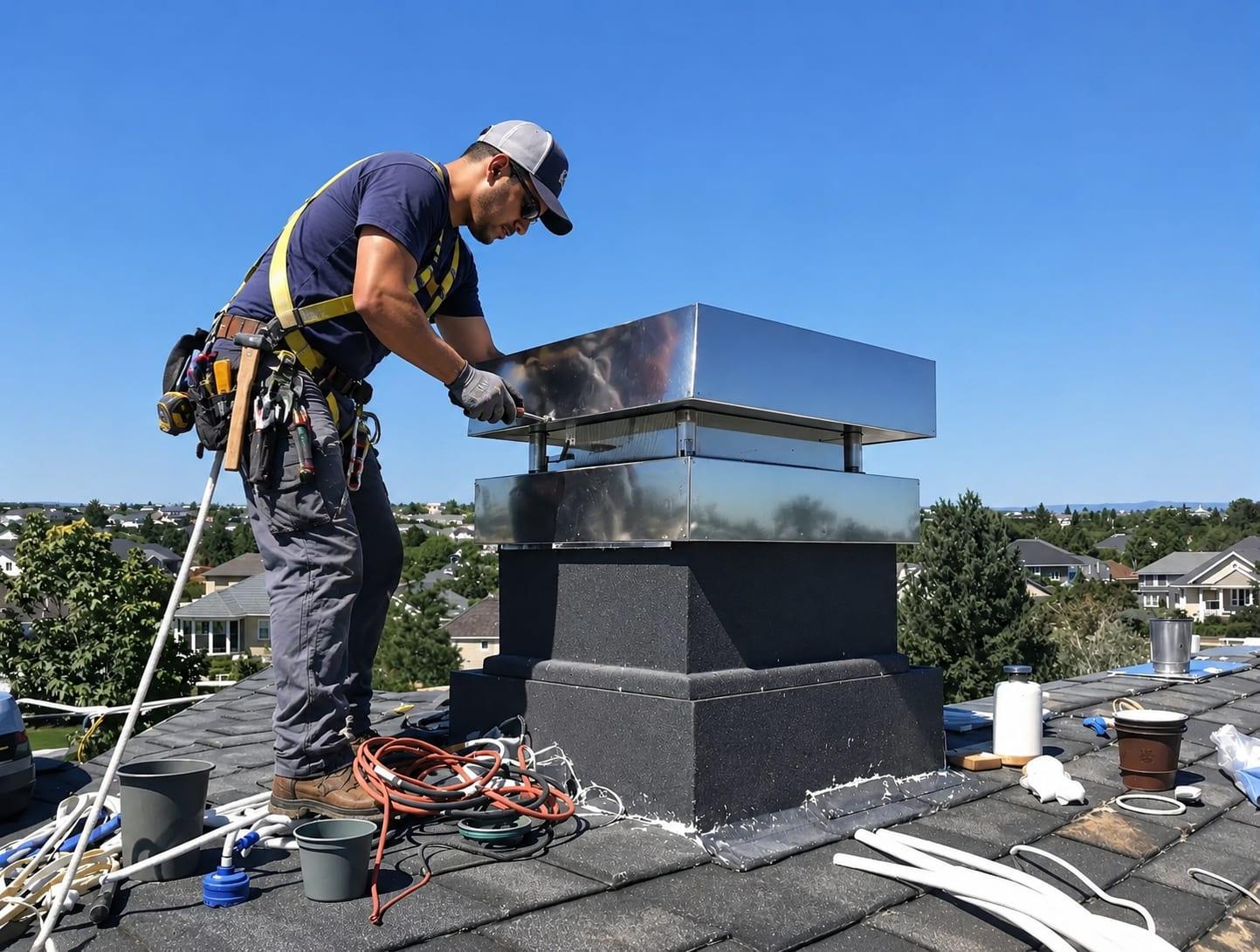
| Masonry chimney cap (multi-flue) | Covers the whole crown or several flues at once | Larger lid catches wind; anchors and lid seams need attention |
| Prefab chimney caps | Part of a factory-built chimney system | Usually need parts made for that specific system |
Stainless steel chimney caps
Stainless steel chimney caps resist rust far better than galvanized or painted steel, which is why many homeowners choose them when a cap does need replacing. A stainless cap that has been bent or loosened is usually a good repair candidate because the metal itself is still in good shape. A galvanized steel chimney cap that is rusting badly is often nearing the end of its life.
Safety and maintenance
A damaged cap is more than a cosmetic problem. Without working mesh, birds and animals can nest in the flue and block the path smoke needs to take. Without a solid lid, rain can soak the flue and damper and wear down the inside of the chimney over time. A cap can also come loose in high wind and fall from the roof. The benefits of Chimney Caps and Dampers go beyond keeping water out, and a cap works alongside a sound flue lining. That is why every Chimney needs a liner in good condition.
Leave roof work to us
Checking a cap up close means working on a roof, often at its highest point. Look from the ground with binoculars if you want a better view, and let us handle anything that needs a ladder.
For maintenance, look at the cap from the ground a couple of times a year and after any storm with strong wind. Having the cap checked during routine chimney cleaning or inspection catches loose fasteners and early rust before they become bigger repairs.
Book a chimney cap repair
Same-day visits are available where the schedule allows (never guaranteed), and emergency calls are accepted, which helps if a cap has blown loose or water is coming in. Commercial and property-manager work is offered too. Call or request an estimate to get started.