The short answer: when a liner has to be replaced
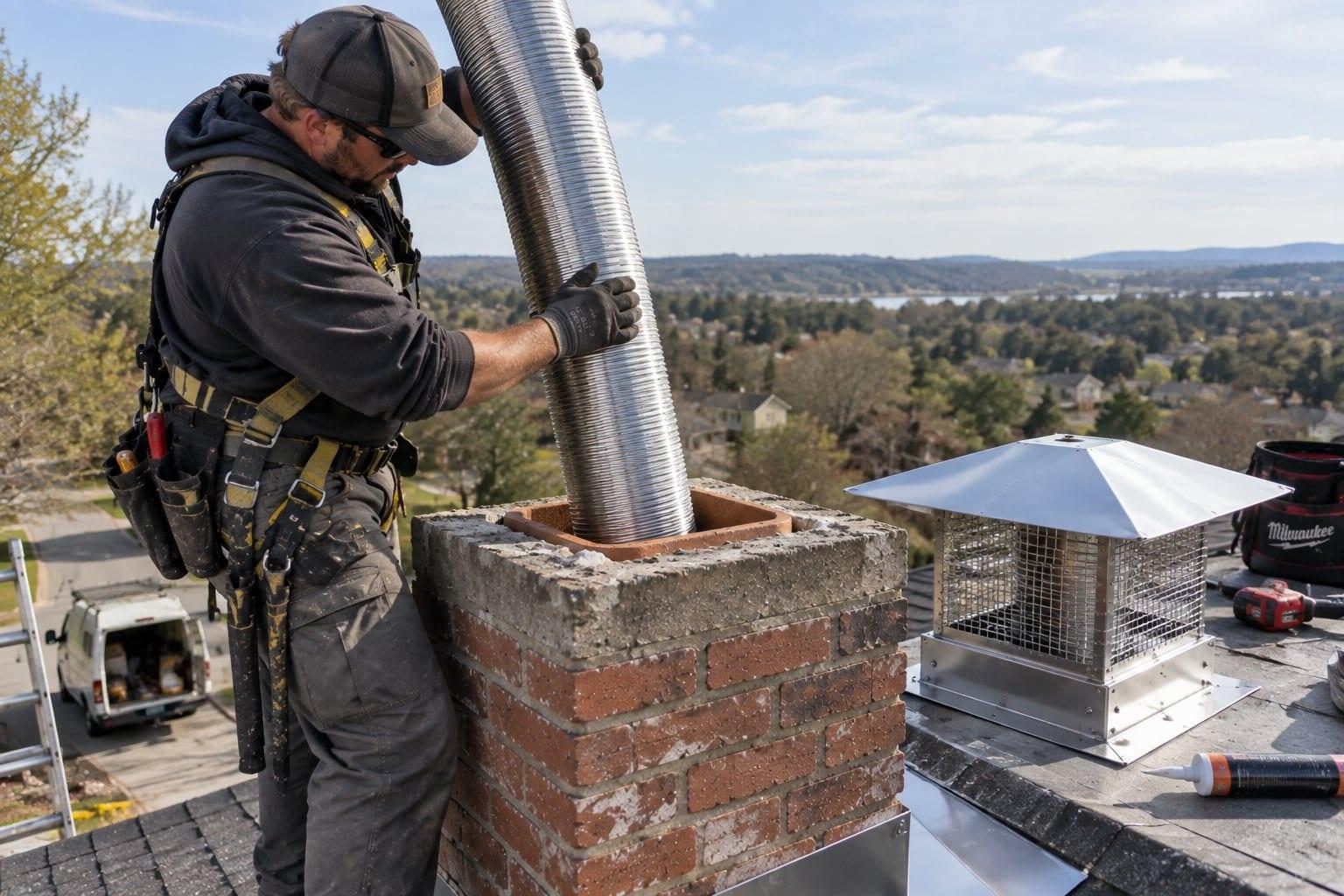
Replace the liner when it can no longer contain heat, smoke and combustion gases along its full length. In practice that means cracks or gaps through many sections, collapsed or missing tiles, a metal liner that has corroded through, or damage from a chimney fire. A liner also has to be replaced when you change appliances and the old flue is the wrong size or material for the new one.
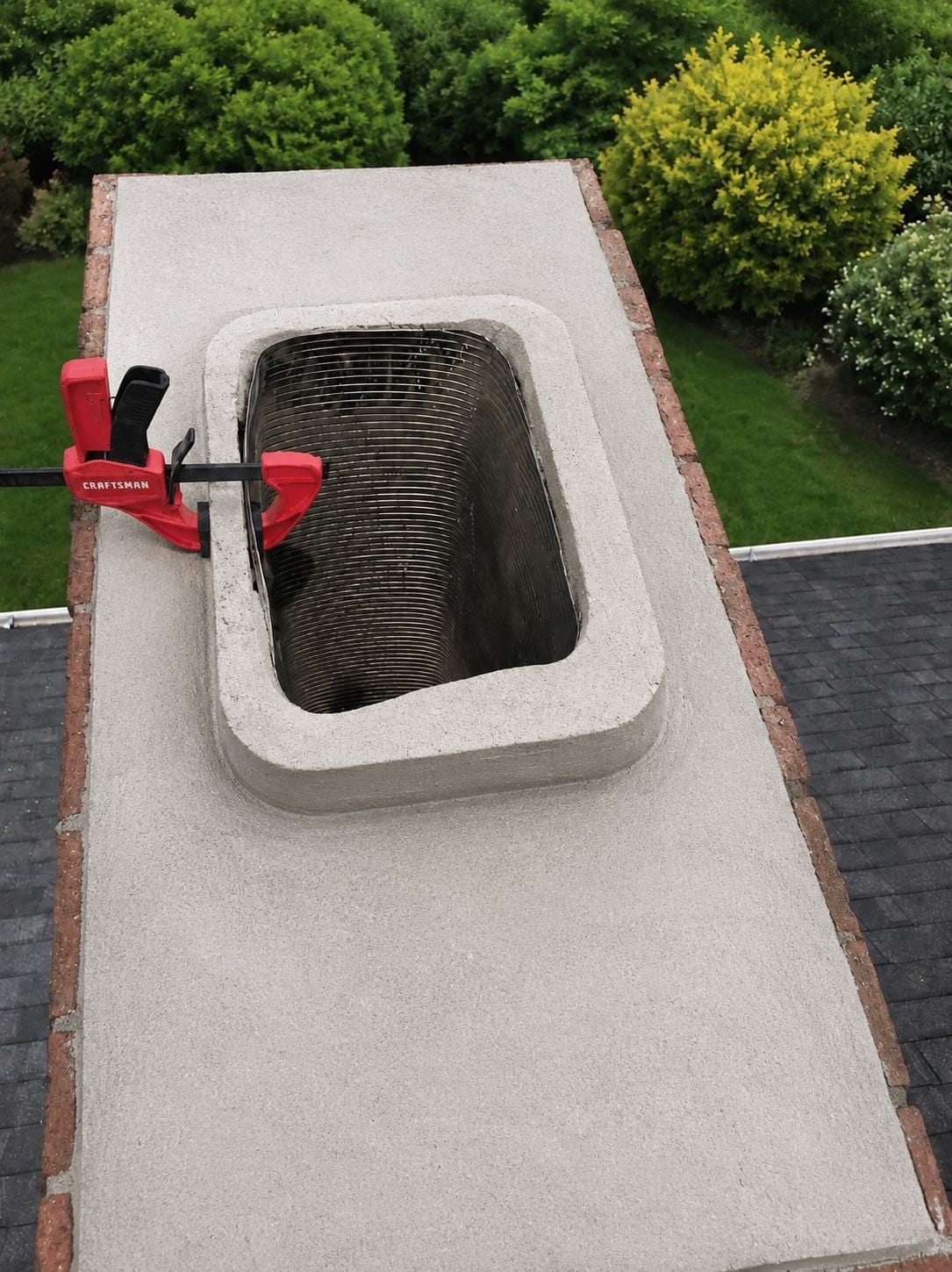
A liner protects the chimney masonry and the framing around it from heat and acidic exhaust. It also keeps the flue the right size so the fire drafts properly. If you are not sure why that matters, read why every chimney needs a liner first.
Signs your chimney liner needs replacement
Most liner damage can't be seen from the firebox or the roof. These signs are reasons to have the flue looked at closely:
Warning signs to watch for
- Pieces of tile, ceramic flakes or grit falling into the firebox or onto the smoke shelf
- Smoke spilling into the room, or a fire that suddenly drafts poorly
- Smoke or odor showing up in other rooms or upstairs when the fireplace is in use
- Water stains, rust or dampness around the fireplace that point to moisture inside the flue
- A past chimney fire: loud cracking or roaring in the flue, puffy or flaky creosote, or warped metal parts. If you hear roaring or see flames or sparks from the top of the chimney, get everyone out and call 911.
- Rust flakes or holes in a stainless or aluminum liner
- A new insert, stove or gas appliance going into an old flue that was built for an open fireplace
After a suspected chimney fire
Stop using the fireplace until the full flue has been inspected. A chimney fire can crack clay tiles along their whole length even when nothing looks wrong from below.
How the damage is confirmed
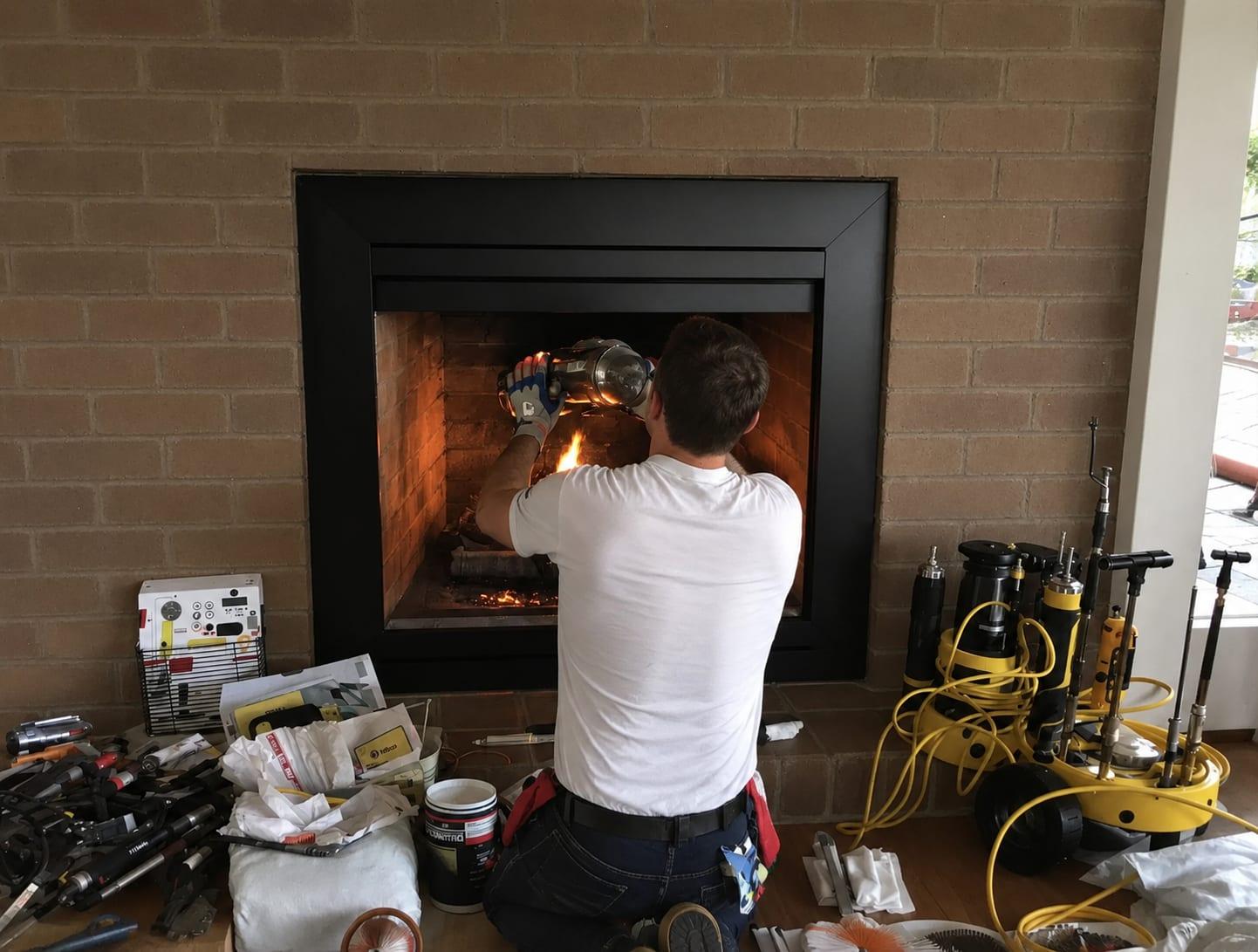
A flashlight from the damper only shows the first few feet of the flue. A camera run through the full height of the liner shows cracks, open mortar joints, offset or missing tiles and corrosion, along with where each problem is. That footage is the basis for choosing between repair and replacement.
What a liner evaluation usually involves
Clean first
Creosote and soot hide cracks, so the flue is swept before it is examined.
Camera inspection
A camera travels the length of the flue to record the condition of every section and joint.
Check the top
The crown, cap and flashing are checked, because water coming in from above is a common cause of liner damage.
Match the flue to the appliance
The flue size and material are compared with what the fireplace, insert, stove or gas appliance needs.
Recommend a fix
You get a recommendation for spot repair, relining or another option, based on what the footage shows.
Repair or replace: reasons and options
Not every damaged liner has to come out. The table compares common findings with the usual way to fix them.
| What the inspection finds | Usually repairable? | Typical fix |
|---|---|---|
| A few open mortar joints between clay tiles | Often | Rejoint or resurface the affected joints |
| A single cracked tile in an otherwise sound flue | Sometimes | Spot repair or resurfacing, depending on location and access |
| Cracks through many tiles, or along the full height | Rarely | Install a new liner |
| Tiles offset, collapsed or missing | No | Install a new liner |
| Damage from a chimney fire | Rarely | Usually a new liner after a full evaluation |
| Corroded or perforated metal liner | No | Replace the metal liner |
| Flue the wrong size for a new appliance | No | Install a liner sized for that appliance |
When the damage is limited, chimney liner repair can bring a sound flue back into service without relining the whole chimney.
Common replacement liner types
| Feature | Stainless steel | Cast-in-place |
|---|---|---|
| How it goes in | A metal liner is lowered down the existing flue and connected at the top and bottom | A mortar-like material is formed inside the existing flue |
| Good fit for | Inserts, wood stoves and most gas appliances, and flues that need resizing | Masonry flues with damage along their length that also need strengthening |
| Things to know | Has to be sized and rated for the appliance it serves | The existing flue has to be suitable for the process |
How it goes in
- Stainless steel
- A metal liner is lowered down the existing flue and connected at the top and bottom
- Cast-in-place
- A mortar-like material is formed inside the existing flue
Good fit for
- Stainless steel
- Inserts, wood stoves and most gas appliances, and flues that need resizing
- Cast-in-place
- Masonry flues with damage along their length that also need strengthening
Things to know
- Stainless steel
- Has to be sized and rated for the appliance it serves
- Cast-in-place
- The existing flue has to be suitable for the process
Clay tile is the traditional liner in masonry chimneys. Relining with new tile is possible, but in an existing chimney it usually means opening up the masonry, so metal or cast-in-place liners are more common.
Fix what damaged the liner
A new liner will fail again if the cause isn't fixed. Water is a frequent culprit, so a cracked crown, failed flashing or a missing cap should be dealt with at the same time. Tracking down a chimney leak and replacing a worn chimney cap both help protect the new liner. A cap also keeps nesting animals out of the flue.
What helps you decide
- Ask to see the camera footage so you can see the damage yourself before agreeing to any work.
- Think about how you will use the fireplace. If you plan to add an insert, stove or gas logs, it makes sense to size the new liner for that appliance now.
- Ask whether the cause of the damage, such as water entry or a past chimney fire, has been found and will be fixed.
- If the firebox or the whole fireplace is also failing, look at the full system before relining a flue that serves a unit you may replace anyway.
When does a firebox need full replacement?
A firebox needs full replacement when the damage is widespread or structural rather than limited to a few spots. In a masonry fireplace, that means firebrick that is loose, missing or cracked across much of the firebox, mortar eroded throughout, or a back wall that is bulging or pulling away. Isolated cracks and a few failed joints can usually be repaired with refractory mortar or by replacing individual bricks.
Factory-built fireplaces are different. Cracked refractory panels can often be replaced, but a warped or burned-through metal firebox usually means replacing the whole unit. Replacement parts may also be unavailable for older models. In those cases, repairing or replacing an old fireplace is often the more practical choice, and any new unit needs a flue suited to it.
We handle liner repair, liner installation, firebox repair and cap work, and estimates are free.