On this page
What chimney liner repair involves
The liner is the inner wall of the flue. It contains heat, carries smoke and gases up and out, and protects the brick and nearby framing from both. If you're not sure why that layer matters so much, why every chimney needs a liner covers the background.
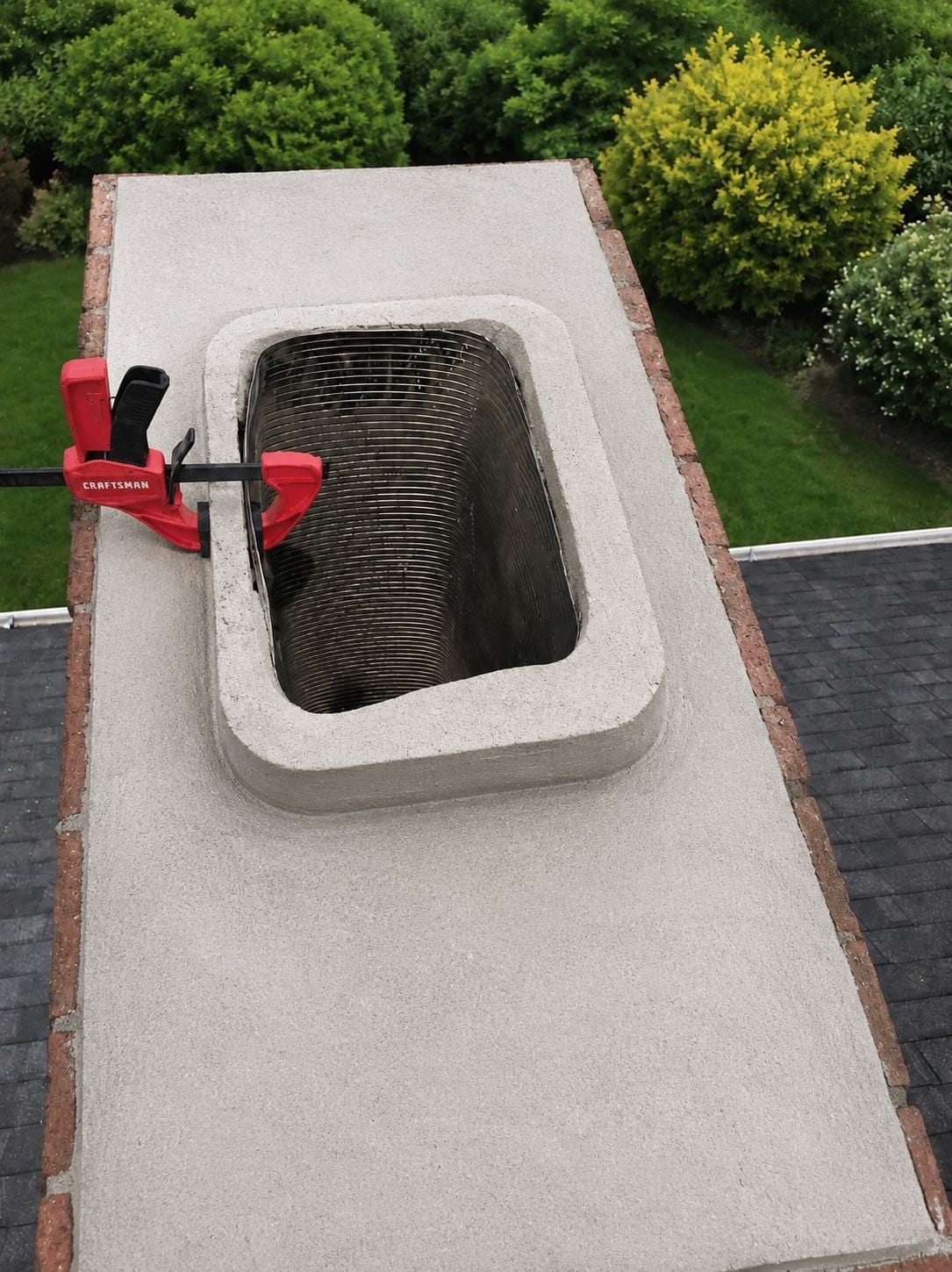
Chimney liner repair fixes damage to a liner that is still basically sound. Depending on what we find, that can mean:
- Sealing open or eroded mortar joints between tiles
- Resurfacing cracked or flaking tile with a heat-rated coating applied inside the flue
- Replacing a damaged section of liner where it can be reached
- Fixing loose connections or worn sections on a metal liner
Repair isn't always the right answer. When damage runs the length of the flue, the old liner has collapsed, or the existing liner is the wrong size for the appliance, a new liner is the honest fix, and our chimney liner installation service handles that job.
Signs your liner may need repair
Most liner damage can't be seen from the firebox or the roof, so many problems turn up during an inspection rather than through obvious symptoms. These signs are worth a call:
Common warning signs
- Pieces of clay tile or flakes of material falling into the firebox
- Smoke or a smoky smell coming into the room when the fireplace is in use
- A fireplace that drafts poorly when it used to work fine
- Water stains or dampness around the chimney inside the house
- A known or suspected chimney fire, even a small one
- An inspection report noting cracked, gapped or missing liner sections
Some of these overlap with other chimney problems, such as a bad crown or failing masonry. If the trouble turns out to be in the structure rather than the flue, our chimney repair work covers it. For a closer look at when patching stops making sense, read how to tell a chimney liner needs replacement.
What the visit involves, step by step
How a liner repair visit goes
Talk through the problem
We ask what you've noticed, what the flue serves (wood fireplace, gas fireplace or another appliance) and whether there's been a chimney fire.
Inspect the flue
We look at the liner from top to bottom, using a chimney camera where the flue can't be seen directly, so the repair is based on what's actually there.
Clean if needed
Soot and creosote hide cracks and keep repair materials from bonding, so a dirty flue is cleaned first.
Recommend repair or replacement
You get a plain explanation of the damage and whether repair will hold or a new liner is the better choice. Estimates are free.
Make the repair
We seal joints, resurface damaged tile or replace sections, depending on the damage.
Check the result
We inspect the finished work and tell you when the system can go back into use.
Safety and maintenance
Hold off on fires until the liner is checked
A damaged liner can let heat reach wood framing near the chimney and let smoke or carbon monoxide leak into the house. If you suspect liner damage, stop using the fireplace or appliance until it has been inspected.
Water is one of the main things that wears liners down, especially clay tile. A cap keeps rain and debris out of the flue; the benefits of chimney caps and dampers explains how both help, and our chimney cap installation puts one on if your chimney is missing one. Regular inspection and sweeping, so creosote doesn't build up and small cracks are caught early, is the other half of keeping a repaired liner in good shape.
Booking chimney liner repairs
Get in touch to request an estimate. Same-day visits are available where the schedule allows, and emergency calls are accepted. We also handle commercial and property-manager work, flues serving gas fireplaces and gas appliances, and work on all major brands.